REVIEW · PARIS
Discover Paris’ Marché d’Aligre: 2-Hour Market Tour
Book on GetYourGuide →Operated by Meeting the French · Bookable on GetYourGuide
Paris has a market side most people miss.
This 2-hour walk through Marché d’Aligre shows you a part of Paris that feels less performance and more everyday shopping, with a rare covered market space tucked behind the big boulevards.
I especially like two things here: you get the les passages couverts backstory while you’re standing inside it, and you also get real food time, including tastings and a break for mint tea.
One caution: the flea market portion can feel hit-or-miss, so if your goal is serious hunting, go in with flexible expectations.
In This Review
- Key things you’ll notice on this tour
- Marché d’Aligre, the kind of Paris you don’t stumble into
- Where to meet by Ledru-Rollin (and how to not waste time)
- Marché Couvert Beauvau: a covered passage that still works
- Outdoor stalls: tapenades, spices, flowers, and coffee culture
- How the tastings work (and why you should show up hungry)
- Flea market time: fun for odd finds, not a guaranteed jackpot
- Guides who turn stalls into stories (and sometimes offer extra Paris tips)
- Price and value: does $129 make sense for two hours?
- Timing and group size: why 2 hours feels just right
- Who should book this tour (and who might skip it)
- Should you book the Marché d’Aligre 2-hour tour?
- FAQ
- How long is the Marché d’Aligre market tour?
- Where is the meeting point?
- What is the nearest metro station?
- How much does the tour cost?
- Is transportation included?
- What’s included in the tour?
- How big is the group?
- What cancellation options do I have?
Key things you’ll notice on this tour
- Marché Couvert Beauvau: a rare covered market still operating like it did decades ago
- Les passages couverts history: you learn why this kind of passage matters in Paris
- Food tastings you can actually eat: plus a mint tea stop at a corner café
- Outdoor market browsing: spices, tapenades, flowers, and coffee stalls you can wander at your pace
- A small group of 8 max: more time to ask questions and talk with shopkeepers
- Flea market time: enough for odd finds, but not built for one big “wow” bargain hunt
Marché d’Aligre, the kind of Paris you don’t stumble into
Marché d’Aligre sits in the 12th arrondissement, in that in-between zone where locals shop, families run errands, and the city still moves at its own speed. On this tour, you don’t just look at stalls—you learn how the place fits into Paris market culture.
What makes it interesting is the mix of settings. You start in the covered Marché Couvert Beauvau, then shift into the outdoor street market atmosphere, and finally add a flea market connection. That rhythm matters because it changes what you see and how you eat.
You’ll also notice how the market sits near North African shops. The food world around here feels connected, not separated into “tourist food” and “real food.” That’s a big part of why I think this tour works well if you want something other than the usual landmark sweep.
You can also read our reviews of more shopping tours in Paris



Where to meet by Ledru-Rollin (and how to not waste time)
You meet at 100, rue du Faubourg Saint-Antoine, 75012 Paris, near the Ledru-Rollin metro station (exit 2). Since transportation isn’t included, plan to arrive on foot or by metro and be ready to start promptly.
The nice thing about the meeting spot is that it’s straightforward. You’re not getting dropped somewhere vague with 20 different exits to guess from—you can identify the area quickly and get your bearings fast.
If you like arriving a few minutes early, do it. You’ll get a feel for the streets around the market before your guide starts pointing things out inside.
Marché Couvert Beauvau: a covered passage that still works
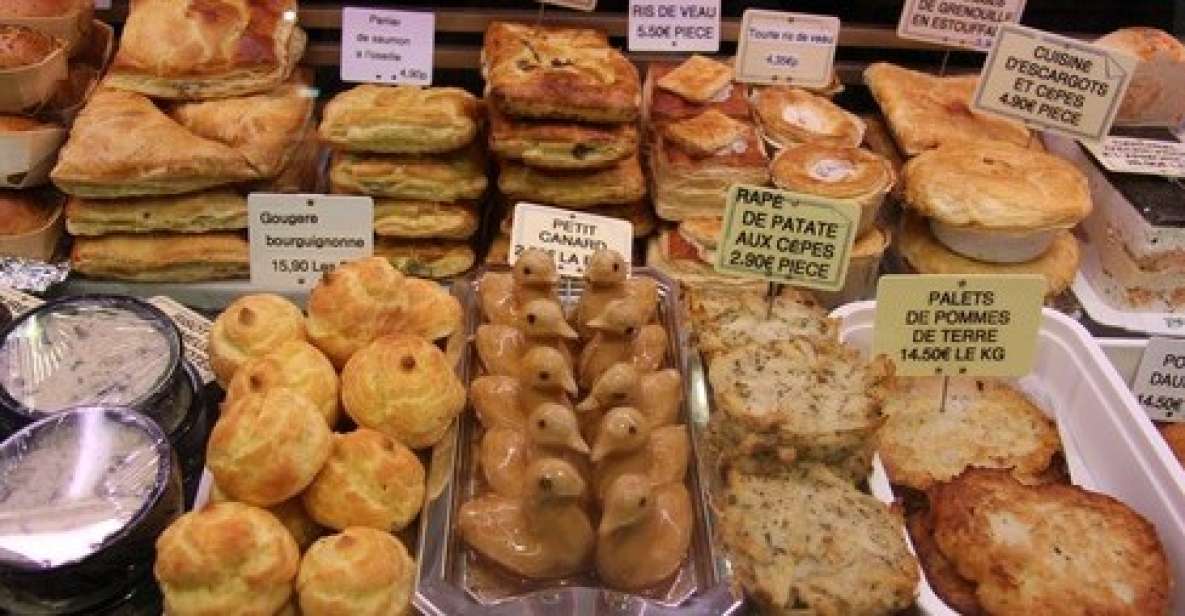
The covered part is the headline. You’ll walk through Marché Couvert Beauvau, which is tied to the idea of les passages couverts—those sheltered passageways that once stitched together busy areas near Paris boulevards.
This market is special because it’s among the last remaining examples of that covered-passage style. You’re not reading about it from a screen; you’re experiencing it with your eyes and nose, in a space designed for foot traffic even when the weather changes.
As you stroll the rows of stalls, pay attention to how the space shapes the shopping. Covered markets encourage lingering. People can compare items without getting drenched or pushed around by outdoor wind. That makes it easier to talk, ask questions, and understand why certain foods are bought regularly.
And because this is still an active market environment, you get a sense of continuity. This place isn’t staged like a museum, and that matters when you’re trying to understand how Parisians actually eat and buy.
Outdoor stalls: tapenades, spices, flowers, and coffee culture
After the covered section, the tour moves into the outdoor market area. This is where Marché d’Aligre can feel different from the indoor calm—more street-level energy, more browsing, and more visible variety.
You’ll see stall offerings that include tapenades, spices, flowers, and coffee. Even if you don’t plan to buy much, it’s worth using this time to look closely at packaging, colors, and display styles. Those details tell you how vendors organize products for daily customers.
One practical trick: approach this part like a tasting walk, not a shopping mission. Ask what something is used for and how it’s typically served. That turns browsing into knowledge, and it helps you decide what you’ll want to taste later.
How the tastings work (and why you should show up hungry)
The tour includes tastings of specialty foods, plus mint tea at a corner café. The goal isn’t to fill you up like a food festival. It’s to let you sample so you can understand the market’s flavors in context.
From what I’ve learned about this tour’s food focus, you may try items like fresh warm croissant, real coffee, and a baguette pairing that can include truffle cheese. The truffle cheese angle is worth keeping in mind because it’s not just a rich flavor—it’s traditionally tied to Christmas in the way the seller explains it. So you’re tasting something with a story, not just a label.
You may also get time connected to people behind the counter. The tour can include a chance to chat with a butcher and visit a bakery, with guidance on how freshness changes taste. That’s one of the quiet strengths of this experience: you’re not only sampling products; you’re meeting the people who make shopping feel like part of life.
And the mint tea stop is smart. It gives you a reset when you’re moving between stalls and flavors. You sit for a moment, take in the market around you, and then you’re ready for one more round of browsing.
You can also read our reviews of more tours and experiences in Paris





Flea market time: fun for odd finds, not a guaranteed jackpot
After the market stops, you’ll spend time in the connected flea market area. This is where you might spot bizarre finds—small objects, unusual vintage bits, and the kind of things you can’t predict until you’re there.
Here’s the honest consideration: the flea market portion isn’t always the strongest part. If you’re coming with a “I will find the best treasure in Paris” mindset, you could leave slightly underwhelmed.
But if you treat it like bonus wandering—extra time to poke around and surprise yourself—you’ll likely enjoy it. The flea area works best when you’re curious and slow. You’re not just hunting; you’re watching how people browse and haggle in a real neighborhood flow.
Guides who turn stalls into stories (and sometimes offer extra Paris tips)
This is a live guided experience in English and French, led by small-group guides (max 8 participants). That small size matters because markets can be chaotic if you’re trying to keep up with a big group. Here, you’re more likely to get a calm pace and time to ask questions.
A couple guide names have stood out in people’s experiences: Caroline and Christine. If you’re lucky enough to get one of them, expect an approach that ties food to everyday Paris. People describe it as the kind of tour where your guide helps you understand what you’re seeing and why it’s important.
Also, guides often don’t just stop at the market. Some include practical follow-up ideas—places to return to, or what to look for when you’re shopping later. That’s where a market tour can stretch beyond its two hours.
Price and value: does $129 make sense for two hours?
At $129 per person for a 2-hour market tour, the price is not “impulse cheap.” You’re paying for a few things at once: a knowledgeable guide, a small group limit, and included food tastings plus mint tea.
So is it value? I think it can be, depending on your travel style.
If you enjoy markets but hate figuring things out alone, this kind of guided structure is worth paying for. You get tasted samples, the context behind items, and help turning stalls into a guided experience rather than an overwhelming to-do list.
If your plan is mostly to window-shop and you don’t care about tastings, then you might decide to explore on your own. Paris markets are accessible and you can wander freely. But you’ll miss the guided connections—like the covered passage history in the moment and the purposeful sampling.
A final value note: the average rating for this tour is 4.5 based on 7 reviews, which suggests consistency in how people feel about the experience. Not perfect, but strong enough that it’s worth considering seriously if you like food-and-place tours.
Timing and group size: why 2 hours feels just right
Two hours sounds short until you’re in a market. Then you realize how quickly time disappears—one stop becomes two, one chat becomes longer than expected, and suddenly it’s time to move on.
This tour’s tight format is practical. You cover indoor covered market sights, outdoor stalls, food tastings, and flea market browsing without turning it into an all-day project. For many visitors, that’s exactly the sweet spot.
The max group size of 8 also keeps things manageable. You’re not squeezed into a line, and it’s easier for the guide to notice if someone wants extra time or an explanation.
Who should book this tour (and who might skip it)
You’ll like this tour if you want:
- A market experience with actual tasting included
- Covered-passage history you can see in real life
- A less obvious Paris neighborhood experience in the 12th arrondissement
- A small-group guide who helps you connect food with how Paris shops
You might skip it if:
- You mainly want shopping deals from a flea market and have little interest in food
- You dislike guided tours and prefer to wander without structure
- You’re not hungry for tastings, since the experience is designed around sampling
Should you book the Marché d’Aligre 2-hour tour?
If your goal is to taste Paris beyond the classic tourist map, I’d lean toward booking. This tour gives you a clear path through the Marché d’Aligre spaces, plus enough food time to understand what the market is about without spending your whole day eating.
Book it if you like markets, want covered passage context, and appreciate small-group pacing. Skip it if you’re looking for an all-day bargain hunt or you don’t care about tastings.
FAQ
How long is the Marché d’Aligre market tour?
It lasts 2 hours.
Where is the meeting point?
The meeting point is 100, rue du Faubourg Saint-Antoine, 75012 Paris.
What is the nearest metro station?
The nearest metro station is Ledru-Rollin, exit 2.
How much does the tour cost?
The price is $129 per person.
Is transportation included?
No, transportation is not included.
What’s included in the tour?
The tour includes tastings of specialty foods and mint tea in a corner café.
How big is the group?
The group is limited to a maximum of 8 participants.
What cancellation options do I have?
You can cancel up to 24 hours in advance for a full refund.