REVIEW · PARIS
5 Hour Walking Tour in Paris with Licensed Guide
Book on Viator →Operated by Top Sights Tours · Bookable on Viator
Paris goes by fast. This tour keeps it organized.
I like that you get a small group pace while still covering a lot of ground, and I especially like the way you practice the Paris metro with a local rather than guessing alone. The one thing to plan for is that timing can hinge on queues and closures on certain big calendar days, so you may not always hit every “inside” moment.
This is the kind of tour you book when you want Paris structure on day one: big monuments from street level, the classic hill-and-river neighborhoods, and just enough photo stops that you won’t feel like you sprinted for nothing. It’s also a practical pick if you want help learning how the city fits together—walking paths for the sights, then metro when it’s time to hop to the next chapter.
In This Review
- Key highlights that make this tour worth your time
- A 4–5 hour Paris loop that actually feels manageable
- Montmartre hilltop start: Sacré-Cœur and the old streets you’ll remember
- Arc de Triomphe, Eiffel Tower, and photo time without the altitude pressure
- Moulin Rouge to the Latin Quarter and Tuileries: neighborhoods in order
- Seine classics: Île de la Cité, Notre-Dame, and Wallace fountains
- The Paris metro subplot: Easy Pass, zones 1–2, and not getting stuck
- Price and logistics: what $75.41 buys you (and what it doesn’t)
- Tips so you enjoy every stop (instead of rushing through Paris)
- Should you book this Paris walking tour?
Key highlights that make this tour worth your time
- A licensed guide guiding you through major sights without the overwhelm
- Montmartre first, so you get the hilltop views early while crowds are still manageable
- Street-level photo stops for Arc de Triomphe and the Eiffel Tower, no climbing required
- A route that mixes icons with neighborhoods: Moulin Rouge, Latin Quarter, and Tuileries
- Metro practice built in, with the Easy Pass system so you can ride smarter after
- A small max group size (up to 15), so questions and quick adjustments stay possible
A 4–5 hour Paris loop that actually feels manageable
This tour is designed like a “best-of” map you can follow on foot and by metro. The length—about 4 to 5 hours—matters because it’s long enough to feel like a full day, but short enough that you won’t hate your life by the time you reach the river. You’re also not stuck waiting around for entrances. Most stops are sightseeing and photo time, with only a few moments that depend on lines.
You start on the north side of Paris (72 Blvd Marguerite de Rochechouart, 75018) and end near the Louvre (near the entrance, 75001). That end point is a big deal. If you’ve got Louvre plans later (or just want to be near a major hub), finishing there saves time and energy.
Group size is capped at 15 travelers, which shows up in how the guide can keep the pacing human. In real-world terms, that usually means fewer stretches where you can’t hear the guide and less time spent wrangling a crowd. It also means you can ask questions and get small diversions when the group is doing well.
One caution: on special days in Paris, closures can throw off schedules. The route is planned, but the city can change its mind quickly around major events. If you’re traveling during a holiday period, keep your expectations flexible—your guide will work with what’s open.
You can also read our reviews of more walking tours in Paris



Montmartre hilltop start: Sacré-Cœur and the old streets you’ll remember
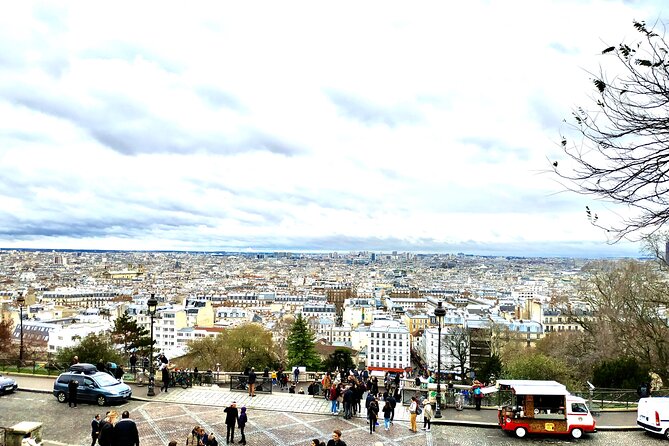
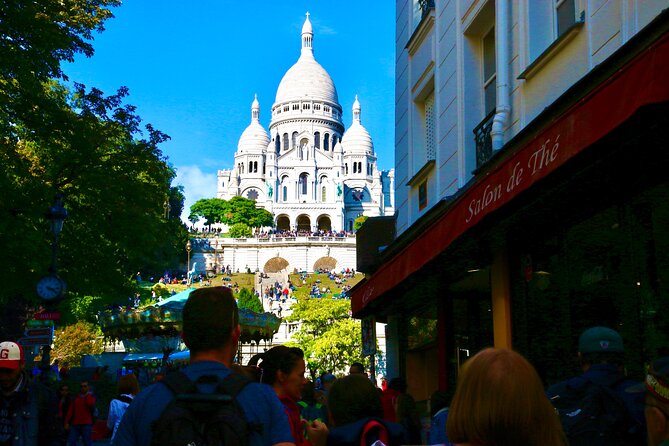
You begin in Montmartre territory, where Paris feels like it’s still made of neighborhoods instead of landmarks. The tour starts by passing an old theatre of Montmartre, then moves right into Basilique du Sacré-Cœur.
Sacré-Cœur is the kind of place where “just seeing it” can be underwhelming unless someone helps you read it. Here, the guide covers the key stories and history, and there’s a chance to go inside if time and queues allow. When the queue is reasonable, walking in can be worth it because it turns a big photo backdrop into a lived-in building with context. If the line is long, you’ll still get the explanation and the exterior viewpoints—just with more emphasis on the story than the interior.
Next comes Montmartre itself: winding lanes and old streets where painters once walked. You’re not doing this as a checklist stop. You’re getting the feel of why artists and dreamers were drawn to the area. Even if you’ve seen Montmartre postcards a thousand times, your guide’s route through the back streets tends to show you details you’d miss on your own.
What you’ll like here: this section sets the emotional tone of the day. Hilltop views, older streets, and a guide who can connect the dots between buildings and people make Paris feel less random.
What to watch: Montmartre is hilly. Even if the walk is not described as punishing, you’ll want comfortable shoes. Also, Sacré-Cœur interior access depends on queues, so plan for “depends on time” rather than assuming you’ll be inside.
Arc de Triomphe, Eiffel Tower, and photo time without the altitude pressure
After Montmartre, the tour pivots toward the famous central axis: victory monuments, the main parade avenue energy, and finally the Eiffel Tower.
At Arc de Triomphe, you do not go up. That matters. Climbing adds time, strain, and long lines—none of which fit a tight 4–5 hour plan. Instead, you get the history story and the chance for great photos from street level. You’ll hear who started the Arc (Napoleon) and who finished it—details like that help you look at the monument in a new way rather than treating it like a postcard object.
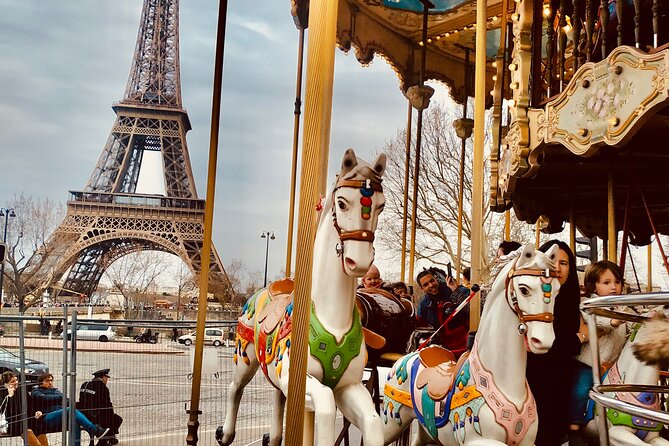
Then the route takes you to the Eiffel Tower. Again: no going inside, and no climbing. The value is in the “how did this become the symbol” story and the timing for photos. When you don’t have to queue for tickets or climb, you can spend more time understanding what you’re looking at.
From there, you pass by Moulin Rouge, with short stop time for photos and stories around the classic Can-Can connection. This is brief by design. If you want a full Moulin Rouge experience (show, inside details), you’ll need to book that separately. The tour keeps moving so you still cover the rest of Paris.
What you’ll like here: seeing Arc and Eiffel without ticket bottlenecks means you’re not trapped. You can enjoy the buildings from the right vantage points and still keep energy for later neighborhoods.
What to watch: if you’re hoping for paid entry experiences at the Eiffel Tower or Arc, this plan won’t match that. It’s built for walking, metro, street-level sighting, and story.
Moulin Rouge to the Latin Quarter and Tuileries: neighborhoods in order
One of the smarter things about this itinerary is how it sequences neighborhoods rather than only bouncing between monuments. After Moulin Rouge, you head into the Quartier Latin, where you’ll hear about the area and see “Latin bars” in the mix—Paris feels more like student streets and lively corners here.
Then comes Jardin des Tuileries. The guide frames it with colorful commentary (including a reference to a famously ruthless French queen) and you get time to take in the garden setting between bigger icon moments. The Tuileries are one of those places where you can go from “I’ve seen this on photos” to “Oh, I get it” quickly when someone gives you the right context.
A quick beat along the Champs-Élysées follows. The guide notes that things may be changing there, and you’ll hear the background stories so it’s not just a walk-by. The stop is short, but that’s part of the point: you get the idea of the avenue and move on before it turns into a long, repetitive strip.
Finally, you reach a run of classic “see it, photograph it, understand it” stops around the central city. Some are identified by function more than by a named ticketed attraction—old structures and recognizable photo spots—so you’re getting the vibe and the standout angles.
What you’ll like here: this is where the tour starts to feel like Paris lives beyond the big statues. You’re not only learning what’s famous; you’re learning why those streets matter.
What to watch: with multiple quick stops, you’ll get the most out of it if you’re ready to listen while walking. If you want long sit-down breaks, you may need to add them after the tour ends.
Seine classics: Île de la Cité, Notre-Dame, and Wallace fountains
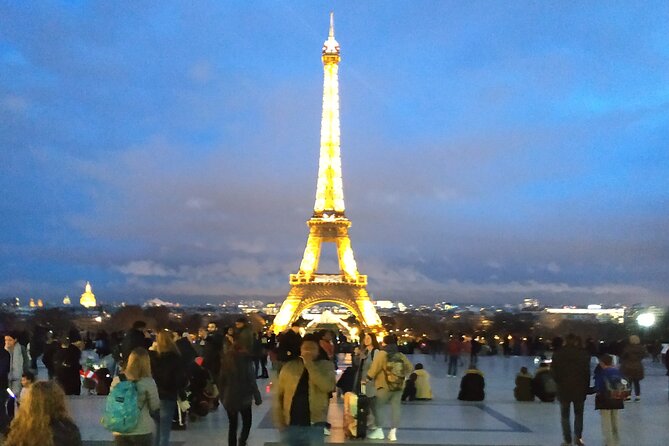
As you move toward the river, you get viewpoints and city texture in a different key. You’ll stop at Le Trocadéro and its esplanade, a classic spot for one of the best Eiffel Tower views. This is a “pause and shoot” moment that helps you reset after the long monument stretch. When the guide explains the area, you’re not just standing in front of a view—you’re learning why it became a go-to spot.
Then the tour threads through several tightly packed photo-worthy historic areas. You’ll see an old palace/castle-like space in the heart of Paris and get pointed out another sight that many people recognize from Emily in Paris. You’ll also have time for what’s described as a massive sundial in history. The key is not the exact label—it’s that you’re walking past high-signal details that you’d likely miss if you were just searching for the next famous name.
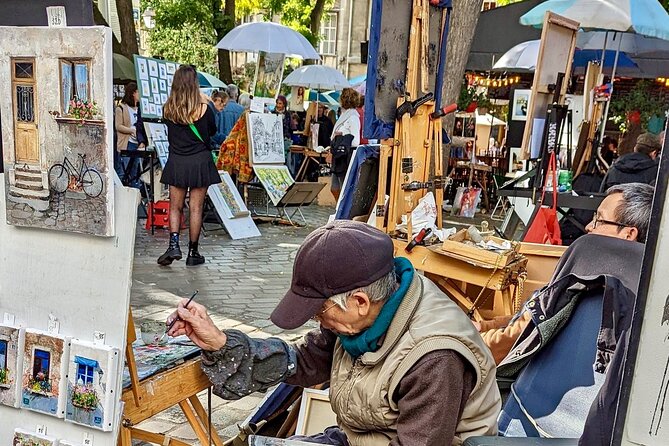
Next up: Place Du Tertre, the artists’ square, where you can watch painters at work and pick up artwork if that’s your thing. The short stop works well here because you get the feel of the area without letting it eat your whole day.
Then you head to Cathedrale Notre-Dame de Paris. The guide points out the scale and complex structure, including the fact that it was nearly destroyed by fire. Even with only sightseeing and photos, this stop is one of those moments where your brain gets quiet for a second. It’s a massive building, and understanding the story behind it changes how you experience the facade and the surroundings.
After that, you’ll see Fontaines Wallace, the recognizable drinking fountains that pop up around the city. These are small enough to miss if you’re rushing, but when you learn what they are and why they exist, they become one of those charming Paris details that makes your photos feel more local.
Then comes Île de la Cité, the island at the heart of Paris, with more photo time. This part of the route helps connect Notre-Dame to the broader Seine area so the city feels like one continuous story rather than isolated stops.
You’ll also get a stop tied to film culture: Café des Deux Moulins on Rue Lepic is mentioned as a location where a famous French film was shot. Even if film isn’t your main interest, it’s a fun reminder that Paris landmarks live in pop culture too.
You can also read our reviews of more guided tours in Paris






The Paris metro subplot: Easy Pass, zones 1–2, and not getting stuck
You’ll ride the metro several times during the tour. The metro is the fastest way to cover distance without turning this into a blisters-only day, but it can also be confusing if you’re new to ticket types.
Here’s the practical reality: the tour does not include the metro fare itself. You need an EASY PASS card that costs €12, and you should top it up with a MOBILIS ticket for zones 1&2. The guide can help you figure out how it works on the route, but you’ll still want to show up prepared with the right card and top-up so your group isn’t delayed.
This is exactly where the tour can be worth the price even if you already plan to walk many sights on your own. Learning metro logic with a guide saves time and avoids the anxiety of buying the wrong ticket at the wrong moment.
What you’ll like: after one guided practice session, you usually start to understand how transfers and stops work. You can then use that knowledge for the rest of your trip.
What to watch: the Easy Pass has to be purchased and topped up. If you arrive late or forget it, the tour can’t magically fix that. Bring time to handle it before you meet.
Service animals are allowed on the tour, and you’ll be near public transportation for meeting and routing, which helps if you’re trying to plug the tour into the rest of your day.
Price and logistics: what $75.41 buys you (and what it doesn’t)
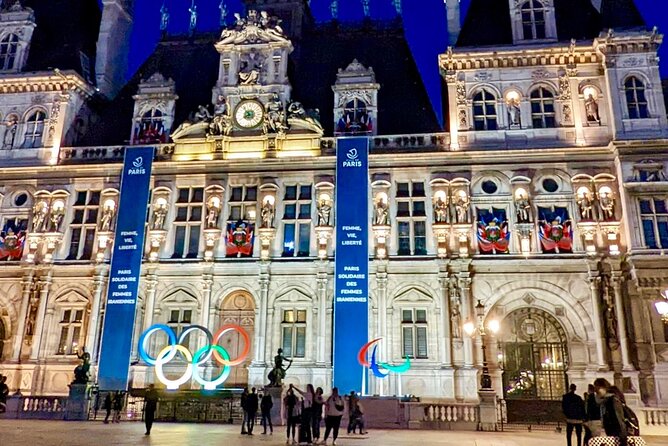
At $75.41 per person, you’re paying mainly for three things: a licensed guide, an organized route that mixes walking and metro, and the time-saving structure of hitting many sights in one run.
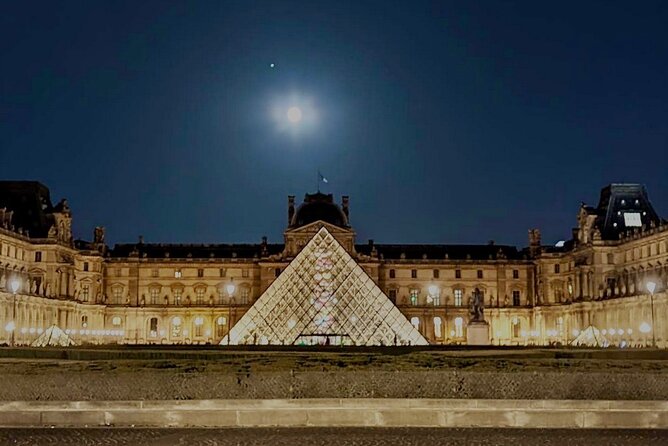
Most of the key sightseeing stops are listed as free admission for what you’re doing (viewing, exterior time, and select chances like Sacré-Cœur interior depending on queues). The big exceptions are the ones where the tour is clear about what it does not do. For instance, it does not include going up the Eiffel Tower or entering the Louvre. And Moulin Rouge is specifically marked as not included—so this is more about stories and quick exterior time than a ticketed show.
So the value question is simple: if you want a narrated day that handles navigation and pacing, this price can feel fair. If you want ticketed entry into multiple paid attractions, you’ll likely spend extra anyway—either on your own during the tour or on a separate tour later.
Group size also plays into the value. A max of 15 helps keep the experience from turning into a noisy stampede. In several positive experiences, guides are praised for being upbeat, patient, and good at keeping people engaged, including helping families and handling small diversions when the group wanted it.
Tips so you enjoy every stop (instead of rushing through Paris)
1) Wear shoes that work for hills. Montmartre is part of the plan, and the streets twist and climb. You want comfort more than style.
2) Bring a camera, but don’t only chase photos. The stories at Arc and Eiffel are what make the photo stops feel meaningful rather than repetitive.
3) Expect a queue variable at Sacré-Cœur. The tour says interior access depends on time and queue. If you don’t go inside, you still get the key history.
4) Think “listening while walking.” Many stops are short. Give the guide your attention so the day becomes a coherent narrative.
5) Have a plan for after the tour near the Louvre. Ending near the Louvre is handy. Use that to avoid spending the evening in transit.
If you’re traveling during a period when the city may close down big areas for celebrations, keep your itinerary flexible. The tour can only work with what’s open, and guide experience shows up when routes need adjustment.
Should you book this Paris walking tour?
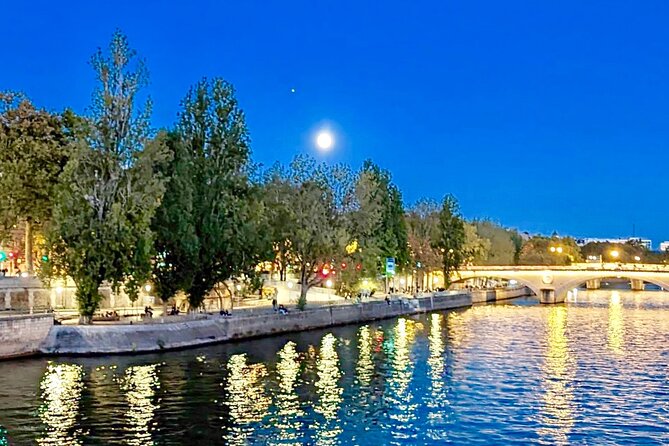
I’d book it if you want a guided day that gives you strong bearings fast: Montmartre up top, central Paris icons at street level, then the Seine and Notre-Dame scale without requiring you to buy several major attraction tickets. It’s also a good choice if you want metro confidence, because the plan includes multiple rides and the specific Easy Pass approach you’ll need.
Skip it if you want lots of paid entry experiences (going up towers, entering the Louvre, or a full Moulin Rouge ticketed evening). This tour is built for sightseeing, stories, and navigation, not for collecting attraction stamps.
If your ideal Paris day is structured but not rigid—small group, licensed guide, lots of photo opportunities, and a practical route you can build from—this one makes sense.