REVIEW · PARIS
2-Hour Private Paris Champs-Élysées Walking Tour
Book on Viator →Operated by Paris in person · Bookable on Viator
Champs-Élysées looks different when someone explains it. This private 2-hour walk turns the famous boulevard into a clear story, from Place de la Concorde through Petit Palais, Grand Palais (outside viewing), and on to the Arc de Triomphe. I especially like the art historian approach, and how the guide adapts the pacing to your group, so it feels personal instead of rushed. One thing to keep in mind: the meeting point details can be a little tricky, so double-check the location on the map before you go.
You’ll cover the big architectural moments at a comfortable walking pace, with most stops free to view. You’re not stuck reading panels or guessing what you’re looking at, which is exactly why a guide helps here—this area is visually grand, but the connections aren’t obvious at first glance. If you’re hoping to spend lots of time inside major monuments, note that the tour keeps things focused on exteriors, and the Arc de Triomphe ticket is not included.
In This Review
- Key highlights worth your time
- Why this private Champs-Élysées walk is good value
- Starting at Place de la Concorde: your orientation point
- Petit Palais: the ornate counterweight to the Grand Palais
- Grand Palais from the outside: why exterior viewing still works
- Champs-Élysées itself: walking the boulevard with an art historian
- Arc de Triomphe finish: the view you’ll understand better
- What your guide adds (and why it’s the most praised part)
- How to customize this walk to match your interests
- Price and logistics: what the $355.04 per group really means
- Meeting point, end point, and how to arrive with less stress
- Who should book this tour (and who might not)
- Should you book the 2-hour private Paris Champs-Élysées walking tour?
- FAQ
- How long is the tour?
- Is this tour private?
- What language is the tour offered in?
- What’s included in the price?
- Is food or drinks included?
- Is the Arc de Triomphe ticket included?
- Where does the tour start and end?
- What is the cancellation policy?
Key highlights worth your time
- Private group of up to 6 means questions don’t get lost in the crowd.
- Art historian guide gives context for what you’re seeing along the boulevard.
- Grand Palais is exterior-only on this route, so you’ll get architecture views without extra ticket time.
- Most stops are free to view (including Place de la Concorde, Petit Palais, and Grand Palais outside).
- Arc de Triomphe is the big payoff at the end, with ticket entry not included.
- English mobile ticket and a near-transit meeting area make it easier to plan.
Why this private Champs-Élysées walk is good value
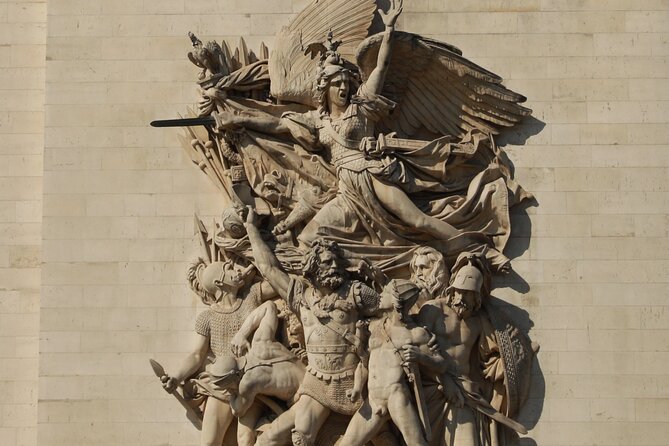
Paying for a guide on Champs-Élysées can feel optional—after all, you can walk it yourself. But what you’re really buying here is interpretation: the guide helps you connect buildings, design choices, and the boulevard’s role in the city’s identity. When the “why” clicks, the “wow” lasts longer.
The tour is priced per group (up to 6), so it can be good value if you’re traveling with family or friends. With a group of 6, the cost works out to roughly $59 per person, which is often less than what many people spend on separate city tickets and audio tours. Even with fewer people, the private format matters here because Champs-Élysées moves fast and the best stories get lost if you’re just following the flow.
Also, this is a 2-hour experience. That’s a sweet spot for first-timers and people who don’t want to turn one neighborhood into a full-day commitment. You’ll see the major names, get the meanings, and still have energy left for dinner plans.
You can also read our reviews of more walking tours in Paris



Starting at Place de la Concorde: your orientation point
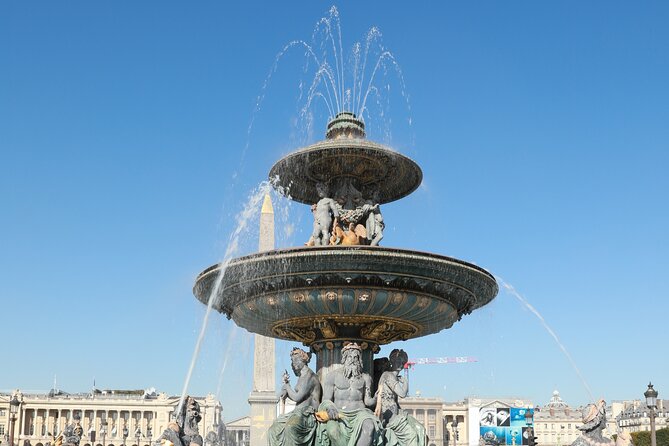
Your walk begins at Place de la Concorde, one of the key civic spaces in Paris. It’s the kind of square that makes you look up fast—architecture, streets, and the way the space is laid out all signal that you’re entering a “main character” part of the city.
With about 30 minutes here, you’re not treated like a quick photo-stop. The guide’s job is to help you read the square: how it functions as a junction, why it feels so important, and what the surrounding design says about Paris at the grand scale. If you’re new to Paris, this stop helps you stop “collecting monuments” and start understanding the city layout.
Practical tip: arrive a few minutes early, and take a moment to orient yourself before the walking begins. Place de la Concorde is not a sleepy square. Once you know which direction the boulevard pulls you, the rest of the route feels logical.
Petit Palais: the ornate counterweight to the Grand Palais
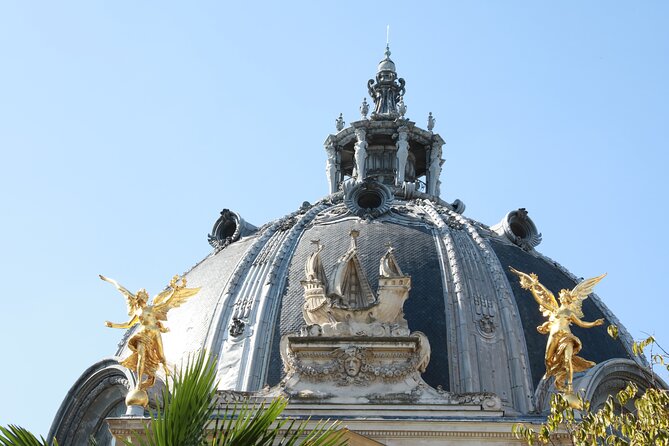
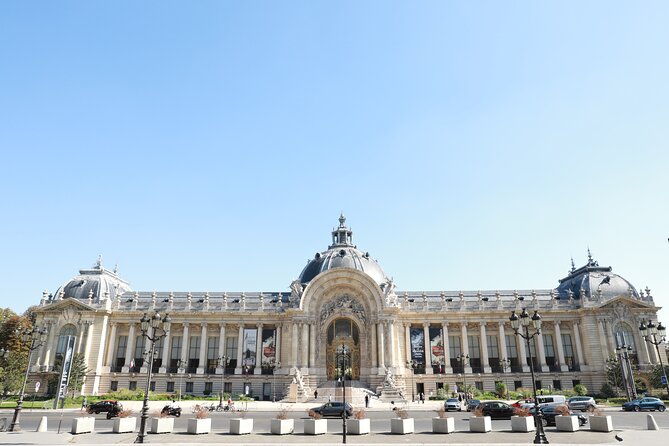
Next comes Petit Palais, a smaller, more delicate-looking counterpart in the same architectural family. You’ll spend around 10 minutes here, which means you won’t get lost in details, but you will learn how to spot what makes it different.
Petit Palais often reads as lavish and decorative, and that matters because it sets up the contrast you’ll see at Grand Palais right after. The guide helps you understand why Paris placed these kinds of buildings side by side: it’s not random, it’s a designed relationship in the city’s visual language.
This is also a good moment for you to practice the tour’s main skill: look first, then listen. When you know what the guide is pointing at—forms, proportions, and the “message” of the façade—you start seeing it in your photos instead of just capturing a pretty wall.
Grand Palais from the outside: why exterior viewing still works
You’ll then reach Grand Palais, but with an important detail: the tour stays outside. You’ll spend about 10 minutes and won’t enter as part of this experience, because entering Grand Palais is treated as a separate visit on its own.
That might sound limiting, but it actually fits the point of this tour. Grand Palais is imposing from the street, and you can appreciate the shift in scale compared to Petit Palais without adding another ticket window, security line, or time pressure. If your goal is to understand the architecture of this corridor, exterior time is often the right choice.
The guide’s context makes the building feel more than a landmark. You learn what makes it stand as a major architectural work from the turn-of-the-century Paris era, and you connect it to the broader story of the boulevard’s prestige. You’ll leave with a mental checklist for what to notice when you pass it later on your own.
Champs-Élysées itself: walking the boulevard with an art historian
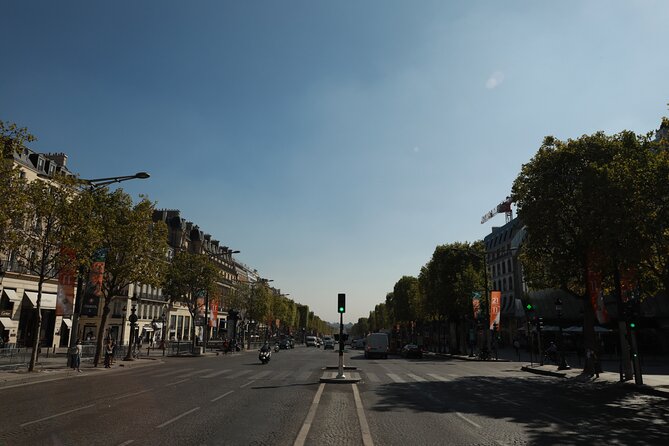
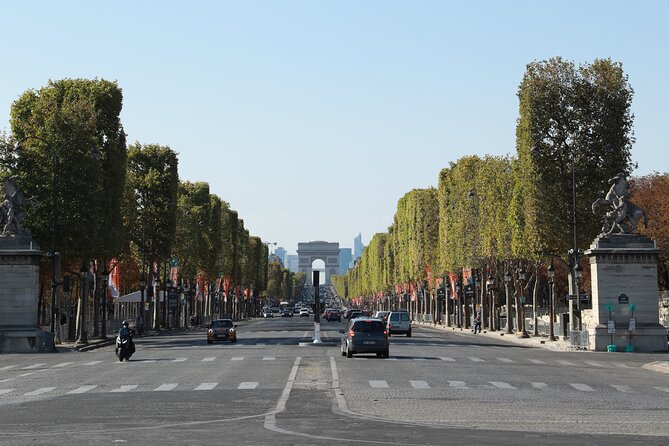
Now you get the main event: Champs-Élysées. This part lasts about 30 minutes, which is long enough to take it in without turning it into a long haul. It’s also long enough for the guide to point out what makes the avenue feel iconic beyond the obvious storefront factor.
This is where the art historian angle shines. The boulevard can feel like one big shopping street if you’re not sure what you’re looking for. With the guide, you start noticing how the design and alignment create a sense of ceremony, how the buildings contribute to the boulevard’s image, and why this stretch has become a symbol people carry home in their heads.
Practical tip: wear comfortable shoes. Even at a “two-hour tour” length, Champs-Élysées is still a lot of walking for one sitting, and Paris sidewalks can vary. Bring your phone charger if you’re the type who will keep photographing as the stories make everything click.
You can also read our reviews of more private tours in Paris






Arc de Triomphe finish: the view you’ll understand better
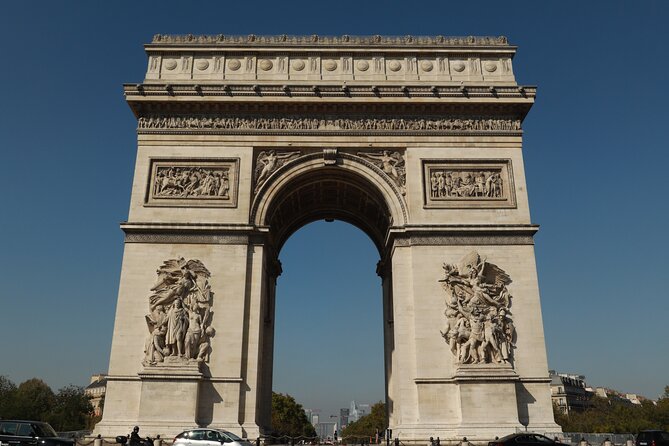
At the end you’ll reach the Arc de Triomphe, where the tour spends about 20 minutes. It’s described as the world’s largest triumphal arch, and that size is exactly why it works as the finish: the walk becomes a full visual arc, and the destination feels earned.
One key note for expectations: the Arc de Triomphe ticket is not included. That means you’ll get the experience of being at the monument and absorbing its presence, but you may need a separate ticket if you want to go inside or access viewpoints that require entry.
Still, a guide visit helps here because it turns the arch into a final chapter instead of a random stop. When you understand how the boulevard frames the city’s grand ambitions, you don’t just see the arch—you get the relationship between avenue and symbol.
What your guide adds (and why it’s the most praised part)
The biggest praised aspect is the guide quality: patient, polite, and able to explain things in a way that sticks. One example mentioned is a guide described as a wonderful Serbian woman who taught a lot about how this iconic area developed. Another guide name you may see referenced is Hannah, noted for making the experience fun and engaging.
You’ll also benefit from the private format in a very practical way. With a small group, the guide can slow down when you look confused, answer follow-up questions, and adjust explanations to your interests. If you’re traveling with kids, the guide style described as funny and great with children is a real plus because it keeps attention from drifting in an area that can feel repetitive without context.
If your travel style is hands-on learning—stop, look, ask, connect—that guide-driven structure is exactly what you want on a first visit to this corridor.
How to customize this walk to match your interests
This is a private tour, so you can tailor it to what you care about most. The core route is fixed around the big names, but the guide can shift emphasis: architecture over shopping, urban design over photo spots, or big-picture development over decorative details.
Here are a few ways to make it pay off:
- Tell the guide what you want more of: architecture, political symbolism, or how Paris built its grand avenues.
- Ask for a quick “what to notice” checklist for Champs-Élysées so you keep spotting details after the tour.
- If you’re moving slower, say so early. A private guide can pace you better than a group tour.
This is also a good time to plan for your day. If you know you want to see other nearby sights afterward, ask the guide for direction once you’re near the end. Even simple advice like which streets to use can save time later.
Price and logistics: what the $355.04 per group really means
The price is $355.04 per group, for a private tour up to 6 people, lasting about 2 hours. That’s not a “cheap walk,” but it’s not priced like a full-day concierge either.
To judge value, I think about two things: time saved and clarity gained. You’re spending a modest amount of money to avoid hours of wandering without understanding. And because it’s private, you’re not competing for attention with strangers. If you and your group value guided interpretation, this cost can feel reasonable fast.
What’s not included is also clear. Food and drinks are not part of the tour, and Arc de Triomphe entry is not included. If you plan to do monument entry afterward, budget separately so the day doesn’t surprise you.
Meeting point, end point, and how to arrive with less stress
You start at Place de la Concorde, 75008 Paris and the tour ends at 5202 Pl. Charles de Gaulle, 75008 Paris. The tour is offered in English, uses a mobile ticket, and is near public transportation.
One small caution based on common planning pain: the meeting address shown can be confusing if you rely only on a text description. It’s wise to open the meeting location on Google Maps right before you leave. Stand at the correct spot before your guide arrives, and you’ll avoid the scramble that comes with mismatched expectations.
If you’re bringing a service animal, service animals are allowed. The tour also notes moderate physical fitness is recommended, which usually means comfortable walking shoes and the ability to spend roughly two hours moving through a busy area.
Who should book this tour (and who might not)
This tour fits best if you want a first-time or orientation experience along a major Paris corridor. I’d especially recommend it if you:
- enjoy architectural stories and want a framework for what you see
- prefer private learning over following a larger group
- want a confident walk from major landmarks without planning every turn
- are traveling with kids and want a guide who can keep things fun and easy
You might choose something else if you want long indoor museum time or multiple monument entries. Since Grand Palais is outside-only and Arc de Triomphe entry isn’t included, this route is best for people who want guided understanding and landmark viewing, not a schedule packed with ticketed interiors.
Should you book the 2-hour private Paris Champs-Élysées walking tour?
Yes, if your goal is to understand Champs-Élysées instead of just walking it. The combination of private, an art historian guide, and a tight route from Place de la Concorde to the Arc de Triomphe makes it a smart use of limited time in Paris.
Book it when you want clarity, not just photos. And do it with one expectation in mind: you’re getting an exterior-focused, guided story on a famous boulevard, not a ticket-based monument sprint.
If you’re ready to turn Paris sightseeing into a connected narrative, this is a good bet.
FAQ
How long is the tour?
It lasts about 2 hours.
Is this tour private?
Yes. It’s a private tour/activity, and only your group participates (up to 6 people).
What language is the tour offered in?
The tour is offered in English.
What’s included in the price?
Included are a professional art historian guide and the fact that it’s private.
Is food or drinks included?
No. Food and drinks are not included.
Is the Arc de Triomphe ticket included?
No. Admission to the Arc de Triomphe is not included.
Where does the tour start and end?
It starts at Place de la Concorde, 75008 Paris and ends at 5202 Pl. Charles de Gaulle, 75008 Paris.
What is the cancellation policy?
You can cancel for free up to 24 hours in advance for a full refund.