REVIEW · PARIS
WW1 Somme Battlefields – Private tour from Paris aboard a Van (2 pax)
Book on Viator →Operated by ADRIAN ROADS · Bookable on Viator
One early start. Real perspective on July 1916. This private Somme day uses a private van and a driver-guide’s storytelling to connect the big plan with the exact places where men suffered, advanced, and died. You’ll move through famous craters, memorials, and two WWI museums that turn distant names into something you can see and feel.
I especially liked how guide Regis kept the narrative clear, with both overview and detail so I always knew why each stop mattered. The day is built around standout interpretation, including the Joe Sacco panoramic mural in Thiepval and the deeper context you get at Péronne. One consideration: it’s a long 12 to 13 hours with a 6:30am start, and lunch is on your own.
In This Review
- Key things that make this Somme day work
- A 6:30am start, and why it’s worth it
- Lochnagar Crater: the tunneling story behind July 1
- Ulster Memorial Tower and Thiepval Wood: standing near the German front line
- The Thiepval museum stop: Joe Sacco’s panorama and a sense of time
- Beaumont-Hamel: walking preserved trenches at Newfoundland Memorial Park
- Delville Wood War Memorial: South African sacrifice and symbolism
- Péronne’s Historial: a museum built for how war felt
- The drive, the pacing, and where lunch fits
- Price and value for a 2-person private group
- Who should book this Somme private van tour
- Should you book it?
- FAQ
- How long is the Somme battlefields private tour?
- Is this tour private or will I share it with other people?
- Where does pickup in Paris happen?
- What time does the tour start?
- What language is the tour offered in?
- Are museum admissions included?
- Is lunch included?
- Does the tour use a mobile ticket?
- Is there free cancellation, and how late can I cancel for a full refund?
Key things that make this Somme day work
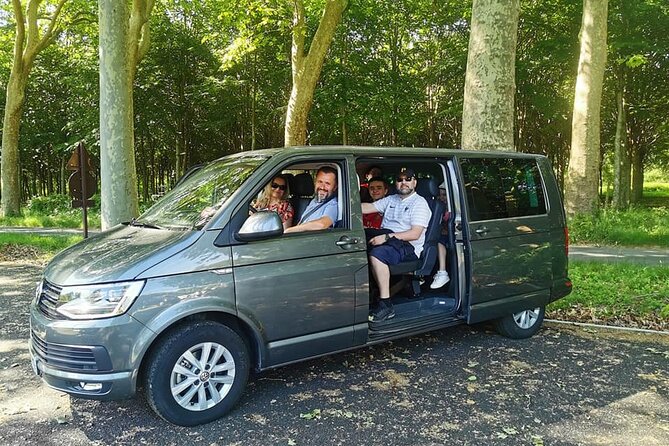
- Private van from Paris keeps the logistics easy for a long day
- Lochnagar Crater shows how the battle began with tunneling and an explosive charge
- Ulster Memorial Tower and Thiepval Wood put you near the German front line and key ridge fights
- Museums at Thiepval and Péronne help you connect what you see outside to what happened inside the war machine
- Beaumont-Hamel Newfoundland Memorial includes preserved trenches you walk through, with the scars still visible on the ground
- A South African memorial at Delville Wood adds another front-line viewpoint beyond the usual single-nation focus
A 6:30am start, and why it’s worth it
This tour is set up for people who want a focused day without wrangling schedules. Pickup runs from specific Paris districts (75008, 75007, and 75016), and the start time is 6:30am, so you leave while roads are calmer and the day is still fresh. You’re in an air-conditioned vehicle, which matters when you’re doing a lot of stops across the Somme region.
The big advantage of the private format is time. You’re not waiting for a big bus group, and you can ask the guide questions as you go. That’s how the day turns from a checklist into something more personal and understandable.
The tradeoff is simple: it’s long. From the moment you leave Paris, you’re committing to a full day (about 12 to 13 hours). If you need downtime, plan for it, and be realistic about how much moving and standing you can handle.
You can also read our reviews of more private tours in Paris



Lochnagar Crater: the tunneling story behind July 1
Lochnagar Crater is one of those places that looks like a science problem turned into history. You’re taken to the huge mine crater created near La Boisselle, detonated on the first day of the Battle of the Somme (July 1, 1916). The point here isn’t just the size of the crater—it’s the method behind the opening assault.
This mine was named after Lochnagar Street, a British trench linked to the work of the Tunnelling Companies of the Royal Engineers. The shaft was dug about 90 feet down into chalk, then stretched roughly 300 yards toward the German lines. Explosives—60,000 lbs (about 27 tons) of ammonal—were placed into two large underground chambers, spaced about 60 feet apart, with the aim of destroying the German strongpoint called Schwaben Höhe.
What I like about starting here is that it gives you a framework for the whole day. Once you understand that the battle’s opening was engineered underground, the rest of the memorial sites make more sense. You’re not just looking at static monuments; you’re seeing the “why” behind positions and losses.
Since the admission ticket for this stop is listed as free, your main focus is on the walking, the viewing time, and the guide’s explanation. That 10-minute window can feel short, so listen for what the guide highlights first.
Ulster Memorial Tower and Thiepval Wood: standing near the German front line
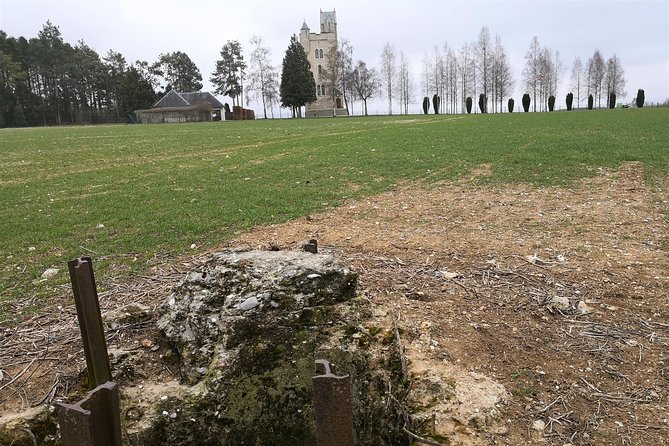
Next comes the Ulster Memorial Tower and the area around Thiepval Wood. This spot is especially powerful because the tower stands on what was the German front line during the main months of the Battle of the Somme. It was erected on the site of the Schwaben Redoubt, a fortified position the Ulster Division eventually captured.
Opposite is Thiepval Wood, tied to the famous charge made by the 36th (Ulster) Division on July 1, 1916. Standing here, you get an immediate sense of how close the sides were—and how deadly “distance” really was in trench war. Your guide’s commentary is what turns the geography into meaning: where the attackers moved, what the defenses looked like, and why particular objectives mattered.
The stop runs about 30 minutes, and admission is free. That gives you enough time to orient yourself, take in the tower setting, and then absorb the historical context from the guide. If you want to understand the Somme as a fight for ridges and positions rather than a single dramatic moment, this is a key stop.
The Thiepval museum stop: Joe Sacco’s panorama and a sense of time
After the outdoor sites, the day shifts into interpretation at the Historial de la Grande Guerre museum in Thiepval. This museum stop is listed as about 30 minutes, with admission included. Even in a short visit, it works because it gives you visual tools to “read” what you just saw.
You’ll start with a large animated map, plus period photographs and film, which helps you place the battle in motion. Then the museum opens onto a major panoramic mural by illustrator Joe Sacco. The mural depicts the harrowing day of July 1, hour after hour, and it’s reproduced across 60 meters of back-lit glass. That format matters: it’s less like a single painting and more like a timeline you can stand in front of.
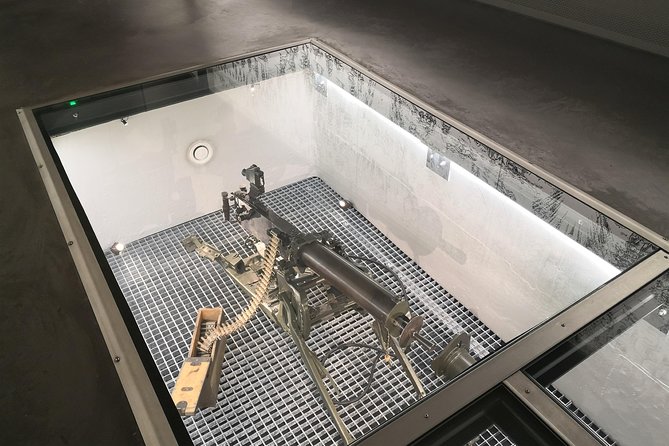
In the central hall, there’s also a display pit covered by glass showing collection pieces and archaeological remains—small evidence that brings home how much was buried, recovered, and studied. The museum also includes short videos that add background through commentary, archive footage, and educational animations.
One detail I appreciated is the Maxim machine gun captured by a British regiment at Thiepval. It’s a reminder that the German defenses weren’t vague or generic; they were built for killing at close range. Finally, the museum covers how aviation changed war and how figures like the “Knights of the Sky” emerged even as mass death continued.
This stop is a smart use of time because it prevents a common mistake: seeing memorials as isolated scenes. After Thiepval, you’ll have a better sense of sequencing—what happened first, what came next, and how plans collided with terrain and firepower.
Beaumont-Hamel: walking preserved trenches at Newfoundland Memorial Park
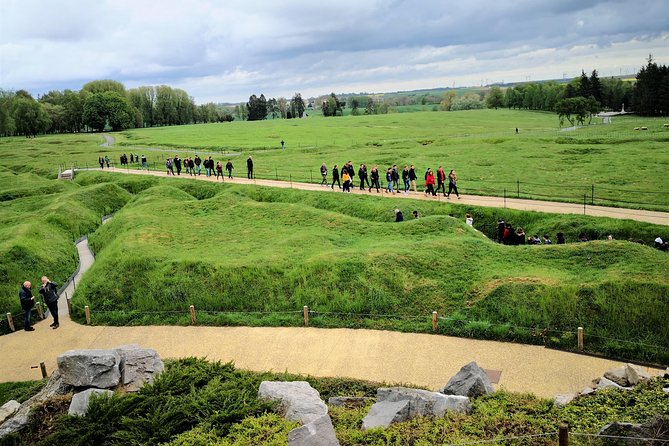
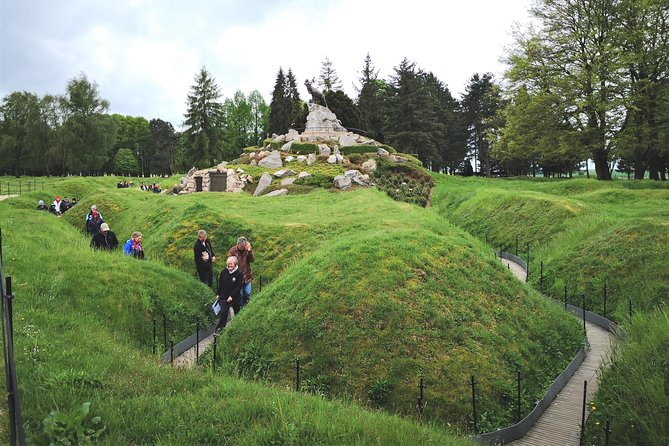
Beaumont-Hamel is where the Somme stops being abstract. The stop at Memorial Terre-neuvien de Beaumont-hamel takes you to the Newfoundland Memorial Park in Beaumont-Hamel. A large portion of the battleground is preserved, so you can walk through a network of trenches that now feel eerily calm.
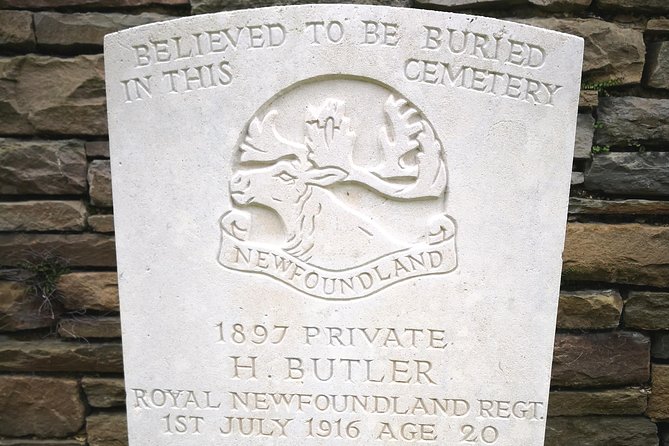
This is a memorial site dedicated to forces from the Dominion of Newfoundland who were killed during World War I. The preserved area covers the grounds where the Newfoundland Regiment’s attack on July 1, 1916 failed on the first day of the Somme offensive.
Your guide explains the timeline of the attack—orders to move forward at 8:45 a.m.—and the scale of what happened after. From the 780 men who went forward, only about 110 survived unscathed, and only 68 were available for roll call the next day. Hearing those numbers in a preserved trench system changes how you interpret the names. It turns casualties into a physical reality.
You get about 1 hour here, and the admission ticket is listed as free. That longer window is important. The point isn’t to rush to a viewpoint. It’s to walk slowly enough to understand trench lines, field edges, and the sense of how far men had to go under fire.
If you’re prone to getting overwhelmed by serious sites, take breaks. This is moving country, and it’s okay to pause and breathe.





Delville Wood War Memorial: South African sacrifice and symbolism
Then you head to Delville Wood for the South African memorial. This stop marks the role played by South African forces in the Battle of Delville Wood, part of the broader Somme offensive. It’s also tied to a first major action for South Africa in Flanders and France, which gives this memorial a slightly different emotional tone than some others on the Somme circuit.
The memorial includes multiple commemorations, including participation at the Battles of Arras and Passchendaele as well. That broadens the meaning beyond a single day, while still grounding you in the Delville Wood connection.
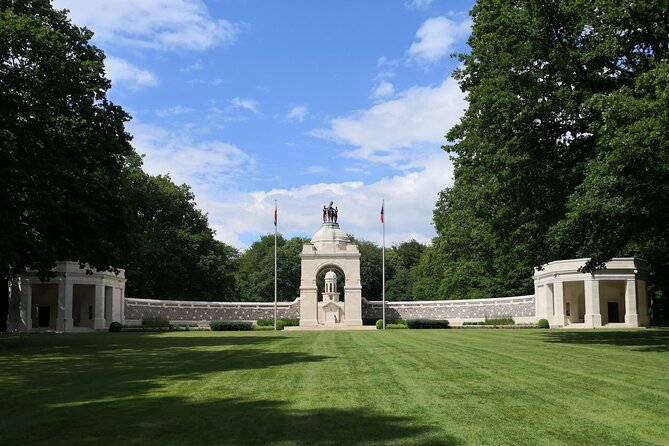
Design details help you read the memorial as more than stone. It was designed by Sir Herbert Baker, with assistant architect Arthur James Scott Hutton and sculpture by Alfred Turner. The structure features a flint and stone screen on either side of an archway, with shelters at each end. On top sits Turner’s bronze sculpture of two men and a war horse, symbolizing Castor and Pollux, representing the two white races of South Africa.
This is one of the stops where symbolism matters because it’s visible and specific. You’ll likely spend about 40 minutes here, with free admission. If you want a tour that includes more than the usual British and French narrative, this stop does that work for you.
Péronne’s Historial: a museum built for how war felt
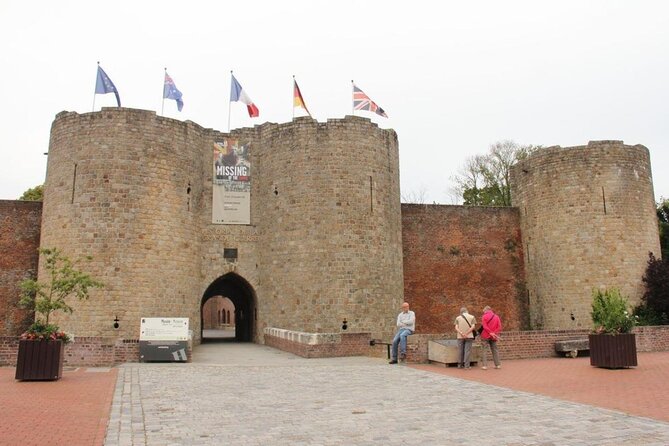
After lunch (not included), the day ends at the Historial in Péronne. This is about 1 hour with admission included, and it’s housed in a 13th-century medieval castle—a striking setting that makes the museum’s subject feel both older than you expect and shockingly modern in its impact.
The museum is known for looking at WWI in cultural, social, and military terms. Instead of focusing only on tactics, it explains what life was like at the front and how entire societies were pulled into war. That’s a key reason this stop adds value after all the exterior memorials. You can see the trenches outside, then learn how people lived inside the machine.
One feature worth noting is the museum’s permanent collection of trench artists, including Otto Dix, with graphic etchings documenting atrocities. There’s also an emphasis on how the front affected different populations: soldiers of various nationalities shown through mannequins in uniform with personal effects, and displays that symbolize the Somme territory cut up by trenches.
You’ll also encounter weapons and equipment in the galleries, placed in pits to show suffering and common experience. Civilians appear in wall cabinets, separated into sections for Germany, France, and Great Britain. It’s a big museum idea delivered through lots of physical detail, so even a short visit can hit you in multiple ways.
The style here is emotionally honest. It doesn’t treat the Somme like a battlefield diorama. It frames the war as a total system—built for mass movement and mass loss.
The drive, the pacing, and where lunch fits
The day runs across a wide area, so your time in the van isn’t wasted but it is time. You’ll be in transit between stops, then doing short focused visits—like 10 minutes at Lochnagar Crater, around 30 minutes at Thiepval and Ulster Tower, and longer walking time at Beaumont-Hamel.
What I like about this pacing is that it respects attention span. You get several “anchors” through the day rather than one long museum marathon. You also get outdoor immersion where it counts: you walk trenches at Beaumont-Hamel and you stand in the memorial settings that explain themselves once you’ve heard the guide’s context.
Lunch is not included. The practical move is to plan for a meal that doesn’t take too long, because the day still needs to finish strong at Péronne. If you don’t want to lose momentum, bring your own water and keep a small snack strategy for the long gap before lunch.
Price and value for a 2-person private group
At $976.96 per group (up to 2 people), this is not a budget tour. But the value is in what you’re actually buying: round-trip private transport from Paris with a driver-guide, plus museum admissions at Thiepval and Péronne.
Here’s the simple math you should do in your head. If you’re traveling as a pair, you’re effectively splitting the cost of your private vehicle. If you were to cover the same stops with separate train tickets plus timed admissions and transfers, you’d spend a lot of energy—and probably still end up with awkward timing.
Also, two museum admissions are included, and multiple outdoor sites have free admission tickets listed. The real “premium” here is the full-day routing and the guide’s commentary that ties the stops into one story. Based on the guide experiences described (including name Regis and the way he connected big picture with on-the-ground details), the tour’s best asset is the person speaking while you’re looking at the ground.
One more small value point: the pickup is offered only in certain Paris districts, which reduces delays and keeps the day on track. If you’re outside those areas, you’ll likely need another plan.
Who should book this Somme private van tour
This tour fits best if you want structure without feeling rushed by a large group. The private format suits couples, history-minded friends, or anyone visiting Paris who wants a serious day trip with minimal hassle.
It also helps if you like interpretation. The day pairs memorial sites with museum stops—especially the Joe Sacco panorama and the Péronne Historial—so you don’t just see places, you understand them.
If you’re new to WWI, this pacing can be a gentle on-ramp because the guide gives context as you go. If you already know WWI history, you’ll still likely appreciate the specific geography and memorial focus, plus the museum’s attention to how war affected different groups.
Should you book it?
I’d book this if you want a single, well-run day that covers the Somme’s biggest emotional and historical checkpoints with private transport and admissions where they matter most. The mix of outdoor memorial geography and two museum interpretations makes the day easier to understand afterward, not just harder to forget.
I’d hesitate if you’re sensitive to long days or very early starts. Also, if you need lunch included to feel comfortable with your schedule, this one requires a little self-planning. But if you can handle a full day and you want the Somme explained as a connected story, this is one of the strongest ways to do it from Paris.
FAQ
How long is the Somme battlefields private tour?
It runs about 12 to 13 hours.
Is this tour private or will I share it with other people?
It’s private. Only your group participates.
Where does pickup in Paris happen?
Pickup is offered in these Paris districts only: 75008, 75007, and 75016.
What time does the tour start?
The start time is 6:30am.
What language is the tour offered in?
The tour is offered in English.
Are museum admissions included?
Yes. Admission to the Historial of the Great War Museum in Péronne is included. Admission to the Historial de la Grande Guerre in Thiepval is also included (as listed).
Is lunch included?
No. Lunch is not included.
Does the tour use a mobile ticket?
Yes. A mobile ticket is offered.
Is there free cancellation, and how late can I cancel for a full refund?
Free cancellation is available. You can cancel up to 24 hours in advance for a full refund.