REVIEW · PARIS
The French Revolution: Self Guided Audio Tour of Paris
Book on Viator →Operated by VoiceMap Audio Tours · Bookable on Viator
Paris has a way of telling stories in stone. This self-guided French Revolution audio walk links famous sites in the Marais to the events that changed France. I love the turn-by-turn GPS playback that keeps you moving without fuss, and I like the offline access to audio and maps so you can save your phone data. One watch-out: you’ll need to bring your own smartphone and headphones to enjoy the narration.
The route is short enough to fit into a single outing, but it covers a lot of ground and ideas. You start at Place de la Bastille, where the prison was stormed, then you work your way past key civic and church landmarks into the legal heart of Paris at the Palais de Justice.
At around 1 hour 30 minutes to 1 hour 45 minutes, this works best when you’re ready to walk at your own pace and listen along the way. It’s not a ticketed museum day, so the value comes from the audio route and the context it gives you outdoors.
In This Review
- Key Things to Know Before You Start
- Marais to Palais de Justice: a Revolution story you can walk
- Stop-by-stop: what you’ll learn on the Bastille to Palais de Justice route
- Place de la Bastille: the opening spark
- Place des Vosges: from monarchy to republic in public view
- Cour et Jardin de l’Hôtel de Sully and the Hôtel de Sully story
- Place Sainte-Catherine and Saint-Paul of Saint-Louis
- Musée Carnavalet area: confiscations and changing ownership
- Vestige de la Petite Force: bread prices and worker pressure
- Saint-Paul of Saint-Louis again: moral struggle meets local reality
- Hôtel de Sens: aristocracy, architecture, and the hit that comes for power
- Hôtel de Ville (City Hall) and the courtyard
- Square of Saint-Jacques Tower and the 800-year-old city wall
- Tour Saint-Jacques: a landmark with a Revolution-era lens
- Place du Châtelet: decoding the ornate column’s symbolism
- Pont au Change: history crossing the river
- Palais de Justice (Paris Law Courthouse): the ending convergence
- Why this audio tour feels like good value at $19.99
- Timing, route length, and how to pace your day
- Who should book this French Revolution audio walk
- Should you book this self-guided French Revolution audio tour?
- FAQ
- How much does the French Revolution self-guided audio tour cost?
- How long is the tour?
- What language is the audio available in?
- Can I use the tour offline?
- Does the tour use GPS for playback?
- Where does the tour start and end?
- What’s included in the price?
- What do I need to bring?
- Are museum tickets included?
- Is the experience private?
- What if I need to cancel?
Key Things to Know Before You Start

- GPS-triggered narration helps you follow the route without constant screen-checking
- Offline access includes audio, maps, and geodata, which is great for spotty signal days
- Lifetime access means you can replay it later or use the virtual tour if you want
- Marais-focused route connects major Revolution story beats to the streets you see
- No entrances included keeps the experience flexible if you prefer pass-and-go sightseeing
- Good for teens since it’s easy to manage without a live guide schedule
Marais to Palais de Justice: a Revolution story you can walk
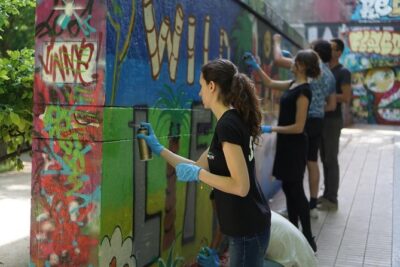
This tour is basically a walking conversation between Paris as it looks today and Paris as it was during the French Revolution. You’re not stuck reading plaques or guessing what mattered. The audio is built around a chain of places, so the political story has a sense of momentum as you move through the city.
The backbone is the Marais district. It’s one of the best areas to use a self-guided format because you can look around while the narration does the heavy lifting. You’ll pass grand squares, courtyards, church buildings, and city institutions that still carry weight—whether or not you already know the history.
What makes this feel practical is the interface: automatic GPS playback and the included maps. You’re not constantly swiping to keep up. You can simply walk, pause if you want a closer look, and let the audio catch you as you reach each stop.
You can also read our reviews of more guided tours in Paris



Stop-by-stop: what you’ll learn on the Bastille to Palais de Justice route
Place de la Bastille: the opening spark
Your starting point is Place de la Bastille, Pl. de la Bastille, 75004 Paris. The audio starts with the infamous political prison of the same name, famously stormed during the Revolution. Even if you only remember the name, it’s a strong place to begin because the whole district gives you that sense of public space and public pressure.
This first segment sets the tone. You’ll hear how a single dramatic event can kick off a longer chain reaction—political, social, and cultural changes that ripple outward. It’s a smart approach for a self-guided audio walk: you get the cause-and-effect frame early, then the tour can keep referencing that framework later.
Place des Vosges: from monarchy to republic in public view
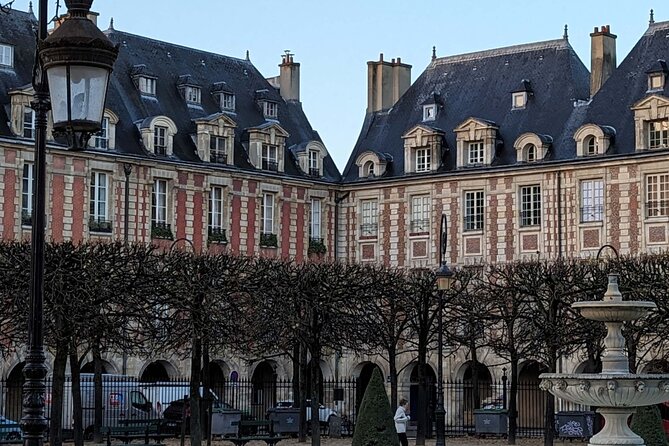
Next up is Place des Vosges, where the narration connects the Revolution’s turning points to a charming, human-scale square. This is where you start noticing how “nice” spaces can still have witnessed major unrest.
You’ll learn how, within only a few swift years, France went through radical shifts from monarchy toward republic. That phrase matters here because it’s easy to treat the Revolution like a single moment. The audio helps you think of it as steps and pivots.
If you want photos, this is a good stop to slow down. Squares like this are built for it, and the historical context gives your pictures more meaning than just pretty architecture.
Cour et Jardin de l’Hôtel de Sully and the Hôtel de Sully story
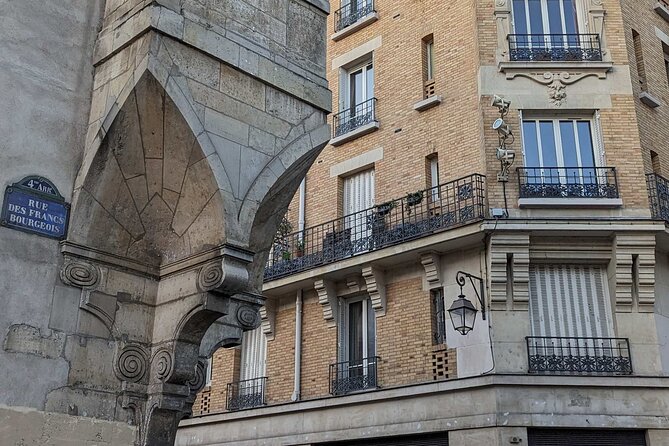
From there, the audio takes you past the Cour et Jardin de l’Hôtel de Sully, an architectural site that hints at medieval layers under later Paris. The tour then zooms in on the Hôtel de Sully and how the French Revolution affected aristocratic properties during the upheaval.
This is one of those sections that works especially well on a self-guided route. You can see the buildings, courtyards, and scale, then the audio explains what that kind of property represented socially. It’s history you can point at.
If you’re the type who likes cause-and-result, this is a strong pairing: physical space on one side, power shifts on the other. And you get to keep your pace instead of rushing through a timed interior tour.
You can also read our reviews of more tours and experiences in Paris






Place Sainte-Catherine and Saint-Paul of Saint-Louis
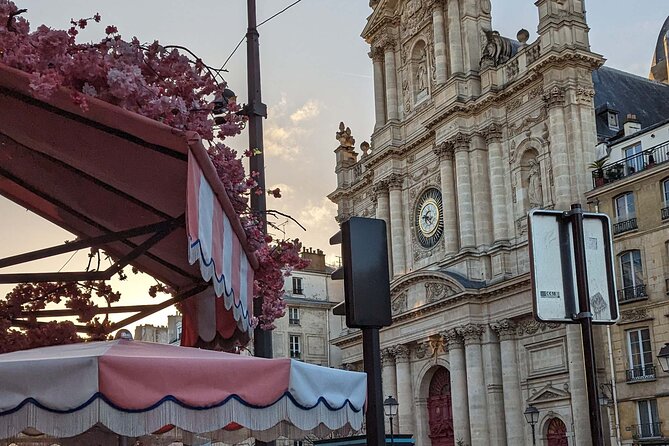
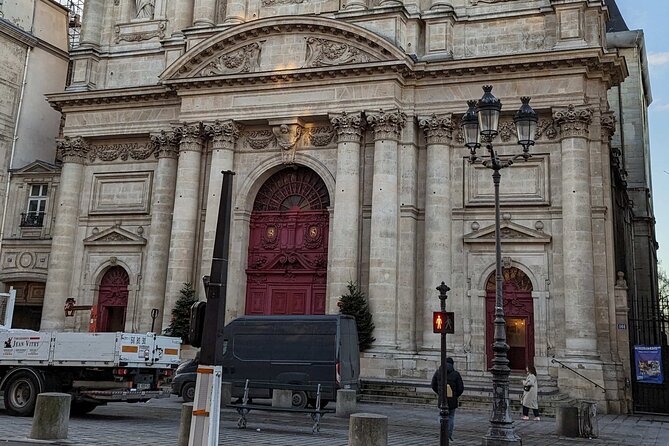
You’ll move toward Place Sainte-Catherine, which has a medieval ambiance. The audio connects this part of Paris to the Parish Church of Saint-Paul of Saint-Louis, where pivotal events unfolded during the Revolution.
This segment is useful because churches show up again and again in Revolution-era stories—but not always in the way you might expect. The audio keeps the focus on moral struggles and political developments linked to the period. That balance helps if you want more than battle anecdotes.
It’s also a good moment to tune your listening. Slow down your walk for a couple minutes here. When you’re near a church, it’s easy to miss small details, and the narration works best when you give yourself time to look.
Musée Carnavalet area: confiscations and changing ownership
The tour passes by Musée Carnavalet with a specific theme: confiscation of buildings from aristocratic owners during the Revolution. Even though you’re not buying museum tickets, you’re still getting the bigger storyline that the museum is known for—minus the time and entry logistics.
That’s a real value angle for this tour. You can get context without committing to a full museum visit. Later, if you decide you want deeper material, you already understand what you’re looking for.
Vestige de la Petite Force: bread prices and worker pressure
One of the more memorable parts of the route is the Vestige de la Petite Force. Here, the audio focuses on what it meant for Parisian workers when bread was priced far beyond reach.
You don’t need a background in economics to grasp the point. The narration links everyday hardship to political pressure. The Revolution wasn’t only about ideas in salons—it also came down to what people could afford to eat.
If you’re traveling with teens, this section often lands well because it connects politics to real life. Food is a universal entry point.
Saint-Paul of Saint-Louis again: moral struggle meets local reality
You’ll also see the Parish Church of Saint-Paul of Saint-Louis referenced again as part of the story. The audio uses the site as an anchor, and it pushes you to see the Revolution as both moral struggle and political change.
This repetition is actually helpful in an audio format. When the same landmark comes up twice, it gives you two different ways to interpret what you’re seeing. It can feel like the route is teaching you how to read the city.
Hôtel de Sens: aristocracy, architecture, and the hit that comes for power
Next you pass by Hôtel de Sens, another architectural gem on the route. The narration uses it to explore the complexities of the Revolution’s impact on both the aristocracy and common people.
This is a good time to notice scale and function. Even without entering buildings, you can sense why ownership mattered. The Revolution targeted privilege, but the audio helps you connect that to the street-level consequences that people experienced.
Hôtel de Ville (City Hall) and the courtyard
The tour then heads to Hôtel de Ville, Paris’ City Hall, and asks you to reflect on the final days of the royal family and the broader implications for the political landscape.
City Hall is a smart pivot point for an audio walk. It’s an institution you already recognize, so it becomes easy to understand why it would matter during the Revolution. The audio also moves you through the courtyard of the City Hall, emphasizing how it relates to the birth of the National Assembly and the idea of citizens advocating for laws.
This section turns the route from street history into civic history. If you care about how government changes when pressure builds, you’ll enjoy it.
Square of Saint-Jacques Tower and the 800-year-old city wall
You’ll pass the Square of Saint-Jacques Tower and get a glimpse of the over 800-year-old city wall. The audio uses that wall as a symbol of how Paris keeps layers of memory, long after the political moment passes.
Even if you don’t love medieval fortifications, this is a useful change of pace. It reminds you that Revolution-era people were surrounded by older structures that shaped how the city worked.
Tour Saint-Jacques: a landmark with a Revolution-era lens
Then the tour brings you to Tour Saint-Jacques, presenting it as a historic landmark connected to what unfolded during the tumultuous time of the French Revolution.
It’s worth leaning into “look up” here. Towers are the city’s way of forcing attention, and the audio helps connect the visual landmark to the story you’re trying to follow.
Place du Châtelet: decoding the ornate column’s symbolism
At Place du Châtelet square, the audio focuses on symbolism behind an ornate column. This is one of those “slow down and look” moments. When the guide is audio, you need to give the city time to reveal details.
The narration helps connect symbolism to the socio-political climate that fueled the Revolution. If you like the idea that messages were built into public art and design, you’ll appreciate this.
Pont au Change: history crossing the river
You’ll cross the Pont au Change bridge, absorbing the atmosphere and reflecting on dramatic events that reshaped Paris and the course of history.
Bridges are great audio moments because you can pause mid-crossing without feeling like you’re blocking the flow. You get a visual reset. And because this is a self-guided walk, you control how long you linger.
Palais de Justice (Paris Law Courthouse): the ending convergence
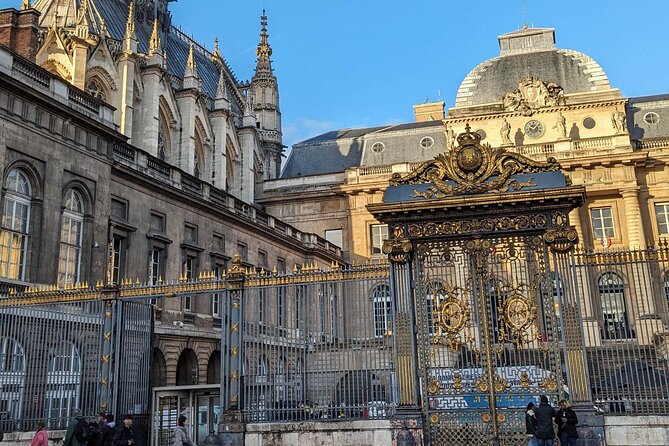
The tour ends at the Palais de Justice de Paris, 08 Bd du Palais, 75001 Paris. The audio frames the destination as where different threads converge: political upheaval, mentions of climatic events, and social injustice that reshaped the world.
This ending is powerful because it lands you at a major legal center. The French Revolution wasn’t just street chaos; it was also about redefining rules, courts, and public authority.
Why this audio tour feels like good value at $19.99
For $19.99 per person, this is less about buying access to a single building and more about buying a walking guide you can replay forever. The lifetime access is key: you can revisit the story later, refresh your memory, or use the virtual tour included with the access.
I also like that it comes with offline access to audio, maps, and geodata. In a city like Paris, that reduces friction. You can plan fewer contingencies for your day, because the tour doesn’t depend on constant mobile data.
No entrance tickets are included, so you aren’t paying extra just to get started. If you’re the type who prefers “see it first, decide later,” this works well. You’ll just keep moving once you’re done listening at each point.
Practical reality check: you bring your own smartphone and headphones. That’s normal, but it’s still the main thing that could slow you down if you forget. I’d pack headphones anyway and give yourself a quick phone test before you start.
Timing, route length, and how to pace your day
The tour runs about 1 hour 30 minutes to 1 hour 45 minutes. That window is ideal if you’re planning a larger day in Paris and don’t want a museum-heavy block.
It also helps that it’s a private tour/activity, meaning it’s just your group with no mixing. With self-guided audio, that matters less than with a live guide, but it still means you can enjoy the experience without random interruptions.
Opening hours are listed as daily from 12:00 AM to 11:59 PM for the validity period shown (01/18/2024 – 06/17/2026). In practice, that suggests you can start any time of day, as long as your phone and app are ready and you’re at the correct locations.
A small planning tip: wear shoes you can walk in for over an hour. This route is in central Paris, and even when you pause for photos, you still need enough comfort to keep moving between stops.
Who should book this French Revolution audio walk
This is a strong match for people who want history with structure, but not a rigid schedule. You get landmark context and a narrative arc without lining up, buying tickets, or waiting for a group.
It’s also a good choice if you’re traveling with teens. The format is easy to manage, and the audio is set up so you can keep everyone engaged without trying to corral a bunch of attention spans.
If you’re a history buff, you’ll like the way the route connects places to specific Revolution themes: prison storming, civic power, aristocratic property, bread hardship, and legal institutions. You won’t feel like you’re just collecting names.
On the other hand, if you want deep indoor content at multiple museums, this isn’t that. It’s designed as an outdoor city walk with narrative audio, and the “not included” list reflects that.
Should you book this self-guided French Revolution audio tour?
Yes, if you want a low-stress, self-paced way to connect the French Revolution to the real Paris you’re walking through. At $19.99 with lifetime access and offline audio/maps, it’s good value—especially if you enjoy learning while you look.
Skip it only if you expect ticketed museum time or if you don’t want to handle your own phone and headphones. Otherwise, this is a smart way to spend a focused chunk of your day in the Marais and end at one of Paris’ most dramatic civic/legal addresses.
FAQ
How much does the French Revolution self-guided audio tour cost?
It costs $19.99 per person.
How long is the tour?
The duration is about 1 hour 30 minutes to 1 hour 45 minutes.
What language is the audio available in?
The tour includes lifetime access to this tour in English.
Can I use the tour offline?
Yes. The experience includes offline access to audio, maps, and geodata.
Does the tour use GPS for playback?
Yes. It includes turn-by-turn directions, maps, and automatic GPS playback.
Where does the tour start and end?
It starts at Place de la Bastille (Pl. de la Bastille, 75004 Paris) and ends at the Palais de Justice / Paris Law Courthouse (08 Bd du Palais, 75001 Paris).
What’s included in the price?
You get lifetime access to the audio tour and virtual tour, plus the VoiceMap app for Android and iOS with offline audio, maps, and geodata.
What do I need to bring?
You need your smartphone and headphones. Transportation and food and drink are not included.
Are museum tickets included?
No. Tickets or entrance fees to any museums or attractions en route are not included.
Is the experience private?
Yes. It’s private, and only your group participates.
What if I need to cancel?
This experience is non-refundable and cannot be changed for any reason.