REVIEW · PARIS
Private Battlefields Tour in Argonne from Paris in Van (2/7 travelers)
Book on Viator →Operated by ADRIAN ROADS · Bookable on Viator
A day built around trenches and monuments changes the way you see WW1. This private Argonne battlefield tour from Paris sends you beyond postcards, with a calm, air-conditioned van ride and a guide, Régis, who connects big battles to real places.
I like that it’s designed for a small group—up to 6 travelers—so you get a proper pace for walking, asking questions, and stopping when something matters to your family story. I also love the mix: trenches at La Main de Massiges, the American cemetery at Romagne, and a museum stop at Romagne 14-18 that turns war into objects and personal details.
One thing to plan for: it’s a long day, about 13 to 14 hours, starting at 6:00 am, and it involves stairs and uneven terrain. If you’re sensitive to emotional sites, this is heavy material.
In This Review
- Key highlights worth your attention
- Private Argonne battlefield tour from Paris: the small-group value
- La Main de Massiges: walking among trench remnants and shell holes
- Montfaucon American Monument: granite column, Liberty statue, and the 1918 view
- Meuse-Argonne American Cemetery: 14,246 graves and engraved names
- Romagne 14-18 museum: soldier life shown through objects found locally
- Varennes-en-Argonne: Louis XVI’s arrest and the American liberation story
- Butte de Vauquois: artillery observation turned fortress and crater field
- The guide touch: why Régis’ passion matters on a heavy day
- Timing, comfort, and what to pack for an early start
- Who should book this Argonne WW1 tour from Paris
- Should you book it?
- FAQ
- What time does the tour start?
- How long is the tour?
- Is pickup from Paris available?
- How big is the group?
- What’s included in the price?
- What’s not included?
- Do I need to buy museum tickets?
- Which key stops are visited?
- Are tickets digital?
- Is the tour dependent on weather?
Key highlights worth your attention
- La Main de Massiges trench walk: shell holes all around, a natural height turned into a fortress of war
- Montfaucon’s American monument: a Doric granite column with Liberty on top and views over the 1918 offensive corridor
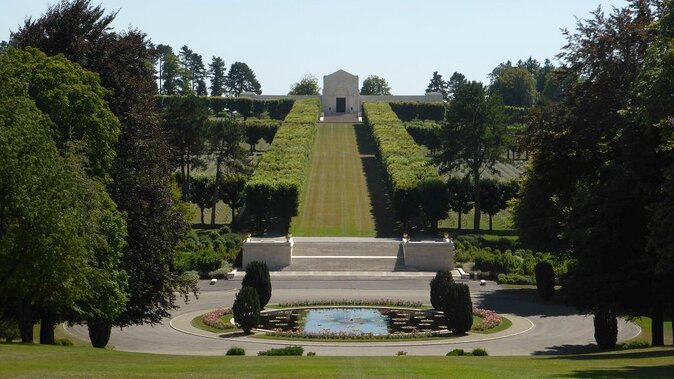
- Meuse-Argonne American Cemetery (14,246 graves): the largest American necropolis in Europe, with engraved maps and names
- Romagne 14-18 museum (included ticket): helmets, weapons, coins, pocket watches—found within about 4 km of the area
- Varennes-en-Argonne history: Louis XVI’s arrest in this village, plus the American liberation story
- Butte de Vauquois (galleries and explosions): a hill used to regulate artillery fire, later turned into a fortress and crater field
Private Argonne battlefield tour from Paris: the small-group value
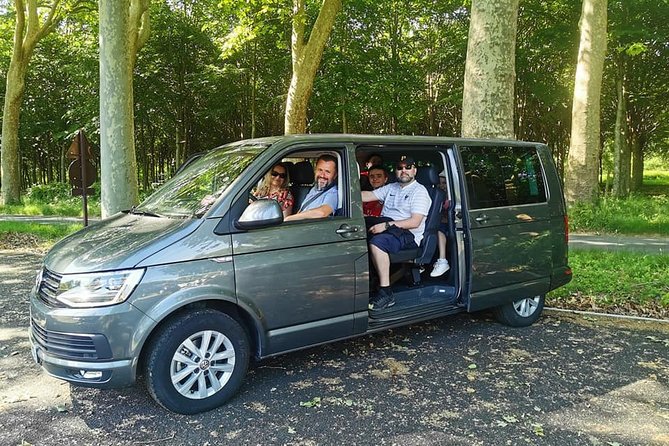
This is a straightforward, no-nonsense way to do the Argonne without stress. You leave Paris at 6:00 am and ride in a comfortable air-conditioned minivan with a maximum of 6 travelers. That matters because the day is long, and WW1 sites usually need time for walking, reading plaques, and absorbing silence.
The price—$462.73 per person—works out best if you want private time with a real guide rather than racing through stops. It also helps that entry to the Romagne 14-18 museum is included, and the other stops don’t add ticket costs based on the information you’re given here.
You’ll also get mobile tickets, and pickup is offered. The tour starts early, so you’re not spending the morning searching for schedules or guessing how to get to rural sites.
You can also read our reviews of more private tours in Paris



La Main de Massiges: walking among trench remnants and shell holes
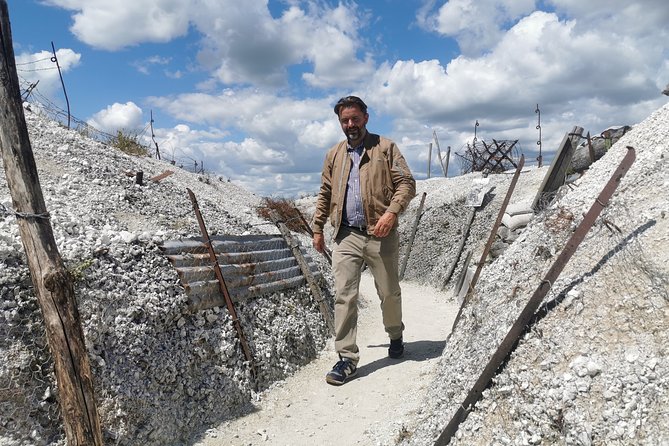
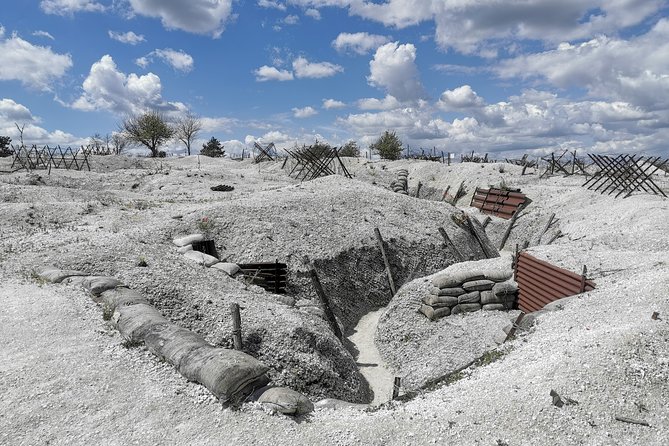
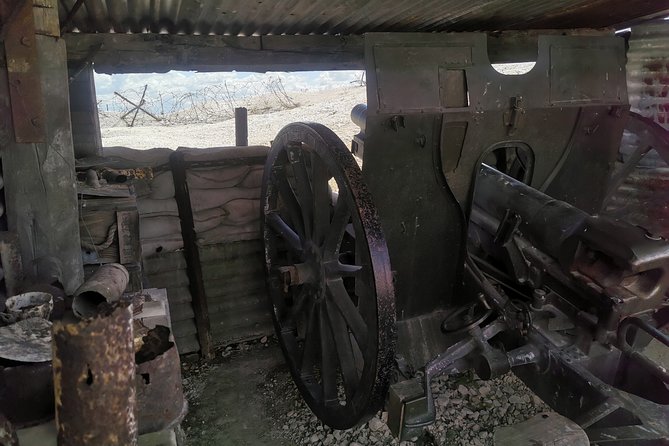
La Main de Massiges is the kind of place where your brain understands why WW1 turned into a grinding war of positions. This “main” refers to the natural height with bastion-like fingers, and the area fought over from 1914 through 1918. You’re there for the feeling of being in the defensive system, not just looking at a monument.
You’ll walk at the site tied to early September 1914 fighting, then into the wider Massiges sector story of fierce combat. The walk is about 1 hour, and admission is free. The description you’ll get on the ground is specific: you’re surrounded by hundreds of shell holes and the trench space that made this spot feel lunar and apocalyptic.
Practical note: the ground can be uneven, and you’re walking through history that’s basically outdoors terrain. Wear shoes you’re comfortable with for real walking, not just museum floors.
Montfaucon American Monument: granite column, Liberty statue, and the 1918 view
At Montfaucon, the day shifts from trench-scale destruction to a larger, more strategic view of the war’s final months. The monument faces the front line of the 1st American Army on September 26, 1918, when the attack began during the Meuse-Argonne offensive. That offensive ran until November 11, 1918, and it forced the enemy to retreat.
The memorial itself is a Doric column in solid granite, topped with a statue symbolizing Liberty, dominating the ruins of the old village by more than 60 meters. Inside the foyer area, you’ll see an engraved map of operations on the walls, along with a tribute to the American troops who served there.
You’ll have about 40 minutes here. At certain times, you can reach an observation platform by climbing a staircase of 234 steps, and the view is described as covering almost all of the land conquered during the offensive. Even without going up, the monument’s alignment and the scale of the valley make the battle geography click.
If you want the viewpoint, build in energy for stairs. If stairs are hard for you, focus on the foyer exhibits and take your time there.
Meuse-Argonne American Cemetery: 14,246 graves and engraved names
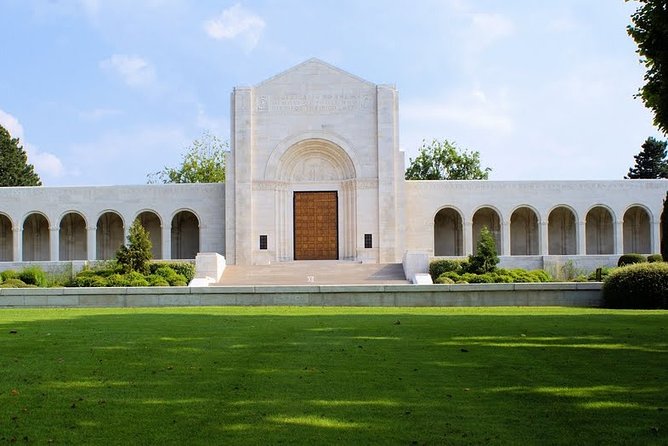
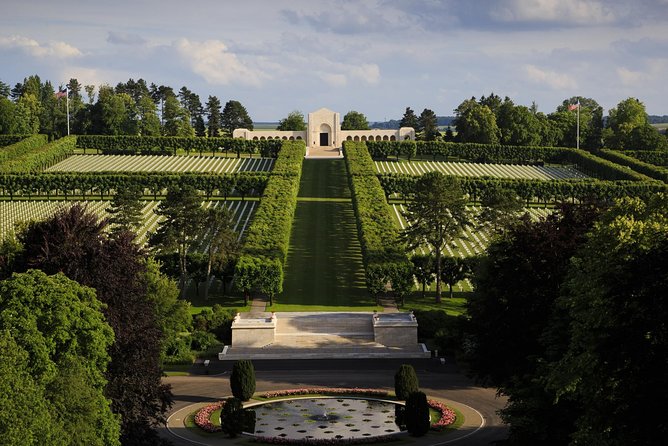
Romagne-sous-Montfaucon is where the war becomes intensely personal, fast. The Meuse-Argonne American Cemetery is the largest American necropolis in Europe, covering 52 hectares. It holds 14,246 graves of American soldiers who perished during the Meuse-Argonne Offensive from September 26 to November 11, 1918.
You’ll spend about 1 hour at the cemetery, with admission free. The Romanesque memorial and its chapel overlook the graves, and that raised position matters—it puts you in the role of visitor and witness at the same time.
On the loggia walls, there are engraved elements meant to help you understand the offensive, including a map of operations. There’s also a list of names engraved—954 American soldiers—which turns the scale into something you can feel rather than just numbers you can read.
This stop is a strong reason the tour is worth doing privately. When your guide explains what you’re looking at, you can pause where you need to, instead of getting pulled onward at the wrong moment.
Romagne 14-18 museum: soldier life shown through objects found locally
After the cemetery, the museum stop gives the day a different emotional texture. Romagne 14-18 is an informal museum run by Jean-Paul, who has been finding and presenting trench-era objects since 1976. The key idea is that each object is tied to life in the trenches, and the collection is based on finds within about a 4-kilometer radius of where the museum is located.
You’ll see everyday war items: helmets, weapons, combs, coins, cutlery, pocket watches—objects that feel close to the hands that used them. Behind each display is a story meant to communicate what daily existence was like, not just what battles were called.
Admission to this museum is included, and the time you have is about 40 minutes. This is also where Régis’ skill can really show. He’s the kind of guide who can steer you toward what connects to your question—names, units, or the kind of detail that makes the site feel less abstract.






Varennes-en-Argonne: Louis XVI’s arrest and the American liberation story
Varennes-en-Argonne isn’t only a WW1 location—it’s also tied to a major moment from the French monarchy era. The village is known for the arrest of Louis XVI and the royal family as they tried to join troops loyal to the monarchy based in Montmédy.
During WW1, Varennes was occupied by German troops early on, and it sat on or near the front line for much of the conflict. Then, during the Meuse-Argonne offensive that began September 26, 1918, Varennes-en-Argonne became the first city liberated by American troops.
You’ll spend about 30 minutes here, with free admission. On the heights above the village, there’s a Pennsylvania Monument erected and funded in 1928 by the State of Pennsylvania in memory of Americans connected to the operation—so the monument ties local geography to a specific US state identity.
This stop works well because it’s not just about one battle. It shows how one town can hold multiple layers of French and American memory.
Butte de Vauquois: artillery observation turned fortress and crater field
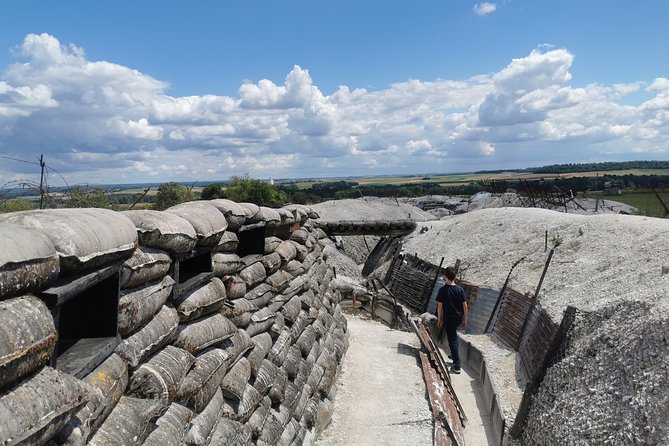
Vauquois is the “how did they fight here?” stop of the day. It’s built at the top of a hill, about 290 meters high, which made it a natural observatory for artillery fire during the First World War. That height meant whoever controlled it had an advantage in seeing and regulating gun ranges.
In autumn 1914, the Germans transformed the village into a fortress. French and German troops dug themselves in trenches at the top, and the hill was hit by more than 500 explosions, with the village of Vauquois eventually destroyed.
From February to March 1915, the ruins were hotly contested. The fighting included tunnel and gallery warfare: kilometers of galleries (about 23) were dug across several levels, reaching depths up to 100 meters, aimed at penetrating beneath the enemy position.
You’ll have about 1 hour at Butte de Vauquois, with free admission. It’s a powerful place to understand that trench war wasn’t just trenches and barbed wire—it was also engineering, sabotage, and a relentless push to control vantage points.
The guide touch: why Régis’ passion matters on a heavy day
This kind of tour lives or dies on the guide. With Régis, you get someone who doesn’t just recite dates. He links battles to ground features and, importantly, he makes the story fit your personal reason for being there.
In the field, that can mean doing the extra work: helping you find meaningful places, like a grave connection at the Meuse-Argonne American Cemetery. It can also mean explaining niche parts of military life that most visitors wouldn’t know existed. In this case, Régis has a way of bringing out details like how a Pigeon Signal Corp fits into communication during WW1.
The value isn’t only in extra facts. It’s in how the pacing feels. You’re in a private van, with a max group size, so Régis can slow down for questions and keep the day coherent instead of turning it into a stop-and-go checklist.
Timing, comfort, and what to pack for an early start
Plan for a long day. Start time is 6:00 am, and the tour runs about 13–14 hours. You’ll be in an air-conditioned minivan, but you’ll still spend time outside at multiple stops, including a trench walk and a monument where stairs are involved at certain times.
Lunch isn’t included. That means you’ll want a plan for eating—either bring something you can manage on the go or arrange a simple meal strategy before you’re out in the countryside all day. Since you don’t want to cut the morning short, a packed lunch is often the easiest move for a day like this.
Weather matters. The experience notes that it requires good weather, and you’ll be offered another date or a full refund if it’s canceled due to poor conditions. So if your calendar is tight, it’s worth booking early so you have flexibility.
Given the terrain and the mention of steep steps at Montfaucon, pack for walking: sturdy shoes, a layer for morning chill (early starts can feel cool even in fair weather), and water.
Who should book this Argonne WW1 tour from Paris
Book this if you care about World War I in a grounded way—trench positions, memorials, and what the war meant for specific places. You’ll likely enjoy it most if you want more than a general overview.
It’s also a great fit for people who have a personal connection, like a family name to research at the cemetery. A private guide who can help you interpret what you see makes that kind of visit far more rewarding.
If you’re short on energy for a very long day, or if the emotional weight of cemeteries and battlefield sites is too much, you might consider a shorter or more focused option instead. This one is a full day of WW1 reality.
Should you book it?
I think you should book this if you want a thoughtful, small-group Argonne day that connects American and French WW1 memory in a practical way. The included museum time at Romagne 14-18, the scale at Meuse-Argonne American Cemetery, and the trench-and-fortress stops at La Main de Massiges and Butte de Vauquois create a full arc rather than disconnected photo stops.
If your ideal day is fast sightseeing with minimal walking, this won’t feel right. But if you’re ready for a long, meaningful road trip with Régis at the wheel of the conversation, it’s strong value for what you get.
FAQ
What time does the tour start?
The tour start time is 6:00 am.
How long is the tour?
It runs about 13 to 14 hours.
Is pickup from Paris available?
Yes, pickup is offered and there’s support for customers at their place of residence in Paris and the Paris region.
How big is the group?
This is a private tour with transportation in a minivan for a maximum of 6 travelers.
What’s included in the price?
The tour includes a driver/guide, private air-conditioned transportation, support in Paris, and admission to the Romagne 14-18 museum.
What’s not included?
Lunch is not included.
Do I need to buy museum tickets?
Admission to Romagne 14-18 is included. Other stated admissions are free based on the tour details provided.
Which key stops are visited?
You visit La Main de Massiges, the Montfaucon Monument, the Meuse-Argonne American Cemetery, Romagne 14-18, Varennes-en-Argonne (including the Pennsylvania Monument), and Butte de Vauquois.
Are tickets digital?
Yes, you’ll receive a mobile ticket.
Is the tour dependent on weather?
Yes. It requires good weather, and if it’s canceled due to poor weather, you’ll be offered a different date or a full refund.