REVIEW · PARIS
Paris Wine with Cheese Pairing & Tasting Small Group Class
Book on Viator →Operated by Le Foodist · Bookable on Viator
That first sip in Paris can turn into real learning fast. This small-group wine and cheese class at Le Foodist is built around tasting, pairing practice, and the French idea of terroir, not just casual sampling.
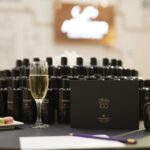
I love that you taste a lineup that makes sense for beginners and food people alike: four wines from different regions plus a Champagne. I also like the hands-on structure, including the explanation of the five major French cheese families and a real pairing moment with bread, olives, and ham.
One consideration: it’s a tight 2-hour session, so if you want a long, meal-style dinner experience, this is more classroom-plus-tasting than slow dining.
In This Review
- Key Things That Make This Class Worth Your Time
- Where the Class Starts: Le Foodist in Central Paris
- What Happens in the First Part of the Class
- The Wine Lineup: 4 Regions of France Plus Champagne
- Why This Works for First-Time Wine Drinkers
- What About the Champagne?
- The Five Cheese Families: Taste by Type, Not Guess by Name
- Pairing Practice: Bread, Olives, and Ham as Flavor Tools
- A Real-World Pairing Skill You Can Use After
- Terroir: Turning Geography Into Taste
- The Champagne Sabering Skill (Yes, It’s Part of the Fun)
- The Pour Kit You Take Home: Drop-Stop
- Price and Value: Is $113.49 Fair for What You Get?
- Who This Class Fits Best (And Who Might Skip It)
- A Practical Way to Get the Most Out of Your 12:00 pm Session
- Should You Book This Paris Wine and Cheese Class?
- FAQ
- How long is the Paris wine and cheese pairing class?
- Where does the class meet in Paris?
- What time does the class start?
- How many people are in the group?
- What will I taste during the class?
- What food is included besides wine and cheese?
- Is there an activity related to Champagne?
- What do I receive at the end of the class?
- Is there a minimum drinking age?
- What if I need to cancel?
Key Things That Make This Class Worth Your Time
- Max 16 people means you get real attention from your sommelier host
- Four French wine tastings + one Champagne gives you a wide flavor map in just two hours
- Five cheese families teaches you how French producers think about texture and aging, not just taste
- Terroir talk with practical tasting helps you connect geography to what’s in your glass
- Champagne sabering technique is the fun, memorable skill you take home in spirit
- Drop-Stop included so you can pour more cleanly afterward
Where the Class Starts: Le Foodist in Central Paris
Your session begins at Le Foodist, 59 Rue du Cardinal Lemoine, in the 5th arrondissement near the Latin Quarter. The location matters because it keeps the experience practical: you can slip in before or after sightseeing without losing half a day to transit.
This is a walk-in-and-sit-down kind of activity with easy access to public transportation. Even in a crowded city, that helps—especially if you’re pairing this class with museums, markets, or a long lunch.
You’ll start around 12:00 pm, and you’ll finish back at the same meeting point. The mobile ticket makes it simple to show up and get seated without extra paperwork.
You can also read our reviews of more food & drink experiences in Paris

What Happens in the First Part of the Class
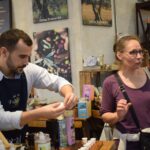
Once you arrive, you meet your sommelier instructor. In the reviews, the host is often described as charming, funny, and willing to meet you where you are—whether you know French wines already or you’re starting from zero.
This opening phase sets the tone: you’re not expected to memorize grape varieties or cheese names. Instead, you learn how to taste on purpose—looking at aroma, thinking about texture, and noticing how flavors change when you switch from wine to cheese to bread.
That matters for value. A lot of tastings give you food and drink, then send you home without a method. Here, you’re given a framework you can actually use again the next day in a Paris wine shop or from a cheese counter.
The Wine Lineup: 4 Regions of France Plus Champagne
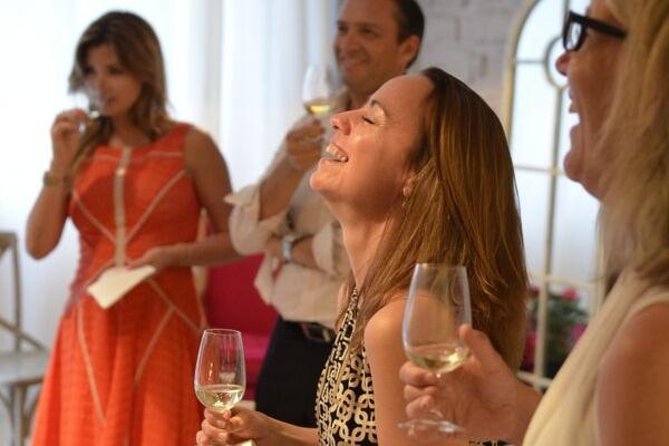
The core of the class is tasting four wines from different parts of France, plus one Champagne. This structure is smart because it gives you contrast fast. You can compare styles, feel how acidity and richness behave, and start to understand why pairing isn’t random.
The sommelier explains the geographical and historical origins of what you’re tasting. Even without a deep chemistry lesson, that context helps you predict flavors next time. You’re basically training your palate to connect where a wine comes from with what it tastes like.
Why This Works for First-Time Wine Drinkers
If French wine feels like a blur of labels to you, this format is forgiving. You’re tasting through a guided set of examples, which is how people really learn. You’ll also have time to ask questions, and the small-group size helps keep things from turning into a lecture with no interaction.
What About the Champagne?
Champagne shows up as its own tasting moment and also as a hands-on activity later. That’s a nice pairing of mind and muscle: you taste it, then you learn how to open it in a showy, skill-based way.
You can also read our reviews of more wine tours in Paris



The Five Cheese Families: Taste by Type, Not Guess by Name
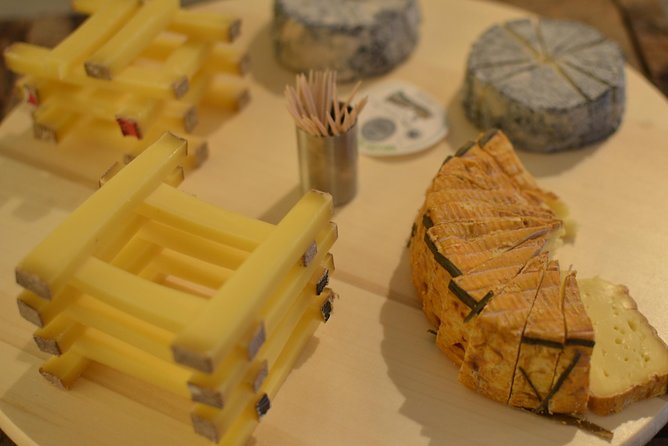
After the first wave of wine tasting, the class shifts to cheese. You’ll learn about the five major French cheese families, then taste them so you can feel the differences rather than just read about them.
This is one of the strongest parts of the experience because it changes how you shop. Instead of hunting for one specific cheese you’ve heard of, you start thinking in categories: how a cheese is aged, how it behaves on the tongue, and what it tends to pair well with.
In a cheese-focused pairing class, beginners often get stuck on names. Here, you get the logic behind the taste. That makes the lesson feel useful beyond the 2-hour window.
Pairing Practice: Bread, Olives, and Ham as Flavor Tools
Cheese pairing isn’t only about matching wine to cheese. You’ll also enjoy a selection of sliced ham, plus bread and olives, which works like a palate reset and a flavor amplifier.
The pairing idea is simple: complex flavors land differently depending on what you eat alongside them. Bread can soften sharp edges. Olives can add salinity and a little bite. Ham can bring smoky or salty notes that make certain wines feel smoother.
So you’re not just collecting tastes; you’re learning how to balance. That’s where the practical value kicks in.
A Real-World Pairing Skill You Can Use After
When you’re back in Paris, cheese counters can feel overwhelming. If you’ve practiced this class method—swap one element at a time—you’ll be calmer. You’ll be able to test combinations like a pro: try the wine with a small piece first, then repeat with bread, then reassess with the cheese family you’re working with.
Terroir: Turning Geography Into Taste
One of the “why does this taste different?” questions that comes up in France is terroir. The class introduces this idea and links it to the wine and cheese you’re sampling.
You’re not asked to memorize definitions. Instead, you hear how producers and regions shape flavors through factors like land and climate, then you taste examples that make the concept feel tangible.
I like this approach because it turns trivia into intuition. Terroir becomes less like a fancy word and more like a reasoning tool: when you notice acidity, texture, or richness, you start thinking about where it might come from.
The Champagne Sabering Skill (Yes, It’s Part of the Fun)
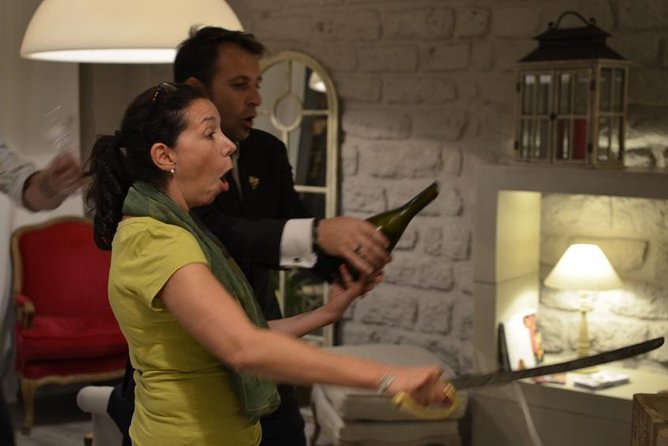
Toward the end, the class includes a Champagne technique: you’ll learn the art of sabering a Champagne bottle. The activity uses a tool approach described as taking a knife and learning the sabering method, and the tone in reviews makes it clear there’s room for laughter and playful nerves.
This is exactly the kind of “skill moment” that makes lessons memorable. You taste the Champagne first, then you learn a dramatic way to open it that feels very Paris—without turning the class into a party with no substance.
And yes, it’s the part you’ll talk about later. More importantly, it breaks up the session so you’re not just passively tasting.
The Pour Kit You Take Home: Drop-Stop
At the end of your session, you’ll receive Drop-Stop for the perfect pour every time. That’s a practical takeaway, not just a souvenir.
If you’ve ever poured from a bottle and watched drips slide down the side, you already know why this matters. It’s the kind of small gadget that keeps your at-home servings cleaner and more consistent—especially when you’re sharing what you bought at a shop or from a market.
Price and Value: Is $113.49 Fair for What You Get?
At $113.49 per person for about 2 hours, the price is easiest to judge by what’s included and how tightly it’s packed.
You get:
- Four wine samples plus one Champagne sample
- A guided explanation from a sommelier host
- Tastings across the five major French cheese families
- Food pairings: cheese, bread, olives, and ham
- A Champagne technique practice (sabering)
- A take-home Drop-Stop
In other words, you’re paying for instruction and structure, not just product. For a Paris food experience, that’s the difference between paying for snacks and paying for a skill you can repeat at home.
If you’re trying to build a short list of “worth it” food activities in Paris, this ranks high because it compresses a lot of tasting education into a manageable time slot.
Who This Class Fits Best (And Who Might Skip It)
This class is a good match if you:
- Love French food and want the pairing logic, not just the flavors
- Are new to wine and want a guide who keeps things approachable
- Like hands-on experiences, including the Champagne moment
- Want a small-group setup where questions actually get answered
You might think twice if you:
- Want a long sit-down meal rather than a structured tasting session
- Prefer non-alcoholic experiences (this class includes wine and Champagne, and the minimum age is 18)
A Practical Way to Get the Most Out of Your 12:00 pm Session
To enjoy it fully, show up ready to taste and compare. I recommend keeping your morning simple and not overloaded with strong perfume scents, smoky street snacks, or heavy coffee.
Also, don’t worry about knowing French wine terms in advance. The point is learning how to taste, pair, and connect flavors to their origins.
If you go with a friend, it’s even better. You can talk through what each cheese family and wine pairing reminded you of, and you’ll remember more than if you keep it all inside your own head.
Should You Book This Paris Wine and Cheese Class?
If your goal is a high-value food education in Paris—tasting with a plan—this is an easy yes. The small size, the guided sommelier approach, and the combination of wine, cheese categories, and practical pairing practice make it more than a stop on a checklist.
I’d book it if you want something authentically “Paris” that still feels accessible. And I’d feel confident that even if you start with zero wine vocabulary, you’ll leave with a method you can use again.
FAQ
How long is the Paris wine and cheese pairing class?
It lasts about 2 hours.
Where does the class meet in Paris?
The meeting point is Le Foodist, 59 Rue du Cardinal Lemoine, 75005 Paris, France.
What time does the class start?
The start time listed is 12:00 pm.
How many people are in the group?
The class has a maximum of 16 travelers.
What will I taste during the class?
You’ll taste four wine samples from different regions across France plus one Champagne sample, along with cheeses from the five major French cheese families.
What food is included besides wine and cheese?
Bread, olives, and sliced ham are included to go along with your tastings.
Is there an activity related to Champagne?
Yes. You’ll learn the art of sabering a Champagne bottle to open it, then share a glass with the group.
What do I receive at the end of the class?
You’ll receive Drop-Stop for a perfect pour every time.
Is there a minimum drinking age?
Yes, the minimum drinking age is 18.
What if I need to cancel?
You can cancel up to 6 days in advance for a full refund.