REVIEW · PARIS
From Paris: Private Day Trip to Giverny and Auvers sur Oise
Book on GetYourGuide →Operated by Normandy Melody · Bookable on GetYourGuide
Two painters, one Norman day. This private day trip takes you from Paris to Giverny for Monet’s house and gardens, then on to Auvers-sur-Oise to follow Van Gogh’s last footsteps. It’s the kind of route that feels calm and focused, not rushed, because you’re moving with your own licensed driver-guide instead of getting shuffled.
What I like most is how much time you get in the places that matter. In Giverny, you can actually see the water garden and the famous little bridge—details Monet turned into his late-life obsession. In Auvers-sur-Oise, you visit the church and wheat fields that he painted, plus his room at Auberge Ravoux.
The main thing to weigh is pacing and logistics: it’s a 9-hour day with a drive and time in two towns, so you’ll want comfortable shoes and realistic expectations about how much you can linger.
In This Review
- Key Takeaways Before You Go
- Monet’s Giverny: Early Arrival Helps You See the Details
- Inside Monet’s House: Yellow Dining Room to First Workshop
- The Flower Garden: Why Season Changes Matter
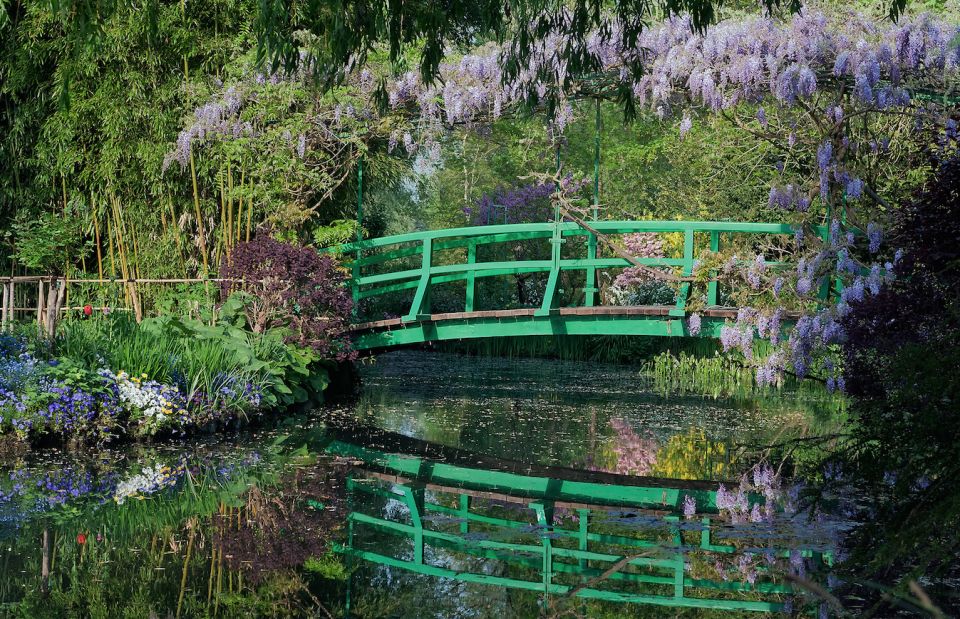
- The Water Garden and Japanese Bridge: Monet’s Late-Life Signature
- Lunch in Giverny: Plan for What’s Not Included
- Auvers-sur-Oise With Van Gogh in Mind
- Auberge Ravoux and the Twin Graves: The Moment the Story Tightens
- Your Private Transport: Licensed Driver-Guide Makes a Difference
- Price and Group Value for $1,049 Up to 8
- Timing Reality Check: 9 Hours Means You Choose Your Pace
- Should You Book This Paris to Giverny and Auvers Day Trip?
- FAQ
- How long is the day trip from Paris?
- How much does the private tour cost?
- Are hotel pickup and drop-off included?
- Do you include admission tickets and skip-the-line entry?
- Is lunch included?
- What will I see in Giverny?
- What will I see in Auvers-sur-Oise?
- What languages are the tour guide services available in?
- What should I bring?
- What about children, infants, and cancellations?
Key Takeaways Before You Go
- Early entry energy in Giverny: you arrive ahead, which helps you enjoy the gardens without fighting the biggest crowds
- Monet beyond the postcard: you get the house details, the flower garden changes, and the water garden reflections
- Van Gogh stops with strong context: you see the wheat fields and church tied to his paintings, plus Auberge Ravoux
- Private, hotel-to-hotel convenience: skip-the-line entry and a dedicated vehicle make the day feel smoother
- Watch the one-day schedule: traffic can shift timings, and lunch isn’t included
Monet’s Giverny: Early Arrival Helps You See the Details
Giverny is only about an hour from Paris, but the mood changes fast. One minute you’re in the city rhythm; the next, you’re walking through a carefully shaped Norman orchard that Claude Monet transformed into his signature world of color and light.
I like this stop because it’s not just about a single building. You’re guided through the layers of his life as an artist—home, workshops, and the gardens he kept refining. If you’ve ever tried to imagine what those paintings looked like from the inside out, this is where it clicks.
Your day starts with hotel pickup and a luxury vehicle ride. Once you reach Giverny, you arrive early, which matters. Monet’s home and gardens can get busy, and arriving ahead makes it easier to actually study what you’re looking at—flower beds, pond edges, and the exact angles that lead your eyes.
One practical note: you’ll do a lot of walking. Even if you’re just moving between highlights, comfortable shoes are non-negotiable.
You can also read our reviews of more private tours in Paris



Inside Monet’s House: Yellow Dining Room to First Workshop
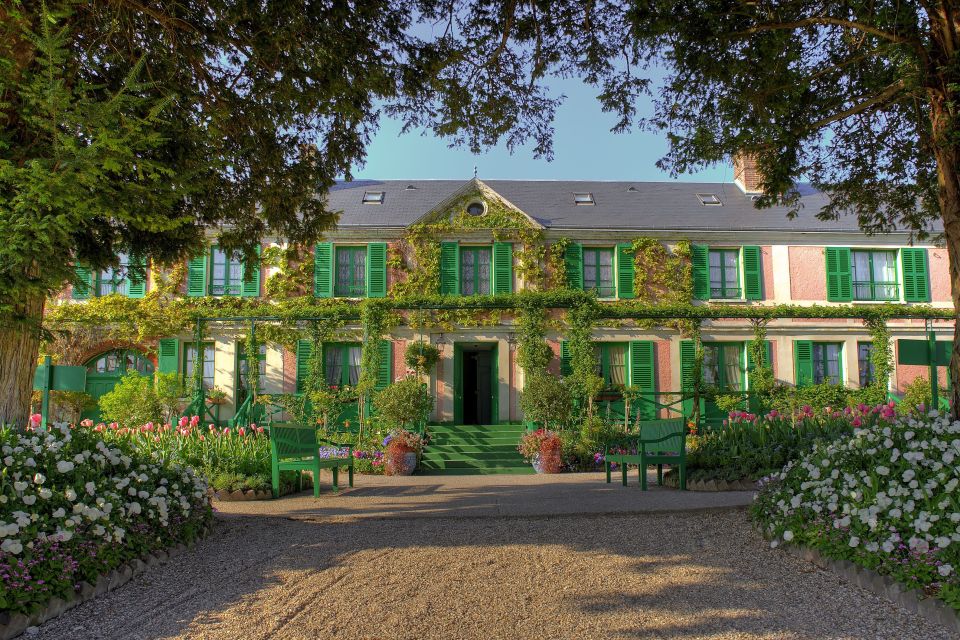
Monet’s House and Gardens is built to connect the dots. The tour doesn’t treat the home like a museum hallway. It shows how his family life and his working life overlapped.
You’ll see where Monet lived with his big family, along with standout interiors like the yellow dining room, his first workshop, and the kitchen. Those rooms help you picture him not as a distant art legend, but as a working person with daily routines. The yellow dining room is especially memorable because it feels tied to the way he looked at color—something you’ll keep noticing as you move outward to the gardens.
If you love small details, take a slow moment here. It’s the part of the day where you can reset your brain before you chase flowers and reflections.
The Flower Garden: Why Season Changes Matter
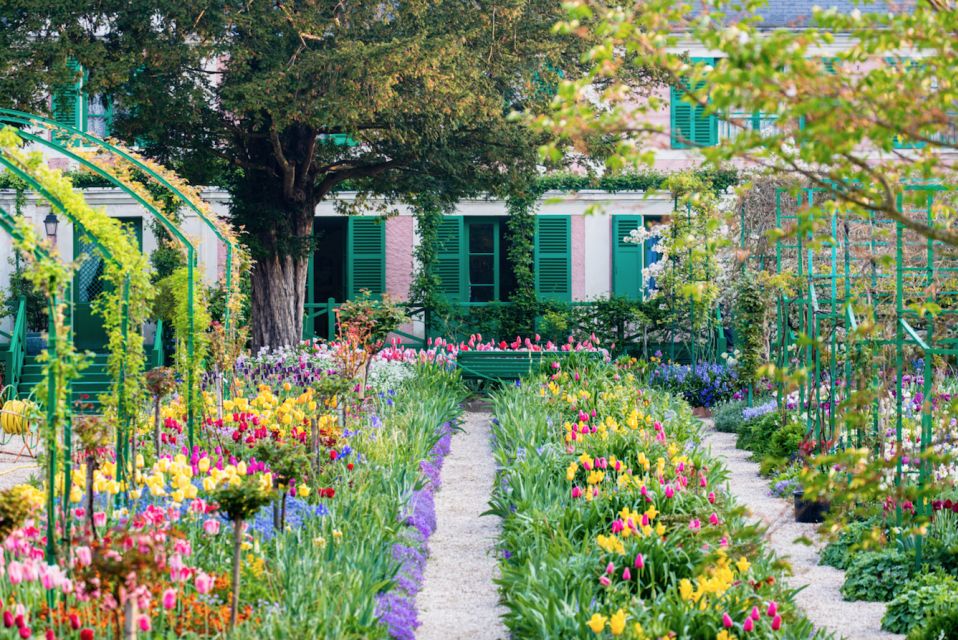
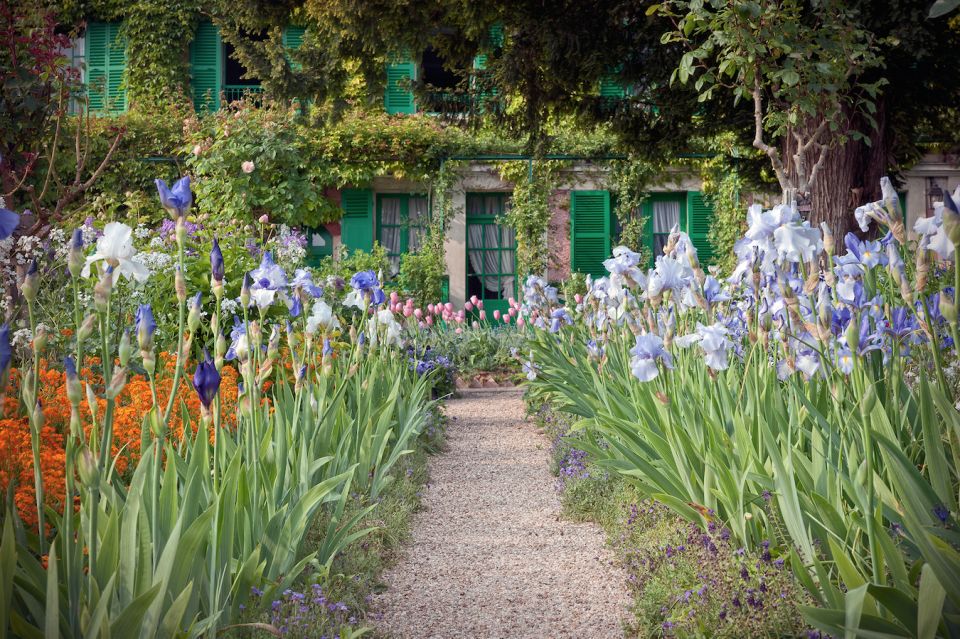
Monet didn’t create one static garden. He built a living work that changes. The flower beds shift by season and month, so you might see tulips, hyacinths, iris, nasturtiums, roses, cherry trees, wisteria, weeping willows, and more depending on when you go.
That’s not just trivia. It’s why the garden feels different from year to year and even from morning to afternoon. Your eyes keep getting fresh starting points, instead of seeing the same few views over and over.
And yes, you’ll keep hearing about the flowers as Monet’s inspiration. The practical payoff is that the gardens guide your walking path. You don’t just look at a big green space; you move from one seasonal scene to the next, picking up visual clues for what he painted.
Tip for your own pace: if you’re a big garden person, spend extra time where the paths naturally slow down. That’s usually where your photos stop looking like generic snapshots and start looking like Monet’s composition.
The Water Garden and Japanese Bridge: Monet’s Late-Life Signature
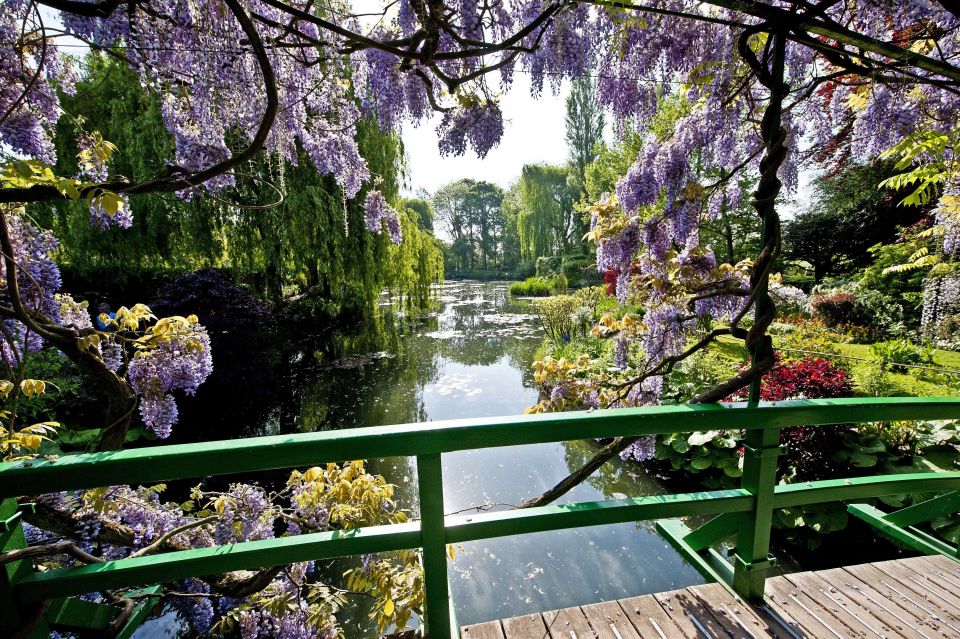
Then comes the Water Garden, the main subject of Monet’s later works. This is where his fascination with light and reflections becomes painfully obvious—in a good way.
You’ll observe how the pond changes, and you’ll see what he painted again and again: water lilies and the shifting look of the surface. It’s a small visual transformation, but the effect is big. Standing there, you can understand why he spent time watching rather than rushing.
The Japanese Bridge is another key moment. It’s famous for a reason: when you see it in person, you understand how Monet used it as a focal point for depth and reflection. Your photos won’t fully capture the effect of the light, but they’ll at least help you remember what your eyes learned.
This is also the section where you’ll likely get the most calm. It’s a good place to pause and stop treating the day like a checklist.
Lunch in Giverny: Plan for What’s Not Included
Lunch isn’t included on this private tour, but your guide will suggest options in the charming village of Giverny. That’s helpful because you’re not stuck scanning menus while everyone else moves ahead.
What you should do: decide in advance how long you want to eat. If you’re traveling as a small group, it’s easy to choose something simple and efficient so you don’t feel rushed in the afternoon. If you’re traveling with someone who wants a longer sit-down meal, factor that into your pace.
Since this is a fixed 9-hour day, don’t aim for an hour-plus lunch unless you’re comfortable with a tighter afternoon schedule.
You can also read our reviews of more tours and experiences in Paris





Auvers-sur-Oise With Van Gogh in Mind
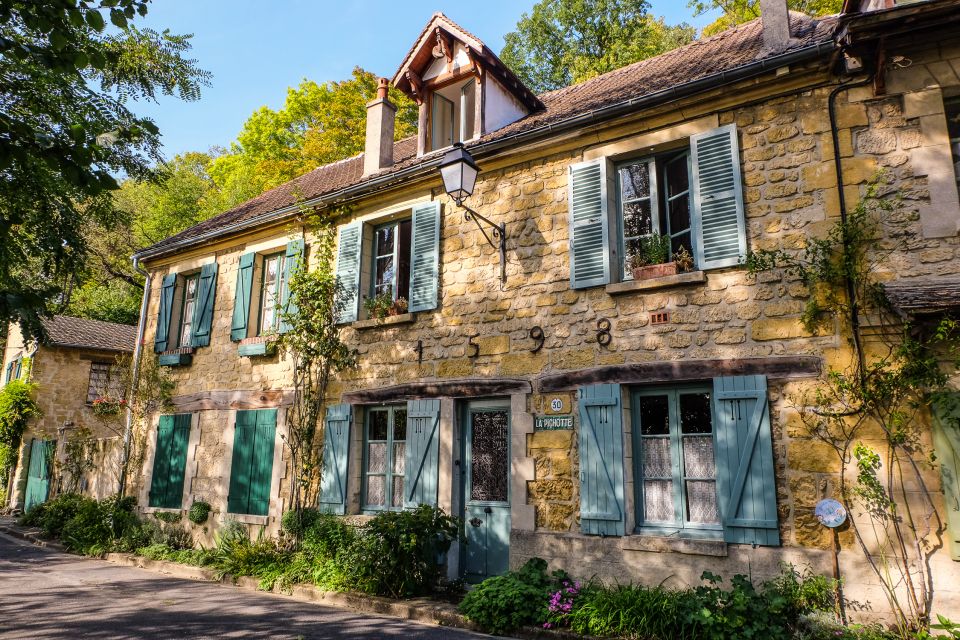
After Giverny, the tour shifts gears. Auvers-sur-Oise is where Van Gogh spent his final days, and the town feels built for people who want to connect life and art.
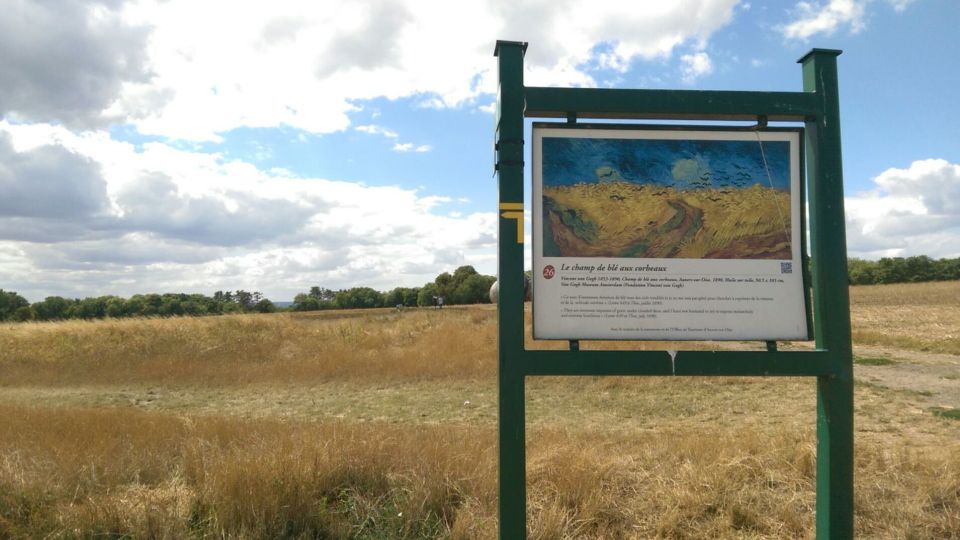
You’ll see the wheat fields and the church that he painted. Those views matter because they show how specific the scenery was. When you can stand where a painting was made, the brushstrokes stop feeling abstract. They feel anchored.
The afternoon also includes the most important stop: visiting his room at Auberge Ravoux, where he died. This isn’t just about seeing a famous address. It gives you a strong sense of the time period and the physical reality behind the final works.
Even if you don’t consider yourself a hardcore art history person, this is the section that tends to land emotionally. It’s quiet, direct, and it doesn’t require you to have a huge background before arriving.
Auberge Ravoux and the Twin Graves: The Moment the Story Tightens
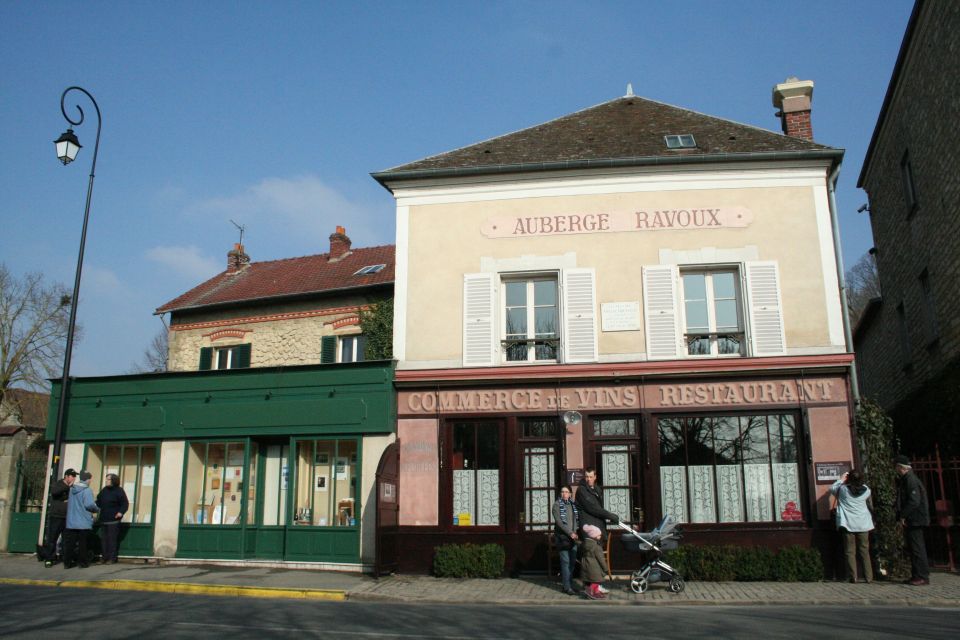
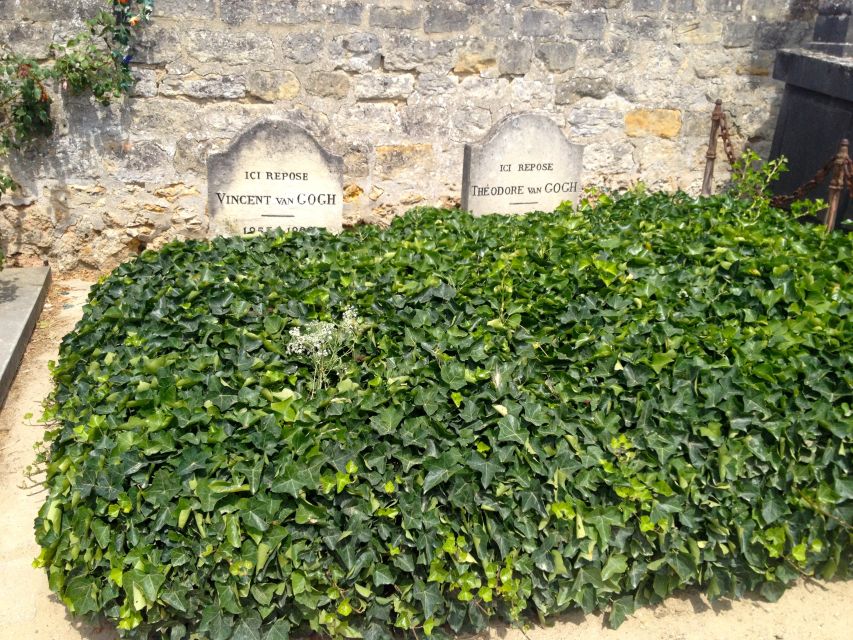
After Auberge Ravoux, you’ll also see the twin graves of Van Gogh and his brother. That final piece helps you understand why Auvers became so important in the story of his life.
I like that the tour doesn’t jump straight from fields to a single building. It walks you through a sequence: painted landscape, a key town landmark, then the lodging room, then the graves. It’s a simple path, but it feels complete.
One thing to keep in mind: if you’re prone to getting emotional at memorial sites, give yourself a minute to slow down. The stop has a heavier mood than the Monet gardens, and rushing it can make it feel less meaningful.
Your Private Transport: Licensed Driver-Guide Makes a Difference
This is a private tour with pickup and drop-off at your hotel, using an air-conditioned vehicle. That alone is a big value lever. Instead of spending time coordinating trains, buses, and ticket lines, you’re using the day for the art.
You also get skip-the-line entry through a separate entrance, plus admission tickets. In plain terms: you’re paying for fewer headaches. That matters on a day trip, where waiting can eat your best hours.
The driver-guide is licensed and professional, and the language options are English and French. If you’re lucky enough to have one of the guides named in past experiences—like Ange or Claude—you’ll likely appreciate how personal and subject-focused the explanations feel. The best guides here don’t just list facts. They connect what you’re seeing to what the painters were trying to solve visually: color, light, reflections, and place.
A practical detail: the driver will wait no longer than 10 minutes after the scheduled pickup time. So if you’re getting ready in the hotel lobby, don’t treat pickup as a vague concept.
Price and Group Value for $1,049 Up to 8
The price is $1,049 per group for up to 8 people, for a 9-hour day that includes admission tickets, skip-the-line entry, private tour guiding, and hotel pickup/drop-off with a luxury vehicle.
Here’s how I think about value:
- If you’re a group of 3 to 8, this can start to feel like a smart way to buy time and peace. You’re not just paying for transport—you’re paying to avoid ticket lines and make a tight route run smoothly.
- If you’re just 1 or 2 people, it’s more of a splurge. You’re still buying convenience and a dedicated schedule, but the per-person cost won’t feel “bargain” unless you’re comparing it to hiring a private driver yourself.
Lunch being not included also affects the real total. But that’s also why many people like having control: you can choose what fits your taste and time.
If you want a day trip that feels organized, art-centered, and not chaotic, the pricing makes sense.
Timing Reality Check: 9 Hours Means You Choose Your Pace
This is a 9-hour experience, and it includes drives plus two major art stops. Times can change due to local traffic conditions, which is normal around Paris.
So think of the day like this: you’ll have structured time in Giverny and Auvers, but you won’t have the kind of freedom where you can wander for hours. If your goal is to see the key sights with strong context, you’ll be happy. If your goal is to take a slow, unplanned day, you might feel the edges of the schedule.
Also, bring the right mindset for the two different moods. Monet’s gardens reward patience and looking. Auvers-sur-Oise rewards reflection and attention to the story. They’re both meaningful, but they feel different.
Should You Book This Paris to Giverny and Auvers Day Trip?
If you want a private, art-focused day that connects Monet’s gardens and Van Gogh’s final days without wasting time on logistics, I’d book it. The biggest strength is the combination: Giverny’s house and gardens with the water garden details, then Auvers-sur-Oise with Auberge Ravoux and the painted scenery.
You might skip (or choose a lighter option) if you’re traveling solo and don’t want to pay for a full private group cost, or if you hate structured itineraries on day trips.
My practical call: book it if your ideal day includes good guiding, early access moments in Giverny, and a calm sequence of stops that makes sense from painting to place.
FAQ
How long is the day trip from Paris?
The experience runs for 9 hours.
How much does the private tour cost?
The price is $1,049 per group, up to 8 people.
Are hotel pickup and drop-off included?
Yes. Pickup and drop-off from your hotel are included.
Do you include admission tickets and skip-the-line entry?
Yes. Admission tickets are included, and skip-the-line entry is available through a separate entrance.
Is lunch included?
No. Lunch is not included, and your guide will suggest options in Giverny.
What will I see in Giverny?
You’ll visit Claude Monet’s house and gardens, including his home, the flower garden, the water garden, and the Japanese Bridge.
What will I see in Auvers-sur-Oise?
You’ll see wheat fields and the church that Van Gogh painted, visit his room at Auberge Ravoux, and see the twin graves of Van Gogh and his brother.
What languages are the tour guide services available in?
The live tour guide is available in English and French.
What should I bring?
Wear comfortable shoes since there’s walking during both stops.
What about children, infants, and cancellations?
Unaccompanied minors aren’t allowed. Infant seats are available on request. You can cancel up to 24 hours in advance for a full refund, and you can reserve now and pay later.