REVIEW · PARIS
Paris: Walking Tour of Montmartre
Book on GetYourGuide →Operated by HelpTourists · Bookable on GetYourGuide
Montmartre hits you like a postcard. This walking tour links the big-name sights with the quieter side of Paris’ artist hill, from Moulin Rouge to Sacré-Cœur.
I especially like the way the walk is structured around real stops you can see and photograph, not just a drive-by explanation. And I like the storytelling style—guides such as Vera, Solene, Nadine, and Christin are known for lively, funny, and detail-rich anecdotes that make the streets feel inhabited, not museum-like.
One thing to consider: the meeting point can be a little confusing around Moulin Rouge, and language can depend on which guide is running the session. It’s also a gradual uphill walk, so plan your energy accordingly.
In This Review
- Key points to know before you go
- Montmartre on foot: what a 2-hour walk really gives you
- Finding ABI Assurances: getting set up near Blanche metro
- Moulin Rouge photo stop: the legend with context
- Moulin de la Galette and La Maison Rose: charming streets that feel lived-in
- Place du Tertre: open-air art energy and real neighborhood life
- Sacré-Cœur Basilica: the calm finale at the top of Paris
- The guide’s stories: why this tour lingers after you leave
- Price and timing: is $34 good value for Montmartre?
- Who should book this Montmartre walking tour
- Should you book this Montmartre walking tour?
- FAQ
- How long is the Montmartre walking tour?
- Where exactly do I meet the guide?
- Is the tour in English or German?
- What time do the tours start?
- Where does the tour end?
- Is food or drinks included?
- Can I reserve and pay later?
- Is it wheelchair accessible?
Key points to know before you go
- Small-group vibe: the operator tries to keep groups small, though they may be larger on public/national holidays.
- Two languages, clear schedules: English and German tours run on specific days and times.
- Photo stops plus real sightseeing: you’ll pause at key views like the Moulin Rouge and Place du Tertre.
- Bohemia-focused route: the emphasis is on everyday Montmartre life—past and present—not just landmark checklists.
- Sacré-Cœur as the finish: the walk closes with the basilica area, a natural place to soak up the payoff views.
- Short and practical timing: at about 2 hours, it fits well into a half-day without stealing your whole afternoon.
Montmartre on foot: what a 2-hour walk really gives you
This is a walking tour with a purpose: Montmartre can look like one big scenic blur if you go solo. Here, you get a guided route that connects famous landmarks with the smaller corners that give the neighborhood its personality. The tour is designed around a manageable time frame—about two hours—so you’re not stuck outside for ages, especially once the hill starts to feel steep.
What you’ll feel most is the contrast. Moulin Rouge brings the legend and glamour energy. Place du Tertre adds the street-level art atmosphere. Then Sacré-Cœur shifts the mood toward calm, big views, and the sense that you’re standing at a high point of the city.
Group size matters on this kind of tour. The operator aims for small groups, which usually means you can move as a unit, ask questions, and actually hear the guide without everyone talking over each other. Still, on public/national holidays, expect a bigger group than normal.
If you like Paris best when it’s human-scaled—street sounds, small squares, and stories you can repeat later—this format fits.
You can also read our reviews of more walking tours in Paris



Finding ABI Assurances: getting set up near Blanche metro
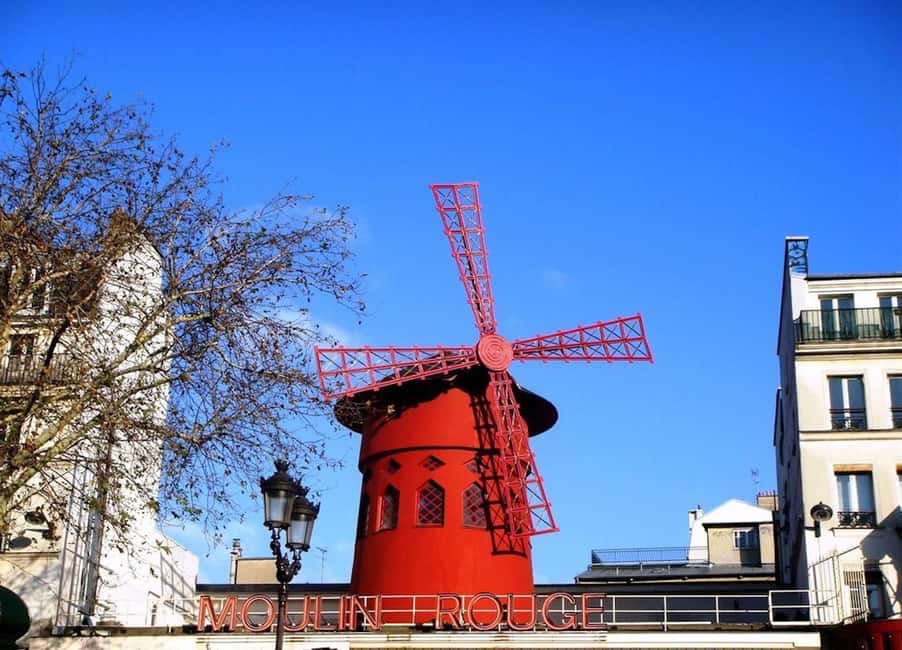
Montmartre tours live or die by the meeting point. You’ll start outside the Blanche metro station, at the traffic island in front of Moulin Rouge. Your guide should carry a HelpTourists bag and wear a pink base cap, so look for that combo first.
Also, give yourself a few extra minutes. Around Moulin Rouge, there are multiple traffic circles and angles that can make the exact starting corner feel unclear. If you arrive right on time, you’ll spend your first moments stressed instead of relaxed.
The tour starts at a walkable point, then you’ll gradually work your way through Montmartre’s main sights. You won’t be covering the whole neighborhood, but you will get the heart of it. Plan to wear shoes you’re comfortable with on uneven sidewalks and cobblestones.
One practical note: the tour isn’t suitable for wheelchair users, which makes sense given the hill and the street surfaces. If that affects you, plan an alternate way to reach Sacré-Cœur (and consider a different kind of guided experience).
Moulin Rouge photo stop: the legend with context
The tour kicks off with a Moulin Rouge photo stop, which is exactly what it sounds like: you’ll get a chance to see the cabaret façade up close and take pictures from an angle that works. But the real value here is what comes with it—your guide connects the spectacle to the ideas that made Montmartre famous in the first place.
Moulin Rouge is often treated like a symbol, but Montmartre is also a place where people lived, worked, argued, painted, and dreamed. A good guide helps you see the cabaret not just as a poster image, but as one piece of a larger neighborhood story.
Expect walking breaks and short pauses, not long lectures. That pacing is important because the tour continues uphill after this point. If you’re someone who likes to photograph first and then listen, this stop is built for you.
If you’re sensitive to crowds, aim to use your photo time efficiently. This area is popular, so the best strategy is to be decisive with your angles and then move on with the group.
Moulin de la Galette and La Maison Rose: charming streets that feel lived-in
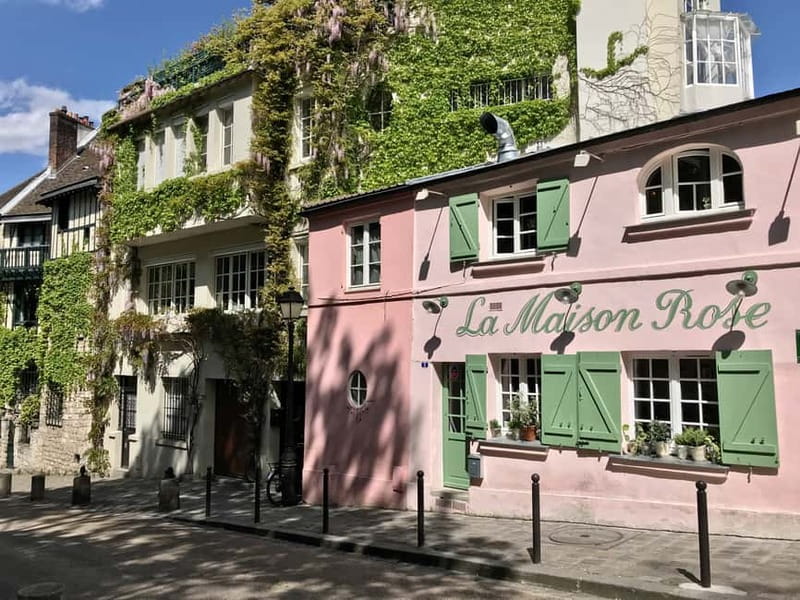
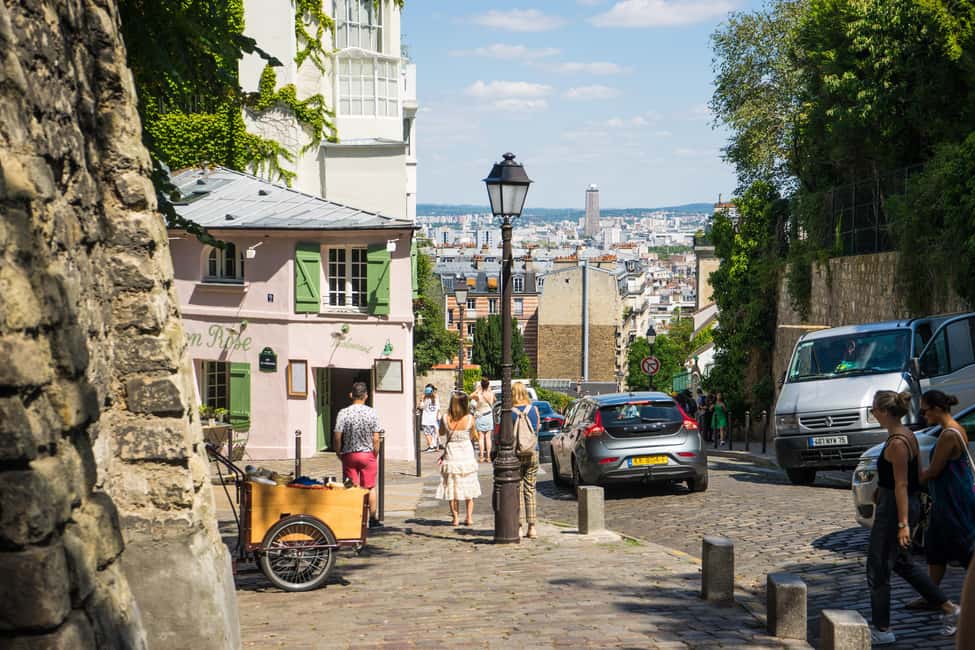
After Moulin Rouge, the tour shifts into Montmartre’s more atmospheric corners. You’ll hit the Moulin de la Galette for another photo stop and sightseeing walk. This is the kind of location that helps you understand why artists were drawn to Montmartre: the mix of views, old-style streets, and that slightly storybook feel.
Next comes La Maison Rose, another photo stop where the neighborhood’s colorful identity becomes obvious fast. It’s the sort of landmark that’s easy to recognize, but it’s more fun when you hear what it means in the context of Montmartre’s artistic past and its ongoing present.
These stops are valuable because they teach you how to look. Instead of just scanning for the next famous building, you start noticing the details that make the neighborhood feel specific: street rhythms, corner sightlines, and the sense of continuity from one era to the next.
The hill is part of the experience here. You’re not just transporting between points—you’re moving through the neighborhood’s texture. If you pace yourself and use the guide’s timing for photos, you’ll feel the charm without burning out early.
Place du Tertre: open-air art energy and real neighborhood life

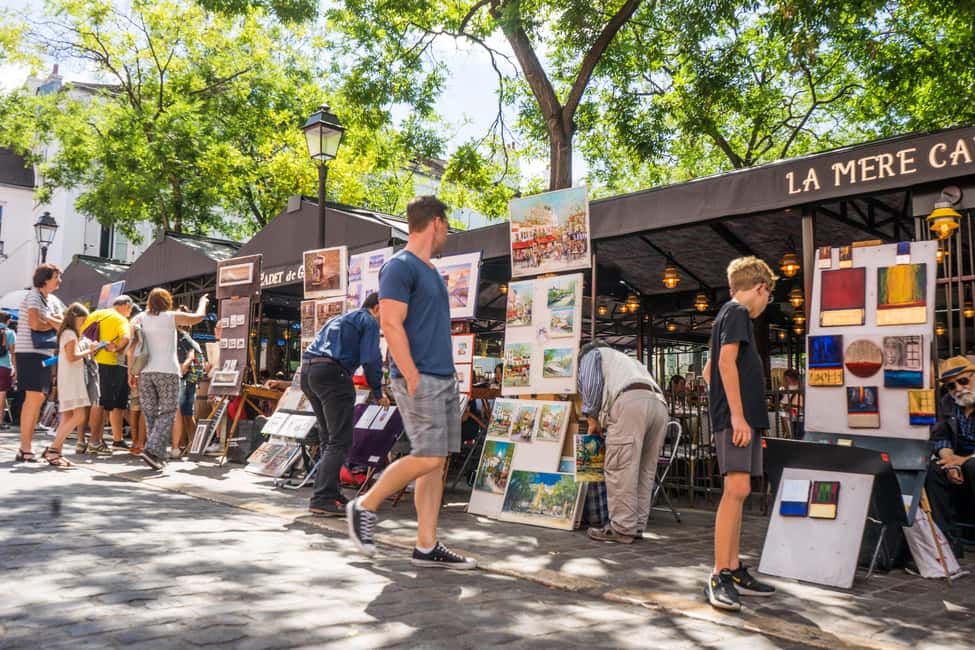
Then you reach Place du Tertre, a square that’s famous for artists working in the open air. This stop is not only about views. You’ll also get time for visit and sightseeing, which means more than a quick look from the sidewalk.
This is where Montmartre stops feeling like a theme park and starts feeling like a living scene. The guide’s job is to connect what you see today with the bohemian past that made the neighborhood a magnet for painters, poets, and dreamers. When that context clicks, the square becomes more than a photo op.
I like how this stop also matches the tour’s promise: you step off the “only the postcard” path and learn how everyday Parisian life has shaped Montmartre over time. The tour leans into anecdotes and curious tales, not just dates and facts.
One practical consideration: Place du Tertre can be lively, so keep a light grip on your belongings and keep an easy pace with the group. If you like browsing art, this is the moment you’ll probably want to linger—just remember you still have one more major stop coming.






Sacré-Cœur Basilica: the calm finale at the top of Paris
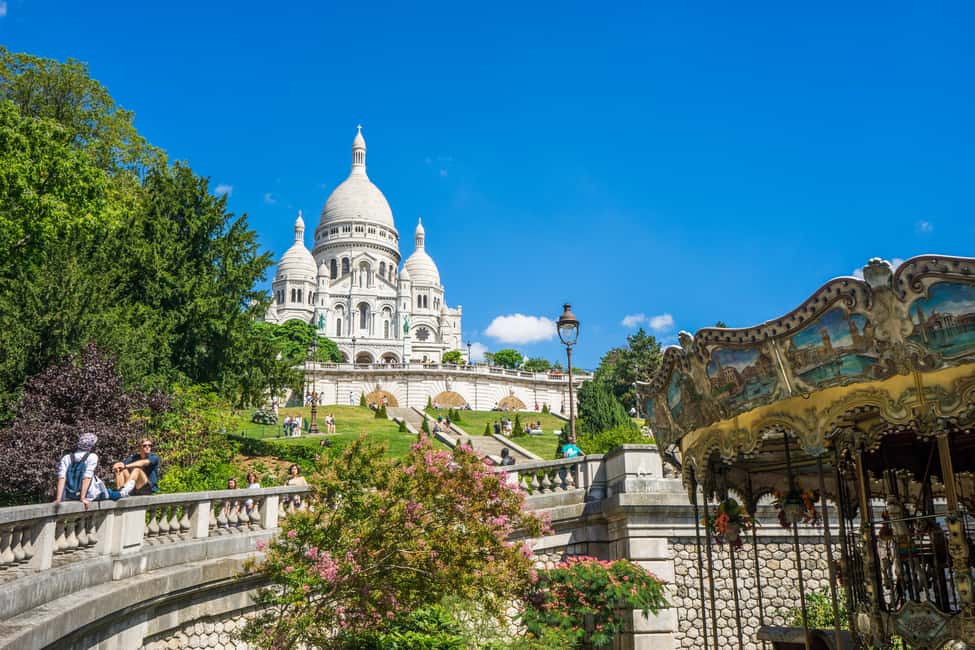
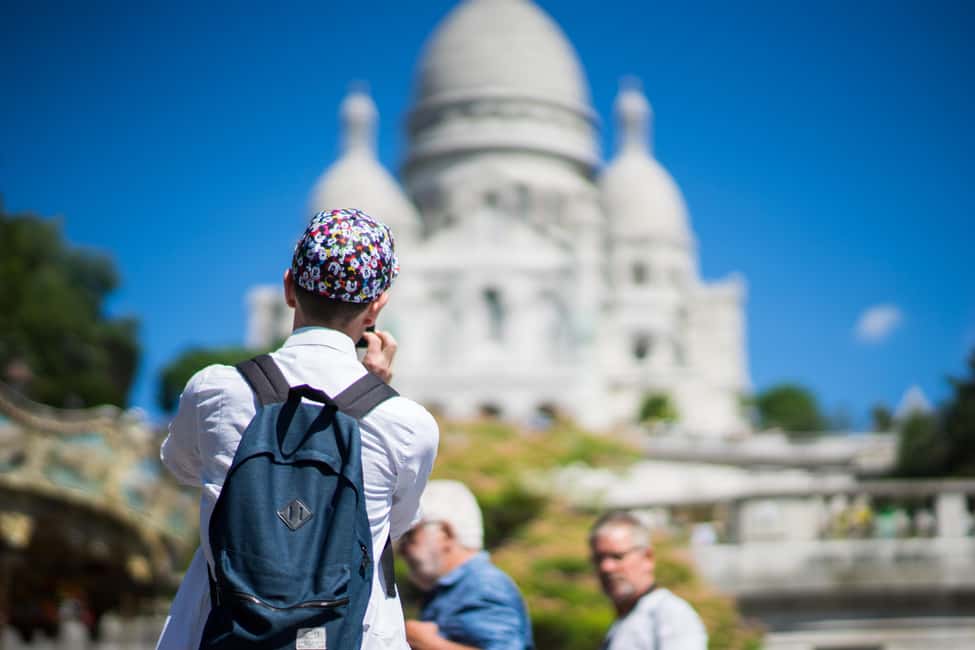
The last big highlight is Sacré-Cœur Basilica. You’ll stop for photos and then enjoy sightseeing right around the basilica area. This ending works well because it’s a built-in reward: after the walk up Montmartre’s hill, you’re suddenly in a different zone—airier, calmer, and visually expansive.
Sacré-Cœur is often described as serene, and your guide’s context helps make that feeling stick. You’ll understand why this particular location matters, not only as a landmark but as the kind of place where Montmartre’s identity crystallizes.
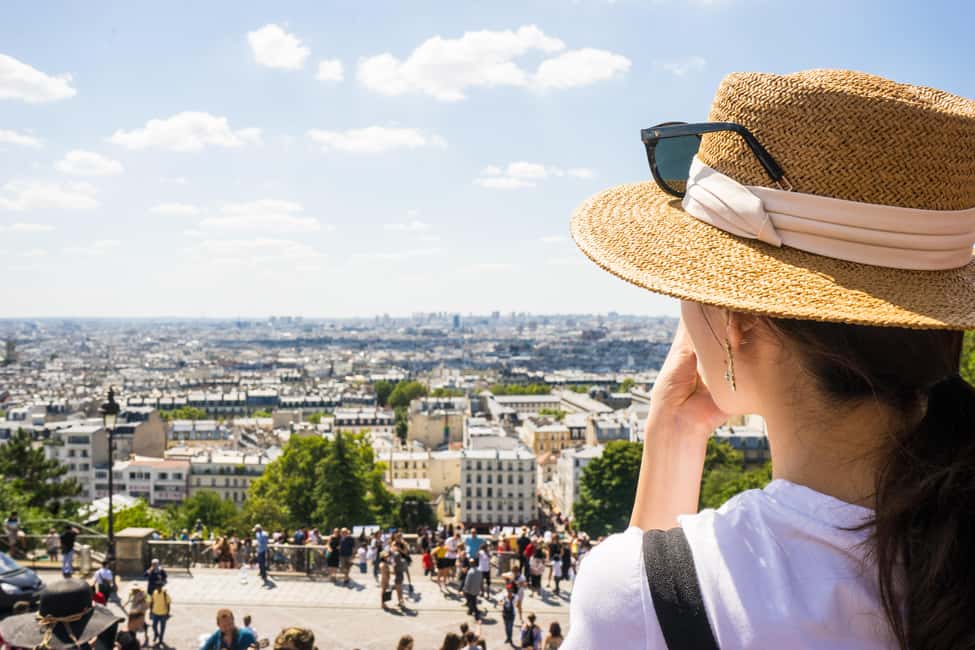
If you’re timing your day, this stop is also ideal for regrouping. Take a breath. Shake out your legs. If the light is good, it’s one of the best places to slow down and look back toward the city.
One note on the tour’s finish: the details indicate you finish at the basilica, and the activity is also listed as ending back at the meeting point area. In practice, your last guided moment will be around Sacré-Cœur, so plan for that as the end of the tour experience.
The guide’s stories: why this tour lingers after you leave
The itinerary is built around iconic Montmartre sights, but what makes it memorable is the way the tour connects art and atmosphere to people and behavior. The promise is clear: fascinating anecdotes and curious tales from everyday Parisian life, plus stories about Montmartre’s inhabitants.
That storytelling style is exactly what turns a walk into something you can retell. You’ll likely walk away thinking of Montmartre less as a collection of famous buildings and more as a real neighborhood shaped by creativity and character. The tour’s emphasis on stepping off the beaten path supports that shift.
It also helps that the guides are part of a German-led team. The vibe is geared toward showing visitors their version of Paris—beautiful, exciting, and full of small surprises. Even if you’ve been to Paris before, Montmartre has a way of changing your mental map of the city. With the right guide, those changes don’t feel random.
I’d recommend paying attention to the transitions between stops. That’s where the stories connect—one location becomes a doorway into the next. If you tune into that rhythm, the last stop at Sacré-Cœur lands with more meaning than a standard “check the church off” moment.
Price and timing: is $34 good value for Montmartre?
At $34 per person for a tour of about 2 hours, this is a mid-range walking-tours price. The value comes from three things: a live guide, a route that doesn’t waste time, and the fact that you’re getting context at multiple high-interest points.
You’re not being asked to spend extra on food or drinks here. That can be a plus if you’d rather choose your own spot for a snack or meal later. It also keeps the experience focused: you spend your money on the guide and the walk, not on packaged add-ons.
Timing-wise, sessions run at consistent afternoon hours, which helps you plan a day without over-committing. Tour days and times are posted clearly by language:
- German tours: Tuesday and Thursday at 4pm, Saturday at 3pm, Sunday at 2pm
- English tours: Monday and Wednesday at 3pm, Saturday at 5pm
If you’re flexible, English at 3pm is a sweet spot for a late-afternoon Montmartre feel. If your schedule matches German sessions, that also works great. Just plan your day around the start time so you’re not rushing to the meeting point.
Who should book this Montmartre walking tour
This is a strong fit if you want Montmartre to feel guided but not over-scripted. You’ll enjoy it most if you like:
- walking through neighborhoods on foot
- photography stops with a plan
- stories that connect famous places to everyday life
- a short tour that doesn’t dominate your whole day
It’s also ideal for first-timers to Paris who want Montmartre as more than a single famous viewpoint. And it can work for repeat visitors too, as long as you’re the kind of person who likes learning the smaller “why this place feels like this” details.
It may be less ideal if you have mobility limitations, since it’s not suitable for wheelchair users and it involves walking uphill on uneven surfaces.
Should you book this Montmartre walking tour?
I’d book it if your goal is to get the Montmartre experience with structure: the right sights, good photo chances, and a guide who brings the neighborhood to life with stories. At $34 for two hours, the math works when you value a local voice over self-guided wandering.
Skip it if you already know Montmartre well and you’d rather craft your own route, or if stairs and uneven streets are a problem for you. In that case, you can still do Montmartre—just plan a route that fits your pace and comfort.
If you do go, arrive early enough to spot your guide by the HelpTourists bag and pink base cap. Then take your time at Place du Tertre—because that’s where the tour’s bohemian promise becomes most visible.
FAQ
How long is the Montmartre walking tour?
It lasts about 2 hours.
Where exactly do I meet the guide?
Meet outside the Blanche metro station, at the traffic island in front of Moulin Rouge. Look for your guide with a HelpTourists bag and a pink base cap.
Is the tour in English or German?
The tour is offered in English and German. English runs on Monday, Wednesday, and Saturday. German runs on Tuesday, Thursday, Saturday, and Sunday.
What time do the tours start?
Start times vary by day. The schedule listed is: German tours at 4pm (Tue/Thu), 3pm (Sat), 2pm (Sun) and English tours at 3pm (Mon/Wed) and 5pm (Sat).
Where does the tour end?
The tour finishes at the Basilica of Sacré-Cœur de Montmartre. The activity details also note it ends back at the meeting point area.
Is food or drinks included?
No. Food and drinks are not included.
Can I reserve and pay later?
Yes. The option listed is reserve now & pay later, so you can keep plans flexible.
Is it wheelchair accessible?
No. The tour is not suitable for wheelchair users.