REVIEW · PARIS
Paris: Treasure Hunt & Walking Tour “Marie Curie’s secret”
Book on GetYourGuide →Operated by Mystery City · Bookable on GetYourGuide
Paris turns into a puzzle board. That is the magic of this outdoor treasure hunt, where you follow a map, solve clues, and chase a Marie Curie mystery across key parts of the city center. I like that it uses real materials (not an app) and that it keeps you moving past major monuments while you figure things out. One thing to keep in mind: the historical storytelling can feel lighter than you might hope, so bring curiosity more than expecting a lecture.
What you’ll really do is walk, read, and solve. You start at Play-In on Rue de Rivoli, pick up a backpack full of treasure-map materials, and then work through riddles at your own pace or in a more competitive way. I also like that it’s designed for mixed groups, including families, so the challenges aren’t only for puzzle pros. Still, because it’s only two hours, you’ll get snapshots of the places and the story, not deep background on everything you see.
In This Review
- Key Points Before You Go
- Marie Curie’s Secret Weapon Treasure Hunt: The Basic Idea
- Where It Starts: Play-In on Rue de Rivoli
- Getting Your Backpack: The French Soldier Moment
- Following the Treasure Map Through Central Paris
- How the Puzzles Work (and Why Physical Props Matter)
- The Marie Curie Story: Fun Framing, Practical Takeaways
- Duration and Pacing: Can You Do It in Two Hours?
- Who This Is Best For (and Who Might Want Something Else)
- Price and Value: Is $28 Worth It?
- Practical Tips to Have a Better Time
- Should You Book This Marie Curie Treasure Hunt?
- FAQ
- What is the duration of the Paris Marie Curie treasure hunt?
- Where does the game start?
- Does the tour end at the same place it starts?
- Is this game app-based?
- What languages is the game available in?
- What is included in the ticket price?
- What is not included?
- Can we play at our own pace?
- Is this a private group activity?
- Is there free cancellation?
Key Points Before You Go
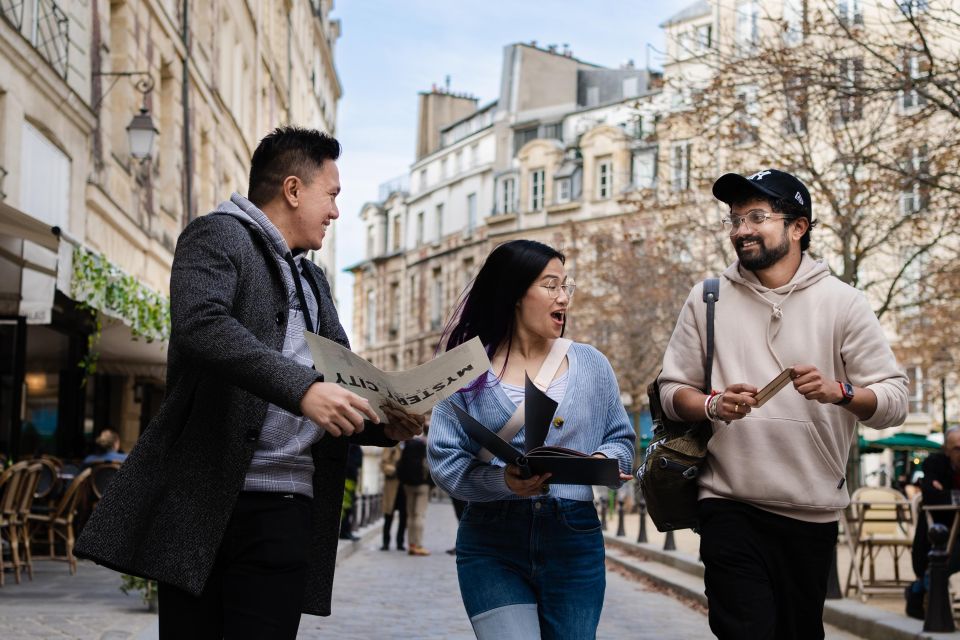
- Meet at Play-In (59 Rue de Rivoli) and collect your backpack from the shop staff.
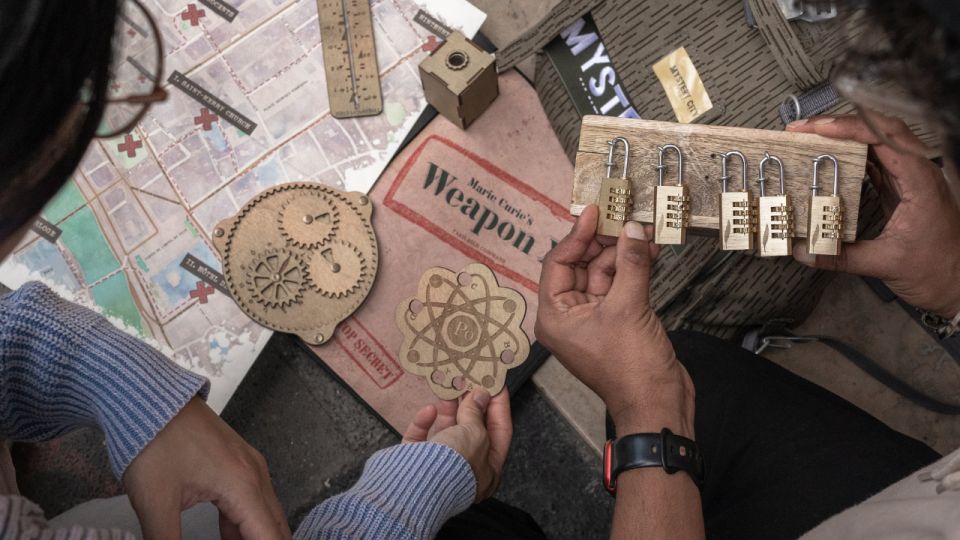
- A no-app experience with physical treasure maps, books, boxes, and tools.
- Follow a treasure map through central Paris while solving puzzle steps.
- Marie Curie themed mission framed as soldiers leaving Paris for the battlefield.
- Works well for families and groups with a mix of finding, reading, and thinking.
Marie Curie’s Secret Weapon Treasure Hunt: The Basic Idea
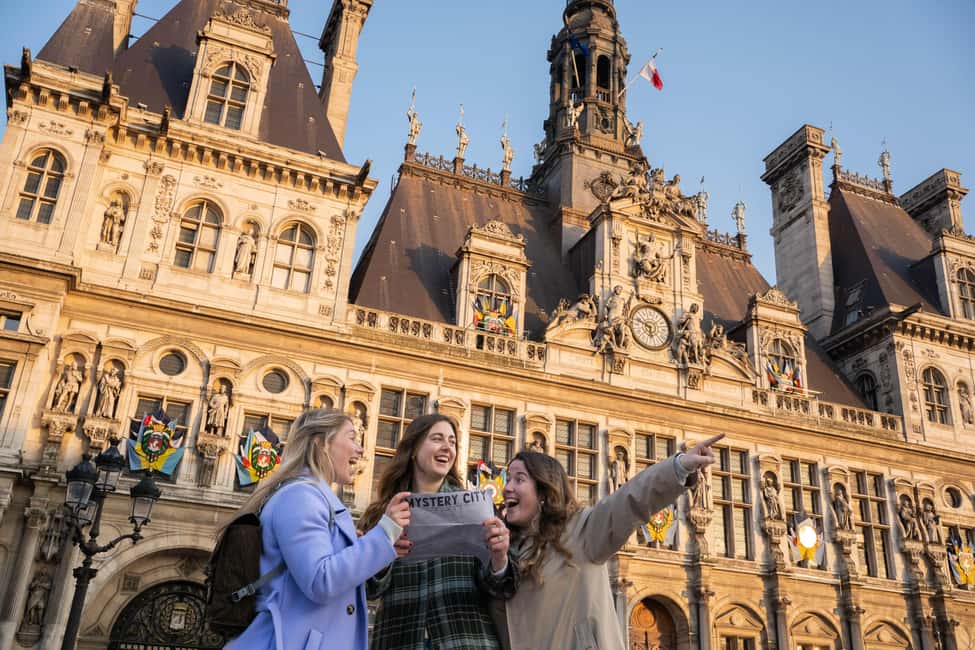
This is an outdoor escape-style game in Paris, built around a treasure map and a set of hands-on props. Instead of staring at your phone, you use printed maps and physical puzzle tools to move from one clue to the next.
The premise is playful and cinematic: as soldiers are leaving Paris in taxis headed to the battlefield, you’re given a special mission to locate a secret weapon left behind by Marie Curie. Along the way, the game routes you through the parts of the city where you can see major sights and monuments—while your group works out what comes next.
If you like Paris but also like doing something with it, this format fits. You’re not just looking around; you’re solving while you look.
You can also read our reviews of more walking tours in Paris



Where It Starts: Play-In on Rue de Rivoli
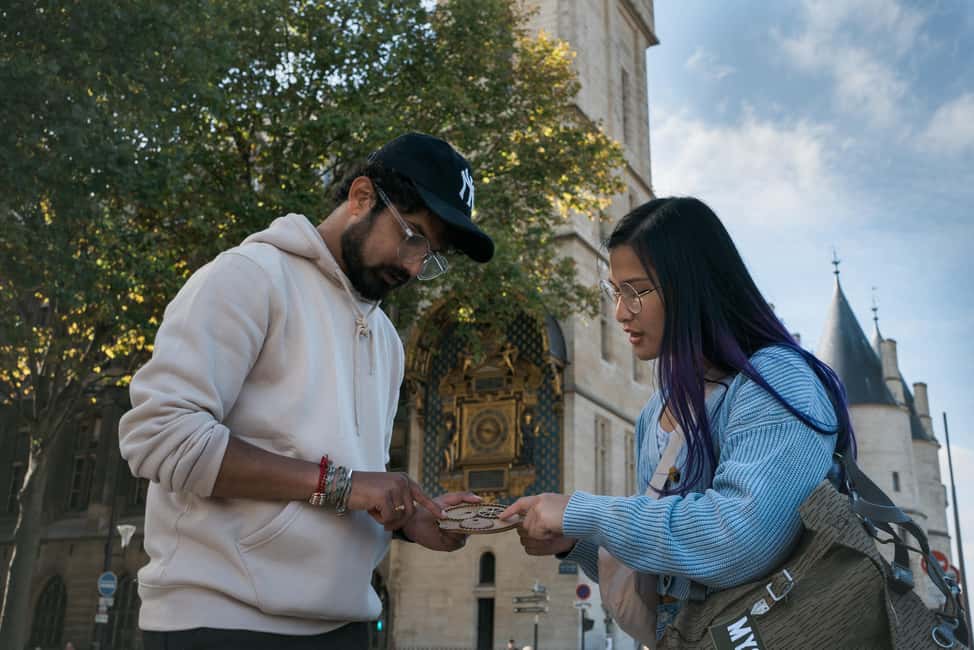
Your meeting point is Play-In at 59 Rue de Rivoli. You’ll gather with your group, then tell one of the shopkeepers you are there to play the Mystery City Game.
This start is useful because it gets you into the game quickly. Rue de Rivoli is a practical central address, and once you’re holding the materials, you stop thinking about logistics and start thinking about clues.
The game also ends back at the meeting point. That makes your planning easier afterward, since you don’t have to figure out how to get across the city at the finish.
Getting Your Backpack: The French Soldier Moment
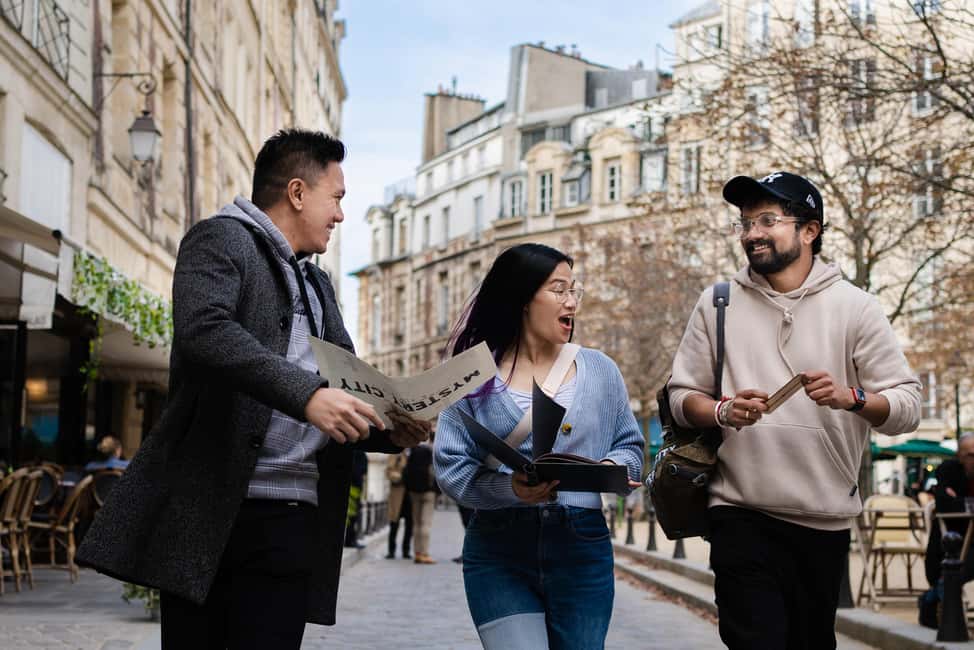
Right at the beginning, there’s a scripted intro with a French soldier character. The idea is simple: you chat with him, then learn how to pick up a backpack that contains what you need to play.
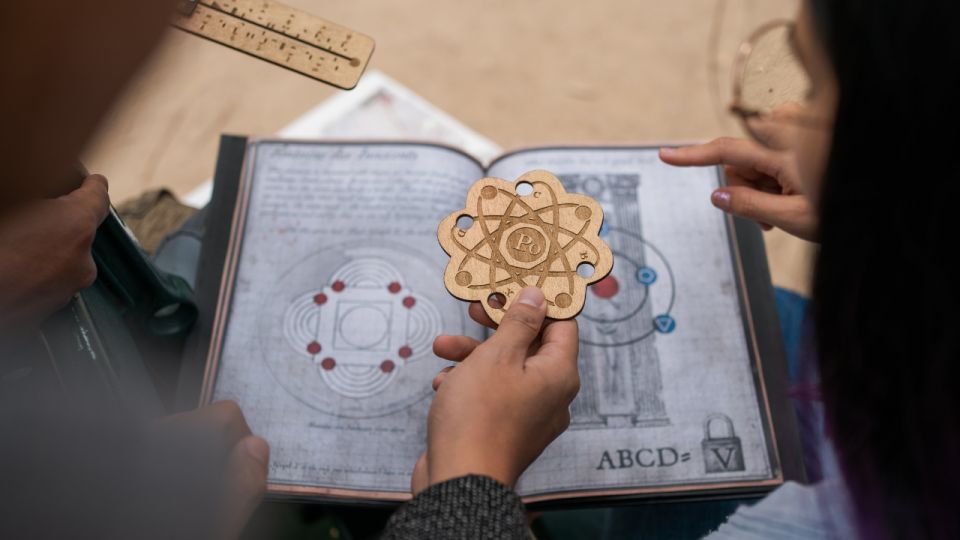
When you collect your kit, it typically includes the treasure maps, boxes, and the other physical tools and props used for the puzzles. It’s a small thing, but it matters because it makes the experience feel like a real mission, not just a walk with questions.
And it sets expectations. You’ll be reading, handling objects, and using what’s in the backpack to solve the next step.
Following the Treasure Map Through Central Paris
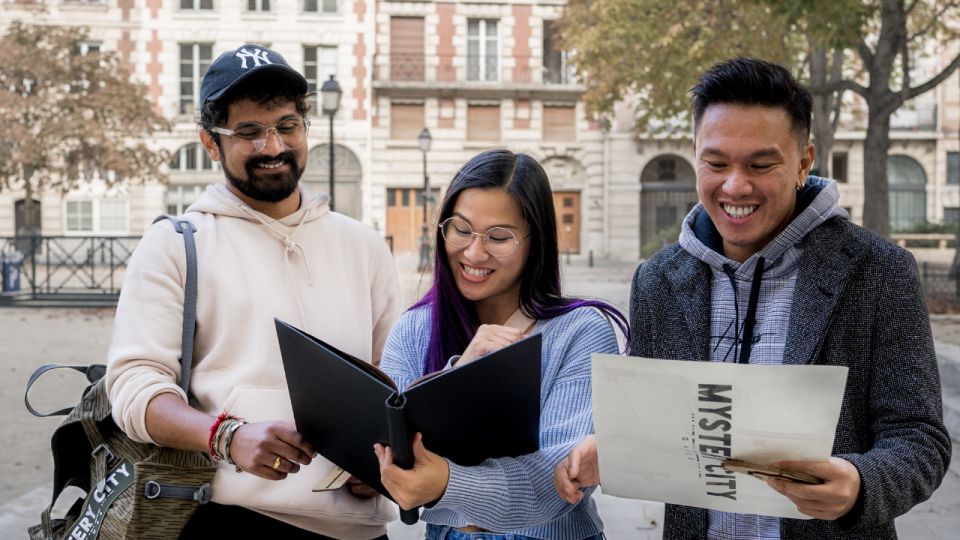
Once you’re set, the treasure map becomes your guide. You walk through Paris city center, and each puzzle step nudges you toward a new spot to explore.
What I like about this approach is that it naturally breaks up sightseeing. Paris can be overwhelming for first-timers when everything feels like a list. Here, you’re guided by curiosity and momentum: you reach a spot because the clue says so.
As you go, the game is designed to pass you by top attractions and monuments. You’re not told to admire them from afar; you’re asked to notice details enough to answer the puzzle step.
You may also end up looking for sculptures and other interesting installations as part of the challenge. That kind of interaction is where the game feels most different from a typical guided walk.
How the Puzzles Work (and Why Physical Props Matter)
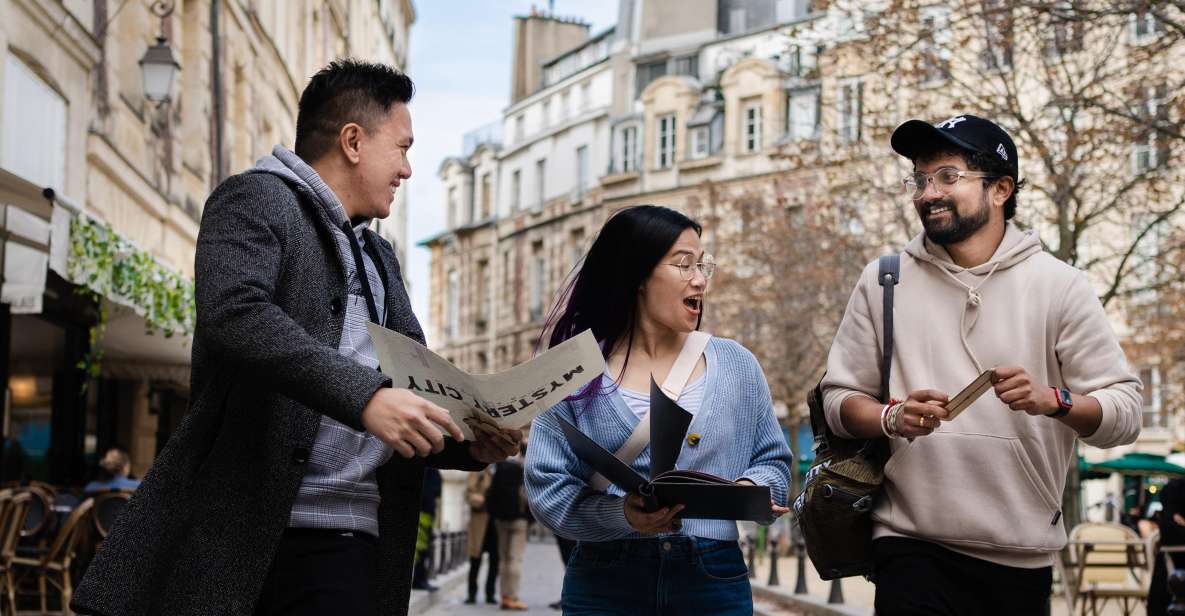
This is not a phone-based scavenger hunt. The game uses physical treasure maps, books, boxes, and tools, which changes the whole vibe.
With paper maps and real puzzle materials, you’ll slow down at the right moments. You’ll gather as a group, compare what you’re seeing, and test ideas the way you would in a board-game style challenge.
You also get to be hands-on. That sounds like a small detail, but it helps a lot for families and mixed-age groups. Kids often enjoy the tactile parts—finding an element, opening a box, or using a tool as instructed—while adults enjoy the logic and the sight-seeing payoff.
The game also allows you to play at your own pace or competitively. If you want teamwork and a relaxed stroll, you can do that. If you want energy and a friendly race feeling, you can lean into competitiveness.






The Marie Curie Story: Fun Framing, Practical Takeaways
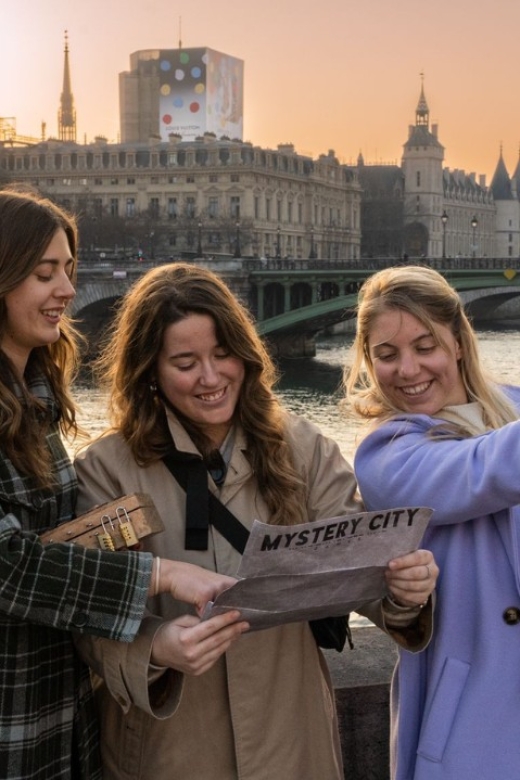
The Marie Curie theme is central to the game. You’re given a mission tied to her, with the storyline set against a tense moment when soldiers are leaving Paris.
The upside of this setup is that it gives your walking route meaning. You’re not just moving between landmarks; you’re completing a narrative arc in real time.
The catch is that the history you get may not be deep enough if you’re looking for a heavy historical briefing. The game is built to keep you in motion and thinking, so the factual content is more like supportive context than a full history lesson.
That said, the “true stories from the city’s history” element still makes the experience feel grounded. You’ll walk away with a better sense of how the story fits into the city, even if you won’t leave with a textbook’s worth of dates.
Duration and Pacing: Can You Do It in Two Hours?
The tour runs about 2 hours. That’s a sweet spot for a city game: long enough to feel like an adventure, short enough that you won’t spend your whole day trying to finish.
Two hours also affects how the puzzles and sights land. You’ll see a lot, but you won’t linger to the point of exhaustion. If you like steady walking and problem-solving energy, you’ll feel comfortable.
If you’re someone who likes long museum stops or deep, slow gazing at architecture, you might want to treat this as one segment of your day rather than your only Paris experience.
Who This Is Best For (and Who Might Want Something Else)
This works especially well for groups that want bonding time and shared “aha” moments. It’s described as fun for friends, family outings, bachelorette parties, and weekend get-togethers, and the clue style supports that mix.
Families are a strong fit here. The game uses physical props and varied challenges that can keep kids interested, including younger ones who like finding sculptures and solving smaller challenges.
It also suits first-timers. If you only have one day and you want a fast way to get oriented around central sights, the treasure-map structure helps you cover ground without feeling lost.
If you’re after a classic guided history tour with lots of detailed lecture-style explanation, you might find the storytelling lighter. In that case, you may prefer pairing this with a museum or a separate walking guide for more structured context.
Price and Value: Is $28 Worth It?
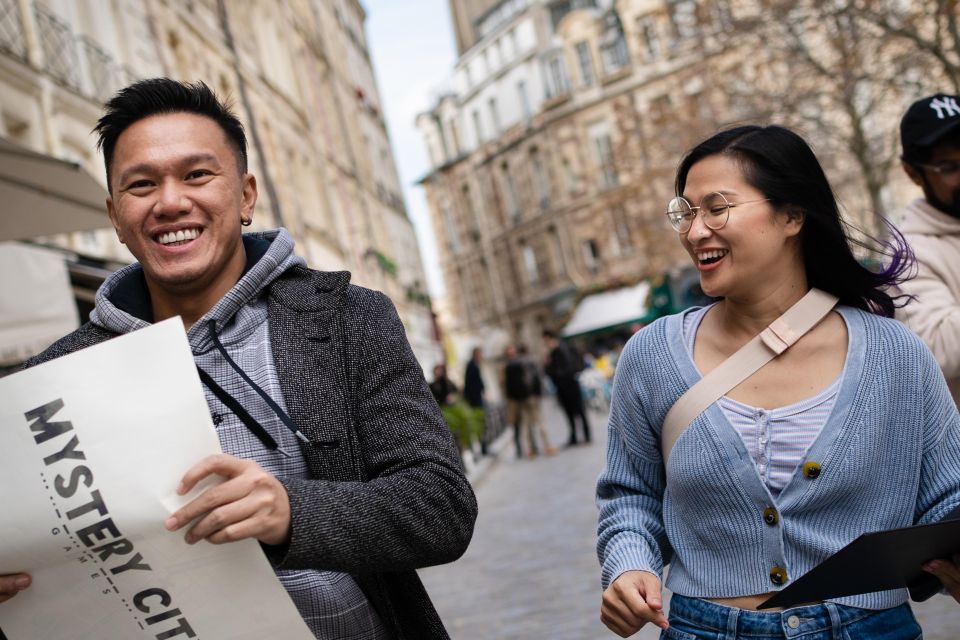
At $28 per person for a 2-hour activity, the value mostly comes from what’s included. You’re paying for a guided-style puzzle route plus physical game materials: treasure maps, boxes, books, and tools.
The “you get props, not just questions” part is the key. Many city activities at this price give you a route and maybe a printed sheet. Here, you get a full puzzle kit, which makes it feel like an event you can do together.
Also, the format is easy to slot into a day. Since it ends where it starts, you don’t need to plan a complicated finish. You’ll also skip the time and attention costs of an app-based scavenger hunt.
If you’re traveling with a group that will actually enjoy puzzles, this price feels fair. If your group hates games or wants pure relaxation, then $28 is harder to justify because the whole point is participation.
Practical Tips to Have a Better Time
A few small choices can make a big difference with a game like this.
First, bring your group mindset. You’ll get farther and enjoy it more if everyone contributes—one person reading, another noticing details, another testing puzzle options. This is a game where teamwork beats lone puzzlers.
Second, wear comfortable shoes. You’re walking in central Paris for about two hours while solving, so you’ll feel the distance even if the route is broken up by stops.
Third, slow down at clue moments. The puzzles work best when you pause and actually use the materials, not when you rush ahead. If the hint says read the map carefully, it means read it carefully.
And finally, if you care most about history, go into it expecting story framing, not a full lecture. Use it as inspiration, then follow up later with your own reading or a museum stop.
Should You Book This Marie Curie Treasure Hunt?
I’d book it if you want a fun, hands-on way to see central Paris in limited time. The combo of physical props and a treasure-map route through monuments makes it feel like an adventure, not a chore.
I would skip it if your top priority is deep historical explanation. Since the timeline is tight and the game is puzzle-focused, the history component may feel like background music rather than the main track.
If your group includes kids, or you want a change of pace from typical guided sightseeing, this is a strong pick. It’s the kind of outing that gets everyone talking, searching, and laughing—then helps you remember what you saw because you earned it step by step.
FAQ
What is the duration of the Paris Marie Curie treasure hunt?
The experience lasts about 2 hours.
Where does the game start?
You meet at Play-In, 59 Rue de Rivoli. You tell a shopkeeper you’re there to play the Mystery City Game.
Does the tour end at the same place it starts?
Yes. It ends back at the meeting point.
Is this game app-based?
No. It is not app-based and uses physical treasure maps, books, boxes, and tools.
What languages is the game available in?
The game is available in French and English.
What is included in the ticket price?
You get treasure maps, boxes, beautiful tools, and true stories from the city’s history.
What is not included?
Transportation to the start point and food and drinks are not included.
Can we play at our own pace?
Yes. You can play at your own pace or competitively.
Is this a private group activity?
Yes, it is listed as a private group experience.
Is there free cancellation?
There is free cancellation up to 24 hours in advance for a full refund.