REVIEW · PARIS
Paris : Montmartre Walking Tour
Book on GetYourGuide →Operated by Guydeez Tours · Bookable on GetYourGuide
Montmartre has a way of making Paris feel personal. This private walking tour takes you through the neighborhood’s artistic legends and the big sights you came for, guided by someone who knows where the story turns. You start with Sacré-Cœur, then work your way through the areas where artists gathered, painted, performed, and mythologized the hill.
I especially like the private, customizable format. You’re not stuck on a rigid group script, and the guide can steer the walk toward what you actually care about. I also love the focus on the key landmarks you’ll want photos of, plus the context that helps them make sense.
The main thing to consider is that food and drinks aren’t included, so you’ll need to plan a snack stop on your own if you get hungry during the walk.
In This Review
- Key highlights I think you’ll enjoy
- Starting at Rue Ronsard: where the tour really begins
- Sacré-Cœur and the meaning behind the white walls
- Moulin de la Galette: the iconic windmill stop
- La Maison Rose: more than just a pretty facade
- Lapin Agile: the cabaret vibe and the artist legend
- Place du Tertre: the artists’ square you’ll want to see
- Picasso, Van Gogh, Dalida: why the names matter
- How the private format changes everything
- Getting the best value at about $29 per person
- A smart add-on: Rue Lepic and Café des 2 Moulins
- Who should book this Montmartre tour
- Should you book it?
- FAQ
- How long is the Paris Montmartre Walking Tour?
- Where does the tour start?
- Is this tour private or shared?
- What languages are available for the live guide?
- Is the tour wheelchair accessible?
- What’s included and what’s not included?
- Cancellation and payment flexibility
Key highlights I think you’ll enjoy
- Private and exclusive: it’s just your group, so you can ask questions without waiting your turn
- Two hours, big hits: Sacré-Cœur plus Montmartre’s core artist stops
- Custom route control: you can tell your guide what you want to see
- Strong local storytelling: you’ll hear how Montmartre shifted from farm village to art center
- Guide advice beyond the walk: useful pointers for what to do next in Paris
- Multiple languages: English, French, Spanish, and Italian, with wheelchair accessibility
Starting at Rue Ronsard: where the tour really begins
Your tour starts at 2 Rue Ronsard, a practical meeting point for getting into Montmartre without wasting time. From there, you’ll move through the neighborhood on foot, with a rhythm that keeps the tour from feeling like a checklist. The guide sets the pace, and because it’s private, that pace can adjust to your group.
This is the kind of walk that works best when you keep an eye out for small details. Montmartre rewards slower attention: doorways, corner cafés, street layouts, and the way people still use the squares and viewpoints the way they always have.
You can also read our reviews of more walking tours in Paris



Sacré-Cœur and the meaning behind the white walls
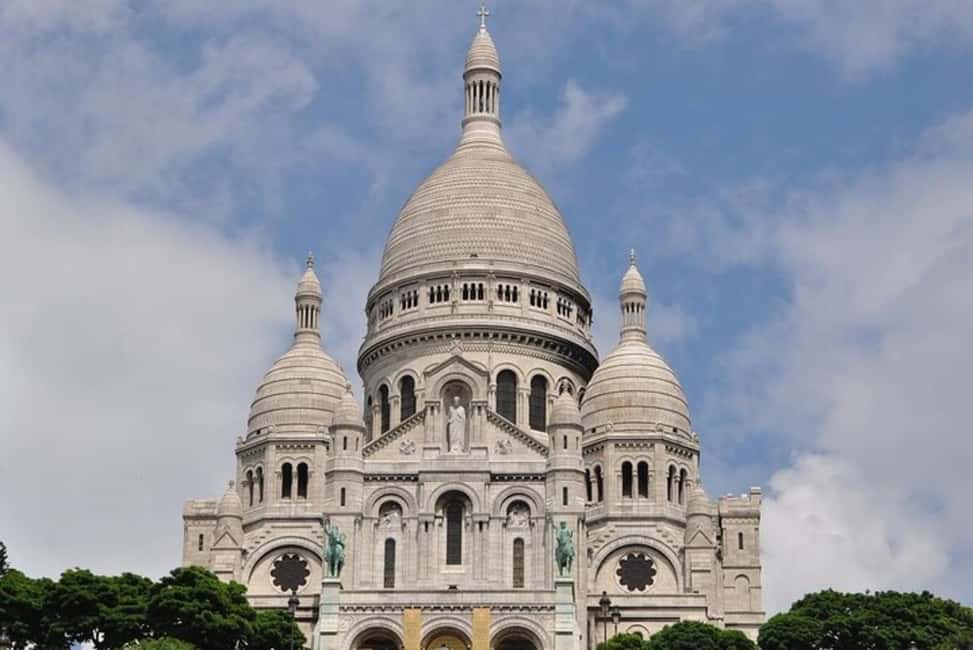
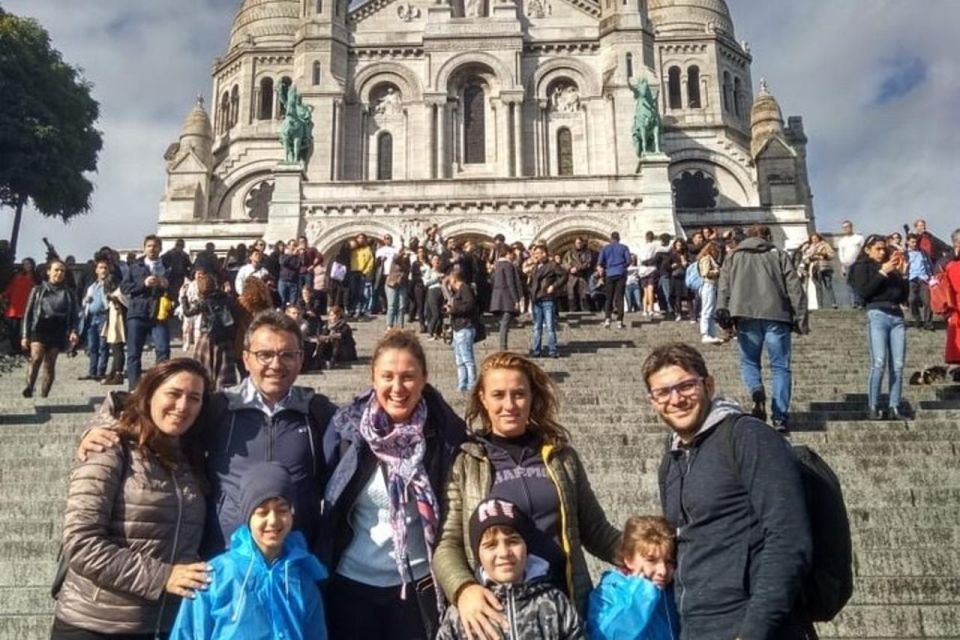
You begin at Sacré-Cœur Basilica, where the architecture does the talking first. You’ll get a guided explanation of why it matters, not just that it looks impressive. The payoff here is understanding that Sacré-Cœur isn’t only a postcard. It’s part of how Montmartre became a symbol of Paris.
The timing also matters. Starting with Sacré-Cœur helps you get your bearings in the area quickly. Once you understand the neighborhood’s center, the later stops feel less random and more like a connected route through Montmartre’s changing identity.
Tip for your visit: if you’re the type who likes a bit of calm, plan to take your first photos early, before you settle into the tighter artist streets. It’s easier to think clearly when you’re not trying to squeeze in a shot with the crowd.
Moulin de la Galette: the iconic windmill stop

Next up is Moulin de la Galette. This is one of those places you recognize instantly, even if you’ve only seen it in books, films, or postcards. The tour includes a photo stop plus a guided visit and walk-through.
What makes this stop valuable on a guided route is the way it connects the visible landmark to the people who made the area famous. You learn how Montmartre went from a more agricultural setting to an art community that attracted major names over time.
Possible drawback: Moulin de la Galette is photo-friendly, but you shouldn’t expect your time there to feel like a long museum-style visit. In a 2-hour format, every stop is designed to give you context and a few standout moments, not to replace slower sightseeing.
La Maison Rose: more than just a pretty facade
Then you’ll head to La Maison Rose, with another photo stop and guided walkthrough. Even if you don’t know the address offhand, the color and vibe make it easy to remember. The benefit of visiting it in sequence is that it fits the story you’ve already started at Sacré-Cœur and Moulin de la Galette.
This stop is a good example of how Montmartre works: famous facades sit next to everyday streets. With a guide, you’ll understand why the neighborhood’s look became part of its reputation for art, creativity, and performance.
If you’re picky about photos, bring your patience here. La Maison Rose can be a quick target for pictures, but the guided part is what helps you slow down and notice what’s around it.
Lapin Agile: the cabaret vibe and the artist legend

At Lapin Agile, you’ll get another guided visit and walk segment. This stop stands out because it points beyond painters and canvases into performance culture—an important part of how Montmartre became an artists’ meeting place.
You’ll also hear the broader transformation arc: Montmartre’s shift from an older working village to a destination for creative life. That theme matters because it ties the landmarks together. You’re not just hopping from sight to sight. You’re tracing how the neighborhood’s identity changed over time.
One practical note: since this is a walking tour, your best strategy is to keep your eyes up and your route awareness steady. Montmartre streets can change character quickly, and a guide helps you keep moving without missing the story.






Place du Tertre: the artists’ square you’ll want to see
Place du Tertre is the classic Montmartre scene—an area associated with artists and sketching life. The tour includes a photo stop plus a guided visit, which helps you frame what you’re seeing rather than treating it as only background.
This is where the “Montmartre as an artists’ village” idea becomes easy to picture. The guide’s job is to connect the present-day view with the neighborhood’s past reputation—especially the way famous figures helped cement the area in cultural memory.
If your goal is to understand Montmartre fast, this is one of the most important stops on the route. It’s where the neighborhood feels most like the version people imagine when they plan a visit.
Picasso, Van Gogh, Dalida: why the names matter
As you walk, you’ll hear about Montmartre’s artistic legacy, including how it became known for figures like Picasso, Van Gogh, and Dalida. The point isn’t to turn the tour into a lecture on famous artists. It’s to show how the neighborhood’s reputation grew because creativity became part of everyday life there.
This is one of the best uses of a guide. Without help, you might recognize names but miss the connection between the person and the place. With a guide, you connect the landmarks to the story of how Montmartre became a magnetic address for art.
I also like that the tour keeps the focus on what you can see in front of you—facades, squares, and landmarks—while still giving you cultural context.
How the private format changes everything
This tour is billed as private and exclusive, meaning you’re not sharing the walk with strangers. In real terms, that makes the experience feel more like a conversation than a ride.
It also means you can adjust the route. The format is described as customizable, and that matters because Montmartre can be approached in different ways. Some people want the big names and famous views. Others want atmosphere and quieter streets. With a private guide, you can steer toward your preference.
I also found it encouraging to see how flexible the guides can be when plans shift. For example, one guide named Charly was described as pleasant and accommodating when the tour was booked with less than a day’s notice, and the group needed to shape what they wanted to see. Another guide, Pascal, was praised for showing Montmartre outside the usual tourist path and being responsive to his group.
Even if your interests are simple—good photos, strong story, easy pacing—the private setup helps you get more out of each stop.
Getting the best value at about $29 per person
At $29 per person for 2 hours, the price is relatively approachable for a private tour style. The value is strongest when you use it for what it does best: guided interpretation plus a route through the most important Montmartre landmarks.
A walking tour like this saves you time. It’s also a chance to ask for practical advice that goes beyond the sights on the map. The tour description promises lots of valuable guidance for other things to do in Paris, and that’s usually where private tours justify their cost. You’re not just paying for footsteps—you’re paying for direction.
What’s not included is food or drinks, so if you plan to stop for a snack, budget a little extra. Also remember it’s a 2-hour route. You’ll leave with a strong overview, but you may still want to come back later for slower browsing.
A smart add-on: Rue Lepic and Café des 2 Moulins
One of the best pieces of advice tied to this kind of Montmartre walk is adding time near Rue Lepic. A helpful suggestion (from a French guide-experience perspective) is to take a separate stroll there to soak up the neighborhood atmosphere. It’s also where you can find the view and spirit associated with Moulin de la Galette and the Café des 2 Moulins, which became well known through the film Amélie Poulain.
You don’t need to force this into the tour if you don’t want to rush. Instead, treat it as a post-walk bonus. The route ends with Sacré-Cœur on the itinerary, so you’ll still be close to an area where you can keep exploring.
Who should book this Montmartre tour
This tour fits best if you:
- Want a high-impact Montmartre overview in about 2 hours
- Prefer a private experience where you can ask questions and adjust the focus
- Like mixing classic landmarks with the story of how the neighborhood changed over time
- Plan to use your guide for practical ideas on the rest of your Paris time
If you’re the kind of traveler who likes to wander without guidance at all, you might feel limited by the structure. But if you want your walking time to come with meaning and context, this is a solid match.
Should you book it?
Yes, I’d book this tour if your priorities are clear: see the main Montmartre sights, get real context from a guide, and keep the experience flexible. The private-only group helps a lot, especially in a place like Montmartre where it’s easy to lose time to congestion and indecision.
Hold off only if you’re expecting a long, slow exploration with lots of food stops built in. This is a focused walking experience. Plan a snack on your own, wear comfortable shoes, and treat the tour as your foundation. After that, you’ll be ready to wander Montmartre with your own eyes—and with better instincts for what to seek next.
FAQ
How long is the Paris Montmartre Walking Tour?
The tour duration is 2 hours.
Where does the tour start?
The meeting point is 2 Rue Ronsard.
Is this tour private or shared?
It’s a private group tour, and it’s described as private and exclusive, meaning there won’t be anyone else in your group.
What languages are available for the live guide?
The live guide is available in English, French, Spanish, and Italian.
Is the tour wheelchair accessible?
Yes, the tour is listed as wheelchair accessible.
What’s included and what’s not included?
Included: the private/exclusive tour, customization, walking tour and public transport (except if you select one of the options), help booking tickets for desired visits, and a small group walking tour. Not included: food or drinks.
Cancellation and payment flexibility
Free cancellation is offered up to 24 hours in advance for a full refund. There’s also a reserve now & pay later option, so you can book without paying immediately.