REVIEW · PARIS
Paris – Montmartre Small Group Walking Tour with a True Local
Book on Viator →Operated by LM Tours · Bookable on Viator
Montmartre makes more sense on a street-level walk. With Corentin, born and raised in the neighborhood, you get a small-group experience that mixes art history with funny, human stories you won’t find in standard guidebooks.
I especially like how the tour keeps a relaxed rhythm while still hitting major landmarks. One thing to plan for: Moulin Rouge admission isn’t included, and the tour is mainly about seeing places from the outside rather than entering buildings.
In This Review
- Key things you’ll notice right away
- Getting Oriented: Place Blanche start, easy 1h45 flow
- Moulin Rouge area and the Café des Deux Moulins: Belle Époque, without the museum feeling
- Van Gogh in Montmartre: the apartment stop that links art to everyday life
- Le Moulin de la Galette: Renoir’s painting and a darker backstory
- Le Bateau-Lavoir and the early-1900s artist scene
- Passe-Muraille and the Clos Montmartre vineyard: art and literature collide
- Au Lapin Agile and Sacré-Cœur views: cabaret history meets Paris panorama
- Place du Tertre: where the street art crowd actually feels alive
- Price and value: why $80 can make sense here
- Who should book this Montmartre walk
- Practical tips to enjoy it more (and waste less time)
- Should you book this Paris Montmartre walking tour?
- FAQ
- How long is the Paris Montmartre small group walking tour?
- What is the maximum group size?
- Where does the tour start?
- Where does the tour end?
- Do I need tickets or entry fees for each stop?
- Is a mobile ticket provided?
- What language is the guide able to speak?
- Is the tour suitable for people with reduced mobility or older travelers?
- What is the cancellation window?
Key things you’ll notice right away
- Max 6 people: you can actually ask questions and get answers tailored to your interests
- Corentin’s local perspective: the route is built from lived-in Montmartre, not just postcard spots
- Art + legends in one walk: van Gogh, Picasso, Renoir, and more, explained in plain language
- Photo breaks with viewpoints: you’re not just marching; you get moments to look and breathe
- Cabaret stops that go beyond the famous sign: stories connect Moulin Rouge, Au Lapin Agile, and Place du Tertre
- Ends at Sacré-Cœur area: a good finish if you want to keep exploring on foot after the walk
Getting Oriented: Place Blanche start, easy 1h45 flow
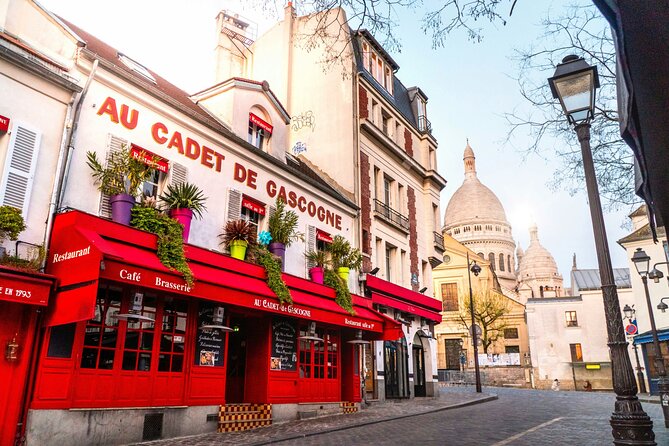
The tour starts at Five Guys on 3 Pl. Blanche (75009), a spot that’s easy to reach via public transport. It runs about 1 hour 45 minutes, which is a sweet spot for Montmartre: long enough to learn the place, not so long that your feet and patience check out.
The pace is described as comfortable, with breaks to take in views. That matters on Montmartre, because the terrain is hilly and the streets can be crowded. This is also a walking tour with a moderate fitness level requirement, and it’s not advised for reduced mobility or for older travelers who may find the grade and time on foot difficult.
A practical tip: arrive a little early and be ready to start on time. One late start can ripple through a route like this, and Montmartre is easier to enjoy when you’re not rushing.
You can also read our reviews of more walking tours in Paris



Moulin Rouge area and the Café des Deux Moulins: Belle Époque, without the museum feeling
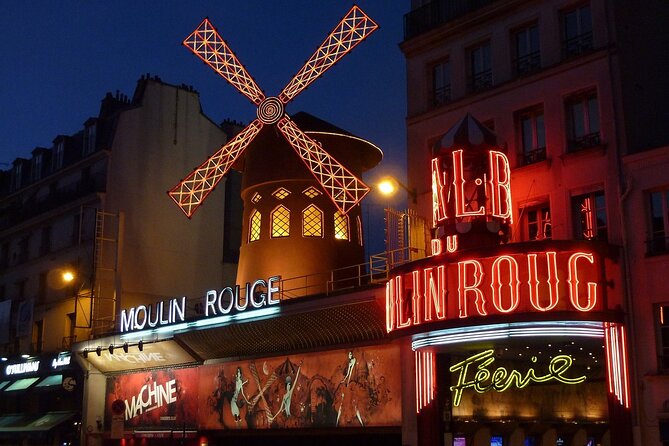
Your first big hit is the Moulin Rouge area. It’s iconic for a reason: Corentin tells you how it became a symbol of Parisian nightlife and culture during the Belle Époque. You’ll also pass the Café des Deux Moulins, the famous Montmartre café tied to the movie Amélie Poulain.
What I like about starting here is that it gives you an immediate frame of reference. Cabarets and art in Montmartre aren’t separate stories—they feed each other. You start with a place everyone recognizes, then the guide shows you the neighborhood connections that make it feel real.
Possible consideration: Moulin Rouge admission isn’t included, and you should plan on viewing from the outside. If you were hoping to go inside, you’ll need to buy that separately on your own—or adjust expectations and enjoy what you can see on foot.
Van Gogh in Montmartre: the apartment stop that links art to everyday life
Next you’ll head to the Appartement des frères Vincent et Théo van Gogh. This stop focuses on Vincent van Gogh’s Paris period, including how Montmartre influenced the direction of his work. The way it’s framed is useful: it’s not just dates and titles. It’s the feeling of why that neighborhood mattered to him at that stage of his life.
Even if van Gogh isn’t your top artist, this is a strong moment because it teaches you how to look. You’ll start noticing how Montmartre’s streets and atmosphere tie into the art that came out of there—so the paintings you’ve seen in books suddenly connect to real corners you can walk past.
Stop length is short, around 10 minutes, so it’s more of a guided orientation than a full deep-dive into one building.
Le Moulin de la Galette: Renoir’s painting and a darker backstory
Then it’s over to Le Moulin de la Galette. The key idea here is the contrast: this is a historic spot with a dark history, and yet Renoir turned it into something unforgettable in Le Bal du Moulin de la Galette.
That pairing is the value. Montmartre isn’t only “pretty streets.” It has edges—social changes, nightlife, conflict, and reinvention. Corentin uses the art connection to show you how the neighborhood’s public image shifted over time.
This stop is also about perspective. If you’ve only seen the image of Renoir’s dance scene, this guide helps you understand why the location mattered to painters—light, setting, and the kind of activity that put artists on the same path as entertainment.
Le Bateau-Lavoir and the early-1900s artist scene
At Le Bateau-Lavoir, you get the story of a hub where renowned artists like Picasso lived and created in the early 20th century. This is one of those stops that feels like a switch flips: modern art isn’t floating in theory. It’s tied to people finding rooms, sharing space, and making work under imperfect conditions.
What you gain here is context you can use later. When you walk through Montmartre after the tour, you’ll recognize how the neighborhood became a magnet for artists—and you’ll be better at spotting why certain streets and viewpoints were so attractive.
You’ll spend about 10 minutes here, keeping it moving while still giving enough information to make the location meaningful.






Passe-Muraille and the Clos Montmartre vineyard: art and literature collide
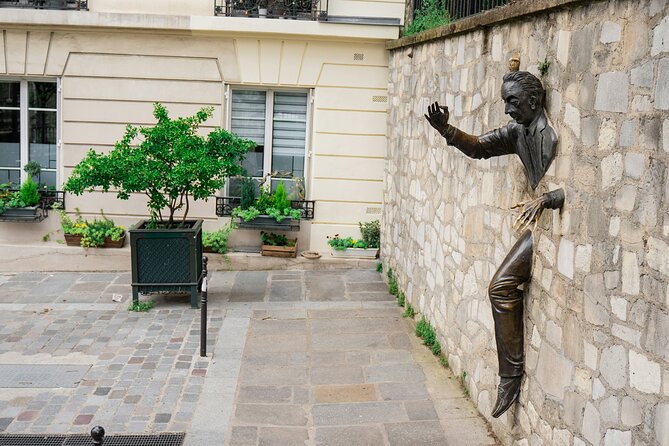
Two smaller stops pack real character.
First is Le Passe-Muraille, the statue of a man seemingly passing through a wall, inspired by Marcel Aymé. It’s brief—about 5 minutes—but it’s memorable because it shows how Montmartre doesn’t just inspire painters. It also feeds literature and symbolism.
Then you’ll visit the Vigne du Clos Montmartre, the historic vineyard tucked into the city. Vineyards in Paris always feel a little surprising, and the value here is learning the local connection between wine culture and Montmartre’s identity.
Both stops work well for a mixed group because they’re visual. You’re not staring at a plaque for too long. You get an idea you can carry into the next street.
Au Lapin Agile and Sacré-Cœur views: cabaret history meets Paris panorama
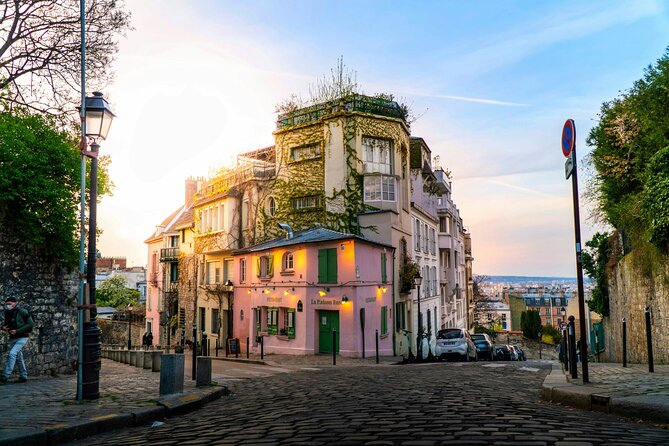
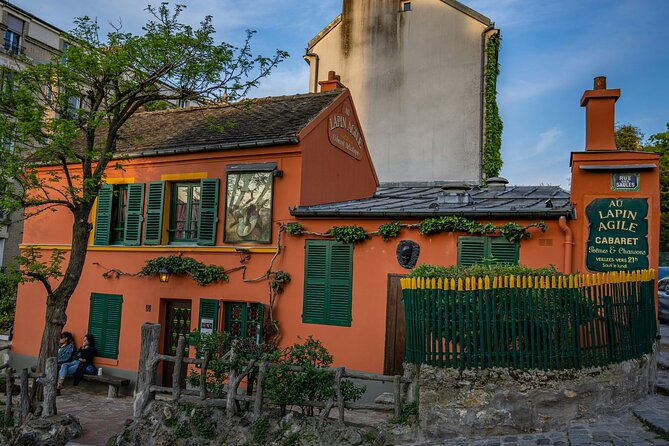
After the art-and-literature interlude, the tour takes you to Au Lapin Agile, described as Montmartre’s oldest cabaret. Corentin shares amusing anecdotes tied to its long-running artist and performer scene, and this stop helps you see how “creative Paris” wasn’t just a 1920s fantasy—it was happening block by block.
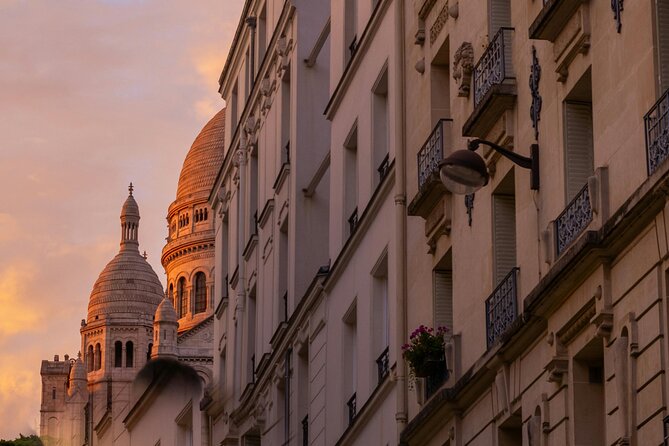
From there, you reach Basilique du Sacré-Cœur de Montmartre. This is the big view moment. You’ll admire the basilica and get panoramic views of Paris from the top of the hill. The stop is around 10 minutes, and while the guide doesn’t promise building entry, the payoff is the viewpoint and the dramatic architecture up close.
One consideration: this is a hillside area. If the stairs or the steady incline are hard for you, you may want to build in extra time and take breaks. Also, if you’re traveling in hot weather, bring water. Montmartre walks can turn uncomfortable fast when the sun hits.
Place du Tertre: where the street art crowd actually feels alive
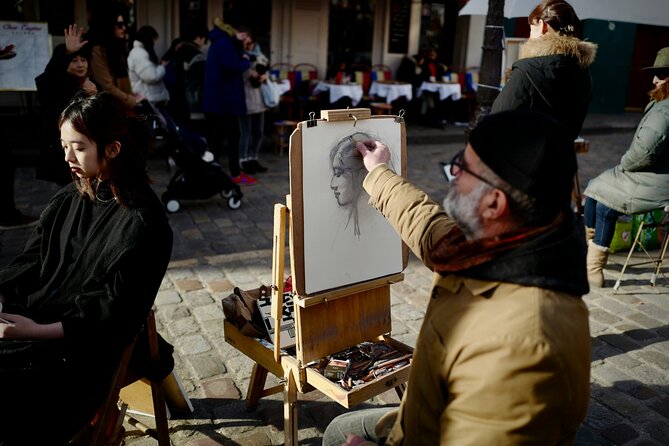
The tour ends at Place du Tertre. This is one of the most picturesque areas in Montmartre, known for an active community of artists working in the square.
Ending here is smart because it gives you a natural handoff. You can keep exploring right away, browse artwork if you want, or simply linger with the kind of street energy that made Montmartre famous.
This final stop is short, about 5 minutes, but it’s a good reset. By the time you reach the square, you understand the neighborhood’s layers—nightlife, art-making, and the stories people repeat about where creativity lives.
Price and value: why $80 can make sense here
At $80 for about 1 hour 45 minutes, you’re paying for three things that matter in Montmartre:
1) A truly small group (max 6).
Crowds kill questions. A small group means Corentin can respond directly, and the tour doesn’t feel like a lecture aimed at no one.
2) A local guide with story-shaped context.
The tour is built around art history, legends, and personalities, not just a list of monuments. That’s why the stops work together: you start at the nightlife image and end at the street art community, with artist hubs and symbolic corners in between.
3) Lots of free stops, with one clear ticket exception.
Most stops are listed as free (in the sense that you’re not buying entry at each one). The only stated admission exception is Moulin Rouge, where entry isn’t included. If you go in expecting outdoor viewing plus guided storytelling, you won’t feel nickeled and dimed.
So the value check is simple: if you want a neighborhood walk with a real resident and you like learning through stories, this price is fair.
Who should book this Montmartre walk
This tour fits best if you:
- want an art-and-culture walk that stays human, not textbook-heavy
- like asking questions and getting answers back
- enjoy walking enough to connect with a neighborhood’s streets, not just see highlights from a bus
It also works well for families. In the feedback you can see it landing with kids and teens too, because the guide’s tone and pace keep the group from turning into a passive shuffle.
On the other hand, it may not be the right choice if:
- you need an accessible route (it’s not recommended for reduced mobility)
- you’re expecting lots of building entry or museum-style time
- you struggle with hills and steady standing/walking for the full duration
Practical tips to enjoy it more (and waste less time)
- Wear comfortable walking shoes. Montmartre is not a smooth sidewalk kind of day.
- Bring water, especially in warmer weather.
- Have questions ready. Corentin’s style is built for back-and-forth.
- If you care about photos, plan to use the viewpoint moments the guide builds in.
- You’ll mainly see places from public areas, so don’t build your day around entering every stop.
Should you book this Paris Montmartre walking tour?
If your goal is a small-group Montmartre walk with a native guide who connects major art sites—van Gogh, Picasso, Renoir—with the neighborhood myths and street-level details, then yes, I’d book it.
Skip it only if you need accessibility accommodations, or if you’re looking for lots of inside museum time and paid attractions bundled into the price. For most people, though, the combination of Corentin’s local perspective, a tight group size, and the mix of cabaret, art hubs, and Sacré-Cœur views makes it an efficient way to understand Montmartre beyond the obvious postcard layer.
FAQ
How long is the Paris Montmartre small group walking tour?
It runs about 1 hour 45 minutes.
What is the maximum group size?
The tour is capped at a maximum of 6 travelers.
Where does the tour start?
The meeting point is Five Guys at 3 Pl. Blanche, 75009 Paris.
Where does the tour end?
It ends at 1 Parv. du Sacré-Cœur, 75018 Paris.
Do I need tickets or entry fees for each stop?
Access to buildings isn’t included, and Moulin Rouge admission is not included. Most other stops are listed as free.
Is a mobile ticket provided?
Yes, the tour includes a mobile ticket.
What language is the guide able to speak?
Corentin speaks excellent English and Spanish, as well as his native French.
Is the tour suitable for people with reduced mobility or older travelers?
It is not recommended for people with reduced mobility, and it is also discouraged for older travelers.
What is the cancellation window?
You can cancel for a full refund if you cancel up to 24 hours in advance. If you cancel less than 24 hours before the start time, the amount paid is not refunded.