REVIEW · PARIS
Paris: Montmartre Private Walking Tour
Book on GetYourGuide →Operated by Paris in person private tours · Bookable on GetYourGuide
Montmartre whispers through old legends. In a private 2-hour walk, you follow the streets that shaped Paris nightlife and Impressionism, with your guide tying what you see to the stories that made this corner famous.
I especially like the way the tour is designed for close-up learning: you get a single guide (not a crowd), and that means questions actually get answered. I also like the route starting at Metro Blanche and working upward through the neighborhood’s big visual landmarks—so the history you hear has a view to match.
One thing to consider: it’s rain or shine, and the time is tight. If you plan to slow down for art browsing at Place du Tertre or you want extra photo time at the viewpoints, you’ll likely need to budget a little extra afterward.
In This Review
- Key things to know before you go
- Starting at Metro Blanche: your bearings in one smart move
- Rue Lepic uphill: where Impressionist energy turns into a walking route
- Sacré-Cœur’s white façade: the payoff viewpoint for the whole climb
- Moulin Rouge and Moulin de la Galette: Can-Can legends in daylight
- Place du Tertre: village charm inside the city machine
- Vigne de Montmartre: vineyards on a hill you thought was only streets
- Lapin Agile: an artists’ cabaret you can picture clearly
- How the tour feels in 2 hours: pace, photos, and energy management
- Price and value: is $171 per person worth it?
- Who should book this Montmartre walking tour?
- Should you book this tour?
- FAQ
- Where does the tour start?
- How long is the Montmartre private walking tour?
- Is this a private tour or a group tour?
- What languages are available?
- Is food or drinks included?
- Does the tour run in bad weather?
Key things to know before you go
- Private guide, real conversation: You’re not squeezed into a group script, so you can ask about what you care about most.
- Art history on foot: The tour links street corners to Impressionism and the way Paris artists lived and worked.
- Rue Lepic uphill route: Expect a climb on an old Montmartre street, plus big “see-it-from-here” moments.
- Can-Can and cabarets: You’ll pass major landmarks tied to late-19th-century entertainment culture.
- Place du Tertre + street art: The tour spotlights the village feel inside the metropolis.
- Lapin Agile stops the story: The cabaret visit gives you a specific hangout tied to artists like Picasso and Modigliani.
Starting at Metro Blanche: your bearings in one smart move
You meet by the exit of Metro Blanche, and your guide will be holding a red canvas tote bag. That matters more than you might think. Montmartre can feel like a maze of staircases and sudden hills, and starting with an obvious landmark helps you get your bearings fast.
This is also a strong opener because Metro Blanche is tied to the area’s entertainment energy. Even if you’ve seen photos of Montmartre’s nightlife, the guide can frame how that scene became part of daily life here—less like a postcard and more like a place with a real rhythm.
When you walk with a private guide, you get a trick that big bus tours don’t: you can ask, right away, why a building or street name matters. That sets the tone for the whole two hours.
You can also read our reviews of more walking tours in Paris



Rue Lepic uphill: where Impressionist energy turns into a walking route
After you start near Metro Blanche, you follow the neighborhood’s older lanes toward Rue Lepic. This is one of the tour’s standout ideas: instead of telling Impressionism as a distant museum topic, you experience it as geography. The guide connects artistic movements to streets you can actually stand on.
Rue Lepic is described as an ancient street where art movements of Paris were born. And the route doesn’t just point—you climb. That uphill walk does two useful things for you:
1) it physically slows your pace so the stories land better, and
2) it builds the anticipation toward the views later.
If you’re traveling with kids or anyone who tires easily, the good news is the tour is only two hours. The better news is that you’re doing the climb with context, so it feels purposeful rather than just effort.
Sacré-Cœur’s white façade: the payoff viewpoint for the whole climb
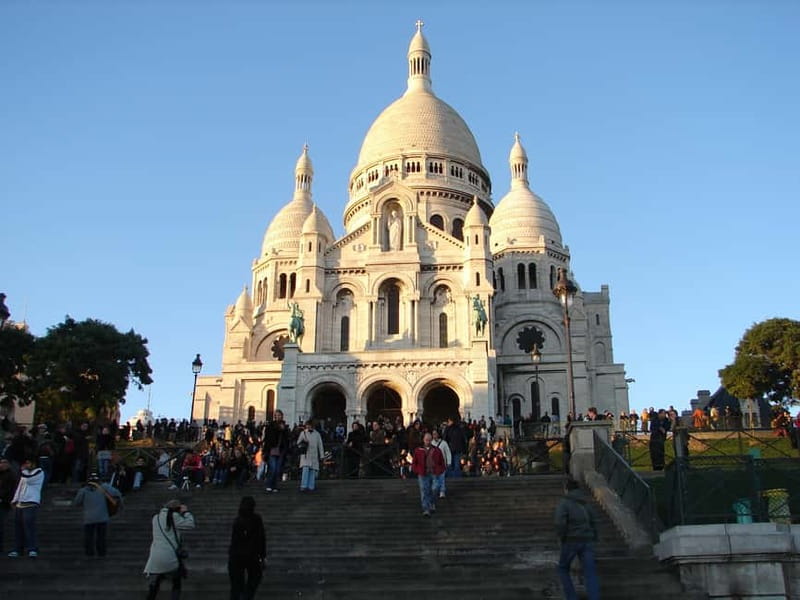
At the top of the Rue Lepic lead-in, you’ll marvel at the white façade of Sacré-Cœur. This is one of those “everyone knows this place” moments, but on a guided walk it becomes more useful than a photo stop.
The guide uses this moment to anchor earlier stories—illegal alcohol, the messy side of nightlife, and how the area shifted from a rougher reputation to a more fashionable, bohemian center. Seeing Sacré-Cœur right after hearing that kind of contrast makes the neighborhood feel like a living timeline.
Also, the tour keeps moving, so you get the visual payoff without turning the whole outing into one long wait for the perfect angle. You’ll still want to take photos, but you won’t lose the flow.
Moulin Rouge and Moulin de la Galette: Can-Can legends in daylight
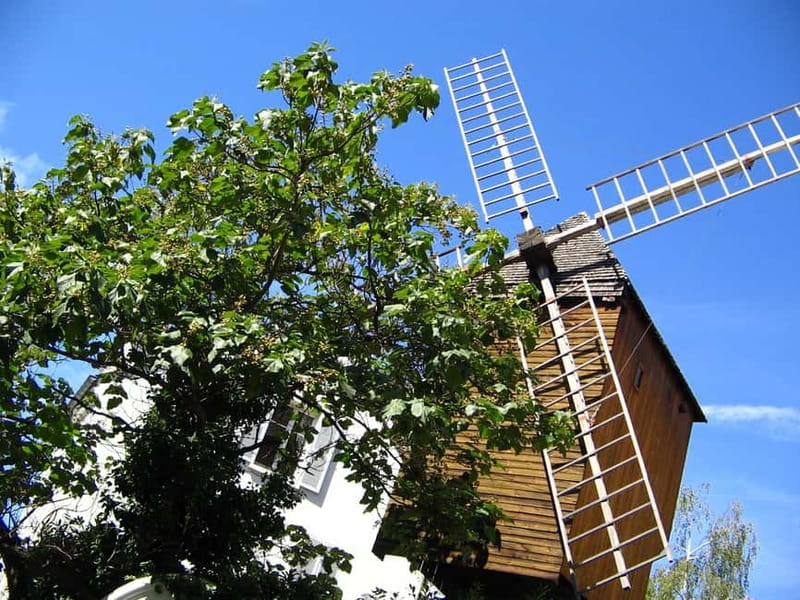
The tour includes major landmarks tied to the Can-Can era, including Moulin Rouge and Moulin de la Galette. What I like about this approach is that it treats nightlife history like something you can track street by street.
You also hear the kind of stories that make Montmartre feel human: mentions of illegal alcohol and “obscene” dancers, plus the constant push-pull between reputation and reality. The tour doesn’t pretend the neighborhood was all glamour. It paints the contrast—lavish houses side by side with run-down slums—so the entertainment landmarks don’t feel disconnected from everyday life.
If you’re into Paris for more than just big sights, this is where the tour is at its best. You start to understand why people were drawn here: it wasn’t only spectacle, it was a whole environment that supported creativity, drinking, and daring behavior.
One practical note: because these are big, famous sights, it can get busy around them. With a private guide you’re usually better positioned to keep walking rather than getting stuck behind a moving crowd.
Place du Tertre: village charm inside the city machine
Next comes Place du Tertre, and this stop is about atmosphere. You’ll discover the village charm of Montmartre right in the middle of Paris, and you’ll also see street artists working in the square.
This is a good spot for you if you like:
- watching art being made in real time, and
- feeling how Montmartre still performs its old identity.
The only drawback is also simple: it’s a popular area. If you want quiet photos, go slow and let your guide lead you. The private format helps here because your guide can steer you toward the calmer corners without turning it into a detour.
You can also read our reviews of more private tours in Paris






Vigne de Montmartre: vineyards on a hill you thought was only streets
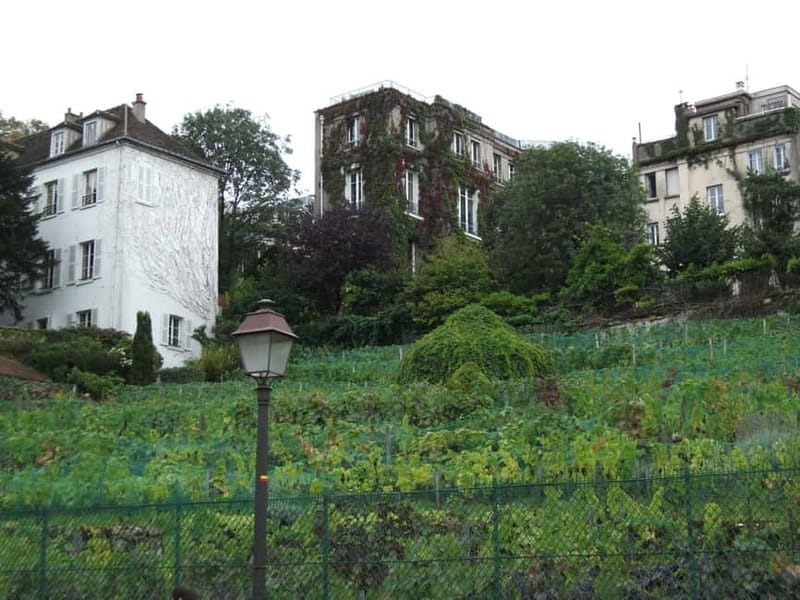
You’ll also stop to discover the Vigne de Montmartre. This is one of those details that changes how you picture the neighborhood. Instead of Montmartre being only steep streets and cabarets, you get a reminder that this district has agricultural roots too.
Even if you don’t know anything about wine or farming, the stop is useful. It provides a breather in the story—your guide can point out how Montmartre’s identity evolved, and why the neighborhood’s landscape mattered to its later reputation.
Lapin Agile: an artists’ cabaret you can picture clearly
The tour visits Lapin Agile, a cabaret with a strong reputation as a favorite haunt of struggling artists and writers. This stop is where the “legends” become specific people.
The tour mentions Picasso and Modigliani in connection with the cabaret—artist names that instantly make the whole district feel personal. When your guide ties those names to a real street-level place, you stop thinking of them as museum-famous and start thinking of them as working, arguing, and creating in cramped venues.
This is also where a good guide really shows up. Private tour reviews consistently highlight guides such as Boris and Isabella as especially strong at storytelling and making the area click. If you’re the kind of person who likes to understand what was happening around the art—not only the art itself—this cabaret stop will land well.
How the tour feels in 2 hours: pace, photos, and energy management
A two-hour private Montmartre walk is basically a sprint with a purpose. You’ll cover several big touchpoints—Metro Blanche, climbs toward Sacré-Cœur, cabaret-area landmarks, Place du Tertre, and Lapin Agile—while still having time to pause.
Here’s what to plan for:
- Wear shoes for steps. Rue Lepic includes climbing, and Montmartre is never flat.
- Expect frequent story stops. This isn’t a “walk past and move on” outing. Your guide will frame each place with context.
- Photo time is possible, but not unlimited. The tour is built to keep the narrative moving, so you’ll want to take photos quickly and get back to the story.
If you’re traveling with kids, this format often works well because the guide can adjust pacing. One private-tour experience noted a guide keeping two young daughters entertained, which is exactly what you want from a private Montmartre guide—less lecturing, more engagement.
Price and value: is $171 per person worth it?
At $171 per person for a 2-hour private tour, the price is clearly not the bargain end of Paris sightseeing. But here’s the value math that makes sense for the right traveler.
You’re paying for:
- a private guide (not a shared group),
- a route designed around major Montmartre landmarks and art-story connections,
- and the chance to hear very specific details like the connections between Montmartre’s nightlife and artistic life.
This price usually makes the most sense if you’re:
- a couple or small group who wants flexibility,
- someone who prefers guided context over reading plaques,
- or you’re short on time and want the “best hits” version of Montmartre with an actual narrative.
If you’re the type who likes wandering without structure, a self-guided Montmartre walk could feel more cost-effective. But if you want your walking route to mean something, the private format is what turns the neighborhood from scenery into a story you can repeat later.
Who should book this Montmartre walking tour?
This tour fits best if you want Montmartre in a way that feels lived-in, not just photographed.
It’s a great match for:
- Art lovers who want Impressionism linked to street corners
- History-curious travelers who don’t mind the less-polished side of the story
- Families who can benefit from a guide keeping kids engaged (especially with a flexible, friendly guide)
- People who like a walking pace and want to learn without sitting in a vehicle
It may be less ideal if you:
- want long, unstructured time for shopping and browsing,
- hate hills,
- or plan to spend most of the day in Montmartre anyway (in that case you may prefer a longer tour or self-guided add-ons).
Should you book this tour?
Yes, if you want Montmartre’s legends stitched to real places you can walk to in a short window. The big strength is the private guide experience—stories that connect Can-Can culture, Impressionism, and artists’ hangouts to the streets you’re standing on. Guides like Boris and Isabella come up as especially engaging, which matters a lot for a two-hour format.
Book it with one expectation: this is a focused introduction. If you love what you hear, you’ll naturally want to extend your day afterward—especially around Place du Tertre and the higher viewpoints.
FAQ
Where does the tour start?
Meet your guide by the exit of Metro Blanche. The guide will be carrying a red canvas tote bag.
How long is the Montmartre private walking tour?
It lasts 2 hours. Starting times vary, so check availability.
Is this a private tour or a group tour?
It’s a private group tour with a live guide.
What languages are available?
The live tour guide is available in English, French, and Serbo-Croatian.
Is food or drinks included?
No. Food and drinks are not included.
Does the tour run in bad weather?
Yes. The tour takes place rain or shine.