REVIEW · PARIS
Paris Marais Quarter 2-Hour Private Walking Tour
Book on GetYourGuide →Operated by Paris in person private tours · Bookable on GetYourGuide
The Marais tells stories at street level. In just two hours, this private walk connects medieval roots, Jewish life in the Pletzl, and the modern Pompidou Centre into one easy loop you can actually follow.
What I like most is how the guide turns big landmarks into a clear timeline—starting with Les Halles, then moving through the public spaces that shaped everyday life. I also love the emotional geography of the Pletzl, where you see how the neighborhood’s Jewish center has persisted through dramatic changes.
One possible downside: it’s only 2 hours, so you won’t get slow, deep reading time for every building. And at $176 per person for a private guide, it’s best when you’re ready to make the time count.
In This Review
- Key highlights before you go
- Marais in 2 hours: private pacing and a smart starting point
- Les Halles to Fontaine des Innocents: why the Marais began with water and commerce
- Hôtel de Ville: opulence, civic power, and the neighborhood’s big swings
- The Pletzl and Rue Pavée synagogue: seeing continuity inside change
- Centre Pompidou: the Middle Ages to modern Paris connection (and why it works)
- Hôtel de Sully, Place des Vosges, and Place de la Bastille: the Marais finale
- What you’ll learn from the guide: clarity, pacing, and street-level context
- Price and value: is $176 per person a smart move?
- Who this tour fits best
- Should you book this Marais private walking tour?
- FAQ
- How much does the Paris Marais Quarter private walking tour cost?
- How long is the tour?
- Is this tour private?
- Where do we meet the guide?
- What languages are available?
- Does the tour run in bad weather?
- What is included in the price?
- Are food, snacks, or drinks included?
- What flexibility do I have for booking and cancellation?
Key highlights before you go
- Les Halles and public Paris: see how a once-major open market fits into the neighborhood’s bigger story
- Hôtel de Ville in Renaissance splendor: an opulent civic landmark with serious “power in stone” energy
- Pletzl and Rue Pavée synagogue: learn why this area became the historic Jewish center
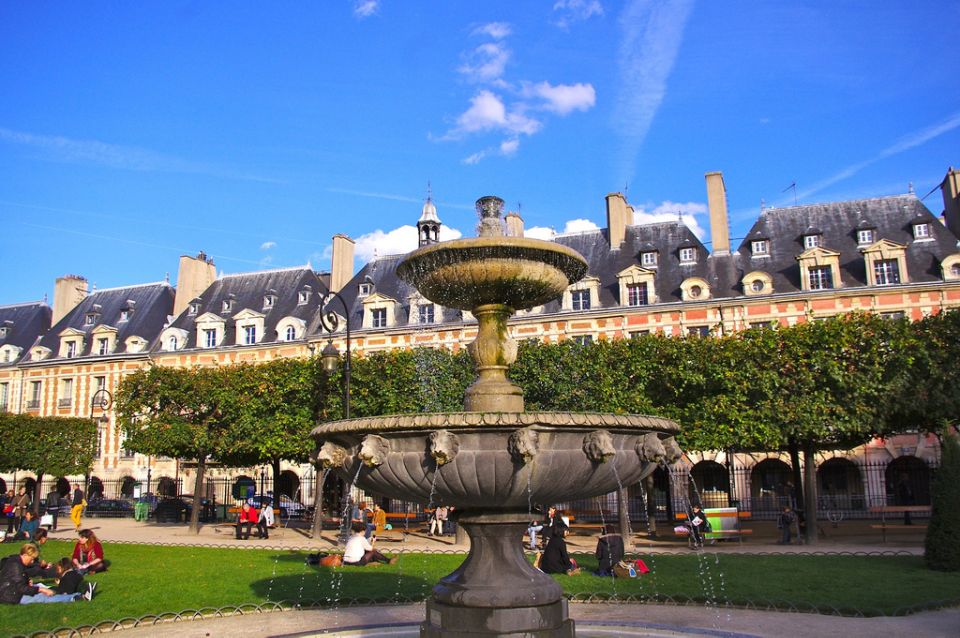
- Place des Vosges: one of the world’s most beautiful squares, visited with real context
- Centre Pompidou’s medieval link: a guide-led connection between the Middle Ages and today’s Pompidou Centre
- Private pacing: your questions and interests can shape what you notice along the route
Marais in 2 hours: private pacing and a smart starting point
This is a 2-hour private walking tour of the Marais that’s built for people who want structure without feeling rushed. You start at Metro Étienne Marcel, and your guide will be carrying a red canvas tote bag, which makes the meet-up simple even if you’re arriving from another line or neighborhood.
Because it’s private, you’re not dealing with the “follow the herd” problem. You can ask what matters to you—architecture, neighborhood history, or just how Paris became Paris in the first place. The guide also works in multiple languages (English, French, Serbo-Croatian), so it’s easier to keep things clear.
Also, this tour runs rain or shine, so plan for real sidewalk time. Bring comfy shoes; the Marais is made for walking, but the streets are not always flat and forgiving.
You can also read our reviews of more walking tours in Paris



Les Halles to Fontaine des Innocents: why the Marais began with water and commerce
The tour’s story starts at the neighborhood’s origin. The Marais began as swamp land, then got drained and became habitable—an important detail because it explains why so much of the area’s early life revolved around shaping and using space. That “turning chaos into city” theme makes later stops feel more meaningful.
From there, you’ll explore Les Halles, once described as the biggest open market in Paris. Even if you only know “market area” as a modern idea, your guide connects it to the earlier rhythm of the neighborhood: food, trade, movement, and how crowds helped make the area central to city life.
Then the walk shifts to Fontaine des Innocents. A fountain might sound like a pause button, but it works well here because it’s a public feature—something you see, notice, and use as a marker while the guide explains how the neighborhood’s character changed over time.
Hôtel de Ville: opulence, civic power, and the neighborhood’s big swings
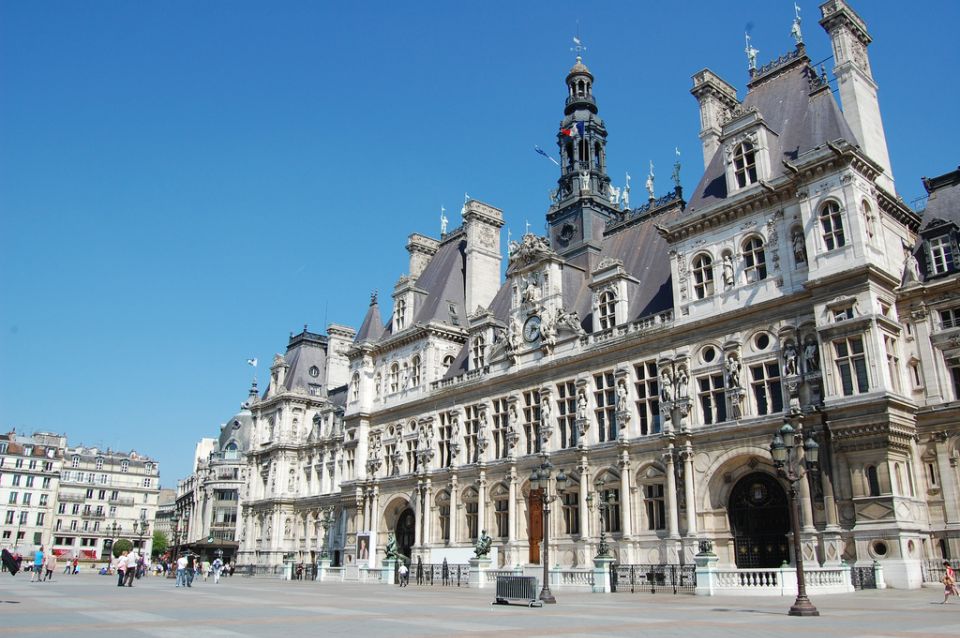
Next comes the Hôtel de Ville, the opulent Renaissance City Hall. This is a great stop for anyone who likes to understand what a city chose to show off—and what it built to last. It’s not just pretty. Your guide frames it as part of the Marais’s climb: a place that at one point attracted elite life, including aristocrats and even a royal court.
That matters because the Marais didn’t only go up. Over the years it also fell hard, eventually turning into a shady slum that people tried to avoid. Hearing that shift while standing near a major civic building helps the story feel grounded instead of abstract.
In other words, this tour doesn’t treat the Marais like a postcard. It treats it like a neighborhood that changed its mind—and learned from both success and failure.
The Pletzl and Rue Pavée synagogue: seeing continuity inside change
One of the strongest parts of this walking loop is the stop in the Pletzl area, the historic center of Paris’s Jewish community. Your guide explains that the Jewish center developed in the Marais and has stayed tied to the neighborhood even as the area went through ups and downs.
The tour then includes a visit to the synagogue at Rue Pavée. Even if you only view it from the outside, it’s the kind of moment where the neighborhood’s history becomes more than dates and names. It becomes human scale—identity, community, and persistence.
A good guide makes sure this section feels respectful and clear. Several past guides have been praised for tailoring their explanation to the audience and for making the history easy to follow. On different departures, guides like Alexander, Caroline, Boris, Alexandre, Fabienne, Yvana, and Anja have led the walk, and the common thread is strong, organized storytelling.
Centre Pompidou: the Middle Ages to modern Paris connection (and why it works)
Then comes a surprisingly clever pivot: your guide connects the Middle Ages to the modern Pompidou Centre. Instead of treating Pompidou as something separate that belongs to another era, the tour shows you how the city’s older structure and the newer cultural world can be linked through planning, public life, and the way Paris reinvented itself.
This is a key reason I’d recommend this tour even if you’ve seen a famous building or two already. The value isn’t only in the stops. It’s in the mental map your guide builds between them.
If you like walking and learning in a straight line—rather than bouncing from one “wow” to the next—this section is one of the best payoffs. You’ll likely start noticing how Paris keeps reusing the same kinds of public energy, just in different centuries and architectural language.
You can also read our reviews of more private tours in Paris






Hôtel de Sully, Place des Vosges, and Place de la Bastille: the Marais finale
As the tour continues, it keeps widening your frame from civic and community landmarks to the kind of dramatic, poetic Paris space you only get in the older quarters.
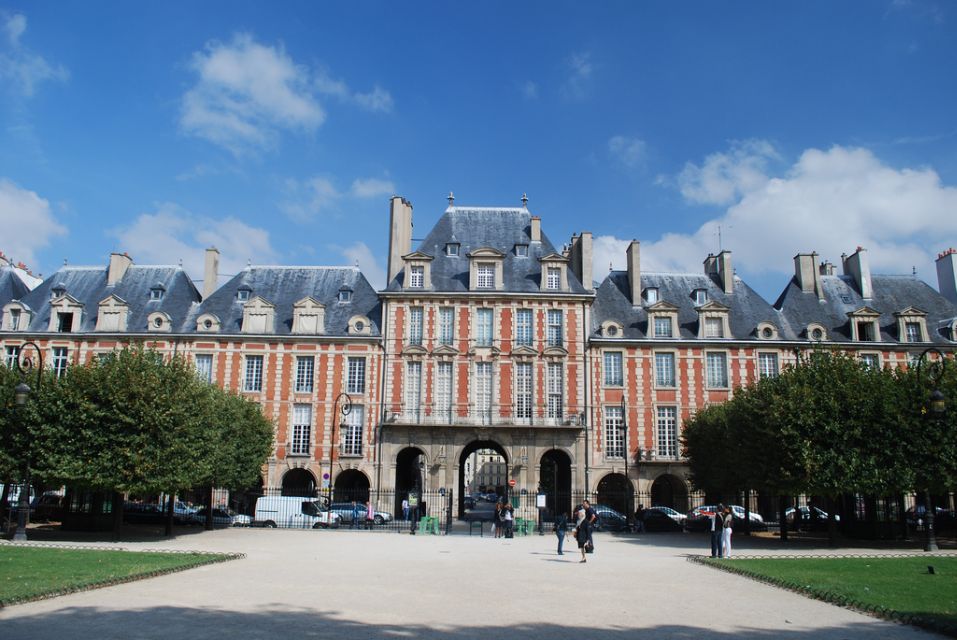
You’ll visit Hôtel de Sully and then finish with some of the Marais’s best-known public spaces, including Place des Vosges. This square is highlighted as one of the most beautiful squares in the world, and it really earns its reputation—especially after you’ve heard the neighborhood’s history out loud. The beauty hits harder when you understand what it represents: order, prestige, and how the Marais can look when it’s at its best.
The walk ends at Place de la Bastille. It’s a useful final stop because it gives you a strong sense of where the Marais leads next—another district, another layer of Paris story. Even in two hours, you leave feeling like you didn’t just walk through pretty streets. You walked through turning points.
What you’ll learn from the guide: clarity, pacing, and street-level context
The most praised aspect of this tour is the way the guide ties history together—not as a lecture, but as a story you can watch unfold while you’re standing in the right spot. That’s especially important in the Marais, where everything looks close enough to confuse, but the time periods are clearly different.
In past departures, guides have been described as organized and good at connecting the dots between neighborhood shifts and specific buildings. Alexander was noted for connecting the history of Paris with the Marais as a single narrative. Caroline was praised for strong knowledge and for pointing out less-obvious angles along the streets. Boris and Anja were also singled out for making the area feel much easier to appreciate once you’ve walked it.
One practical bonus: since it’s private, you can ask for clarifications right when something clicks—or when it doesn’t. That makes the whole experience feel less like consuming information and more like building understanding.
Price and value: is $176 per person a smart move?
At $176 per person for a 2-hour private walking tour, this isn’t the cheapest way to see the Marais. But private tours often win on “value per minute,” not on lowest ticket price.
You’re paying for:
- a guided route with key historical anchors (Les Halles, Hôtel de Ville, Pletzl, synagogue at Rue Pavée, Centre Pompidou, Place des Vosges, Place de la Bastille)
- a guide who explains the Middle Ages to Pompidou connection, so you don’t just see sites—you understand why they belong together
- private pacing and the ability to ask questions in the group’s language (English, French, Serbo-Croatian)
If you’re traveling with someone who wants structure, or you’re the one in the group who usually ends up leading the history conversation, this price can feel fair. If you’re solo and purely budget-driven, you might compare options—but if you want a focused, guided “Marais timeline” instead of aimless wandering, this is the kind of private tour that tends to pay off.
Who this tour fits best
This tour is a strong match if you want:
- a compact overview of the Marais’s major eras without spending the whole day on research
- a story-based walk that covers Jewish community history and the neighborhood’s major rises and falls
- a route that ends with classic visual payoff at Place des Vosges and Place de la Bastille
It may be less ideal if you’re looking for an all-day museum schedule, or if you prefer super-slow, line-by-line architectural analysis. Two hours is focused time, not a long study session.
Should you book this Marais private walking tour?
Yes—if you want the Marais with a plan. I’d book it when you’re short on time but still want the neighborhood to make sense: swamp to settlement, chic to slum, community continuity in the Pletzl, and that thoughtful link between medieval Paris and the modern Pompidou Centre.
Before you go, do two simple things: wear comfortable shoes for street walking, and bring your curiosity. This tour works best when you treat it like a guided street conversation, not a checklist.
FAQ
How much does the Paris Marais Quarter private walking tour cost?
It costs $176 per person.
How long is the tour?
The tour lasts 2 hours.
Is this tour private?
Yes. It’s a private group walking tour.
Where do we meet the guide?
You meet at Metro Étienne Marcel. The guide will be carrying a red canvas tote bag.
What languages are available?
The live tour guide is available in English, French, and Serbo-Croatian.
Does the tour run in bad weather?
Yes. Tours operate rain or shine.
What is included in the price?
The price includes the 2-hour guided walking tour.
Are food, snacks, or drinks included?
No. Food, snacks, and beverages are not included.
What flexibility do I have for booking and cancellation?
You can reserve and pay later, and you can cancel up to 24 hours in advance for a full refund.