REVIEW · PARIS
Paris: Local Secrets and Passageways Walking Tour
Book on GetYourGuide →Operated by Dayin · Bookable on GetYourGuide
Paris’s passageways make the city feel smaller. You’ll walk through covered corridors that still whisper 19th-century Paris, with a local guide pointing out details most people miss. I like that this tour keeps you moving at a human pace while showing passageways you’d otherwise never seek out on your own.
My favorite part is the mix of famous names and the lesser-known connectors. You’ll spend real time at Galerie Vivienne and Palais-Royal, then move on to other arcades that feel calmer and more lived-in. I also love the small group size, capped at 6 people, which makes it easy to ask questions and get practical help for the rest of your day.
One consideration: the route is still a walking tour. If you need wheelchair access, the tour is only wheelchair accessible with the private option, so you’ll want to plan that upfront.
In This Review
- Key reasons this Paris passageways tour makes sense
- Why Paris passageways are worth your time
- Meeting at Optic 2000 on Rue Cadet: a practical start
- Passage Verdeau: a shortcut full of photo angles
- Passage Jouffroy: 19th-century elegance in a compact walk
- Passage des Panoramas: the longest mood shift of the tour
- Palais Brongniart: when commerce gets a grand façade
- Galerie Vivienne: the passage you’ll remember
- Palais-Royal: from arcades to a calmer Paris moment
- Galerie Véro-Dodat: a quieter arcade with personality
- Bourse de Commerce: commerce, design, and public space
- Saint-Eustache Church: a change of mood you’ll feel in your feet
- Les Halles de Paris: why the market matters to this neighborhood
- Finishing at Passage du Grand Cerf: where to go next
- Price and value: what $91 gets you in 2 hours
- Rain-day strategy: how to stay comfortable under Paris weather
- Pace, group size, and language options that actually matter
- Who this tour suits best
- Should you book this Paris passageways tour?
- FAQ
- How long is the Paris passageways walking tour?
- How much does it cost per person?
- Where do I meet the guide?
- What stops are included?
- Is this tour wheelchair accessible?
- What languages are available for the guide?
- What if my plans change?
Key reasons this Paris passageways tour makes sense
- Small-group format (max 6) keeps the pace relaxed and the guide’s attention personal
- Rain-friendly covered walking helps you keep sightseeing even when Paris is damp
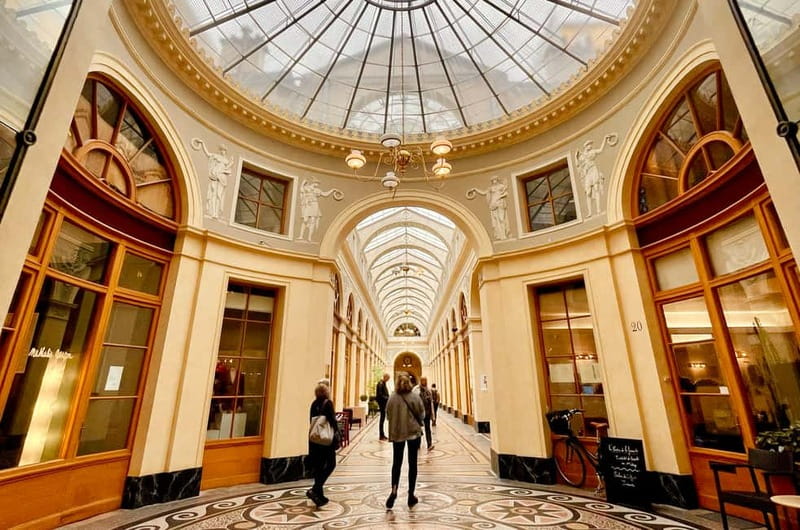
- Galerie Vivienne and Palais-Royal get more than a quick stop, with guided time to look properly
- A stop-by-stop path through multiple arcades and landmarks keeps you oriented in a maze-like area
- Benoir and other English/French/Spanish guides share stories that make the architecture feel human
- You finish near another passageway, so you can keep exploring without a big “end of tour” letdown
Why Paris passageways are worth your time
Paris passageways are basically the city’s answer to “shopping streets, but nicer.” Long before big department stores took over, these covered walkways connected streets, protected you from weather, and made wandering feel like a treat. They’re also one of the easiest ways to see design trends up close: glass roofs, ironwork, decorative façades, and storefronts lined up like little stages.
This tour is built for exactly that kind of sightseeing. You’re not stuck in one spot. You walk from arcade to arcade, which means you get variety in a short time. In 2 hours, you cover enough ground to see how the city’s commercial life evolved, without turning your legs into jelly.
It also helps that the tour is ideal for rainy days. When the forecast is gray, your options can shrink fast. Covered passages act like walking shelters, so you can keep your plans intact instead of switching to only museums or cafés.
You can also read our reviews of more walking tours in Paris



Meeting at Optic 2000 on Rue Cadet: a practical start
You meet your guide in front of the Optic 2000 shop on 26 Rue Cadet. It’s an easy landmark, and the meeting spot keeps the tour anchored in the center of the passageway area rather than starting somewhere far away.
Plan for simple, practical comfort:
- Wear comfortable walking shoes. Even with covered segments, you’ll still be on sidewalks and cobblestones.
- Bring a small umbrella or light rain layer. Covered doesn’t mean dry for the whole trip.
- Have your camera ready, because several stops are built around photo moments.
The tour runs with a local guide in English, French, or Spanish. Guides vary, but the best ones share stories that connect architecture to everyday Paris—artists, writers, and intellectuals who would have wandered these corridors when they were new.
Passage Verdeau: a shortcut full of photo angles
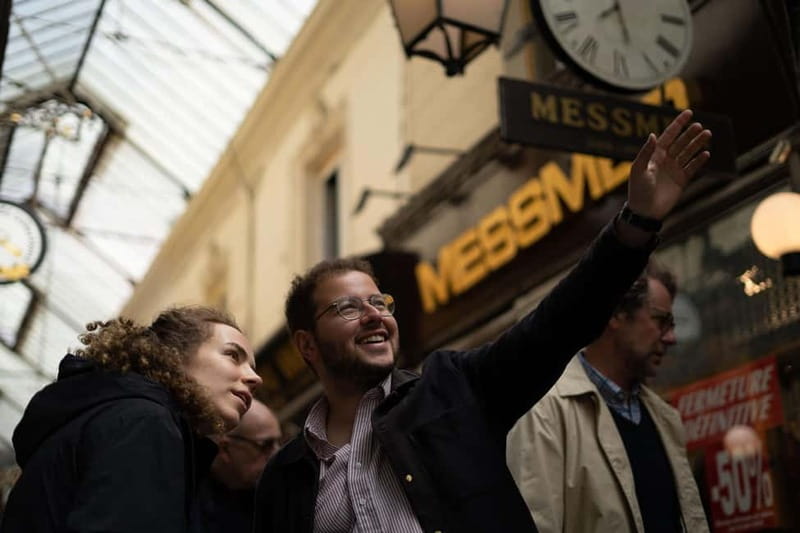
You start with Passage Verdeau. You’ll get a photo stop and a short guided look (about 10 minutes). These passages can look similar at first glance, but Verdeau is a good warm-up: it helps you learn how to read the space.
Here’s what to watch for:
- Look up. The ceiling is part of the experience, not just a roof.
- Notice how the passage frames street life. You’re seeing a mini-world between louder streets.
- Take your time with the entrance. Many passages feel like portals once you know where to stand.
A short stop is actually a plus on this tour. It gives you momentum without making you feel like you’re stuck in the same “covered street” scene over and over.
Passage Jouffroy: 19th-century elegance in a compact walk
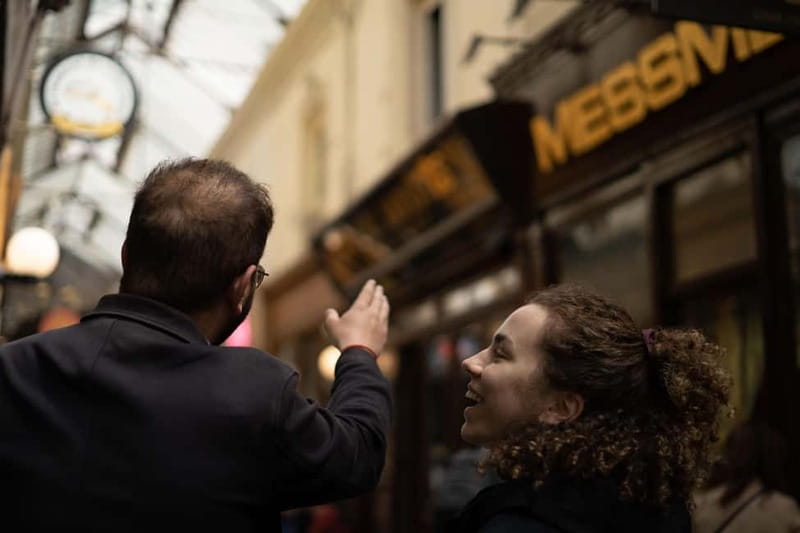
Next is Passage Jouffroy, again with a guided visit of around 10 minutes and time for photos. This is one of those places where architecture does the work of a guidebook.
I like Jouffroy for two reasons:
- It helps you understand the passageway design language. You’ll start to recognize the decorative style and layout.
- It’s quick enough that you can still enjoy it instead of rushing.
If you’re the type who likes to spot small differences, you’ll feel satisfied here. Each arcade has its own personality, even if the overall concept is the same.
Passage des Panoramas: the longest mood shift of the tour
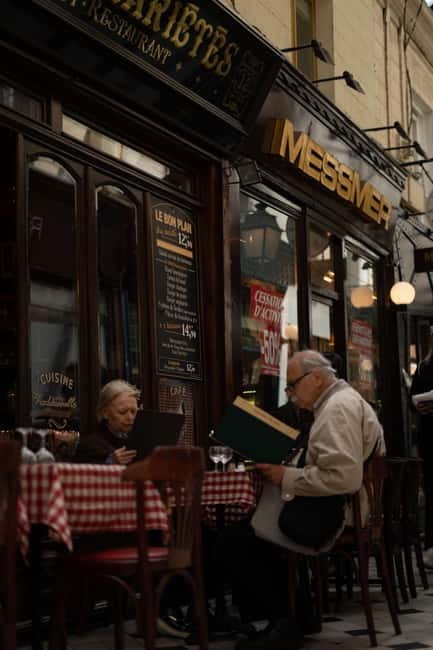
Then you hit Passage des Panoramas, with a longer guided window (around 20 minutes). This is a step up in scale and atmosphere, and it’s the stop where the tour begins to feel like more than just a string of pretty corridors.
A passage like this is worth the extra time because you can do more than look. You can actually experience how it feels to be inside it—how the light changes, how the space guides your movement, and how the design supports an old-school strolling pace.
Practical tip: if it’s wet, you’ll appreciate that this portion is covered. It’s easier to keep walking without constantly adjusting your umbrella or getting caught out by sudden rain.






Palais Brongniart: when commerce gets a grand façade
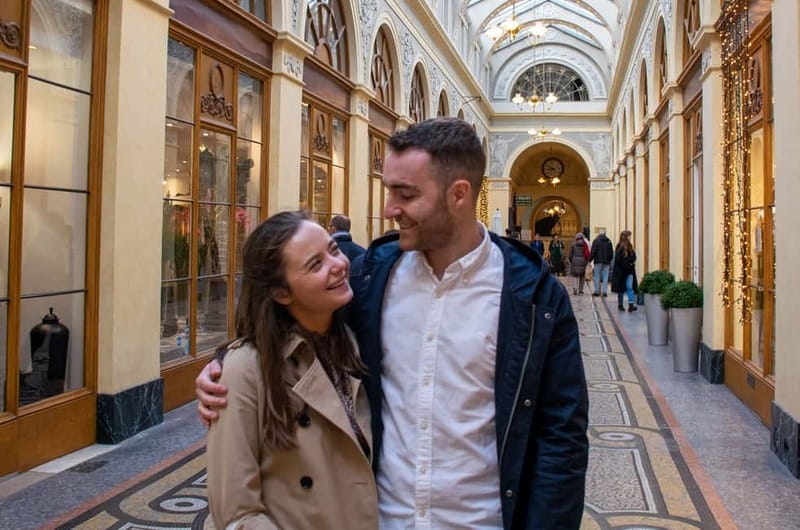
Palais Brongniart comes next, with about 10 minutes of guided time. Even if you’re not a finance history person, you’ll likely enjoy this because it shows how the city dressed up business.
This is where the tour connects passageways to the wider Paris idea of prestige. You’re seeing the relationship between streets, trade, and public buildings—how important buildings and everyday corridors share the same urban stage.
If you like architecture that has authority, this stop is a good marker. It gives you a “reset” moment before you move back into the softer, more decorative world of the arcades.
Galerie Vivienne: the passage you’ll remember
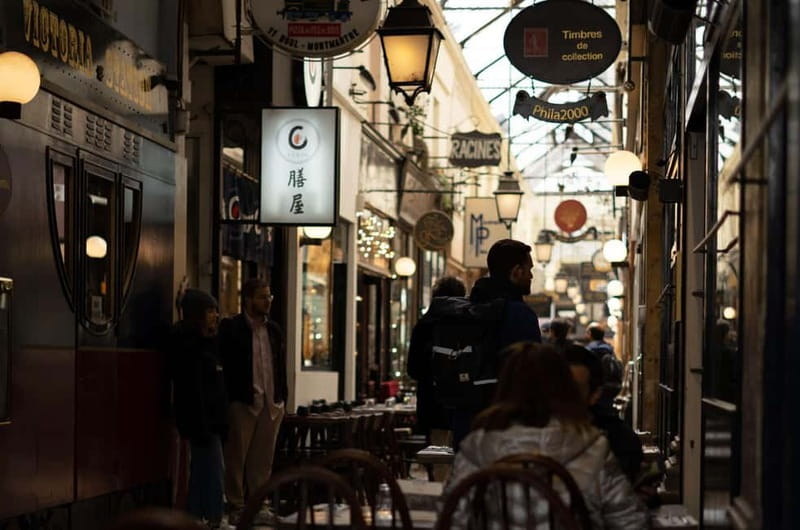
Galerie Vivienne is one of the anchor stops, with about 15 minutes guided. This is where the tour’s tone becomes more dreamy without getting vague.
Why you’ll enjoy it:
- It feels curated in the old-fashioned sense—beautiful, detailed, and meant to be walked slowly.
- It’s a place where you can stand still and really look. You’re not just passing through; you’re meant to notice.
- Your guide’s stories can make the architecture feel tied to real people, not just buildings.
I also think Galerie Vivienne works well for first-time Paris visits. It’s famous enough that you’ll recognize it in photos, but the guided time helps it become something more than a snapshot.
Palais-Royal: from arcades to a calmer Paris moment
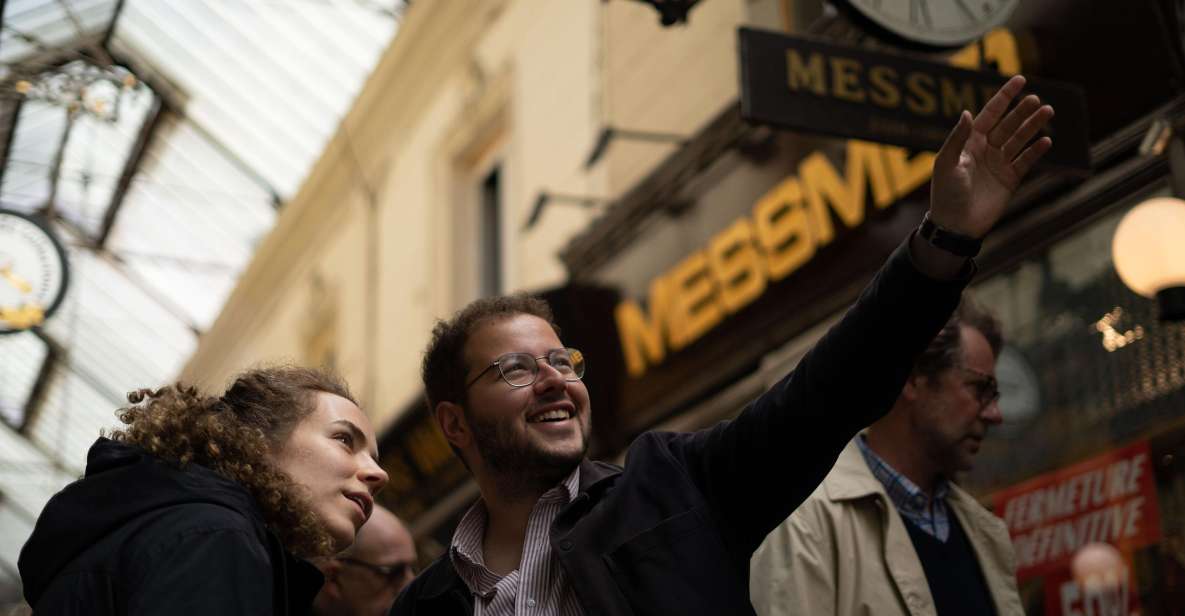
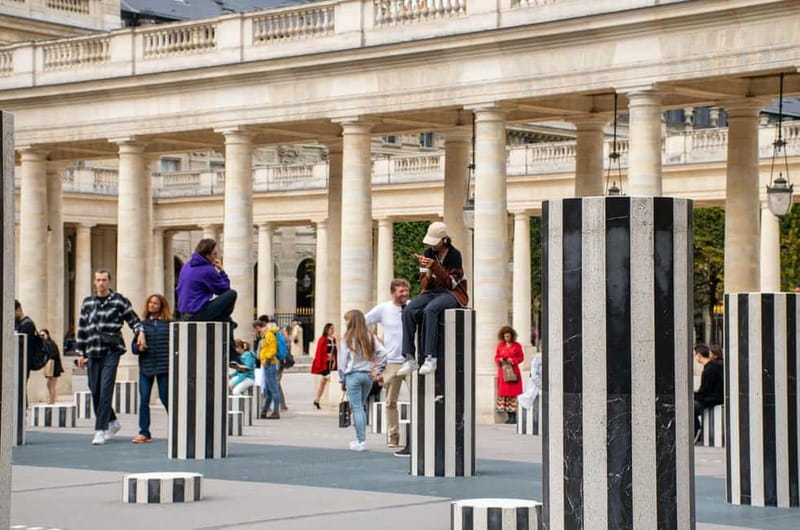
Next is Palais-Royal, with about 20 minutes of guided time. This stop broadens the tour from shopping corridors into a more open, classic Paris setting.
What makes it special on this route is contrast. After passageways, Palais-Royal gives you a different kind of Paris pleasure: a more spacious feel, plus the sense that this is a place people have used for centuries, not just a modern attraction.
Your guide’s commentary is key here. When someone ties the space to the kinds of visitors it attracted—artists, writers, intellectuals—it changes how you see the building. Instead of just admiring design, you start picturing how people moved through it.
Galerie Véro-Dodat: a quieter arcade with personality
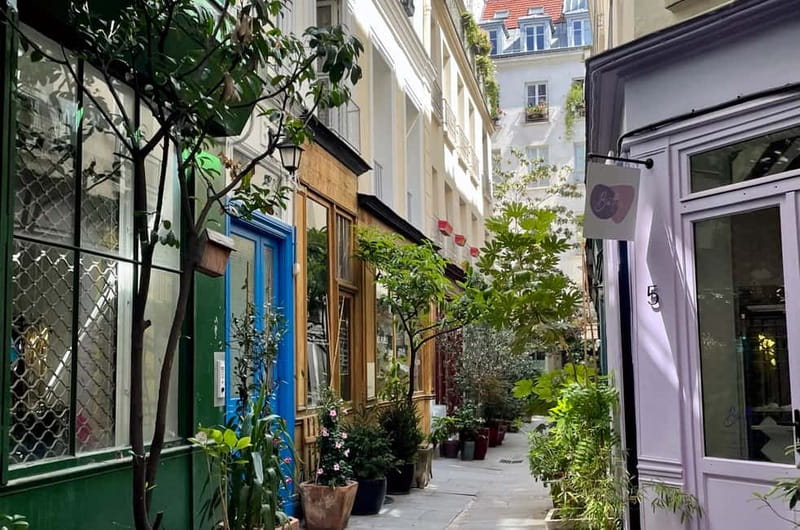
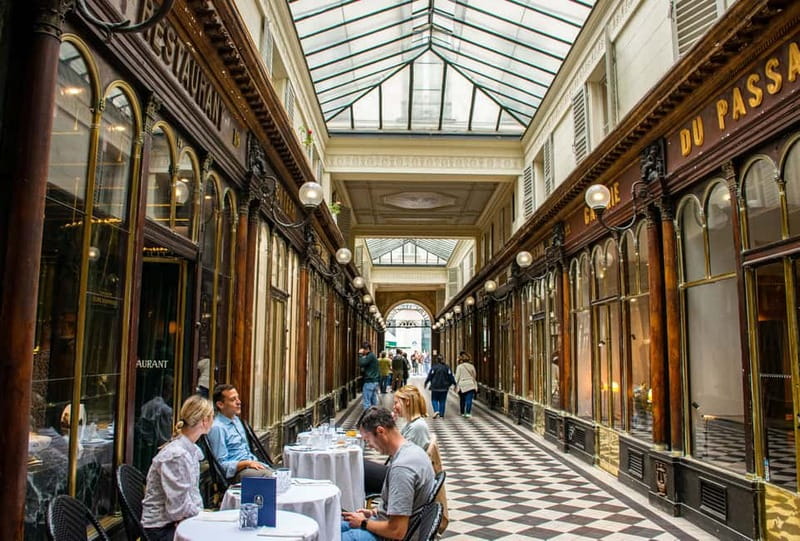
Galerie Véro-Dodat gets about 10 minutes, including a guided look and photo stop. If you found the big names a bit overwhelming, this is the moment that often brings the tour back to earth.
This is where I like the tour’s pacing strategy: you don’t spend all your time in the most famous areas. By dropping in smaller passageways like Véro-Dodat, you get variety without losing the theme.
Look for details like:
- The way the arcade’s layout controls your line of sight
- The decorative character that makes one passage different from another
- The “you could linger here” feeling that makes passageways worth repeating later on your own
Bourse de Commerce: commerce, design, and public space
Bourse de Commerce is a short stop (around 10 minutes guided). It’s an interesting pivot because it broadens your view from the decorative corridors to a larger public building connected to trade.
Even with limited time, it can help you place the passageways in a bigger urban story: Paris didn’t just build beauty—it built systems for moving goods, money, and people through the city.
If you’re the sort who likes to understand how a city works, this stop gives you context. If you’re more into photos, it still offers solid visual material because the setting is grand and structured.
Saint-Eustache Church: a change of mood you’ll feel in your feet
Next comes Saint-Eustache Church, about 10 minutes guided. Churches can feel like filler when they’re rushed on tours, but on this route, it works as a mood change.
You’ve been in enclosed passages and commercial architecture. Saint-Eustache gives you height, atmosphere, and a different kind of Paris craft. Even if you don’t go inside fully depending on conditions, the guided framing can help you understand why this church belongs in the same neighborhood story as markets and passageways.
It’s also a useful reset for your walking stamina. Ten minutes here feels like a break, not another marathon stop.
Les Halles de Paris: why the market matters to this neighborhood
Then you reach Les Halles de Paris (around 10 minutes guided). This is where the tour connects the “old Paris” passageway feeling to Paris’s ongoing food-and-life culture.
Markets are one of the most honest places to understand a city. They’re where you see what people actually buy, cook, and carry home. Even in a short visit, a guided stop helps you look past the surface and understand why this area remains important.
This part of the walk is also practical. You’re nearing the end of the loop, which means you’ll likely start thinking about what’s next for you—dinner, a snack, or just another short wander.
Finishing at Passage du Grand Cerf: where to go next
The tour finishes at Passage du Grand Cerf. The tour information also notes that you end back at the meeting point area, so expect the route to keep you near where you can easily continue your day.
Finishing on another passageway is smart. It leaves you with a “last image” that still fits the theme. If you liked the walk, Passage du Grand Cerf is a good final taste without the pressure of forcing a huge new attraction into the day.
I like that this helps with momentum. You’re not ending with a random square where you have to re-orient from scratch.
Price and value: what $91 gets you in 2 hours
At $91 per person for a 2-hour small-group walking tour, value comes from focus, not volume. You’re getting:
- A local guide
- A small group setting (6 people max or private)
- Time at multiple named passageways and landmarks, including Galerie Vivienne and Palais-Royal
- Help with tips to navigate Paris after the tour
This is the kind of price that makes sense when you consider how hard it can be to see these arcades in a useful order on your own. Passageways are numerous and easy to get mixed up. A guide turns the day into a coherent route, and that saves you time and energy.
If you’re traveling with someone who likes architecture and street-level Paris, the cost also feels fair because you’ll be spending your time in places that are more about walking and noticing than about long ticket lines.
Rain-day strategy: how to stay comfortable under Paris weather
This tour is ideal for rainy days because it runs through covered arcades and sheltered corridors. That said, rain still happens. Cobblestones can get slick, and sometimes rain finds the cracks.
Do this:
- Bring non-slip shoes.
- Layer your clothing so you can adjust when you move between open and covered spots.
- Keep your phone secured. With all the photo stops, wet surfaces and quick stops can make mishaps more likely.
The upside is that even in bad weather, you won’t feel stuck. The entire concept of the passageways is built around walking under protection.
Pace, group size, and language options that actually matter
The tour is designed around short guided windows—typically 10 to 20 minutes at each stop. That pace keeps it lively, and it also means you’re not spending your whole time waiting in one location.
The small group size (up to 6) is more than a nice-to-have. It makes it easier for the guide to adjust the flow if people slow down for photos or if questions pop up.
You can also choose private if you want more control. Private is the only option mentioned for full wheelchair accessibility, so if mobility is a concern, that’s your clue to book private rather than hoping for a workable compromise.
Languages available are English, French, and Spanish. If you’re booking for a group with mixed language comfort, this helps you pick the easiest experience.
Who this tour suits best
I’d recommend this for you if you like:
- Architecture you can see at walking speed
- Photo-friendly stops that aren’t just “look and leave”
- Paris neighborhoods beyond the postcard streets
- A guide who tells stories about artists, writers, and intellectuals tied to these spaces
It may be less ideal if you want a museum-heavy day or if you dislike walking for 2 hours, even with covers. And if you need wheelchair access, choose the private option because that’s the only arrangement explicitly described as accessible.
Should you book this Paris passageways tour?
Yes, if your goal is to see a side of Paris you can’t easily DIY in a tight window. This tour gives you a logical route, names that anchor your memory later, and a guide who can bring the spaces to life. For me, the best sign is the combination of Galerie Vivienne and Palais-Royal plus multiple additional passages that keep the walk feeling varied.
Book it when the weather might be iffy. Covered passages make the day feel resilient. And if you’re booking close to your dates, the operator offers free cancellation up to 24 hours in advance and also a reserve-now/pay-later option, which reduces the stress of planning.
If you want one smart “Paris walking” choice that focuses on atmosphere and design rather than long transfers, this is a solid pick.
FAQ
How long is the Paris passageways walking tour?
The tour lasts 2 hours.
How much does it cost per person?
It costs $91 per person.
Where do I meet the guide?
You meet your guide in front of the Optic 2000 shop at 26 Rue Cadet.
What stops are included?
The tour includes Passage Verdeau, Passage Jouffroy, Passage des Panoramas, Palais Brongniart, Galerie Vivienne, Palais-Royal, Galerie Véro-Dodat, Bourse de Commerce, Saint-Eustache Church, Les Halles de Paris, and it finishes at Passage du Grand Cerf.
Is this tour wheelchair accessible?
It is wheelchair accessible only with the private option.
What languages are available for the guide?
The guide is available in English, French, and Spanish.
What if my plans change?
Free cancellation is available up to 24 hours in advance for a full refund, and you can reserve now and pay later.