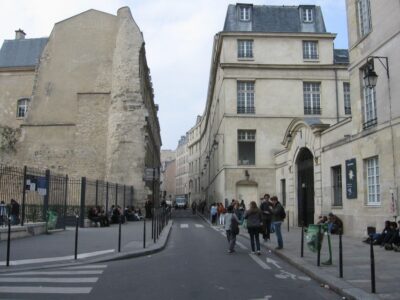
Le Marais is best when you walk it. This small-group stroll links big landmarks and quiet alleyways, with a late-morning finish that keeps you on track for lunch. If you add the Seine option, you get the same neighborhood energy, but from the water.
I especially like the way the guide turns each stop into something practical. You’re not just collecting facts at Centre Pompidou’s famous outside design and the old cloister spaces; you also get real pointers for where to eat, drink, and shop in the Marais. I also like the pacing: about 1.5 hours total, so you can fit it neatly into a day of museums and wandering.
One thing to plan for: a couple of the big-name stops aren’t included with tickets. If you want to go inside Centre Pompidou or see the library collections, you’ll likely pay extra, so build a little budget for that.
In This Review
- Key things to know before you go
- Le Marais makes more sense with a guide and a plan
- Pace, meeting point, and how you avoid the afternoon scramble
- Centre Pompidou: inside-out architecture and quick choices for views
- Cloister of Billettes and Impasse des Arbaletriers: medieval Paris in small doses
- Rue des Rosiers in the Jewish Quarter: culture, photos, and snack time
- Hôtel de Lamoignon and Musée Carnavalet: history with the right atmosphere
- Place des Vosges and Hotel de Sully courtyard: where you slow down
- Optional Seine cruise: the Eiffel Tower start and the “use later” ticket
- Price and what you’re really paying for
- Who should book this Marais walk
- Should you book this Le Marais tour
- FAQ
- How long is the Paris Le Marais walking tour?
- How big is the group?
- Is the tour offered in English?
- Are entrance tickets to museums and attractions included?
- What is the meeting point and where does it end?
- Is lunch included?
- Does the tour include transportation?
- What does the optional Seine river cruise include?
- Can I use the Seine cruise ticket at a later time?
- Is there free cancellation?
Key things to know before you go
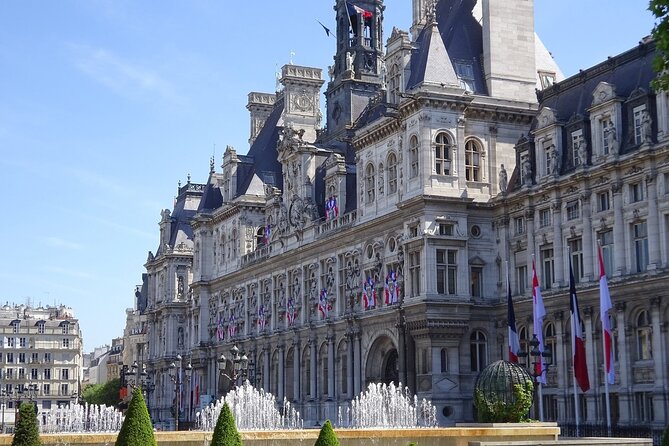
- Small-group feel in Le Marais: capped at a maximum of 15 travelers for easier listening and smoother stops.
- Late-morning timing: finished with enough time to grab lunch without rushing all afternoon.
- Iconic views without the full museum detour: you’ll get Centre Pompidou’s architecture and a chance at top views, but paid entry is optional.
- Old Paris lanes with contrast: medieval dead-ends, cloister remains, and street-art layers in the same route.
- Jewish Quarter photo street with snack time: Rue des Rosiers is a highlight, with time to pop in for something tasty.
- Optional Seine cruise that runs flexibly: a one-hour narrated cruise you can use anytime within a year of your tour date.
Le Marais makes more sense with a guide and a plan
The Marais can feel like two different cities at once. You’ve got major landmarks that everyone knows, then side streets where life plays out in small-scale details: doorways, courtyards, stone textures, and signage from different eras.
That’s exactly why I like this style of tour. Your guide stitches the neighborhood together with stories that explain why places look the way they do today. And the best part is that you get ideas you can act on right away, like where to grab a snack in the Jewish Quarter and what to keep an eye out for when you’re shopping later.
You also benefit from English guidance and a human voice that helps you read the neighborhood. In the feedback you’ll find praise for guides such as Sophia, Katie, Paula, Sag, and Zac, with people calling out clear English and strong storytelling.
You can also read our reviews of more boat tours in Paris



Pace, meeting point, and how you avoid the afternoon scramble
This walks-and-talks tour runs about 1.5 hours, and the departure is late enough that you can still end in time for lunch. That matters in Paris, where the wrong timing can mean skipping a meal or turning lunch into a stress sprint between metro stops.
You’ll start at 2 Rue Brisemiche, 75004 Paris. The tour ends near the Saint-Paul metro station, about a mile and a half from the start, so treat it as a route that ends where you’ll likely want to keep exploring. The good news: it’s near public transportation, and you’ll have a Paris shuttle included to make the start easier.
Plan for typical walking-tour realities: listen best when you’re close to the guide, especially when the group slows down near a landmark. If you tend to drift back for photos, consider keeping yourself within easy earshot. That way you don’t miss the key stories at each stop.
Centre Pompidou: inside-out architecture and quick choices for views
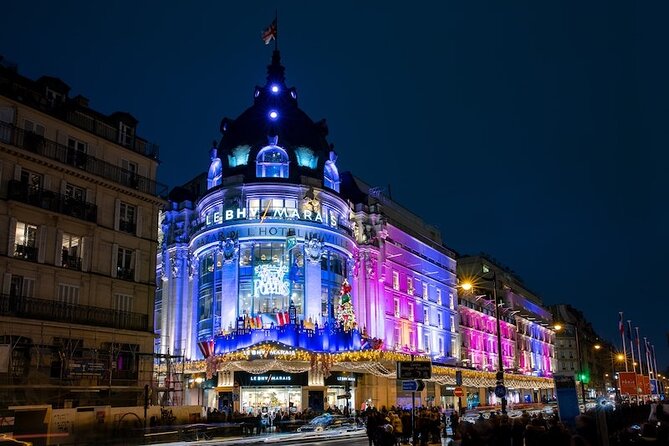
Centre Pompidou is one of those buildings people love to argue about. From the outside, it’s a loud statement: an “inside-out” design where the structure feels exposed, like the building is showing you its inner workings. On this tour, you don’t need a full museum day to get the point of it.
Your guide gives context for why it matters to Parisians, plus a quick sense of how to interpret it once you’re standing there. You also get a practical fork in the road: if you’re curious about current exhibits, you can return and buy a ticket. If you want the skyline payoff without committing to the museum, there’s also the option to take a ride up for views.
One caution: Centre Pompidou admission isn’t included here. So if you know you want to see exhibitions, budget for it ahead of time. If you’re more interested in photos and neighborhood context, you’ll still come away with something meaningful from the outside.
Cloister of Billettes and Impasse des Arbaletriers: medieval Paris in small doses
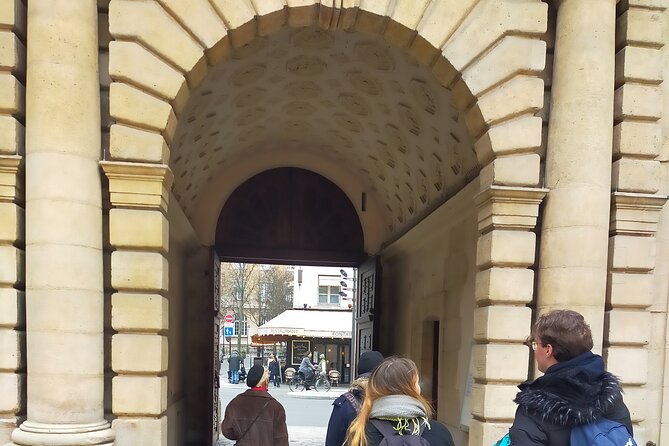
This is where the tour starts feeling like a true neighborhood walk, not a checklist of famous sights.
At the Cloister of Billettes, you get a peek at the remains of a medieval cloister. It’s brief by design, but the story helps you understand what you’re looking at: how religious and communal spaces shaped life in earlier centuries. The “behind-the-door” feel is part of the charm, and it’s the kind of stop that makes Le Marais feel layered.
Then you step into Impasse des Arbaletriers, a medieval dead-end road with a name tied to a crossbow shooting range. Your guide also points out a fun contrast: the street looks shiny and fresh on one side while feeling gritty on the other, with street art and graffiti adding a modern layer over older stone. It’s the kind of detail that’s hard to spot on your own unless someone explains what to look for.
Both stops are short, which keeps the tour moving. If you like slow photography moments, you’ll want to take advantage of the time you’re given rather than assuming you’ll have extra minutes later.
Rue des Rosiers in the Jewish Quarter: culture, photos, and snack time
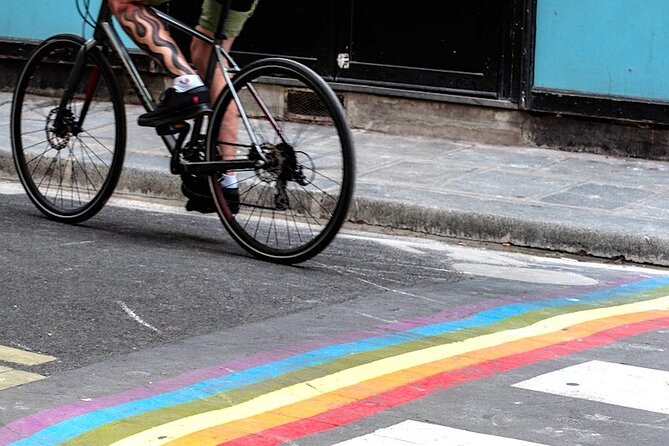
If you’ve got one “walk this street” moment on your Paris itinerary, make it Rue des Rosiers. It’s classic, very photogenic, and strongly identified with the Jewish Quarter. What makes it more than just a picture street is the way your guide frames it around cultural continuity and change.
You’ll learn how the neighborhood has handled modern pressure and gentrification, and you’ll get help spotting spots that still feel authentic. The tour also builds in real time to do something useful: pop in for a snack. Even if you’re not planning a big meal, it’s a chance to taste the vibe of the area instead of just seeing it.
This is a stop where you should take notes in your head. When you later wander back through the Marais, having a short list of food and shopping ideas helps you avoid the trap of picking the first place you see.





Hôtel de Lamoignon and Musée Carnavalet: history with the right atmosphere
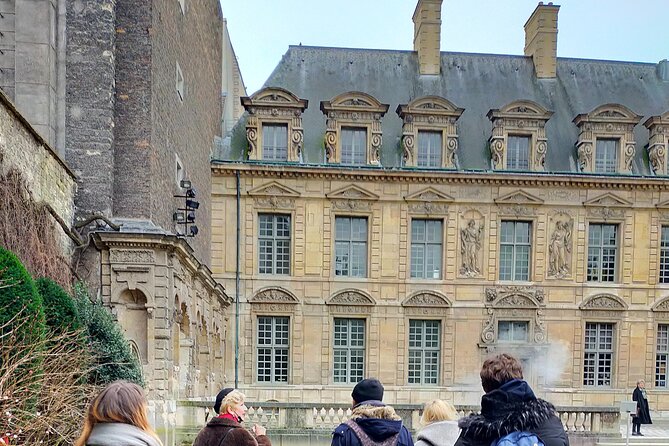
After medieval lanes and street-level energy, the tour shifts into “history museum” mode—without turning into a full-day ticket marathon.
First is the Bibliothèque historique de la ville de Paris in the Hôtel de Lamoignon. You get a look inside this historic mansion, and the point isn’t just the building; it’s what it holds. The library is described as having over a million books, documents, and maps spanning from the 16th century to present-day Paris. That’s the kind of fact that makes you see the city as something you’re reading, not just visiting.
Just know that admission for this library stop isn’t included. If you’re the type who loves archives, maps, and old documents, you’ll likely want to come back later with a plan.
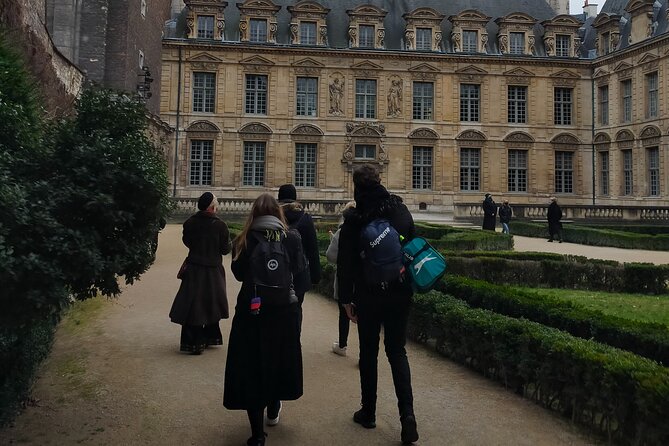
Then you head to Musée Carnavalet – Histoire de Paris, which is positioned as the city’s top history museum. The setting matters here: you’ll stroll through gardens and a regal atmosphere, with architecture described as Renaissance. Since this stop is free during the tour, it’s a strong way to get a meaningful cultural break without added entry costs.
Place des Vosges and Hotel de Sully courtyard: where you slow down
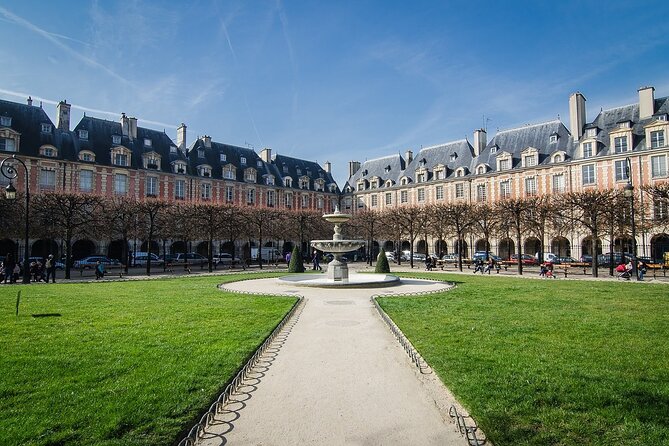
Le Marais has a way of pushing you toward photogenic corners, but these next parts are for people who like atmosphere.
At Place des Vosges, you’re in one of the Marais’s most famous 17th-century squares. Your guide connects it to Victor Hugo and gives you story prompts to notice what’s around you: the layout, the feeling of the square, and why it’s become an anchor of the neighborhood. There’s also time to sit with your group for a moment, which makes this stop feel less like a stop and more like a reset.
Next is the Cour et jardin de l’Hotel de Sully, a private mansion courtyard dating to the early 17th century. Even if you’re not able to access everything inside, the tour makes the point that the Marais was especially tied to royal and upper-class residents during that era. Today, it’s tied to the management of historic buildings and monuments, so the courtyard becomes another way to understand how Paris preserves itself.
This part of the route is ideal if you want a calmer moment before you rejoin the more energetic streets.
Optional Seine cruise: the Eiffel Tower start and the “use later” ticket

If you add the optional one-hour Seine river cruise, it changes the day in a good way. A walking tour shows Paris up close; a river cruise gives you the city’s geometry and landmark placement in one continuous view.
This cruise begins and ends at the Eiffel Tower, and it’s narrated. You’ll pass major sights along the way, including Notre-Dame, Petit Palais, Musée d’Orsay, and the Conciergerie (plus more listed in the cruise description). Even though you’re not stopping, it’s a simple way to connect the dots between neighborhoods.
The schedule flexibility is the real value play here: your cruise ticket is valid for a one-hour cruise anytime within one year of your tour date. That means you’re not forced to “lock in” a specific day and time because of weather or your energy level. Pick a moment when you’re not rushing to dinner or trying to catch a train.
Price and what you’re really paying for
At $43.55 per person, this is priced for a short, guided experience in a dense area. The math looks better than it first appears because:
- You’re getting an experienced local guide and a true small-group cap.
- A Paris shuttle is included, which reduces friction getting to the start.
- Many of the key stops during the walk are free to view on your own outside paid museum time.
The trade-off is that some admission isn’t included, specifically for Centre Pompidou and the historic library stop. Lunch is also not included, so you’ll be planning your own meal.
In other words, the tour fee mostly covers interpretation, timing, and access to places you might not notice as clearly without context. For travelers who enjoy walking with direction and then spending the rest of the day on their own, this is a solid use of time.
Who should book this Marais walk
This tour fits best if you want:
- A small-group introduction to Le Marais that doesn’t swallow your whole morning.
- Practical local guidance, including tips on where to eat, drink, and shop.
- A route that mixes landmark architecture with quieter medieval corners, plus a Jewish Quarter street stop.
It’s especially good for first-timers who feel overwhelmed by choices in Paris. If you’re the type who likes to return later to museums with a sharper sense of what you’ll be looking for, you’ll benefit from the context you get on the walk.
If you strongly prefer large “see everything” museum time, you might feel it’s too light on paid interiors. The stops are timed to keep the tour moving and lunch-friendly, not to run a full museum day.
Should you book this Le Marais tour
Yes, if your goal is to understand Le Marais fast and leave with a short list of places to eat and explore afterward. The combination of late-morning timing, a group limited to 15, and a guide who can connect landmarks to neighborhood life makes it a strong value for $43.55.
I’d be more cautious if you want to guarantee paid entry to major interiors as part of your ticket. Since Centre Pompidou and the historic library are not included, you’ll need extra money if those are must-dos.
FAQ
How long is the Paris Le Marais walking tour?
It runs about 1 hour 30 minutes.
How big is the group?
The experience has a maximum of 15 travelers.
Is the tour offered in English?
Yes, it’s offered in English.
Are entrance tickets to museums and attractions included?
No. Centre Pompidou and the historic library stop list admission as not included. Other stops listed are free.
What is the meeting point and where does it end?
You start at 2 Rue Brisemiche, 75004 Paris and end in front of Saint-Paul metro station in the 75004 area, about a mile and a half from the start.
Is lunch included?
No, lunch is not included.
Does the tour include transportation?
A Paris shuttle is included for convenient transportation.
What does the optional Seine river cruise include?
It’s a one-hour narrated Seine cruise that begins and ends at the Eiffel Tower. You pass landmarks such as Notre-Dame, Petit Palais, Musée d’Orsay, and the Conciergerie.
Can I use the Seine cruise ticket at a later time?
Yes. The ticket is valid for a one-hour cruise anytime within one year of your tour date.
Is there free cancellation?
Yes, you can cancel for a full refund up to 24 hours in advance.