REVIEW · PARIS
Paris: Jewish Marais District Walking Tour
Book on GetYourGuide →Operated by Cognosimo Tours · Bookable on GetYourGuide
Paris has layers few tours explain. This Jewish Marais walk links street-level history to the Shoah Memorial and the Martyrs of the Deportation Memorial, so the story feels real, not textbook. I like the start at Synagogue des Tournelles and how the guide keeps tying buildings to names, dates, and everyday life, and I like the mix of neighborhood stops and solemn memorial sites; just note you’ll be on your feet most of the 2-hour walk and you may need a head cover and modest dress.
I also like that this is a private group tour with a live guide in English or French, so questions actually get answered. In guide feedback, people have praised Lucid, patient communication from guides like Simón and strong, carefully paced explanations from guides like Camille, including extra context and time to rest—worth knowing if you want more than a quick plaque reading.
In This Review
- Key Points To Know Before You Go
- Start at Synagogue des Tournelles: Why the Tour Begins Here
- The Jewish Marais Stops: Synagogues (Outside), Kosher Shops, and Real Streets
- Learning the Timeline: From Gaul to Carolingians to Expulsions
- After the Expulsions: Crypto-Jews, Alsace-Lorraine, and French Nationality
- Jewish Paris After World War II: Sephardic Roots and a New Demographic Shift
- Anne Frank Garden and the Museum of Jewish History: Memory in Urban Form
- The Shoah Memorial and Deportation Martyrs Memorial: How to Interpret the Space
- Price and Logistics: Is $160 for 2 Hours Worth It?
- Who This Tour Suits Best (and Who Might Want to Skip It)
- Should You Book This Paris Jewish Marais Walking Tour?
- FAQ
- Where is the tour meeting point?
- How long is the walking tour?
- What languages are the guides available in?
- Where does the tour finish?
- What sites are included along the route?
- What should I bring or wear?
- Is photography allowed?
- Is the tour suitable for wheelchair users or mobility impairments?
Key Points To Know Before You Go
- Meet at Synagogue des Tournelles and get oriented in the Marais from the start.
- See key sites from outside while the guide explains what happened there and why it mattered.
- Walk through the neighborhood timeline of Jewish life in France, from Roman-era mentions to 20th-century tragedy.
- Anne Frank Garden and the Museum of Jewish History are part of the route (from outside), helping connect past and memory.
- Shoah Memorial plus the Deportation Martyrs Memorial give the tour its emotional center.
- Quality depends on the guide, so choose based on language comfort and how you like your history delivered.
Start at Synagogue des Tournelles: Why the Tour Begins Here
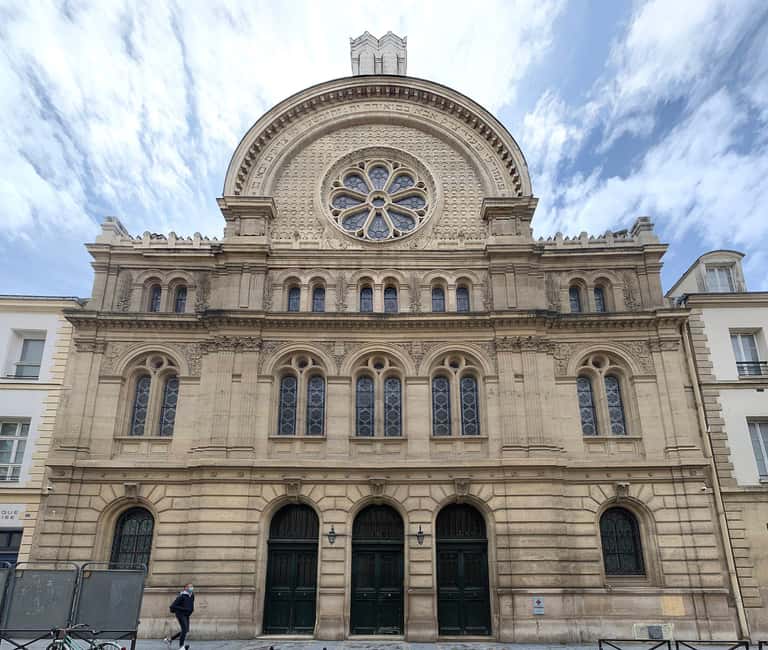
Most walking tours in Paris start with a landmark photo. This one starts with something more useful: a real anchor point for understanding the neighborhood. You’ll meet at Synagogue des Tournelles, then begin moving through the Marais with your guide setting the frame for what you’re about to see.
That matters, because the Jewish Marais isn’t one single museum-style space. It’s a web of streets, buildings, and surviving cultural traces. When the guide begins with context instead of trivia, the rest of the walk clicks into place faster.
Practical tip: plan for modest dress expectations at some stops. If you forget a head covering, the tour rules and site norms can feel like they slow you down. Bring a kippah or head cover and you’ll be able to focus on the explanations instead of scrambling.
You can also read our reviews of more walking tours in Paris



The Jewish Marais Stops: Synagogues (Outside), Kosher Shops, and Real Streets
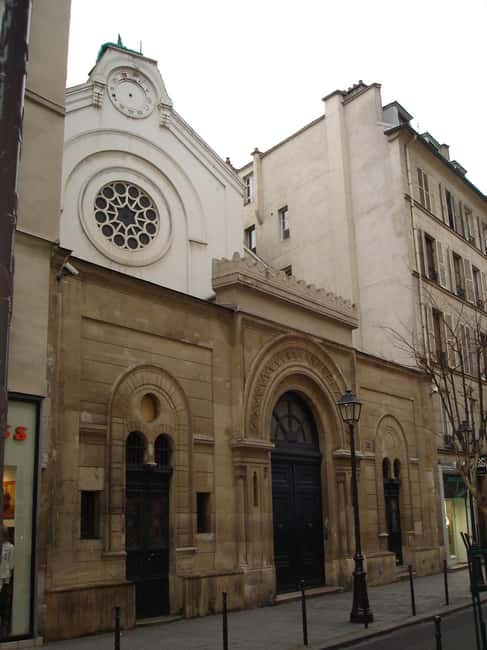
Once you’re in the Marais, the tour works on two levels at the same time. First, you’re walking the streets that shaped community life. Second, your guide connects what you see—often from outside—with what once happened there.
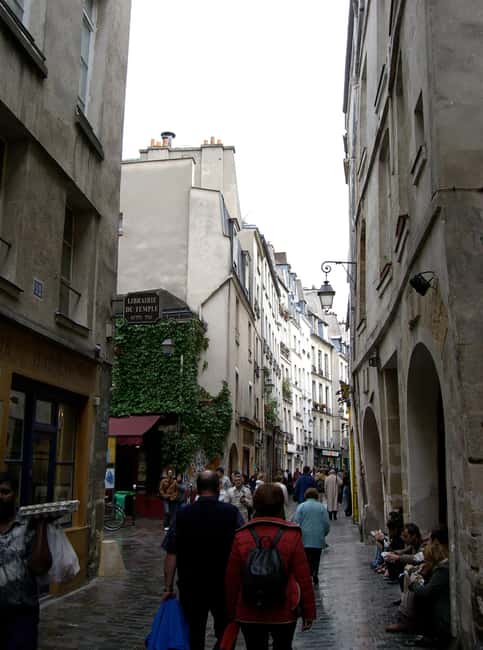
You’ll pass or visit the kinds of places that make a neighborhood feel like a community, not just a sightseeing district. That includes historic synagogues (outside viewing) and kosher shops. Even when you’re not going inside, seeing storefronts, street layouts, and the rhythm of the area helps you understand how daily life sat alongside major events and shifting laws.
A big value here is that the guide doesn’t treat Jewish Paris as a single story. The walk sets it up as a long sequence: long presence, community growth, periods of prosperity, then repeated persecution and forced change.
What to watch for while walking: don’t just count sights. Pay attention to how the guide explains power and policy—how edicts and expulsions changed where people could live, worship, and trade. That’s what turns “a few buildings” into a coherent place.
Possible drawback: this part of the walk is moderate but steady. Comfortable shoes matter, because the Marais can mean uneven paving and tight pedestrian routes.
Learning the Timeline: From Gaul to Carolingians to Expulsions
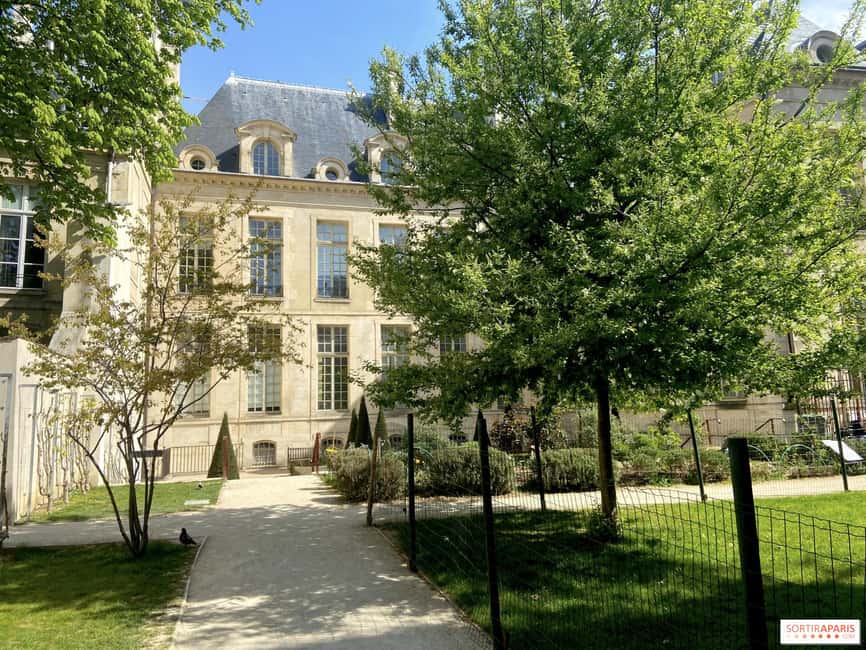
The tour’s historical storytelling is where the time starts paying dividends. You’ll learn that Jewish presence in France is often described as going back to the first centuries, with mentions tied to Gaul soon after Rome’s conquest. Your guide then moves forward through political eras like the Merovingians and highlights a period of prosperity connected to the Carolingians.
One of the most memorable parts of this kind of tour is when the guide connects faith and scholarship to a place and a period. Here, that shows up in the discussion of medieval Jewish cultural life and the work of Rashi, the 11th-century rabbi and Talmud commentator. It’s a reminder that communities weren’t only reacting to hardship; they were building intellectual and religious life too.
Then the story turns sharply. The tour explains deterioration after the crusades, along with trials involving the Talmud and expulsions that begin temporarily and later become definitive. You’ll hear about key edicts, including one associated with Philippe le Bel in 1304 and another linked to Charles VI in 1394—and the grim point that, about a millennium after establishment, there were no Jews left in the kingdom of France.
The tour also gives you the wider map of where Jewish life continued when it was cut off in France—such as communities in the papal states and among Alsatian Jews—so you understand expulsion as displacement, not disappearance.
Why this is valuable for you: it helps you read the Marais with fewer blind spots. Without this timeline, you might assume what you see today is a complete story. With it, you’ll understand why certain traces feel small, why some streets are silent, and why memorial sites carry such weight.
After the Expulsions: Crypto-Jews, Alsace-Lorraine, and French Nationality
The tour doesn’t stop at medieval expulsions. It moves forward to show how Jewish communities reappeared and reshaped themselves within France.
You’ll hear about Crypto-Jews from Portugal settling in areas like Bordeaux and Bayonne after expulsion from Iberia. Then the story shifts again in the 17th century with Jewish communities in Alsace and Lorraine becoming part of France after treaties (including those associated with Westphalia). That’s one of those historical threads that explains why Jewish life in Paris later has multiple roots rather than one single origin.
During the French Revolution, the guide explains that Jews obtained French nationality. That leads to a push-and-pull dynamic: a “Franco-Judaic” movement on one side, and a corresponding rise in antisemitism on the other. The tour connects the worsening climate to major episodes such as the Dreyfus affair, then to increasing severity during the 1930s, culminating in institutionalization under the Vichy regime. The guide also covers the scale of deaths during the occupation—75,000 Jews—so the history lands where it belongs: in lived loss, not vague dates.
Tip for your attention: if your brain starts to glaze over with numbers and reigns, focus on cause and effect. Ask yourself: what changed in law? what changed in daily life? what changed in where people could gather? That’s the tour’s backbone.
Jewish Paris After World War II: Sephardic Roots and a New Demographic Shift
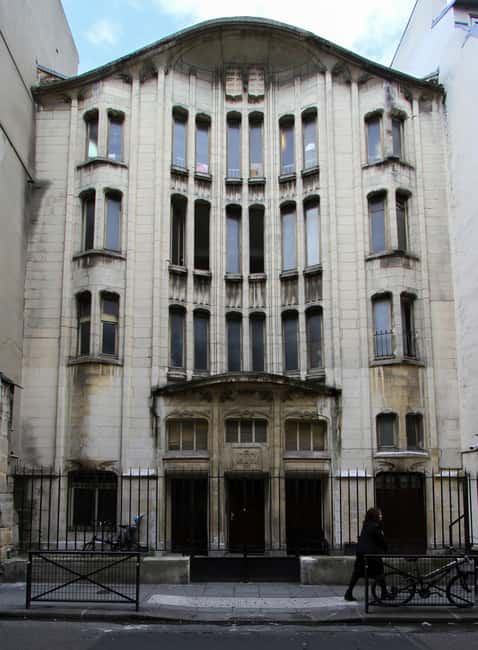
One of the most practical “so what?” sections comes next. The guide explains how, after periods of displacement and persecution, France became a destination for many Jews leaving Egypt and North Africa in the 1950s and 1960s. As a result, the community shifted so that it became predominantly Sephardic, with Paris and the Paris region at the center.
You’ll also hear current-scale context: the Jewish community of France is described as the largest in Europe, at roughly 450,000 to 550,000 people, with about 70% from the Arab world. Even if these numbers feel big, the tour’s approach keeps them tied to geography—especially Paris—so it doesn’t feel like a stats lecture.
Why you’ll care even as a non-expert: it changes what you think you’re seeing in the Marais today. You’re not just looking at remnants of a tragic past. You’re seeing a living community shaped by many arrivals, losses, and reinventions.






Anne Frank Garden and the Museum of Jewish History: Memory in Urban Form
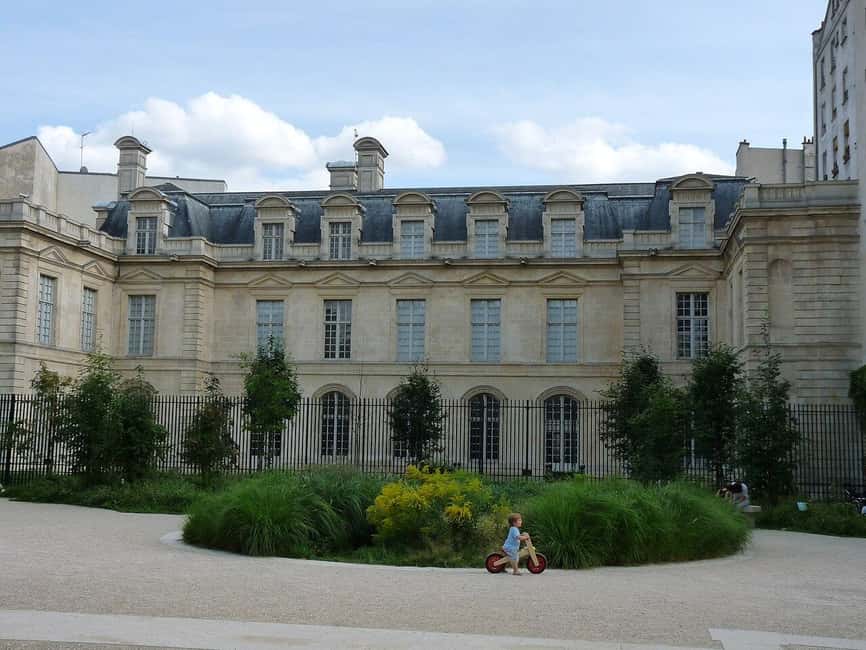
The tour brings you to the area of Anne Frank Garden and the Museum of Jewish History, with viewing from outside. Even without entering, these stops help you connect the personal story of Anne Frank to the broader history of Jewish life, persecution, and remembrance in France.
I like this placement because it gives your head and heart a landing spot before the memorials. You’re not going straight from medieval expulsions into 20th-century genocide language without a bridge. This is a visual cue that memory can live in gardens, signage, and public space—often right next to ordinary streets.
If you get a guide who adds extra context, you may also hear references that expand the remembrance theme beyond Anne Frank. For example, one guide-focused route included attention to gardens associated with Elie Wiesel and a school site impacted by deportations. If that kind of expanded storytelling matters to you, it’s a good sign you’ll want a guide who’s comfortable going beyond the basic stops.
What to do on this stretch: slow down for a moment. Read what’s there. Let the guide’s links land, then move on when you’re ready. Memorial-related tours work better when you give your brain time to catch up.
The Shoah Memorial and Deportation Martyrs Memorial: How to Interpret the Space
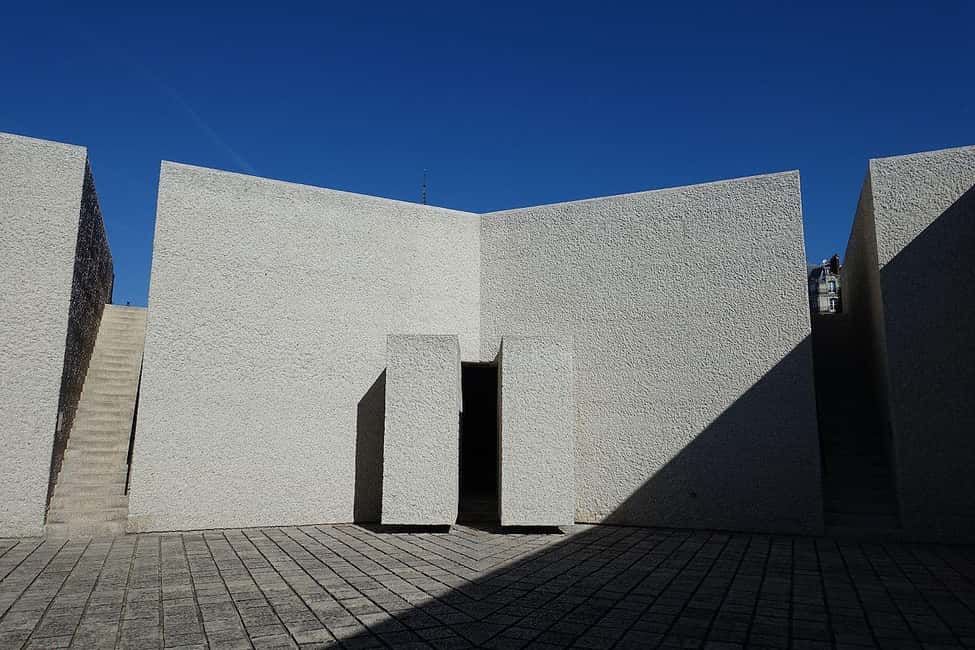
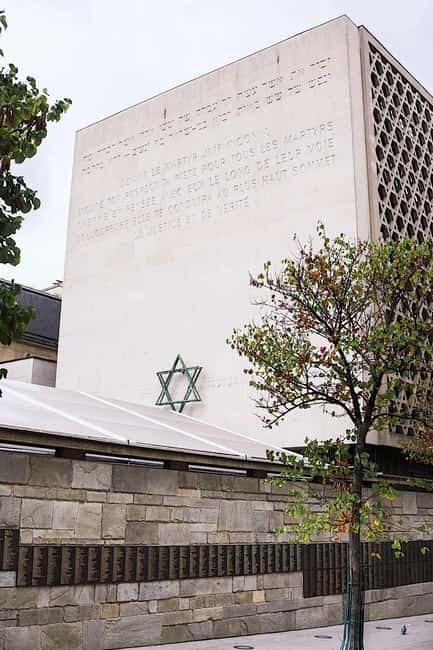
This is the emotional core of the walking tour: the Shoah Memorial and the Memorial of the Martyrs of the Deportation, with the tour finishing at the latter.
These places aren’t about quick photos. They’re designed to slow you down. The guide’s job is crucial here because the story could easily become general—numbers and dates—unless someone explains what those memorial forms are trying to make you feel and understand.
In practical terms, you should treat this part like a respectful visit, not a sightseeing sprint. Dress appropriately, keep your voice down, and give the guide a chance to talk through what you’re seeing. If you’ve been through enough Paris attractions that day, this is also where you’ll likely notice how different the focus becomes.
Why I think this part is worth your time: the neighborhood stops explain policy and community. The memorial stops explain consequence. Together, they make the history feel like one line instead of disconnected chapters.
Price and Logistics: Is $160 for 2 Hours Worth It?
At $160 per person for about 2 hours to 160 minutes, the first question is value. For me, the value comes from three things you don’t get from a generic self-guided walk.
First, you get a live guide in English or French who can connect what you see to what happened, including the long timeline of Jewish life in France. Second, you get a structured neighborhood route that includes kosher shops and historic sites without requiring you to research them in advance. Third, you end at major memorials where context helps you understand the meaning of the space.
Could you do portions on your own? Sure. You could walk the Marais and visit memorial sites independently. But the tour’s edge is the connective tissue—how the guide links laws, community life, and modern remembrance.
Logistics are straightforward: it’s a walking tour with moderate walking, not a wheelchair-friendly route, and you should plan for outdoors time in whatever weather you get. Also, photography is restricted in some areas, and flash photography isn’t allowed.
My take on the price: it’s not cheap, so be picky about guide quality. If your top priority is deep clarity and respectful pacing, this price starts to look more reasonable.
Who This Tour Suits Best (and Who Might Want to Skip It)
This tour suits you best if you want history with geography—that is, you like learning by walking through the places where events actually unfolded. It’s also a good pick if you care about understanding Jewish life in Paris not just during World War II, but across many centuries, including expulsions, resettlement, and demographic change.
It’s less ideal if you need step-free routes or mobility support. The tour isn’t suitable for wheelchair users or people with mobility impairments, and the streets and distance can be tough.
If you’re traveling with kids or teenagers, the memorial portion could be intense, so you’d want to gauge age and sensitivity. If you’re an older traveler who needs pacing flexibility, guide feedback suggests some guides handle rest stops well—still, keep your own stamina in mind.
Should You Book This Paris Jewish Marais Walking Tour?
Book it if you want a guided route that connects the Marais Jewish neighborhood to major memorial sites, with enough context to make the whole story coherent. The walking format makes the history feel anchored in place, and the combination of synagogues and kosher shops with the Shoah and deportation memorials is a powerful pairing.
Skip or reconsider if you’re expecting a mostly hands-on museum visit or lots of inside entrances. This tour is built around outside viewing and neighborhood walking, plus a respectful memorial visit. And if your language needs are strict, do a quick check on guide English/French comfort when booking.
If you’re open to a thoughtful, guided walk, this is one of the more meaningful ways to understand Jewish Paris beyond postcard landmarks.
FAQ
Where is the tour meeting point?
The tour meets at Synagogue des Tournelles.
How long is the walking tour?
It lasts about 2 hours (listed as 2 hours to 160 minutes).
What languages are the guides available in?
The tour is offered with live guides in English and French.
Where does the tour finish?
The tour finishes at the Mémorial des martyrs de la Déportation.
What sites are included along the route?
You’ll explore the Jewish Marais district, including historic synagogues (from outside), kosher shops and related sites, plus outside viewing of Anne Frank Garden and the Museum of Jewish History, as well as the Shoah Memorial and the Memorial of the Martyrs of the Deportation.
What should I bring or wear?
Bring comfortable shoes, a hat, sunscreen, and water. A head covering or kippah may also be needed.
Is photography allowed?
Photography may be restricted in certain areas, and flash photography is not allowed.
Is the tour suitable for wheelchair users or mobility impairments?
No. It is not suitable for people with mobility impairments or wheelchair users.