REVIEW · PARIS
Paris History Walk: Medieval Marais, Notre Dame Islands & Stories
Book on Viator →Operated by Paris Love Affair · Bookable on Viator
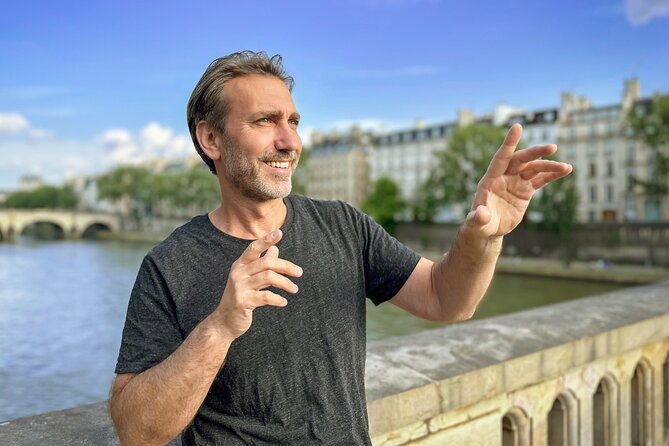
Medieval Paris, mapped for your camera. This 2-hour Paris history walk strings together the Marais, the Seine islands, and landmark views in a way that makes the city feel readable fast. I like that the guide is an American photographer living in Paris, so the stories come with a lens-focused eye, plus helpful visual aids as you go.
My other favorite part is the flow: you get architecture and street-level history without getting stuck in long lines. One thing to consider: it is an active walk, and some stops are best seen from the outside since entrance fees aren’t included.
In This Review
- Key points worth caring about
- Marais to the Islands: why this history walk works
- Meeting point and timing: 10:00 start, about 2 hours, good shoes
- The medieval Marais stops: Hôtel de Sens, Maison Faust, and the Philippe Auguste Wall
- Île Saint-Louis: a quieter Seine island and the Berthillon add-on
- Île de la Cité and Notre-Dame: Paris starts here
- Marché aux Fleurs and Palais de Justice: beauty next to power
- Sainte-Chapelle: royal chapel stories and stained glass context
- Conciergerie: from royal residence to prison walls
- Place Dauphine, Square du Vert-Galant, and Pont Neuf views
- What’s included, what’s not: plan your entrances and your snacks
- Price and value: $82.91 for a small-group history plus photo help
- Who this tour fits best (and who should pick something else)
- Should you book this Paris History Walk?
- FAQ
- What’s the duration of the tour?
- How much does the tour cost?
- Is the tour offered in English?
- How big is the group?
- What’s included in the price?
- What’s not included?
- Where do I meet and where does it end?
- Is it weather dependent?
Key points worth caring about
- Small group (up to 8) keeps the pace human and the questions actually land.
- An American photographer guide uses visuals that help you spot what matters in stone and street layouts.
- Île de la Cité to Sainte-Chapelle to Conciergerie is a concentrated route through Paris power and faith.
- Medieval remnants like the Philippe Auguste Wall (built in 1190) turn history from words into objects.
- Photo support included with complimentary group shots taken using your device.
Marais to the Islands: why this history walk works
This tour is built for people who want Paris to make sense quickly. You start in the Marais, then move through the islands in the Seine, where you can literally connect the dots from medieval fortifications to royal chapels and legal power.
What I like most about the design is that the stops are close enough for walking, but each one has a clear role in the story. You’re not just ticking famous names. You’re learning how the city was organized—who built walls, where the elite lived, and why the islands mattered.
You can also read our reviews of more historical tours in Paris



Meeting point and timing: 10:00 start, about 2 hours, good shoes
You meet at Le Louis Philippe, 66 Quai de l’Hôtel de ville, in the 4th arrondissement (Paris 75004). The tour wraps at Pont Neuf (75001). It’s scheduled to start at 10:00 am, and the time on your feet is about 2 hours.
The tour is described as active, so plan on real walking, not a slow stroll. Wear comfortable shoes—especially if you’re bringing a camera bag. The upside: in two hours, you can see an impressive sweep of Paris without feeling like you spent the whole day “just getting around.”
The medieval Marais stops: Hôtel de Sens, Maison Faust, and the Philippe Auguste Wall
The Marais segment is where the tour earns its name. You step into medieval Paris and you start seeing how old the city really is.
First up is Hôtel de Sens, a 15th-century Gothic mansion. This is a great “first story” stop because it shows how Gothic style showed up in private power, not only in churches. Expect the guide to connect details you’d normally miss to what was going on politically at the time.
Next is Maison Faust, a Renaissance find with ornate courtyards. Renaissance Paris can feel like a style lesson unless someone points out what to look for, and that’s where the photography angle helps. You’ll likely notice how courtyards create framed views—useful if you’re shooting with a phone or a compact camera.
Then comes the standout: the Philippe Auguste Wall, built in 1190 for the Crusades. This is a rare physical relic of Paris’s third fortification. Walls are not just “cool old stone” here—they’re a key to understanding why certain areas grew the way they did. If you like history that has edges and weight, this part is for you.
Practical tip: take a moment to pause with your back to the wall area (when the street allows). It helps you “read” the city layout while you’re hearing the story.
Île Saint-Louis: a quieter Seine island and the Berthillon add-on
After the Marais, you cross into Île Saint-Louis, a 17th-century island with elegant mansions and calmer energy than nearby hotspots. The tour slows just enough here to let you enjoy tree-lined quays and cozy streets without constant crush.
This is also where the guide’s local rhythm shows up. Even though you’re in central Paris, you get stretches that feel more like lived-in city than sightseeing grid.
You’ll also have the option to stop at Berthillon if you want—famous since 1954 for its ice cream. Importantly, this is not included, so it’s on you. If you’ve got a sweet tooth (and good timing), Berthillon can be a fun way to end the island section with something very Paris.
Île de la Cité and Notre-Dame: Paris starts here
Île de la Cité is where Paris begins, and the tour treats it like the city’s origin point—not an afterthought. You’ll walk through the island’s core lanes and landmark area, setting the stage for the major religious and civic sites to come.
Then you walk by Notre-Dame, where the guide explains its Gothic presence and the long arc of French history tied to it. Since the tour notes that entrances aren’t included, you’ll likely experience Notre-Dame as a strong street-facing landmark: views, facade details, and the stories that explain why this place became a symbol beyond its walls.
If you’re photographing: aim for one early stop where your camera is ready before you get jostled by foot traffic. Notre-Dame is never quiet, so having a plan saves frustration.





Marché aux Fleurs and Palais de Justice: beauty next to power
The tour adds texture by including Marché aux Fleurs, a historic flower market. It’s a simple stop that works because it changes the mood. Color in the street makes the earlier stone-heavy history feel more human—and it’s useful for photos when the light hits the blooms nicely.
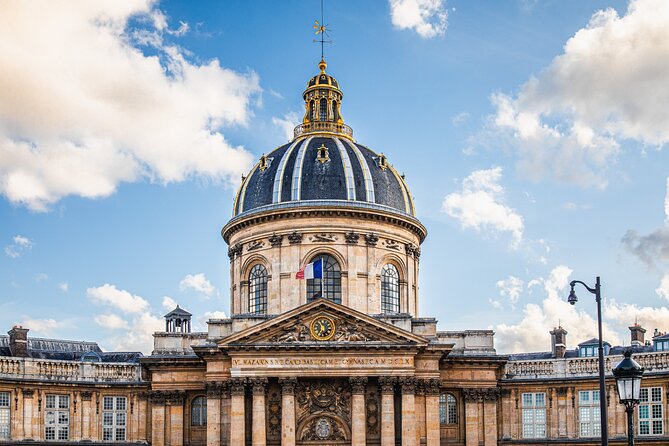
Then you shift to Palais de Justice, a massive complex tied to legal affairs for centuries. This is an architecture-and-influence stop. You’ll see how institutional buildings dominate the skyline in a way that tells you who held power and how decisions shaped daily life.
Key idea: markets and courts are both “public systems,” just for different needs. You’re watching Paris organize commerce and law in the same walk.
Sainte-Chapelle: royal chapel stories and stained glass context
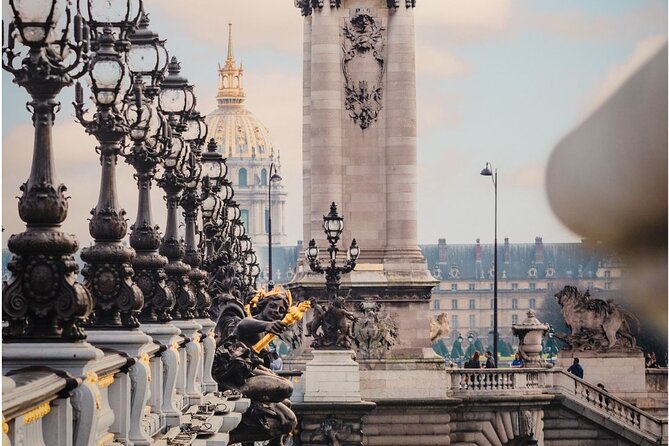
One of the big education stops is Sainte-Chapelle. The tour focuses on the royal chapel’s history and its reputation for stained glass.
Here’s the practical catch: since entrance to sites is not included, you should treat this as a guided exploration of the building and its role, not a guarantee that you’ll go inside. If you want to see the stained glass up close, plan on buying tickets separately later (you can decide once you see how much you want that interior detail).
Still, this is a valuable moment even from the outside because stained glass is hard to appreciate without context. The guide’s job here is to explain why these windows mattered, not only what they look like.
Conciergerie: from royal residence to prison walls
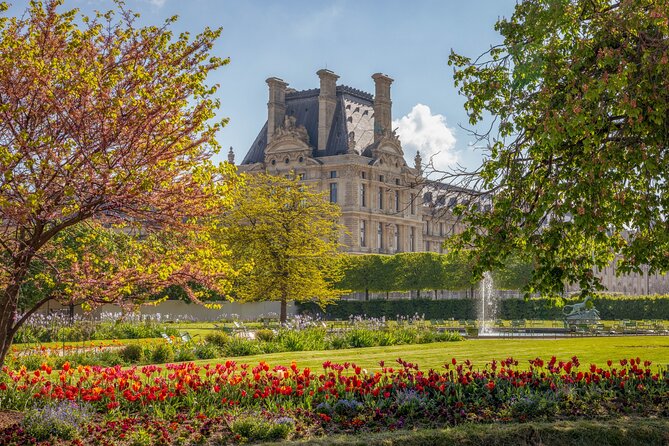
On Île de la Cité, you also visit the Conciergerie, a former royal palace and prison. The tour includes the story arc—how it shifted roles and why it mattered during the French Revolution.
This is one of those stops where the building type does half the teaching. Even if you don’t go inside, the Gothic architecture and the function of the place help your brain understand what kind of era you’re standing in. It’s a strong counterpoint to the royal chapel story: faith and pageantry on one side, punishment and politics on the other.
If you love darker history and want more than postcard Paris, this section is worth your attention.
Place Dauphine, Square du Vert-Galant, and Pont Neuf views
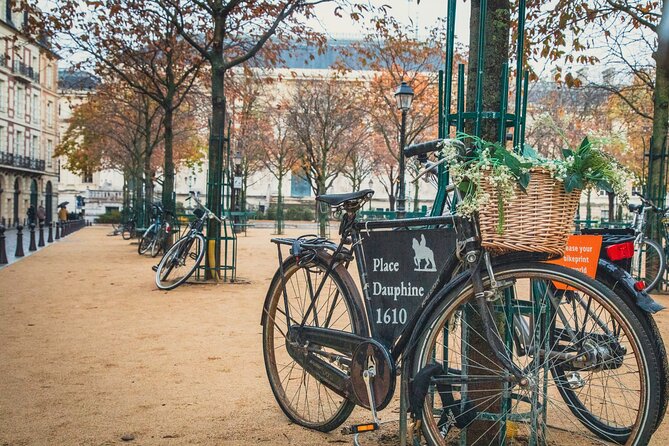
The tour gives you a breather with Place Dauphine, a charming triangular square that once served as a royal hangout. It’s a quieter pocket where you can reset after the heavier institutional stops.
Then comes my favorite “feel it with your eyes” segment: Square du Vert-Galant. This small park sits at the tip of Île de la Cité and gives views over the Seine. It’s a great place to stop moving, hold your camera still, and absorb how wide the river feels from this spot.
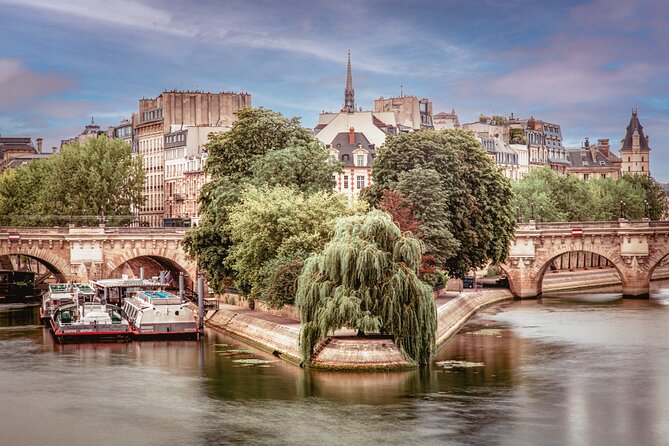
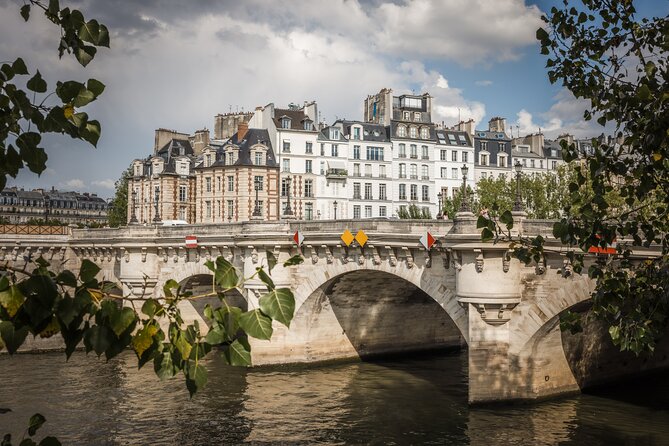
The tour then heads toward Pont Neuf, Paris’s oldest bridge (completed 1578). On the way, you’ll also get to see the New Bridge, built in 1607—and yes, it’s funny that it’s actually the oldest. The story highlights a big planning shift from earlier bridges: prioritizing views and pedestrians over housing. That’s exactly the kind of detail that makes a walking tour more than a photo escort.
There’s also a secret-sounding moment: the tour includes time at a hidden spot under a willow tree along the Seine’s bank, with views toward the Louvre. If you like “blink and you miss it” Paris, this will land.
What’s included, what’s not: plan your entrances and your snacks
Included is a smart mix for a history walk:
- a passionate local Paris guide (natively American)
- complimentary group photos taken with your device
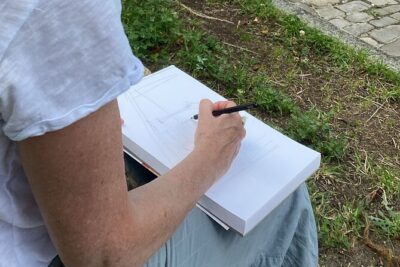
- historical visual aids throughout
- local restaurant recommendations
Not included items are important to understand:
- transportation to and from the meeting point
- any entrance to sites or monuments
- food and beverages
- gratuities
- professional photo sessions or prints
So the best planning move is simple: treat this as a guided route and context session, not a ticketed museum crawl. If you want inside access somewhere specific—like Sainte-Chapelle—you’ll want to line that up separately.
For timing, bring water and a small snack if you’re the type who gets hungry mid-walk. The itinerary length is short, but the walking adds up.
Price and value: $82.91 for a small-group history plus photo help
At $82.91 per person for about 2 hours, the value comes from the format.
You’re paying for:
- a small group cap (up to 8), which usually means less waiting and more explanation
- a guide who can turn architecture into clear stories
- included visual aids (those often save you from standing there guessing)
- included group photos using your own phone or camera
If you usually do self-guided walking, this tour gives you two things you can’t easily replicate: a guided sequence that makes sense, and context for buildings you might otherwise treat as scenery. If you’re the type who stops to read plaques, you’ll appreciate this even more—because the guide helps you pick the right details.
If you’re the type who hates crowds and prefers long museum time, you might find two hours too short and entrances too limited. But for first-day orientation and meaningful photo stops, the price is reasonable.
Who this tour fits best (and who should pick something else)
This experience is ideal if you:
- are a first-time visitor who wants Paris history without overload
- care about architecture and street-level storytelling
- want a photo-friendly route with help from an experienced guide
- like small-group pacing and asking questions
It’s less ideal if you:
- want a tour that includes inside entry to major monuments
- hate any active walking at all
- planned your day around museum-style time inside churches and palaces
That said, even without entrances included, the route is packed with places that visually do the heavy lifting.
Should you book this Paris History Walk?
Yes, if you want a fast, story-driven way to connect the Marais, Île de la Cité, and the Seine’s key viewpoints. It’s the kind of tour that helps you return to Paris landmarks later and actually recognize what you’re seeing.
Book it especially if you’re arriving in Paris soon and want to build your mental map early. You’ll leave with photos, a clearer timeline, and a sense of how medieval walls, royal power, religious art, and legal institutions shaped the city you’re walking through.
If you’re hoping to spend time inside monuments, plan that as a follow-up. This one is best for context and outside views, with a guided narrative that makes the stones feel alive.
FAQ
What’s the duration of the tour?
The tour is listed as about 2 hours (the hours given are approximate).
How much does the tour cost?
The price is $82.91 per person.
Is the tour offered in English?
Yes, the tour is offered in English.
How big is the group?
The tour has a maximum of 8 travelers.
What’s included in the price?
You get a local Paris guide, complimentary group photos taken with your device, historical visual aids, and local restaurant recommendations.
What’s not included?
Transportation to and from the meeting point, entrance to any sites or monuments, food and beverages, professional photo sessions or prints, and gratuities are not included.
Where do I meet and where does it end?
You start at Le Louis Philippe, 66 Quai de l’Hôtel de ville, 75004 Paris, and you end at Pont Neuf, 75001 Paris.
Is it weather dependent?
Yes. If it’s canceled due to poor weather, you’ll be offered a different date or a full refund.