REVIEW · PARIS
Paris: Kids in the Kitchen – Croissant
Book on GetYourGuide →Operated by MUCURISA · Bookable on GetYourGuide
Paris croissants get way more fun. In this kid-friendly class, you learn the why, not just the steps, inside a private apartment setup.
I especially like the small-group feel (just 4 participants) and the fact that you use simple, at-home tools instead of industrial tricks you can’t copy later.
One consideration: the meeting point is on a 5th floor with no elevator, so plan for stairs if you’re traveling with little ones or rolling luggage.
In This Review
- Key highlights I’d bookmark
- Paris Kids in the Kitchen: Croissant, Not a Factory Class
- Inside the 90 Minutes: Mise en Place to Viennoiseries
- Croissant History That Works for Kids, Too
- Tools You’ll Actually Use Again at Home
- Designed for Families: Starting Around Age 3
- Small Group Size: Limited to 4 for Real Attention
- Meeting Point Reality: 5th Floor, No Elevator
- Price and Value: $182 for a Family-Centered Skill Session
- How to Think About Skill Level and Expectations
- Who Should Book This Croissant Class?
- Should You Book This Class?
- FAQ
- FAQ
- How long is the Paris croissant class?
- Where does the experience take place?
- Is this class child-friendly for young kids?
- How big is the group?
- What languages is the instructor available in?
- What’s included in the price?
- Is there a place to sit and drink coffee or tea?
- Where do we meet?
- Is the apartment accessible by elevator?
- Can I cancel for a full refund?
Key highlights I’d bookmark
- Kids-first pacing starting at age 3: designed for families, not just advanced bakers
- Mise en place to finish: you start with prep and follow the dough process through the end
- Viennoiseries timeline energy: you travel through centuries to understand croissant origins and related pastry traditions
- At-home tool approach: the methods are meant to be repeatable in your own kitchen
- Private apartment workshop: a real local-feeling kitchen setting, not a production-line classroom
- Inclusions that reduce friction: materials, borrowed apron, plus coffee or tea are built into the experience
Paris Kids in the Kitchen: Croissant, Not a Factory Class
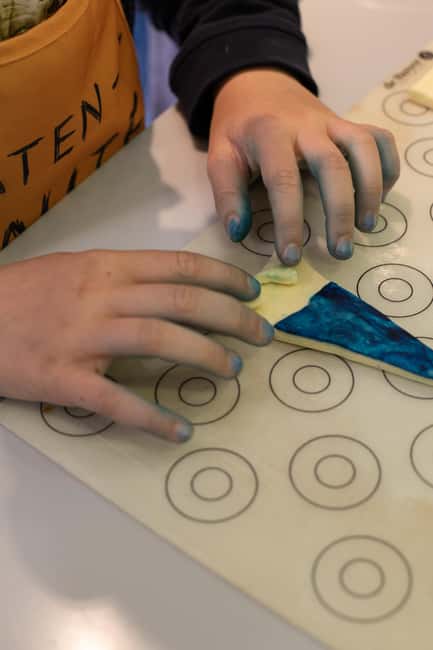
This is the kind of cooking class that feels like a home kitchen turned into a mini workshop. You get a private apartment setting, and the format is designed for families. The goal is simple: you and your kids should leave knowing how to make croissants in real life, not just admire them in a window display.
The experience runs for 90 minutes and keeps the group small, limited to 4 participants. That matters more than it sounds. In a class like this, kids need time to touch dough, ask questions, and try again. A tiny group also means your instructor can slow down for hands-on moments rather than rushing to cover everything.
You also get a bit of story with the baking. The class starts with mise en place, then moves through pastry history to help you understand viennoiseries as a family of treats, not one random recipe. It’s an approach that works well for kids, because it turns baking into a narrative they can follow.
You can also read our reviews of more tours and experiences in Paris.



Inside the 90 Minutes: Mise en Place to Viennoiseries
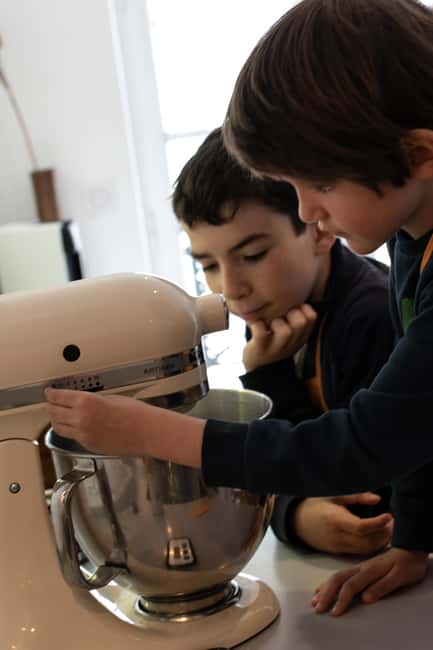
The flow is built like a guided sequence, starting with the prep stage. You begin with la mise en place, which is the French cooking habit of setting out tools and ingredients before the work starts. For kids, this is surprisingly valuable. It teaches order. It also helps prevent that common cooking-class chaos where someone is still hunting for flour while the timer starts.
From there, you work through croissant basics as part of a longer look at viennoiseries. The experience is framed as a journey over centuries, starting with the question of where croissants come from. You’ll learn the origin point that croissant was created in Austria, then connect that story to how viennoiseries fit into French pastry culture.
What you’ll like is the logic: dough isn’t just a recipe you copy. It’s temperature, patience, and technique. Even if you don’t get every term down perfectly, you’ll leave with practical habits: how to measure and prep, how to work the dough steps, and how the final result should look and feel.
Croissant History That Works for Kids, Too
Adult history lessons can be dry. This one isn’t trying to be a museum audio guide. It’s more like a kid-sized story that explains why croissants and related pastries exist at all.
The class explicitly frames croissant origins in Austria, then uses that as a stepping stone to explore the broader world of viennoiseries. For families, that storytelling layer helps kids feel like they’re doing something meaningful, not just following a recipe. You’re not stuck only on hands-on action; you’re also getting context.
From the reviews, the tone lands well. One parent highlighted how much their sons enjoyed making croissants and praised the instructor for being patient and kind. Another review in French and Spanish also called out how fun it was and how well it works with little kids. That combination suggests the class isn’t all talk. It’s structured enough to keep toddlers and preschoolers engaged.
Tools You’ll Actually Use Again at Home
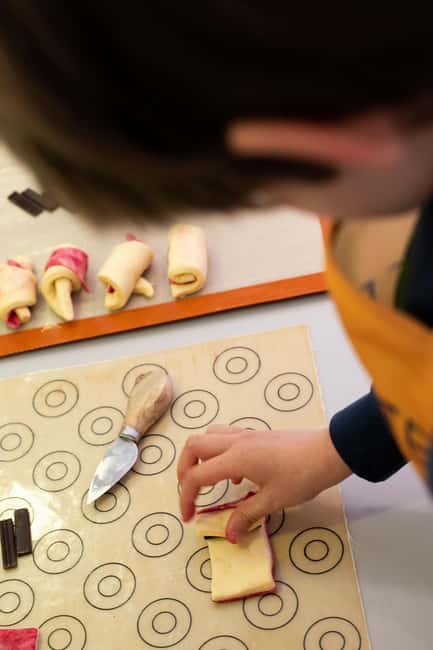
One of the biggest selling points is that this isn’t a workshop built around industrial gear. The description is clear: you use simple tools, like at home, not bakery-only equipment.
This matters for value. Many cooking classes teach you a technique but then leave you stuck at home because your kitchen doesn’t have the same tools, the same scale, or the same setup. Here, the promise is that the experience is designed to be recreated later. That means the skills you gain should transfer into your own baking routine.
Also, the class includes an apron you borrow for the experience. That’s a small detail, but it keeps the moment comfortable for families. You don’t have to bring anything just to avoid flour disasters.
And you get coffee or tea during the class. It’s a gentle perk that makes the 90 minutes feel less like a strict lesson and more like a shared afternoon in a local home kitchen.
Designed for Families: Starting Around Age 3
This is a family-focused class with a clear age target. It’s built specially for kids starting 3 years old. It’s not suitable for children under 2, which makes sense given that you’ll be handling dough and working in a real kitchen environment.
If you’re traveling with young kids, that age guidance helps you decide quickly. A class that’s only “child-friendly” sometimes still expects adult-level focus. This one is built for kids, so pacing and participation are likely to match what small children can do.
In practice, the hands-on part is what you’re there for: kids can mix, shape, and work with the dough rather than just watch from the sidelines. The small group size supports that. You’re not competing for attention with a bigger crowd.
From the reviews, the instructor’s demeanor is a major part of the experience. Parents specifically described patience and a kind approach, and that is exactly what makes a baking class with little ones go smoothly.






Small Group Size: Limited to 4 for Real Attention
The workshop caps at 4 participants. That’s a lot of personal attention for a class that’s 90 minutes long.
A small group changes the feel in a few practical ways:
- Kids get more chances to try steps instead of waiting their turn.
- Adults can ask questions without feeling rushed.
- The instructor can keep the energy calm, even when flour and dough are involved.
This matters if you’re trying to do something special with family members who don’t have a lot of time. A 90-minute class is also a manageable commitment while you’re touring Paris. It’s short enough to fit between sightseeing blocks, yet long enough to feel like a real skill-building session.
Also, because it’s set in a private apartment, you’re not dealing with the noise and motion of a huge cooking school. You get a quieter, more local vibe.
Meeting Point Reality: 5th Floor, No Elevator
The experience happens in a private Parisian apartment in Ile-de-France. You’ll find the meeting instructions through the provided directions link, which references Atente Aute in Le Marais.
Here’s the practical heads-up: it’s on the 5th floor with no elevator. So if you’re bringing a stroller, small luggage, or you’re simply not up for stairs, plan accordingly. For many families, that means arriving with everything you need already on hand, so you’re not stuck making multiple trips.
This is also worth considering for kids. Young kids can get restless in stair climbs. If you can time it so everyone is calm and ready, the rest of the experience will feel much smoother.
Price and Value: $182 for a Family-Centered Skill Session
At $182 per person, this is not a cheap activity. But you’re not only paying for ingredients. You’re paying for an instructor-led session designed around families, including included materials and a borrowed apron, plus coffee or tea.
So where does the value come from?
1) Small group instruction
With a cap of 4 participants, you get more attention per person than a larger class.
2) Designed for kids starting age 3
This is a tailored experience, not a generic baking class with a casual suggestion to bring children.
3) At-home repeatability
The class is built around simple tools you can recreate later. If you bake again at home, you’re getting more than one afternoon of fun.
4) Private apartment setting
It’s a local-feeling environment, which changes the atmosphere. That matters for families who want an authentic experience rather than a staged show.
If you’re traveling with kids, $182 can feel easier to swallow because the experience is built for family enjoyment, not adult-only technique. If you’re traveling as a pair of adults who want a serious, advanced pastry course, you might find you want something more technical. But for families, the value is strong.
How to Think About Skill Level and Expectations
This class is framed around family participation and hands-on learning. It’s not described as a technical pastry bootcamp. That’s a feature, not a flaw, especially for kids and beginners.
Expect to learn by doing: prep first, then work through croissant making steps. The history element is there to give meaning to the recipe, not to turn your kitchen session into a lecture.
You’ll likely leave with two kinds of takeaways:
- Practical habits (mise en place, working through steps, understanding the dough process)
- Context (croissant origins in Austria and how the broader world of viennoiseries connects)
That combination is great for families because it makes the activity feel like a real cultural experience, not just baking for the sake of baking.
Who Should Book This Croissant Class?
I’d point this toward families who want a fun, hands-on Paris activity that feels local and repeatable. It’s also ideal if you’re planning a private get-together such as a family or friends gathering, or an anniversary.
It’s especially worth it if:
- You have kids age 3 and up who will actually participate
- You want a small-group class where the instructor can slow down
- You care about bringing the method home, not just tasting something in Paris
- You prefer a private apartment setting over a big shared kitchen
It might be less ideal if:
- You need step-free access, since it’s on a 5th floor without an elevator
- Your kids are under 2, since it’s not suitable for them
Should You Book This Class?
Yes, if you want a family-friendly Paris experience that’s built for kids and designed around doing, not watching. The combination of small group size, at-home repeatable tools, and a patient, supportive teaching style (as reflected in the reviews) is exactly what makes this kind of class worth your time and money.
If you’re on the fence mainly because of the price, think about it like this: you’re paying for personal instruction, materials, and an experience that’s tailored for children from age 3. That’s the kind of “value” that’s hard to get from generic attractions.
If stairs are an issue for your family, factor that in early. Everything else is aligned for a smooth, enjoyable afternoon.
FAQ
FAQ
How long is the Paris croissant class?
The class lasts 90 minutes.
Where does the experience take place?
It takes place in a private Parisian apartment.
Is this class child-friendly for young kids?
It’s designed for kids starting at 3 years old, and it is not suitable for children under 2.
How big is the group?
The class is limited to a small group of 4 participants.
What languages is the instructor available in?
The instructor speaks English and Spanish.
What’s included in the price?
All main materials are included, you borrow an apron for the class, and coffee or tea is provided.
Is there a place to sit and drink coffee or tea?
Coffee or tea is included as part of the experience, during the 90 minutes.
Where do we meet?
You meet at the private apartment location. The directions are provided through the meeting-point instructions link.
Is the apartment accessible by elevator?
The apartment is on the 5th floor and there is no elevator.
Can I cancel for a full refund?
Yes. You can cancel up to 24 hours in advance for a full refund.