REVIEW · PARIS
Paris: Guided Side Car Tour on the Left Bank
Book on Viator →Operated by Wild Side Tour · Bookable on Viator
Paris flies by in a sidecar, and you get a guided sweep of the Left Bank without the usual walking grind. It’s a private ride with an English-speaking guide, and I like that you can keep a pace that actually feels comfortable instead of racing from stop to stop.
I also love the photo stops that you hit without effort, especially the Eiffel Tower viewpoints around Trocadéro and the long run of bridges across the Seine. One thing to keep in mind: it’s about an hour, and many of the famous spots are quick pass-bys, so this is best as a fast orientation to the city rather than a slow deep-dive.
In This Review
- Key highlights worth your time
- Why this Left Bank sidecar route works so well
- Meet at Le Petit Plateau and set yourself up for an easy start
- How the one-hour timing feels on the road
- Stop-by-stop: what you’ll see and how to get the best out of each moment
- Notre-Dame de Paris: first glimpse of the gothic giant
- Arc de Triomphe: ride beneath a monument of French ceremony
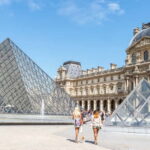
- Louvre Museum: spot the glass pyramid from the outside
- Eiffel Tower: the thrill moment you’ll remember
- Champs-Élysées: a classic Paris parade route
- Les Invalides: the golden-domed military complex
- Musée d’Orsay: a former station repurposed
- Trocadéro: Eiffel Tower viewpoint you can count on
- Palais-Bourbon: France’s National Assembly from the street
- Conciergerie: medieval walls with a dramatic reputation
- Institut de France: the dome-topped academic presence
- Pont des Arts: the Seine view and the love-lock history
- Pont Alexandre III: ornate gold and Art Nouveau style
- Pont Neuf: old bridge energy with ongoing views
- The guide makes a difference, and Raphael clearly knows the job
- Who this sidecar tour suits best
- Price and value: what $99 buys you
- A few practical notes before you book
- Should you book this Wild Side Tour sidecar ride?
- FAQ
- How long is the Paris sidecar tour on the Left Bank?
- Is this tour private?
- What language is the tour offered in?
- Where is the meeting point, and where do we end?
- How many passengers can ride?
- What happens if weather is bad or I need to cancel?
Key highlights worth your time
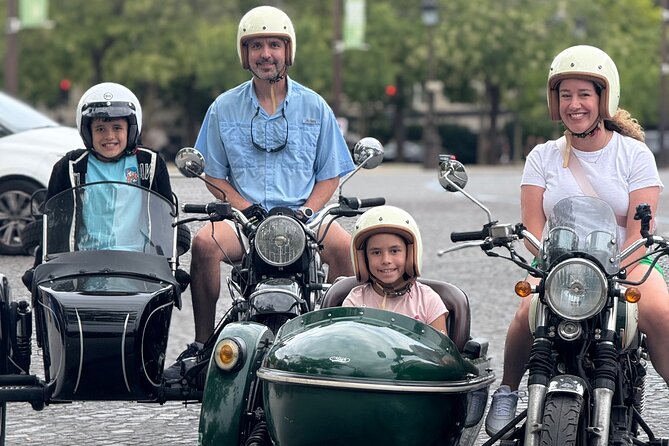
- A private, English-led ride through the Left Bank, so the pace stays yours
- Raphael’s hosting style: fun, funny, and tuned to questions (including vlogging needs)
- Big-name landmarks in one loop, with short, efficient stops for photos and street views
- Trocadéro for Eiffel Tower photos, a proven vantage point
- Seine bridge lineup, including Pont des Arts and Pont Alexandre III
- Good-weather dependent, so check the forecast and plan to be flexible
Why this Left Bank sidecar route works so well
Paris is easy to over-plan. You start with one “must-see,” and suddenly you’re sprinting across the city just to say you saw it. This kind of sidecar tour flips the logic: you still get the iconic hits, but you spend your energy on enjoying the ride, not on commuting.
The route is also smart for first-timers and for anyone short on time. You get a tight visual arc—from the Île de la Cité area up toward big monuments like the Arc de Triomphe and down through the Eiffel Tower district. Even if you come back later for museums or longer stays, this gives you a mental map quickly.
There’s also an energy you don’t get from a regular van. You’re exposed to the city in a direct way: street angles, architecture details, and the sense of motion that helps the city feel real instead of just photographed.
You can also read our reviews of more guided tours in Paris



Meet at Le Petit Plateau and set yourself up for an easy start
The tour starts at Le Petit Plateau, Quai aux Fleurs, in the 4th arrondissement (75004). The meeting area is near public transportation, which matters because Paris is at its best when you don’t fight for parking or waste time on complicated transfers.
You’ll receive a mobile ticket, and the tour is set up as a private activity. That means it’s just your group in the sidecar, not a rotating crowd that keeps changing how long you can linger near a curb.
Another practical upside: the tour is built around a one-hour window. That’s long enough to get a meaningful sweep, but short enough that you’re unlikely to feel “stuck” halfway through.
How the one-hour timing feels on the road
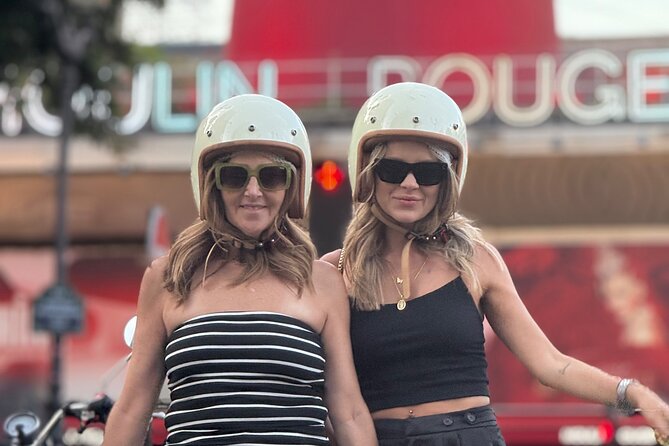
This is not a long stop-and-stare tour. Most highlights are brief—think quick viewing moments rather than guided history lectures at each curb.
That approach is actually useful. In one hour, you see a sequence of landmarks you’d normally scatter across multiple days. You’ll also get a sense of where landmarks sit in relation to each other: which ones are near the Seine, which areas feel more grand and ceremonial, and where the views open up.
A small consideration: because the timing is tight, you should be ready to grab photos quickly when the guide positions you. If you’re the type who wants ten minutes per stop to fully absorb details, you might prefer pairing this with a slower walk afterward.
Stop-by-stop: what you’ll see and how to get the best out of each moment
Notre-Dame de Paris: first glimpse of the gothic giant
You’ll glide by Cathedrale Notre-Dame de Paris and get that instant “wow” from the gothic lines and scale. You’re not meant to sit and read every panel here; the value is the opening sense of place. This is also a helpful anchor for understanding the rest of the route, since the Île de la Cité area connects to several other major sights later.
Photo tip: aim to catch the cathedral in context—part of why it works from the street is seeing it with the surrounding city edges.





Arc de Triomphe: ride beneath a monument of French ceremony
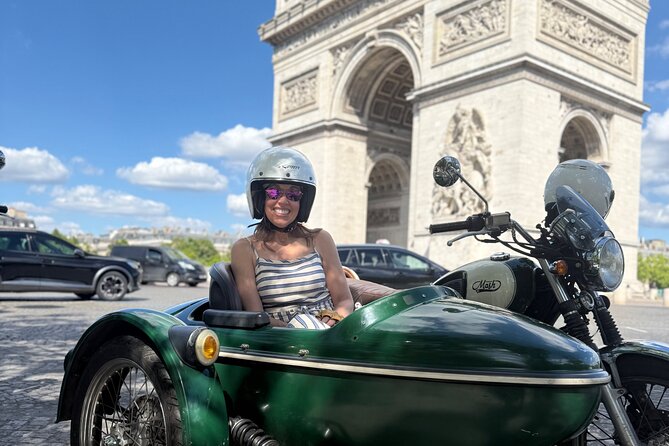
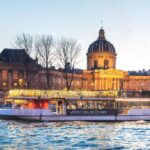
Next is the Arc de Triomphe, another quick but powerful stop. Seeing it from the roadway helps you understand why it’s such a city focal point. It’s monumental, formal, and built to make you feel like you’re passing through a stage set.
If you like architecture, this is a good moment to slow your breathing for a second and notice the monument’s symmetry and scale.
Louvre Museum: spot the glass pyramid from the outside
You’ll roll past the Louvre and its glass pyramid, which is the modern counterpoint to the palace-scale buildings. Since you’re not relying on museum time here, you get an immediate sense of what makes the Louvre so visually recognizable.
Drawback to note: you won’t get inside collections on this ride. This stop is for orientation and exterior impressions.
Eiffel Tower: the thrill moment you’ll remember
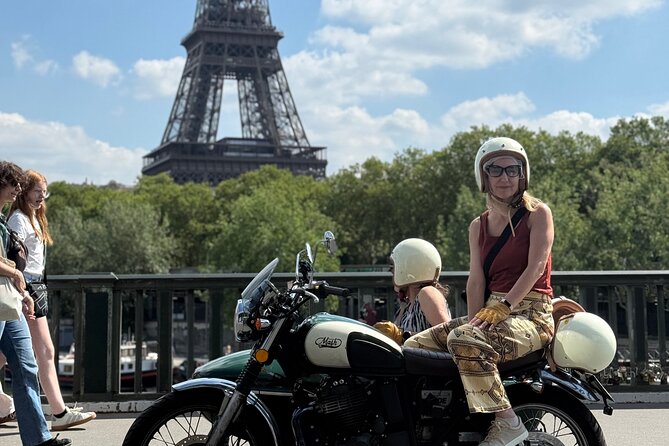
Then comes the big one: Eiffel Tower. The ride-by view is the kind that makes you sit up a little. Even from streets and viewpoints, the tower has gravity—you feel it more than you can explain it.
If you’re pairing this with later plans, treat the Eiffel stop as a preview of where you’ll want to spend more time.
Champs-Élysées: a classic Paris parade route
You’ll zoom down Champs-Élysées, a boulevard people associate with luxury shops and café life. The value here is speed. You see the rhythm of the avenue—the straight-line perspective and the sense of grandeur—without spending hours walking it.
Practical tip: if you plan to return, this ride helps you understand what sections feel best for a relaxed stroll.
Les Invalides: the golden-domed military complex
You’ll pass Les Invalides, famous for the golden dome. This stop adds a different side of Paris—state power, military history, and monumental architecture.
The sidecar format is perfect for this kind of sight because you can take in the dome and surrounding structure quickly, then move on while the tour keeps momentum.
Musée d’Orsay: a former station repurposed
Next is Musee d’Orsay, housed in a Beaux-Arts-style former train station. Even without going in, you’ll appreciate the building’s grand public design. It also helps you see why this museum space feels different from typical gallery blocks.
If you like art, you’ll likely want a follow-up visit later. But as a ride highlight, it’s a strong change of pace.
Trocadéro: Eiffel Tower viewpoint you can count on
Then you hit Le Trocadero et son esplanade—and this is one of the best photo opportunities on the whole loop. You’re getting an Eiffel Tower view from a classic viewing platform, the kind of spot that consistently delivers a recognizable composition.
What I like here is that it’s not just about seeing the tower. It’s about seeing it framed by the city’s planned geometry, which makes your photos look like Paris rather than like “a tall structure in the distance.”
Palais-Bourbon: France’s National Assembly from the street
You’ll glide past the 7th Arr. – Palais-Bourbon, the neoclassical building housing the French National Assembly. This stop is a reminder that Paris isn’t only romance and monuments. It’s also government, civic life, and formal architecture.
You don’t need to be a political-history buff to enjoy it—just notice the building style and how it reads as an institution.
Conciergerie: medieval walls with a dramatic reputation
Next is the Conciergerie, a former royal palace and prison on the Île de la Cité. It’s famous for holding Marie Antoinette before her execution, and the building’s medieval character helps you feel the weight of that history.
Because this is a quick stop, the goal is impression and location. Later, you can decide whether you want more time for a deeper visit.
Institut de France: the dome-topped academic presence
You’ll pass Palais De L’institut De France, which includes the French Academy and other academic institutions. This isn’t a flashy tourist stop, and that’s part of the charm. It brings a quieter, scholarly elegance to the route.
If you enjoy seeing different “types” of buildings—religious, ceremonial, civic, artistic—this one keeps the tour feeling balanced.
Pont des Arts: the Seine view and the love-lock history
You’ll ride by Pont des Arts, known for the love locks that couples attached there (now removed). The practical value is the bridge perspective: it’s pedestrian-friendly in terms of sight lines, and it gives you a clear look along the Seine.
If you’re a photo person, this is where you can aim for “Paris above the water,” not just “Paris as a single monument.”
Pont Alexandre III: ornate gold and Art Nouveau style
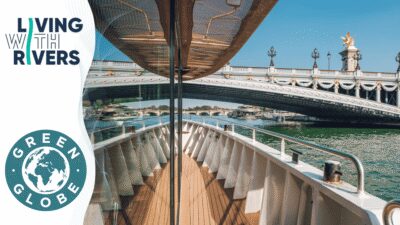
Then comes Pont Alexandre III, widely considered one of the most beautiful bridges in Paris. Expect golden statues and ornate lampposts, with that Art Nouveau feel that makes the bridge look like sculpture even when you’re moving by.
This is an ideal stop to frame architecture details—because the bridge isn’t plain. It’s designed to catch the eye.
Pont Neuf: old bridge energy with ongoing views
Finally, you’ll pass Pont Neuf, the oldest bridge in Paris, connecting both banks and running by the Île de la Cité. It’s one of those places where the date on the calendar matters less than how the bridge fits into the city’s flow.
If you remember just one thing from the bridge portion, it should be this: the bridges aren’t just connectors here. They’re built as viewpoints and symbols.
The guide makes a difference, and Raphael clearly knows the job
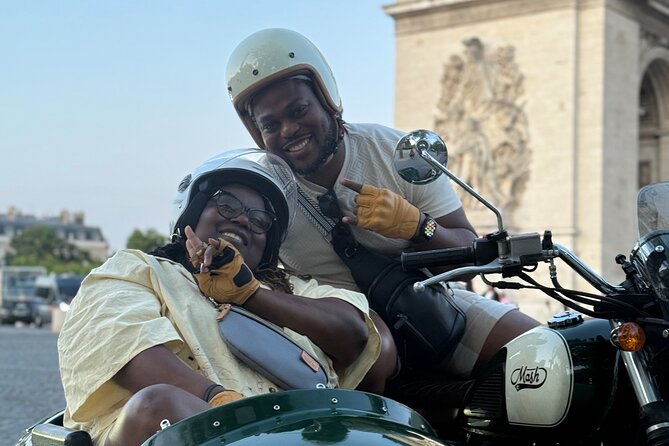
From what I’ve seen the best guides do, it’s this: they manage the ride so you feel relaxed, not rushed. Raphael stands out for being super nice, well informed about the area, and genuinely fun to be with.
In at least one case, he adjusted to a travel vlogger filming needs, even answering questions to help make Paris culture easier for an audience to understand. That kind of flexibility is rare on tight, one-hour schedules.
You’ll likely get more than just landmark facts. You’ll get a sense of how Paris “reads” street by street.
Who this sidecar tour suits best
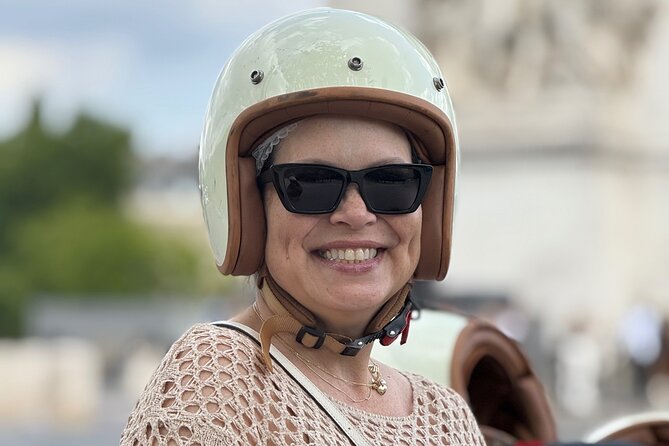
This works best if you want:
- A fast orientation to major Left Bank and center-city landmarks
- A fun, cinematic way to travel between sightseeing points
- A private experience where you can ask questions without holding up strangers
It also fits couples and small groups who want something memorable without committing to a whole day of walking.
One caution: if you want museum entry time or long guided stops at each site, this isn’t built for that. It’s built for motion, views, and quick moments.
Price and value: what $99 buys you
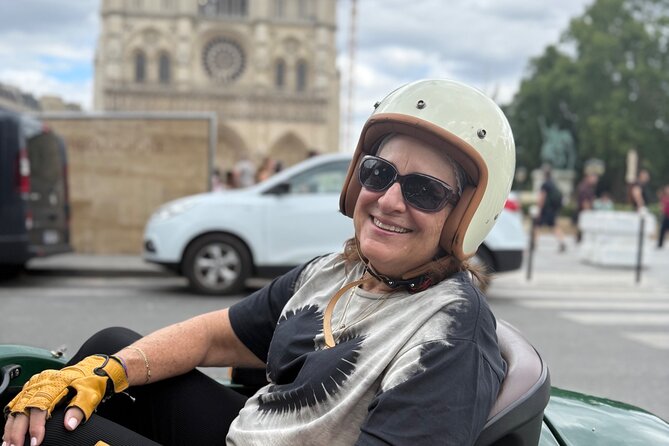
At $99 per person for about one hour, you’re paying for more than transportation. You’re paying for:
- a guide who can connect the dots between landmarks
- a private sidecar experience that feels special from minute one
- efficient routing so you see many major sites without spending your day in transit
If you compare this to paying separately for multiple taxis and trying to coordinate photo stops on your own, the math can start to make sense—especially if you’d otherwise spend time crossing the city on your own feet.
The value is highest when you’re honest about what this is: a short, iconic highlights sweep. Treat it like that, and it feels worth it.
A few practical notes before you book

This experience requires good weather. If it’s canceled due to poor weather, you’ll be offered a different date or a full refund. If you cancel for other reasons, it’s non-refundable and can’t be changed.
Also, the tour is marked as available in English, and it’s designed so most people can participate. Sidecar rides usually mean a bit of motion—so if you’re sensitive to that, consider how comfortable you are with being out on the road for an hour.
Should you book this Wild Side Tour sidecar ride?
Yes, if you want a fun, efficient way to see Paris’s greatest hits from the street, with a guide who keeps the ride moving at your comfort level. It’s especially strong for first-timers, couples, and anyone who wants Eiffel Tower views plus a clear sense of the Seine bridges without spending the day on foot.
Skip it if you’re looking for museum entry, long stops, or a slow pace where you can spend real time inside sites. In that case, you’ll get more value from dedicated neighborhood walks and museum tickets.
FAQ
How long is the Paris sidecar tour on the Left Bank?
The tour lasts about 1 hour.
Is this tour private?
Yes. It’s a private tour/activity, and only your group participates.
What language is the tour offered in?
The tour is offered in English.
Where is the meeting point, and where do we end?
You start at Le Petit Plateau, Quai aux Fleurs, 75004 Paris. The activity ends back at the meeting point.
How many passengers can ride?
Up to two passengers can ride in the sidecar and motorbike.
What happens if weather is bad or I need to cancel?
The experience requires good weather. If it’s canceled due to poor weather, you’ll be offered a different date or a full refund. If you cancel or request an amendment for other reasons, it’s non-refundable and cannot be changed.