REVIEW · PARIS
Paris Champs-Élysées 2-Hour Private Walking Tour
Book on GetYourGuide →Operated by Paris in person private tours · Bookable on GetYourGuide
Champs-Élysées feels bigger than it looks. A private, 2-hour walk like this turns the avenue from postcard scenery into a clear story about Napoleon and Roman myth. I like that it starts with big, readable landmarks like Place de la Concorde, then keeps moving so you always know what you’re seeing and why it matters. One drawback: at $176 per person for just 2 hours, it’s best if you want guided orientation, not long museum time or a full-on shopping spree.
I also really appreciate the museum focus: you’ll see the Grand Palais and Petit Palais in their current roles, not just as famous facades. The guide is there to explain how the “grand avenue” relates to both 19th-century Paris and today. Since it’s private and rain or shine, the pace is steady and you’ll want comfortable shoes for a straight 2-hour stroll.
In This Review
- Key things I’d zoom in on
- Why a 2-hour private walk works on the Champs-Élysées
- Place de la Concorde and the Luxor Obelisk: the city’s “main compass”
- Grand Palais and Petit Palais as living museums
- Champs-Élysées, Avenue Montaigne, and the art of reading a grand street
- The Luxor-to-Arc story: Roman mythology and Napoleon’s shadow
- Arc de Triomphe: why you don’t just look, you understand it
- Picasso’s favorite drinking dens: the street gets human
- Price and what you’re really buying for $176 per person
- Who should book this private Champs-Élysées walk
- Should you book it or skip it?
- FAQ
- Where does the tour start?
- How long is the Champs-Élysées private walking tour?
- What’s included in the price?
- Is food and drink included?
- Which languages are available?
- Is the tour private or shared?
- Does the tour run in bad weather?
- Is the tour wheelchair accessible?
- What’s the cancellation policy?
Key things I’d zoom in on
- Place de la Concorde: the planning and architecture around the Luxor Obelisk make the area make sense fast
- Grand Palais + Petit Palais: you’ll connect what you see on the street to what these buildings became as museums
- Champs-Élysées on both sides: the guide’s approach helps you stop “just walking” and start reading the city
- Roman mythology meets Napoleon: this tour gives you the symbolism behind the famous sights
- Picasso’s drinking dens: you’ll get cultural street-level context, not just monuments
- A tight 2-hour route: you cover major hits without spending the day commuting or waiting
Why a 2-hour private walk works on the Champs-Élysées
The Champs-Élysées is the kind of place where you can wander for hours and still feel like you saw nothing “important.” This private format fixes that. In 2 hours, you get a guided path that hits major anchor points and then explains how they connect, so you leave with a mental map instead of a blur of shops.
It’s also a smart choice for a first day. The tour is designed to help you understand the avenue’s two-sided personality: the grand, ceremonial side, and the more human, nightlife-and-culture side. That balance is exactly what makes this kind of walking experience useful when you’re trying to orient yourself in Paris quickly.
Finally, it’s private. That matters because questions and pacing don’t get stuck behind a group schedule. If you want to pause to look at details on a façade or ask how something ties to Napoleon, you can.
You can also read our reviews of more walking tours in Paris



Place de la Concorde and the Luxor Obelisk: the city’s “main compass”
Your tour begins in front of the obelisk at Place de la Concorde. That’s a great way to start, because the square is built to feel monumental and intentional. You’re looking at a deliberate urban design, not random greatness.
Here’s what the guide’s approach does well: you’re not just shown a landmark. You learn how the square’s architecture and layout guide the eye. From there, you can understand how the avenue functions like a major axis—something Paris uses to create drama from street level.
A helpful detail: the Luxor Obelisk is the kind of feature you may have seen in photos, but it’s easy to misunderstand in person. On this walk, it becomes a reference point for the bigger story of the neighborhood and the avenue’s role in the city.
Practical tip: this is also the area where many people feel they need to “stand in the right spot” for photos. Don’t fight the crowd. Use the guide’s direction first, and then take your photos after you understand what you’re aiming at.
Grand Palais and Petit Palais as living museums
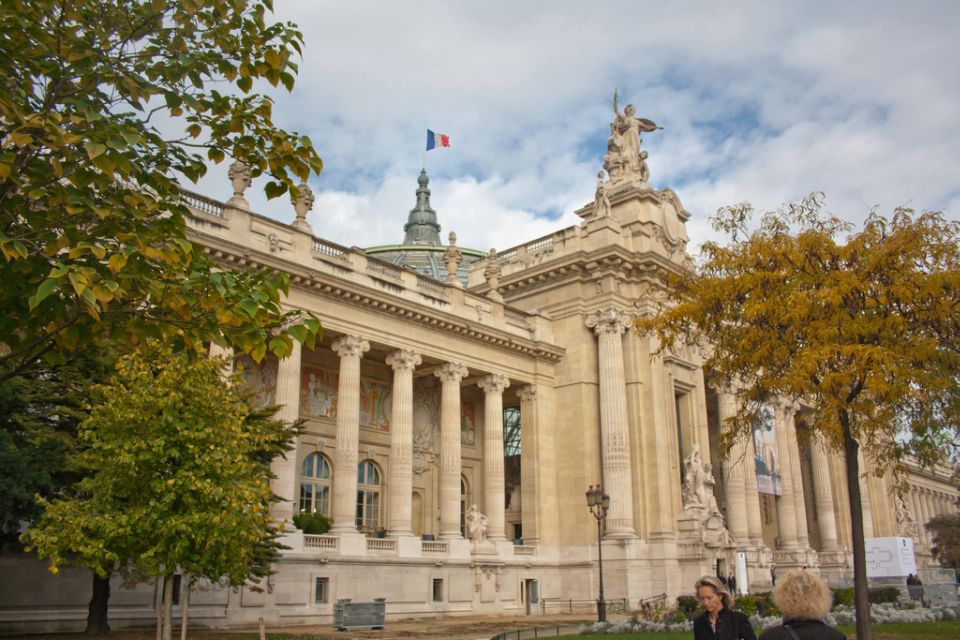
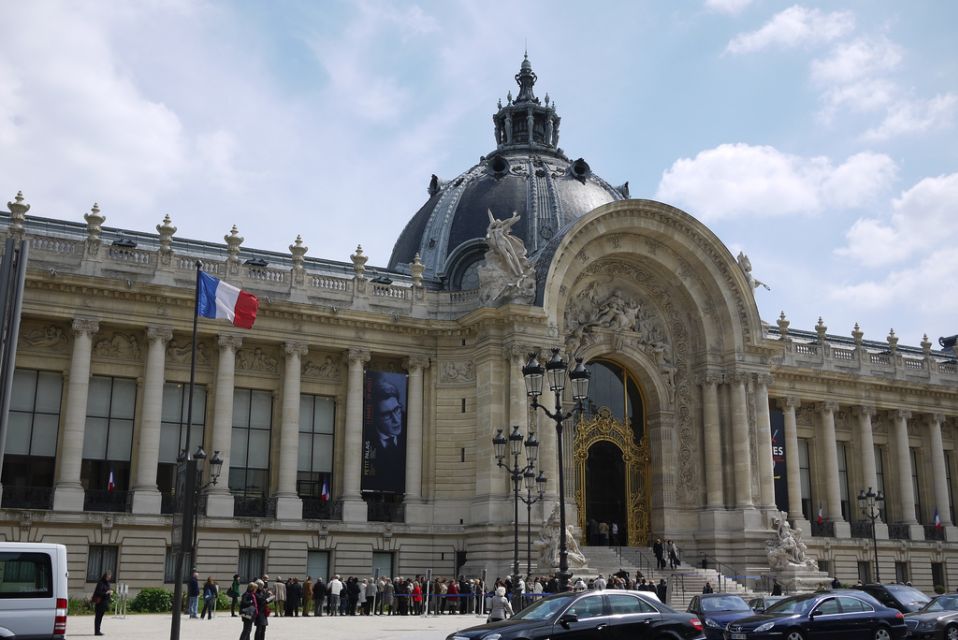
After Place de la Concorde, you’ll move toward two of the best-known museum buildings in Paris: Grand Palais and Petit Palais. Both are recognizable even to non-experts, which is why they work so well on a short tour. You don’t lose time trying to identify what you’re looking at.
What makes this stop valuable is how it changes your perspective. Instead of treating these as “famous exterior buildings,” you’ll get context for how they function today. That shift is huge. Once you understand what a building is used for now, you start noticing design choices that support its purpose—space, light, and the feel of entry and movement.
There’s also an efficiency factor. A lot of travelers spend time reading up on Grand Palais and then end up walking past it with no context. This tour gives you the interpretation early, so later you’ll recognize details you would otherwise miss.
A possible drawback: the tour is only 2 hours, so you won’t get long museum time. If your priority is going inside and spending hours, this is a “set-up” experience. Pair it with a museum visit later if that’s your style.
Champs-Élysées, Avenue Montaigne, and the art of reading a grand street
Once you’re on the Avenue des Champs-Élysées (and the adjacent feel of Avenue Montaigne), the guide does something that’s easy to underestimate: they explain both sides of the avenue. That’s not just “left vs. right.” It’s how Paris frames class, ceremony, commerce, and lifestyle along the same line.
You’ll also pass by recognizable Paris retail landmarks, including the Ladurée macaron shop. This kind of stop is more about placing you in real Paris rhythms than about food (and the tour doesn’t include food or drink). Think of it as a way to connect the iconic imagery to what’s actually happening on the street.
Hôtel de Crillon is another key street-level anchor on the route. Even if you never enter, it’s helpful to see it during a guided explanation because it signals the “high end” side of the avenue and how that contrasts with the places tied to artists and night life.
Practical note: Champs-Élysées is busy. In a private tour, your guide can help you keep moving without getting stuck in the slowest pedestrian bottlenecks for too long. Still, plan for steady walking and crowd conditions.
The Luxor-to-Arc story: Roman mythology and Napoleon’s shadow
One of the most interesting parts of this experience is the way it links the avenue to symbolism. You’ll hear about its connection to Roman mythology and Napoleon, and you’ll also learn how that symbolism relates to both the 19th-century Paris of the big civic vision and the Paris you see now.
This is where a guided walk becomes more than sightseeing. Monuments can feel like isolated pieces of stone. The explanation stitches them into a single narrative about power, empire, and how cities display their ideas in public space.
You’ll also learn how the avenue used to be something very different. Instead of only thinking of Champs-Élysées as “the famous shopping street,” the tour highlights that it once started as a simple park with bars and third-rate theaters. That detail helps you understand why the avenue carries more than one identity: spectacle and entertainment, grandeur and everyday life.
If you like history, architecture, and cultural storytelling, this is the heart of the tour. It turns what might feel like obvious landmarks into a set of clues you can actually read.
You can also read our reviews of more private tours in Paris






Arc de Triomphe: why you don’t just look, you understand it
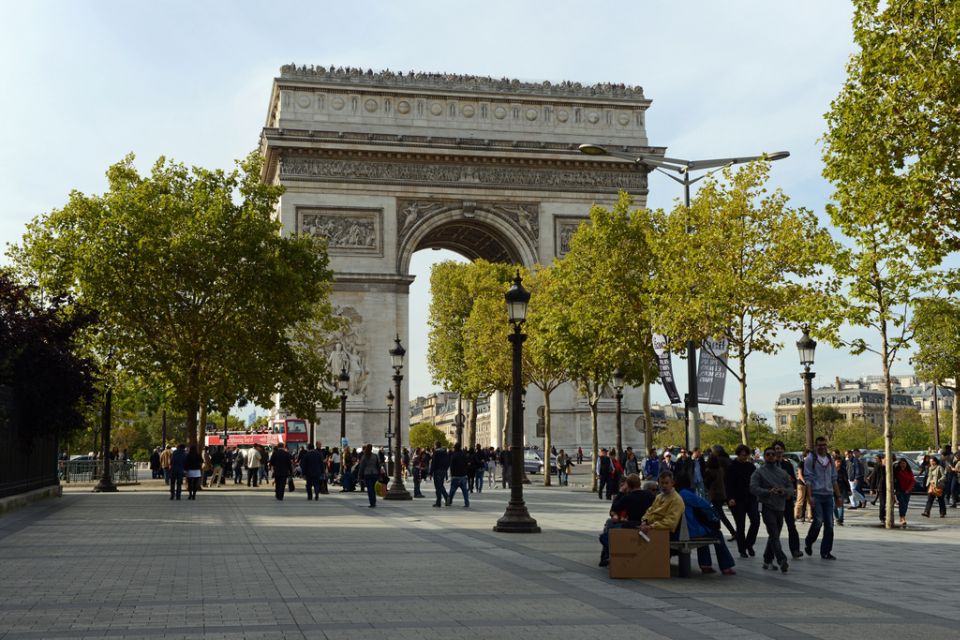
The tour ends at the Arc de Triomphe, described as a monolithic monument to Napoleon. That wording matters. In person, the Arc can feel like a giant “stop sign” for your attention. But it becomes more interesting when you know what it’s communicating and why it belongs at the end of an avenue designed for sweeping views.
Even if you don’t go inside (the tour data doesn’t promise entry), you’ll still get the “big picture.” The guide’s framing helps you see it as part of a broader sequence—Place de la Concorde leading the eye, the avenue acting like a corridor, and the Arc landing the story.
Practical tip for photos: at the Arc, crowds can take over. Use the guide’s directions for where to pause so you get a clean view without wasting time fighting foot traffic.
Picasso’s favorite drinking dens: the street gets human
The Champs-Élysées is famous for shops and monuments, but this tour adds a different layer by pointing out places connected to Picasso—specifically, his favorite drinking dens. This kind of stop is valuable because it reminds you that Paris wasn’t always “galleries and greatness.” Artists, nightlife, and everyday hangouts shaped the city’s creative reputation.
I like that this doesn’t replace the monumental sites. It balances them. You see the civic and the romantic side, then you get a reminder that the same streets held messy, social energy too.
Because the walking time is limited, you probably won’t get a full “art history lecture,” and that’s fine. The payoff is that the Picasso connection gives you a more textured feel for the area as you move from sight to sight.
Price and what you’re really buying for $176 per person
At $176 per person for a 2-hour private walking tour, you’re paying for a live guide and a focused route that covers multiple major landmarks. You’re not buying museum entry, food, or drink. So if your goal is to spend time in places as a stand-alone activity, you’ll likely want to add separate museum plans.
What you are buying is time-saving context. Instead of spending your vacation day figuring out what the monuments mean and how the avenue evolved, you get an organized narrative in a short walk. For many people, that’s the best value on the Champs-Élysées: it prevents “I saw it” sightseeing and replaces it with “I understand it.”
It also helps you plan the rest of your trip. Once you’ve been oriented, deciding what to do next—museum visits, longer walks, shopping streets, or neighborhoods nearby—becomes easier.
Who should book this private Champs-Élysées walk
This tour fits best if you want:
- A guided intro to Paris history and symbolism tied to major landmarks
- A short “orientation walk” that helps you understand where the sights fit together
- A private format with a guide explaining what you’re seeing, not just pointing it out
- A balanced approach: monuments plus culture, including the Picasso connection
It may be less ideal if you want:
- Long museum interiors or deep, ticket-based sightseeing (the tour doesn’t include food/drink, and the time is brief)
- A slow, linger-at-every-shop experience. This is a walking tour, and it moves.
Also, the tour operates rain or shine. If you hate weather disruptions, it’s reassuring that the plan stays active.
Should you book it or skip it?
If you’re planning your first days in Paris and want a fast way to turn the Champs-Élysées into something you actually understand, this is a strong booking. The combination of Place de la Concorde, Grand Palais/Petit Palais, the Champs-Élysées story, and the Arc de Triomphe gives you a complete “core sights” loop. The added layers—Roman mythology, Napoleon, the avenue’s earlier life as a park with bars and third-rate theaters, and Picasso’s nightlife—give the walk personality.
The main reason to hesitate is the price for a 2-hour private format, especially if you’re the type who prefers self-guided wandering or long museum time. If that’s you, you might spend less and do it on your own. If not, and you want a clean, guided start that makes the rest of your trip easier, this tour is the kind of decision that pays off later when you recognize what you’re seeing.
FAQ
Where does the tour start?
You’ll meet in front of the obelisk at Place de la Concorde. The guide will be carrying a red canvas tote bag.
How long is the Champs-Élysées private walking tour?
It lasts 2 hours.
What’s included in the price?
The tour includes a live tour guide.
Is food and drink included?
No. Food and drink are not included.
Which languages are available?
The live guide is available in English, French, and Serbo-Croatian.
Is the tour private or shared?
It’s a private group tour.
Does the tour run in bad weather?
Yes, it operates rain or shine.
Is the tour wheelchair accessible?
Yes, it is wheelchair accessible.
What’s the cancellation policy?
You can cancel up to 24 hours in advance for a full refund.