REVIEW · PARIS
Paris and the Art of Music, 1.30 hour Walking Tour
Book on GetYourGuide →Operated by Not a Tourist Destination · Bookable on GetYourGuide
Paris sounds different when you walk its streets. This 2-hour, small-group music-history walking tour guides you through places tied to Mozart, Stravinsky, Edith Piaf, Maurice Chevalier, George Gershwin, and Cole Porter—plus Paris’s oldest café and the grand 7,000-pipe organ at Saint-Sulpice. I love that the route mixes famous names with real hangout spots you can actually see. The tour also fits well if you want stories that land fast, since the time flies and you cover a lot on foot. One possible drawback: it’s a walking tour, so you’ll want comfortable shoes and to travel light (large bags aren’t allowed).
What makes it especially appealing is how the stops connect different eras of music—church performance, Renaissance court life, Revolution-era street musicians, and cabarets between the world wars. I also like that the guide can adjust what you hear, because music interests aren’t one-size-fits-all. The pace is quick, but the focus stays human: who sang, where they gathered, and how Paris itself shaped the sound.
In This Review
- Key highlights worth your attention
- Where Paris’s composers turn into street-level stories
- The 2-hour plan (and how to get the most from it)
- Saint-Germain-des-Prés Abbey: where troubadours learned to sing
- Luxembourg Gardens and Palace: court music with a garden break
- Carrefour de Buci: cabaret crossroad between WWI and WWII
- Cour du Commerce Saint-André: Paris’s oldest café and Revolution-era music
- Saint-Sulpice Church: the 7,000-pipe organ you can’t ignore
- Furstenberg Square: where Piaf and Chevalier get their last word
- The guide makes it feel personal, not generic
- Price and value: what $99 buys you here
- Who this tour fits best (and who might want a different style)
- Quick logistics you should plan for
- Should you book Paris and the Art of Music?
- FAQ
- How long is the Paris and the Art of Music walking tour?
- What is the group size?
- How much does it cost?
- Where do I meet the guide?
- Do I need hotel pick-up or drop-off?
- What languages are the tours offered in?
- Are there any restrictions on luggage or bags?
- What should I bring?
- What if my plans change?
Key highlights worth your attention
- Max 8 people means you’re not lost in a crowd; you can actually hear and ask questions.
- Relais Odeon Café meeting point puts you near the core of Saint-Germain and the Left Bank’s music landmarks.
- Cour du Commerce Saint-André leads to Paris’s oldest café, tied to street musicians from the French Revolution.
- Saint-Sulpice Church is where you learn about the 7,000-pipe organ, one of only three 100-stop organs in the world.
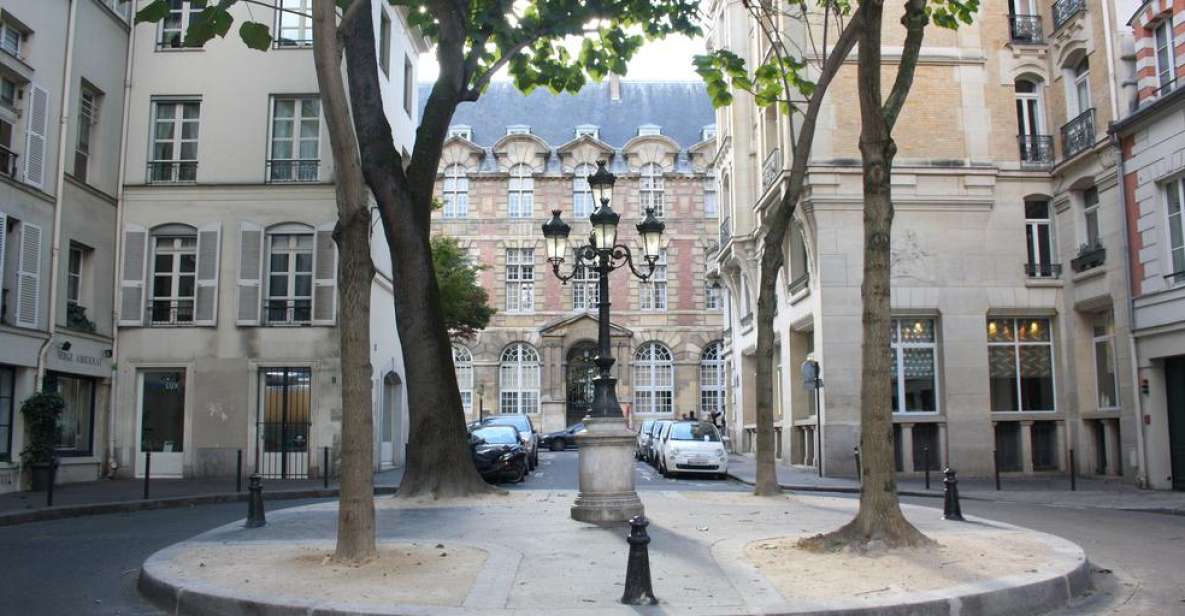
- Furstenberg Square ends the walk in a romantic, tiny setting linked to Edith Piaf and Maurice Chevalier.
Where Paris’s composers turn into street-level stories
Paris can feel like a museum if you rush it. This tour avoids that problem by building the music story out of blocks, corners, and specific venues—things you can point at. Instead of just hearing names, you see the kind of city that shaped the work: places where performers gathered, where patrons listened, and where music spilled out onto streets and squares.
You’ll start on the Left Bank near Odeon, then head into areas that make sense historically: old churches tied to medieval performance, gardens connected to Renaissance court culture, and nightlife streets where cabarets mattered between WWI and WWII. If you like music but don’t want a textbook tour, this format makes the connections feel practical.
You can also read our reviews of more walking tours in Paris



The 2-hour plan (and how to get the most from it)
This is a 2-hour guided walk with an expert local guide in English (and also available in Spanish). The group stays small—limited to 8 participants—so the guide can keep the tempo without turning it into a lecture.
Here’s the practical angle you’ll care about:
- You’re walking, so plan for uneven sidewalks and museum-street spacing.
- There’s no hotel pick-up or drop-off, so you’ll want to arrive at the Relais Odeon Café, 132 Boulevard Saint-Germain, 75006.
- Luggage or large bags aren’t allowed, so travel with a small daypack.
- Bring comfortable shoes. That’s the big one.
If you’re worried about the walk length, the route is designed so the “you’re still seeing things” feeling stays strong. In the people-who-love-this-tour comments, the consistent theme is that the time moves fast because you’re constantly switching scenes—church to café to square—rather than staring at the same kind of street view for two hours.
Saint-Germain-des-Prés Abbey: where troubadours learned to sing

The walk begins with the spirit of early Paris music. You’ll visit the 6th-century Benedictine Abbey of Saint-Germain-des-Prés, which connects you to a period when religious music carried a lot of cultural weight. The guide frames the area as one of the oldest anchors in the city, and that matters because it sets the timeline.
What I like about starting here is the contrast. You get medieval and church performance first, then you move toward more secular scenes later. It’s easier to understand Paris’s musical shifts when you feel the order of eras.
What to watch for: even if you’re not a music-nerd, this is where you’ll start hearing the “why” behind the rest of the stops—how locations shaped who listened and who performed.
Luxembourg Gardens and Palace: court music with a garden break
Next up, you’ll spend time around Marie de Medici’s Luxembourg Gardens and Palace. This is where the tour shifts from sacred and street-level performance toward a more court-centered vibe from the Renaissance.
This stop works well for real-world travelers. You’re not just standing in front of a building—you’re moving through a space that makes sense for how music functioned as patronage. The garden setting helps you imagine an audience that wasn’t necessarily in a concert hall the way we think of one today.
And if you’re into specific performer links, this is also the point where the tour’s Edith Piaf connection comes into the conversation. The guide highlights the park as a favorite associated with her, which helps turn the scenic pause into something you can actually anchor to music rather than treating it as a random “nice park moment.”
Potential drawback: gardens can mean a bit of open walking. If the weather is hot or rainy, you’ll feel it more than at stops inside.
Carrefour de Buci: cabaret crossroad between WWI and WWII
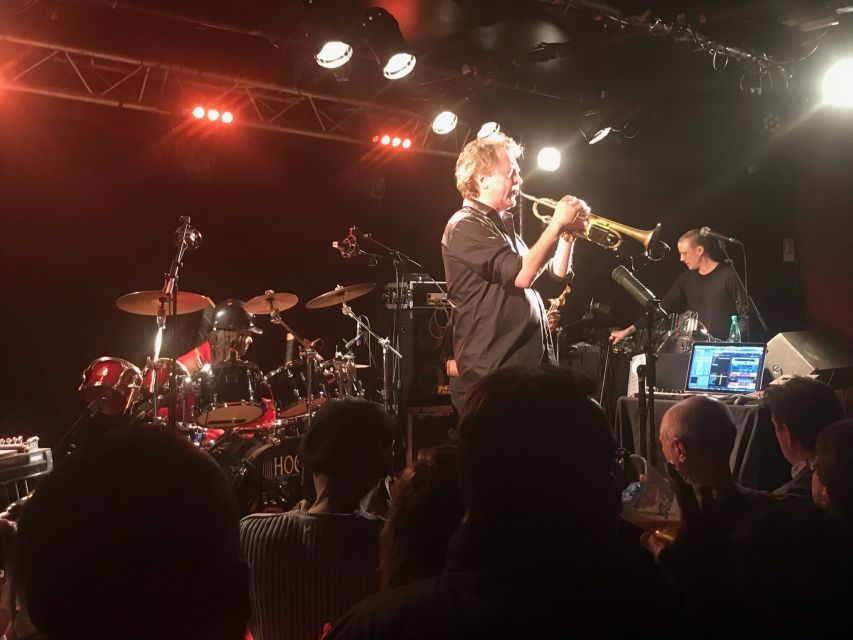
If you’ve ever wondered where Paris nightlife actually happened, this is the kind of stop that answers it. You’ll see Carrefour de Buci, a crossroads known for its cabarets during the years between WWI and WWII.
Crossroads are important in city stories. They’re where people meet, where crowds pass through, and where entertainment can grow because foot traffic keeps showing up. In a walking tour, that matters: you get a sense of how a scene could form and stay alive, instead of music being stuck behind a single door.
The guide’s approach here helps you hear the city differently. The street name isn’t just a label—it becomes the geography of an era.






Cour du Commerce Saint-André: Paris’s oldest café and Revolution-era music
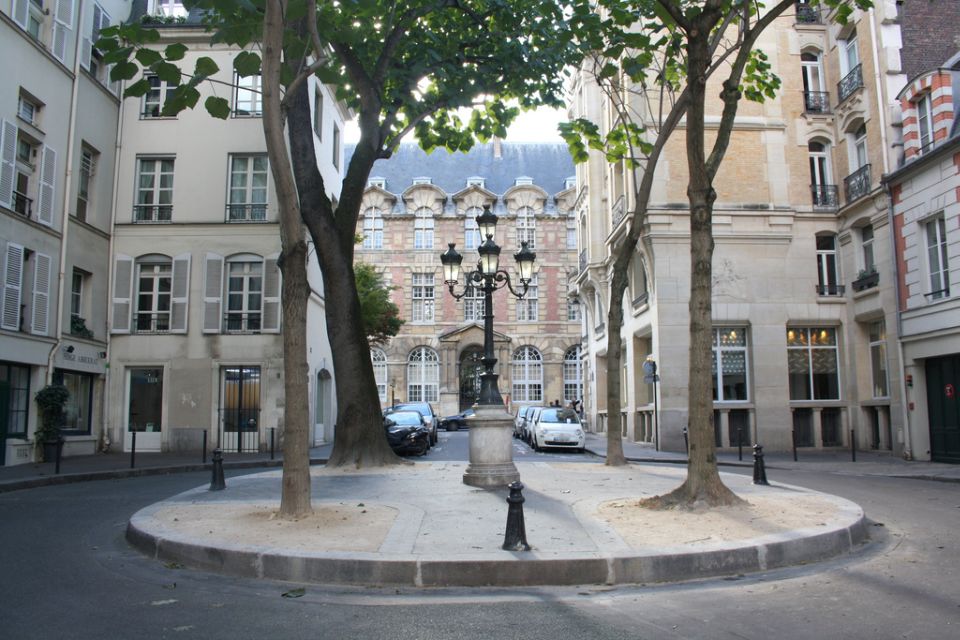
Now you get one of the most charming parts of the walk: the Cour du Commerce Saint-André, a picture-perfect street arcade. This area leads you to Paris’s oldest café, and the guide connects it to a specific kind of gathering.
The tour explains that this was a meeting point for street musicians during the French Revolution. That detail is exactly why I like this stop. It turns a pretty passageway into something lived-in and risky and alive—music as a public language.
You’ll also feel why an arcade matters. With music, acoustics and crowd behavior are part of the story. People gather where they can linger, and where they can be seen. This is the kind of place where you can almost picture performers setting up and making the corner theirs.
Tip: take a moment here to look up and down the arcade rather than only forward. The space rewards slow attention, even on a tight schedule.
Saint-Sulpice Church: the 7,000-pipe organ you can’t ignore
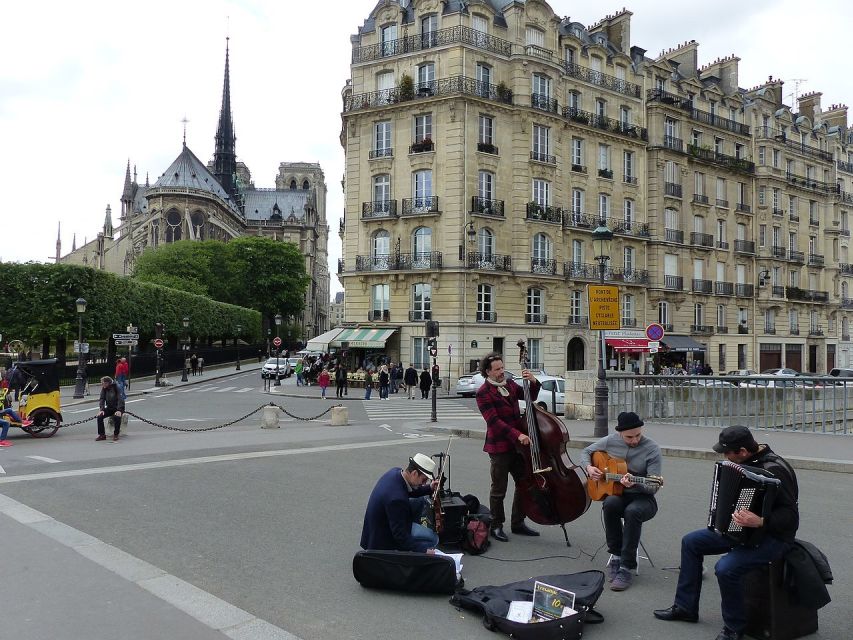
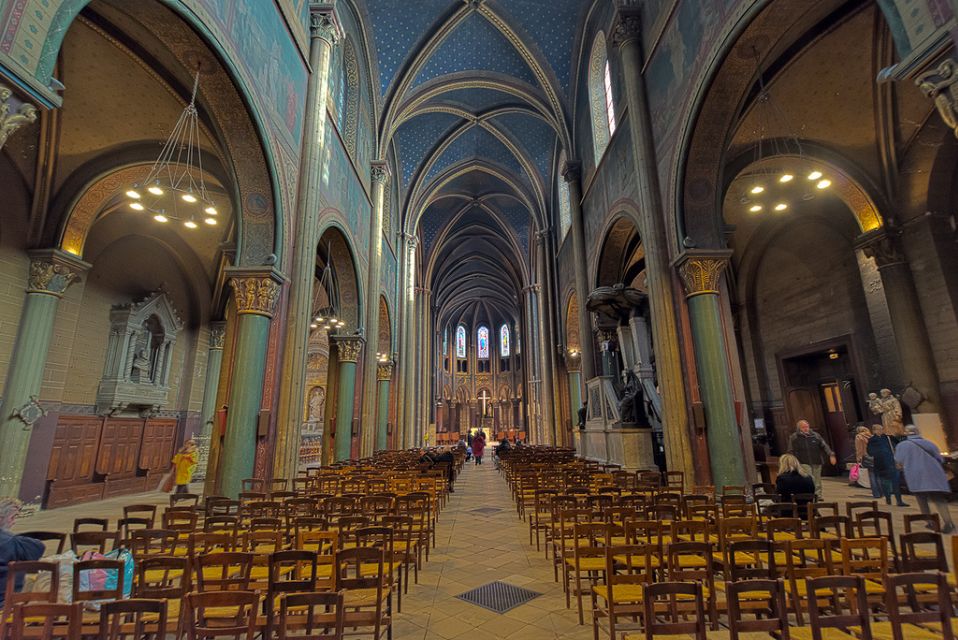
If there’s one stop that feels like a finale inside the middle of the walk, it’s Saint-Sulpice Church. The tour highlights the church’s role in religious music and points you to its huge instrument: a 7,000-pipe organ.
The guide also shares a standout fact: it’s one of only three 100-stop organs in the world. That gives you a scale that’s easy to remember, even if you’re not counting pipes for fun (though if you are, no judgment).
There’s also a pop-culture footnote included in the discussion: Saint-Sulpice shows up in The Da Vinci Code. That doesn’t replace the musical story, but it helps you connect the space to what many visitors already recognize.
Why this stop is valuable: the tour gives you a sense of place plus a sense of sound. Even if you don’t hear the organ during the visit, the scale gives your imagination something concrete.
Furstenberg Square: where Piaf and Chevalier get their last word
To close the walk, you finish at Furstenberg Square, one of the smallest and most romantic squares in Paris. The guide links it to two big names—Edith Piaf and Maurice Chevalier—which is a satisfying way to end. After churches, gardens, and cafés, you land in a compact space that feels like an intimate stage.
Finishing at a square is smart. It gives you a natural “wrap-up” moment where you can look around and picture what the tour just taught you. In other words, the ending helps the story stick.
The guide makes it feel personal, not generic
The strongest praise in people’s experience comments is about the guide’s flexibility. One person loved that the guide was willing to personalize the information based on their interests. Another had a near-private setup and still got the benefit of a guide who shared a lot of knowledge while taking them through a lovely quarter.
You don’t need to be a hardcore classical fan to enjoy this. If you tell the guide what you like—Broadway composers, jazz-adjacent names, chanson, opera, or just “teach me the Paris vibe”—you’ll likely get more tailored stories.
How to get more out of it: come with two or three names you care about most (or even one). That makes it easier for the guide to steer the conversation while staying on the route.
Price and value: what $99 buys you here
At $99 per person for about 2 hours, this isn’t a budget-only activity. But the value stacks up in a few specific ways:
- Small group (up to 8) keeps the experience readable and interactive.
- You get a local guide who connects sites to music across multiple time periods, which is hard to do on your own without research time.
- The route hits a mix of “see it” landmarks (square, café arcade, churches) plus music-specific details like the organ scale and the Revolution-era musician meeting point.
- You’re starting from a convenient central spot near Odeon, so you’re not spending time commuting across the city.
If you were paying $99 for only a generic stroll, it would be hard to justify. Here, you’re paying for interpretation—someone giving you the threads that connect names to places.
Who this tour fits best (and who might want a different style)
This tour is a strong match for you if:
- You like music, but you want it explained through real places in Paris.
- You enjoy walking as a way to learn, not as a chore.
- You want a manageable time commitment at about 2 hours.
It may be less ideal if:
- You hate walking for any reason, even at a moderate pace.
- You’re expecting long stays inside major venues. This is a walking experience built around specific stops and viewpoints.
- You’re carrying big luggage (the tour notes luggage or large bags aren’t allowed).
Quick logistics you should plan for
- Meet at Relais Odeon Café (132 Boulevard Saint-Germain, 75006). Metro: Odeon, line 4.
- Expect no hotel pick-up or drop-off.
- Dress for walking, and keep your bag small.
- Cancellation is flexible up to 24 hours in advance for a full refund, but shorter-notice cancellations may not be refunded.
Should you book Paris and the Art of Music?
If you want Paris to sound like something—not just look like postcards—this is a smart book. The mix of small group size, music-specific details like the 7,000-pipe organ, and the variety from medieval church links to Revolution-era café scenes makes the route feel worth your time.
Book it if you’re curious about how Parisian music culture changes across centuries and you like learning while walking. Skip it only if you’re not up for a two-hour stroll or you want to spend most of your time inside museums and big-ticket interiors.
FAQ
How long is the Paris and the Art of Music walking tour?
It’s listed as a 2-hour guided walking tour.
What is the group size?
The tour is a small group limited to 8 participants.
How much does it cost?
The price is $99 per person.
Where do I meet the guide?
You meet at Relais Odeon Café, 132 Boulevard Saint-Germain, 75006. The nearby metro station is Odeon on line 4.
Do I need hotel pick-up or drop-off?
No. Hotel pick-up and drop-off are not included.
What languages are the tours offered in?
The live guide is available in English and Spanish.
Are there any restrictions on luggage or bags?
Luggage or large bags are not allowed.
What should I bring?
Bring comfortable shoes for walking.
What if my plans change?
You can cancel up to 24 hours in advance for a full refund. Tours cancelled less than 24 hours in advance will not be refunded.