REVIEW · PARIS
Paris: 2-Hour Passages Private City Tour in German
Book on GetYourGuide →Operated by HelpTourists · Bookable on GetYourGuide
Paris has secret corridors few people notice. That is exactly what makes this tour fun: you walk passages that feel tucked away on purpose, and you learn why they were created when Paris still looked and smelled like a real 19th-century city. I also like that you get a friendly, German-speaking guide who ties the sights together into one story. The one real drawback is simple: the tour is German-only and there is no hotel pickup, so you’ll need to reach the meeting point on your own.
You start at the Metro Le Peletier station (Line 7) and finish in the Palais-Royal area, all in about 2 hours. This is a private group, so the pace stays relaxed, and the route is designed so you don’t waste time hunting for places that are easy to miss. Also, the overall rating is very high (4.9), which lines up with the way the tour is built: short enough to feel efficient, long enough to feel like you learned something you would not figure out solo.
In This Review
- Key points to know before you go
- Why the Paris Passages Still Feel Like a Time Machine
- Meeting at Le Peletier and Ending in the Palais-Royal Area
- Passage Verdeau: A Quiet Start That Sets the Tone
- Passage Jouffroy: Where the Guide Turns Architecture Into Story
- Passage des Panoramas and the Grands Boulevards Lift
- Palais-Royal Quarter: The Walk Ends Where You Can Keep Exploring
- What the German Guides Actually Add (and Why It Matters)
- Price and Value: Is $94 for Two Hours Worth It?
- Who This Tour Suits Best
- Should You Book This Private City Tour of the Passages?
- FAQ
- Where does the tour start?
- Where does the tour finish?
- How long is the tour?
- Is this a private tour?
- What language is the guide?
- What is included in the price?
- What is not included?
- What days does the tour run?
- What is the cancellation policy?
Key points to know before you go
- Hidden passageways in central Paris: you get to the quieter sides of the city that most visitors miss
- 19th-century context: the guide explains why these passages exist when Paris was far from modern
- Private pacing: you can ask questions and keep moving without being rushed by a crowd
- Passage Verdeau, Jouffroy, and des Panoramas: each stop has its own feel and purpose
- Grand Boulevards to Palais-Royal finish: the walk ends where you can still make your own plans
Why the Paris Passages Still Feel Like a Time Machine
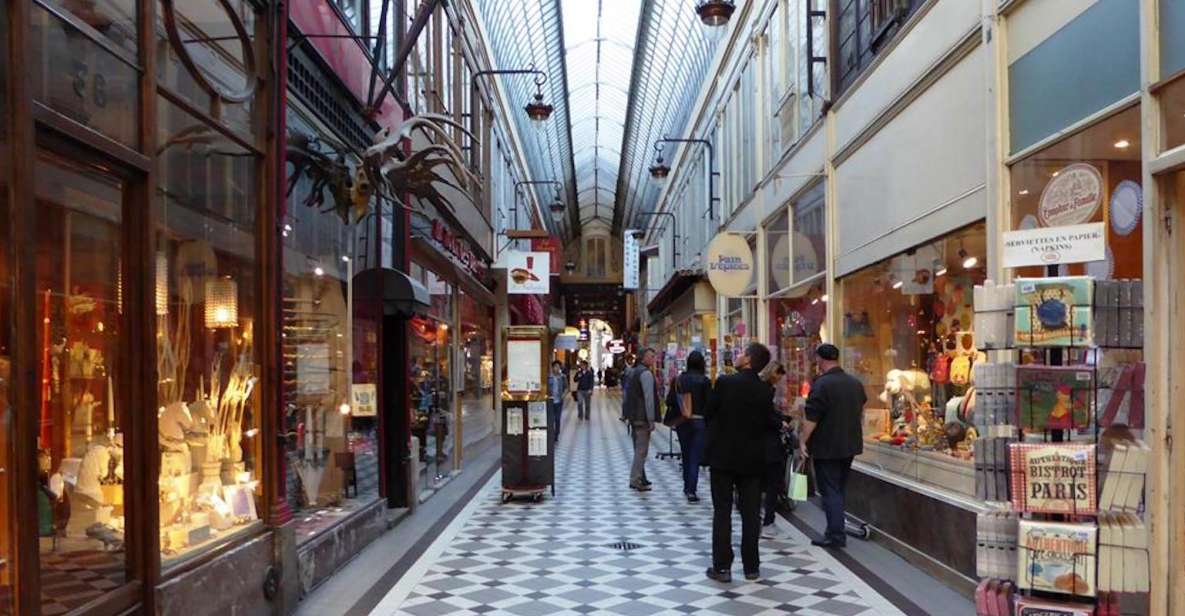
The best part of this tour is the idea behind the route: these are not just pretty walkways. They were practical answers to daily life in early 1800s Paris, when the city had a reputation for being dirty and uncomfortable. The passages helped solve that problem by creating covered, protected corridors where people could move through the city without being stuck entirely in the open air.
I love that the tour frames them as a kind of early commercial architecture. You can think of them as forerunners of the later big department stores, even though they were not shopping arcades in the modern sense. That shift in viewpoint changes how you see every entrance, every curve, and every doorway you pass.
And yes, the charm is real. When you step into a passage, you immediately feel the scale difference from the street outside. It is quieter, tighter, and more cinematic—like the city is lowering its voice.
You can also read our reviews of more city tours in Paris

Meeting at Le Peletier and Ending in the Palais-Royal Area
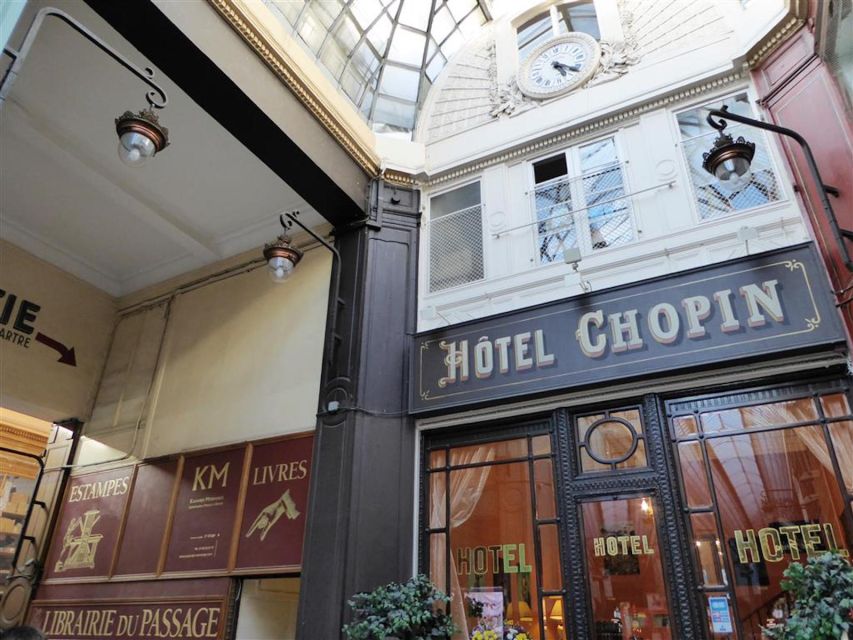
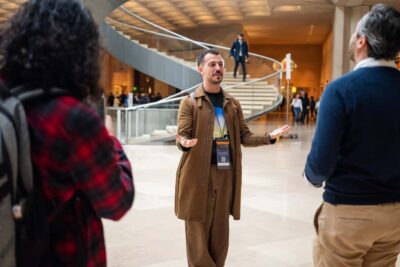
Logistics are refreshingly straightforward. You meet at Metro station Le Peletier (Line 7), and you should look for your guide carrying a HelpTourists bag. From there, the walk moves through central Paris, ending at Palais-Royal.
That start and finish matter because they help you chain this tour with the rest of your day. Le Peletier gets you into the core of the city fast, and Palais-Royal is a natural place to continue: cafés, side streets, and more sightseeing all sit nearby.
Since there’s no hotel pickup, plan to arrive a few minutes early. The tour is only 2 hours, so losing time at the start feels extra painful. Once you’re with the guide, though, the pace stays efficient.
Passage Verdeau: A Quiet Start That Sets the Tone
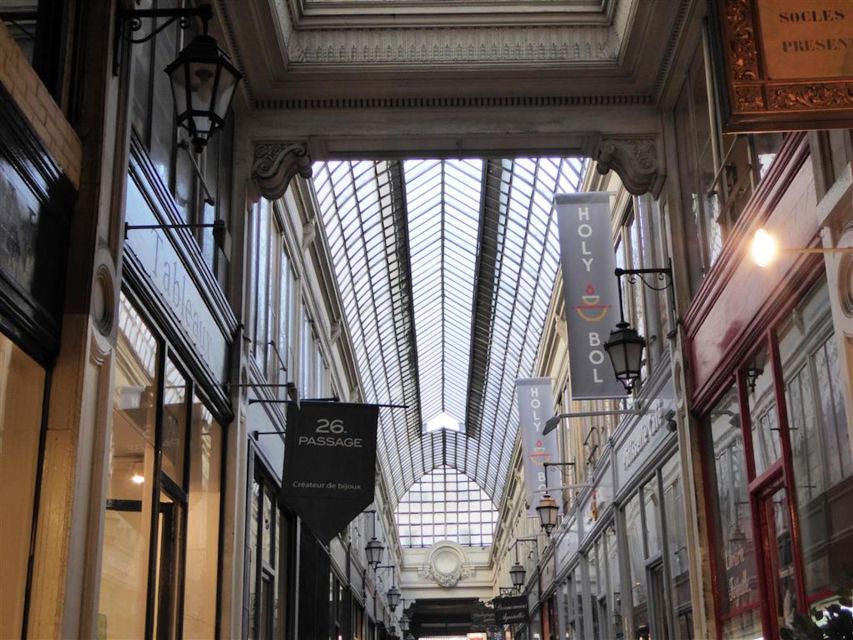
The route begins with Passage Verdeau, and it is a smart opening move. This is where the tour concept clicks: you learn how to spot a passage in the first place. Outside, the street looks like regular Paris. Inside, the passage feels like it is hiding in plain sight.
What makes Passage Verdeau work as a first stop is how it primes you for the rest. You start paying attention to details—the way the passage channels your movement, how it creates a sheltered micro-world, and how it changes the feel of the surrounding neighborhood. Even if you’ve seen photos of Paris passages, this kind of “walk in, feel the shift” moment is what you can’t easily get from a map.
A practical consideration: because passages are compact, you’ll mostly get your experience through short windows of observation. That’s good news for most people, but if you want long photo sessions at every location, you may feel the time limit.
Passage Jouffroy: Where the Guide Turns Architecture Into Story
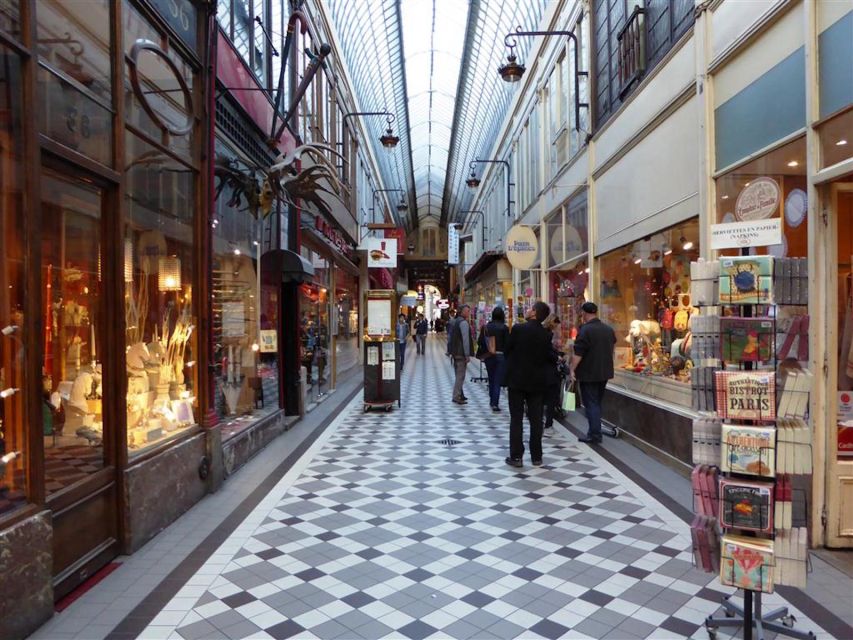
Next is Passage Jouffroy, and this is often the kind of stop that makes you realize why a private guide helps. A passage is easy to walk past. Understanding what you’re looking at takes more than just seeing it.
Here’s what I like about the tour approach: the guide doesn’t treat these passages as isolated landmarks. Instead, they explain connections—why these corridors appeared when they did, and how they functioned as practical spaces in a city that wasn’t yet the clean, sleek Paris many people picture.
Jouffroy gives you time to ask questions without feeling like you’re holding up a big group. And because it’s a private tour, you can get answers that match your interests: commerce, urban planning, or simply how life would have felt walking there.
Passage des Panoramas and the Grands Boulevards Lift
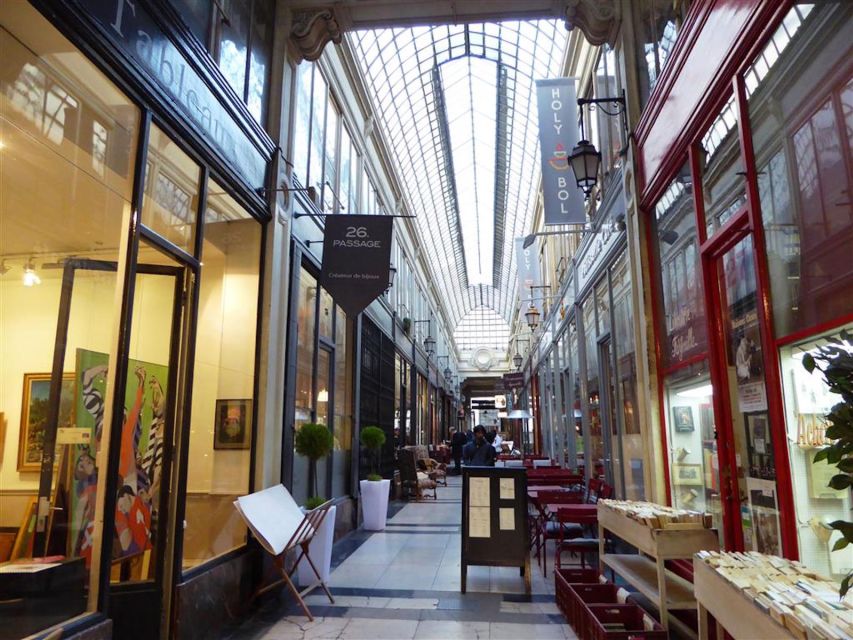
Then you move to Passage des Panoramas, followed by time along the Grands Boulevards. This is a nice balance: you stay in the world of passages, but you also shift back toward the broader streets where Paris shows more of its main character.
I like this pairing because it helps you compare moods. The passages are enclosed and controlled. The Boulevards feel open and energetic, with the city’s public face right in front of you. Even if you’re not a history person, the contrast makes the theme easier to understand.
A drawback to keep in mind: walking from passages back into major boulevard streets can feel like a change in sound level and pace. If you’re someone who gets easily distracted by crowds or noise, it may take a minute to settle into the passage mindset again. The guide helps you transition back by pointing out what to notice as you go.
You can also read our reviews of more private tours in Paris






Palais-Royal Quarter: The Walk Ends Where You Can Keep Exploring
The tour finishes in the Palais-Royal quarter. Ending here is a smart choice because Palais-Royal is a place that still feels central to how you experience Paris—lots of nearby places to continue at your own pace.
But more than that, this finish gives your brain a clean landing. After two hours of sheltered corridors and historical context, you get to emerge into an area that’s easier to navigate and easier to turn into a second act: a meal, a café stop, or a self-guided stroll.
If you’re trying to make the most of a single day, you’ll appreciate this ending point. You can extend your plans without committing to another long transfer across the city.
What the German Guides Actually Add (and Why It Matters)
This is a tour in German, led by German-speaking guides. That sounds obvious, but it’s also the biggest deciding factor for value.
If you speak German well enough to follow guided explanations, you’ll likely love the way the tour links the passages to the bigger story of early 19th-century Paris. The guide style is described as friendly and full of interesting details and connections, like you’re getting a local’s mental map of why each place matters.
If your German is limited, the tour may still be beautiful to see—but you’ll lose the main reason it feels like more than a photo walk. In that case, it’s worth thinking about whether you’d rather pick a tour offered in a language you fully understand.
Price and Value: Is $94 for Two Hours Worth It?
At $94 per person for a 2-hour private tour, you’re paying for two things: time with a guide and the private group format. That usually costs more than a group tour, but it also changes the experience.
Here’s the value equation I see:
- You’re not just visiting famous monuments. You’re getting access to places that are easy to miss on your own.
- The guide’s explanations turn the passages into something you understand, not just something you pass by.
- Two hours is long enough to feel like a real walk with context, but short enough that you won’t blow half your day.
Also, because the route focuses on passages and a specific city area, you don’t have to worry that you’re paying for transit across town. You’re walking in central Paris.
So the question is not just cost. It’s whether you want the guide part. If you do, $94 feels reasonable for the format.
Who This Tour Suits Best
This tour is a great match if you want:
- A less touristy Paris experience centered on passages
- A guided explanation of why the passages exist and what they solved in daily life
- A smooth, two-hour plan that doesn’t demand major logistics
It is especially appealing for people who enjoy city details—architecture, urban life, the way spaces are designed to handle real problems. And if you like the idea of seeing Paris from an angle that most visitors don’t naturally find, this is exactly that.
If you’re traveling with kids or you’re on a tight schedule, it can still work, but you’ll want to ensure the group stays engaged with walking and explanations for the full two hours.
Should You Book This Private City Tour of the Passages?
Book it if you want Paris that feels off the usual postcard track. This tour’s strength is the combination of hidden passages and a guide who can explain the context, not just name the places. With a private format and a tight 2-hour duration, it’s also a smart choice for a day when you want something different without overcommitting.
Skip it if German is a barrier for you, or if you need hotel pickup and zero walking. Since there’s no pickup and the language is fixed, you’ll want to be comfortable handling the meeting point and following the guide.
FAQ
Where does the tour start?
The meeting point is Metro station Le Peletier (Line 7). Look for your guide with a HelpTourists bag.
Where does the tour finish?
The tour finishes at Palais-Royal.
How long is the tour?
The duration is 2 hours.
Is this a private tour?
Yes, it’s a private group tour.
What language is the guide?
The tour is in German, with a German-speaking guide.
What is included in the price?
Included: a 2-hour private city tour in German and a German-speaking guide.
What is not included?
Not included: tip, entrance fees, pick-up from your hotel, and food.
What days does the tour run?
The city tour takes place from Monday to Saturday.
What is the cancellation policy?
You can cancel up to 24 hours in advance for a full refund.