REVIEW · PARIS
Notre Dame Mystery and Latin Quarter Walking Tour
Book on Viator →Operated by SIGMA CITY TOUR · Bookable on Viator
Notre-Dame can feel like a monument you know already. This tour makes it feel like a story you can follow. You start on Île de la Cité, spend real time around Notre-Dame, then wind through the Latin Quarter with quick stops that add up fast.
What I like most is the guide’s knack for turning big landmarks into understandable medieval moments. I especially enjoyed the Q-and-A style focus on Gothic design and the cathedral’s big modern chapter, including the April 2019 fire. You also get a guided photo-friendly sweep through classic streets and squares—no rushing past the good angles.
One thing to keep in mind: the pacing is tight. Notre-Dame is a long stop, but several other sights are brief, and rules during some services or interior access limitations can affect how much you hear inside the cathedral.
In This Review
- Key things to know before you go
- Starting at Charlemagne: why the meeting spot matters
- Notre-Dame de Paris: mysteries, Gothic design, and the 2019 fire
- Photos and the real-world rhythm
- Shakespeare and Company: a quick stop that changes how you read the street
- Rue de la Huchette: the oldest street vibe and the alchemist stories
- Fontaine Saint-Michel: Napoleon III’s fear and why it shaped the fountain
- Musee de Cluny: what you’ll see without paying museum prices
- La Sorbonne: a university building tour without the classroom
- The Pantheon: Louis XV’s vow and the monument’s real story
- Jardin du Luxembourg: your 17th-century reset before you break off
- Price and value: what $71.20 actually buys you
- Who this tour fits best (and who may want to self-guide)
- Should you book this Notre-Dame and Latin Quarter walk?
- FAQ
- How long is the Notre Dame Mystery and Latin Quarter Walking Tour?
- What is the price per person?
- What is included in the tour price?
- Where does the tour start and end?
- Is the tour offered in English?
- Do I need a separate ticket for the Musee de Cluny stop?
- Is there free cancellation?
Key things to know before you go
- Small group (max 6) means it’s easier to ask questions and stay with the guide.
- English mobile ticket keeps you from juggling paper.
- Notre-Dame focus is the whole point: Gothic architecture, medieval context, and the 2019 fire.
- Street-level Latin Quarter storytelling at places like Rue de la Huchette and Fontaine Saint-Michel.
- Musee de Cluny is a look, not a ticket (admission not included).
- Garden time at Jardin du Luxembourg gives you a calmer finish after the monuments.
Starting at Charlemagne: why the meeting spot matters
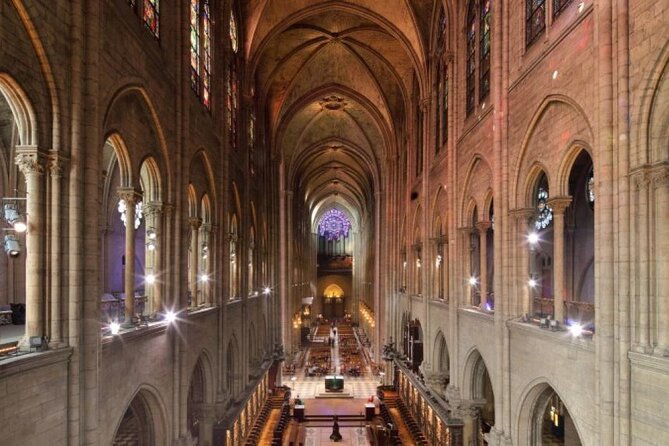
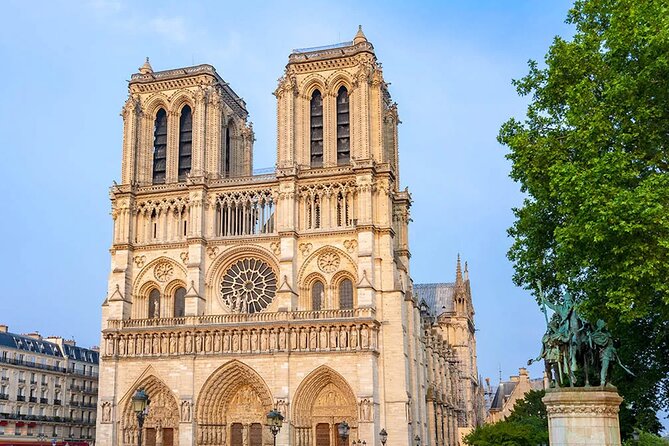
The walk begins at the Statue de Charlemagne et ses leudes on Île de la Cité. That location is smart because it puts you in the right neighborhood from the first minutes, before you even think about crossing crowds for famous views.
The tour runs about 2 hours 10 minutes, and with a group capped at 6 travelers, it won’t feel like you’re stuck in a slow-moving conga line. You’re also starting at 9:00 am, which is usually when the city is still waking up and you can get those Latin Quarter streets without quite as much traffic.
One more practical note: the tour ends at Jardin du Luxembourg. That’s convenient because it’s a natural point to branch off—coffee, metro connections, or just a long stroll if you still have energy.
You can also read our reviews of more walking tours in Paris



Notre-Dame de Paris: mysteries, Gothic design, and the 2019 fire
This is your anchor stop and it lasts about 1 hour, with cathedral entrance included. The guide’s approach here is what makes the difference. Instead of treating Notre-Dame like a postcard, you get the medieval logic behind what you’re looking at: Gothic architecture choices, how the cathedral took shape, and why certain details mattered.
You’ll also cover the modern shock of the April 2019 fire. That matters on a walking tour because it connects the long medieval timeline to what’s happening to the building in real time—so you’re not just admiring stone, you’re understanding continuity.
Now for the honest part. Interior access rules can change, and you may not get the same guided experience inside the cathedral at all times. Some days have restrictions on how guides can speak inside, and silence is expected during certain religious moments. If you go in expecting a narrated interior tour the whole time, you might feel that pinch. If you go expecting a very strong exterior and context experience plus time at the cathedral entrance, you’ll probably be happier.
Photos and the real-world rhythm
This is also where the tour’s timing makes sense. Notre-Dame exterior details—especially window shapes and façade features—are easiest to understand with a guide in front of you. And if you want photos, you’ll usually have better luck when the guide is pointing out what to look for before you raise your camera.
Shakespeare and Company: a quick stop that changes how you read the street
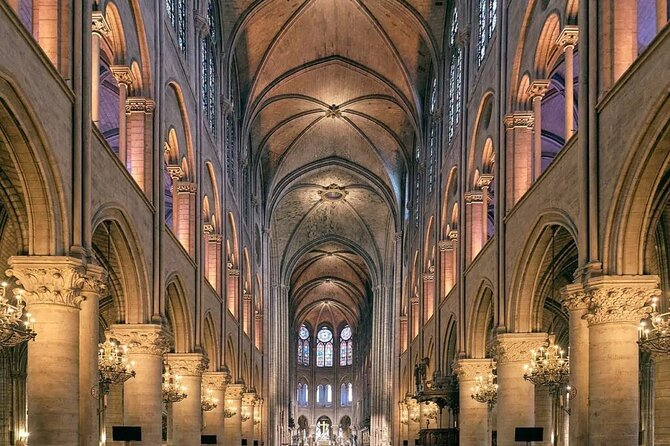
After Notre-Dame, you’ll pass through a very different mood in just a few minutes at Shakespeare and Company. This isn’t a long “museum-style” stop—think about 5 minutes—but it’s still valuable because it reminds you that the Latin Quarter isn’t only about architecture.
You’ll learn why this independent library has mattered in history, and it gives you a lens for the rest of the walk. Suddenly, the street scenes feel less like background and more like part of a cultural map.
If you like bookstores and literary Paris, this is the kind of short stop that keeps paying off. Even if you don’t go inside, the way the guide frames the place makes the neighborhood feel lived in.
Rue de la Huchette: the oldest street vibe and the alchemist stories
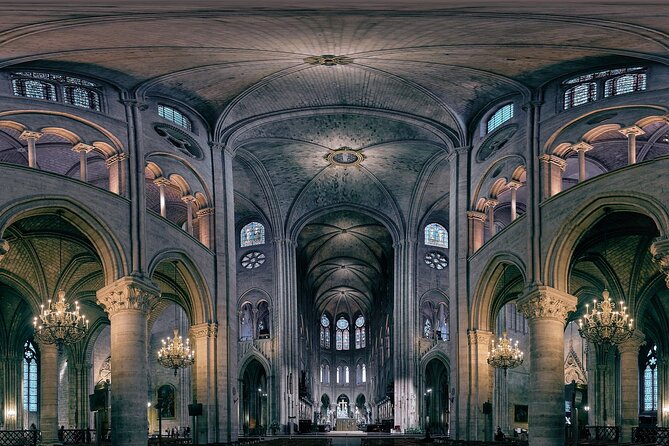
Next is Rue de la Huchette, also a 5-minute stop. The guide connects it to the idea of being the oldest street in Paris, then shares mysterious-sounding tales about alchemists who lived there.
Will you verify every detail like a historian? Probably not. But that’s not the goal here. The point is atmosphere plus context: how medieval legends stick to real corners and how a street can become shorthand for a whole era. It’s also a great area for photos because the street narrows and the buildings feel close—perfect for capturing that “I’m in old Paris” feeling.
Wear shoes you can trust. This street and the surrounding Latin Quarter lanes are comfortable to walk, but they’re not the smoothest paths.






Fontaine Saint-Michel: Napoleon III’s fear and why it shaped the fountain
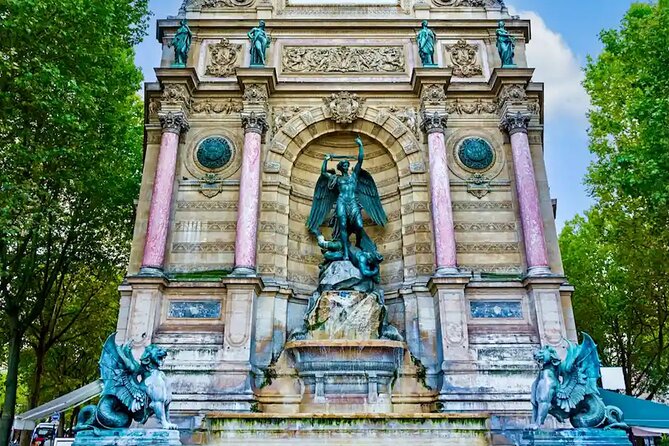
Then you hit Fontaine Saint-Michel, about 10 minutes. This stop has a specific story focus: the background behind the fountain and how Napoleon III’s fear influenced the construction.
That kind of detail is exactly why I like guided walks. Without a guide, you might simply look at the fountain and move on. With the story, you start seeing how leadership decisions, public perception, and urban design get written into monuments.
One caveat to plan for: there’s been renovation activity reported for Fontaine Saint-Michel, with it stated as closed since February 2025 and not finished until January next year. If your dates overlap with renovation, your experience may be more about learning the story and seeing what’s visible from the sidewalk than standing around for a full photo session.
Musee de Cluny: what you’ll see without paying museum prices
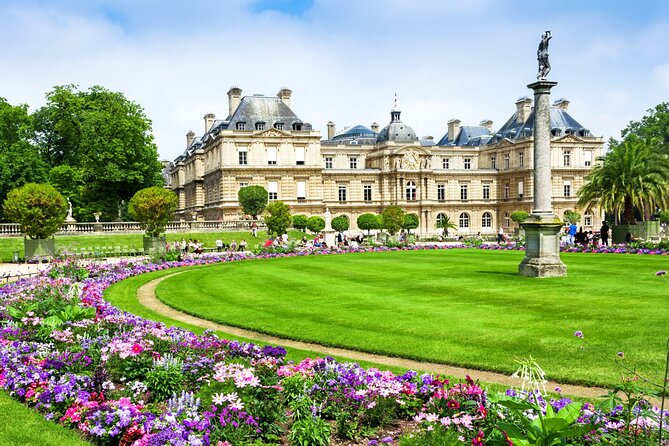
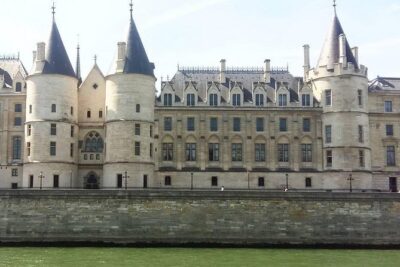
The tour includes a quick look at Musee de Cluny, roughly 5 minutes. The museum is known for housing a beautiful abbey that’s part of what makes the visit feel special, but here you’re not going to buy a museum ticket.
Admission to this stop is not included, so expect more of a visual “context check” than a full interior visit. Still, it’s a smart addition because it bridges your mental timeline: from Gothic cathedral to medieval learning spaces.
If you want the full museum experience, you can treat this as your hint to come back later with more time. For this walk, it works well as a short, connective beat.
La Sorbonne: a university building tour without the classroom
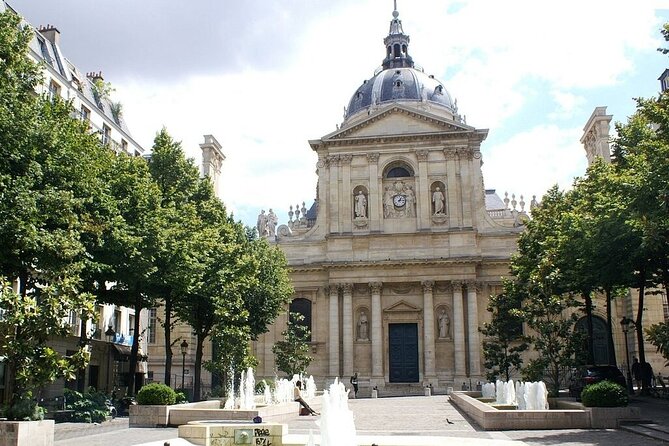
Next comes La Sorbonne, about 10 minutes. This is where the guide adds architectural appreciation with a timeline story. You’ll learn about the university’s origins and its claim as the world’s fourth-oldest university, based on what you’re told during the stop.
Even if you’re not a campus person, Sorbonne is worth a look because the Latin Quarter isn’t just medieval leftovers. It’s also where learning institutions shaped the city’s identity for centuries.
For readers who want value: this is one of the easiest places on the walk to get a lot out of a short time. The guide helps you connect what you see in front of you with how Paris grew as a center of study.
The Pantheon: Louis XV’s vow and the monument’s real story
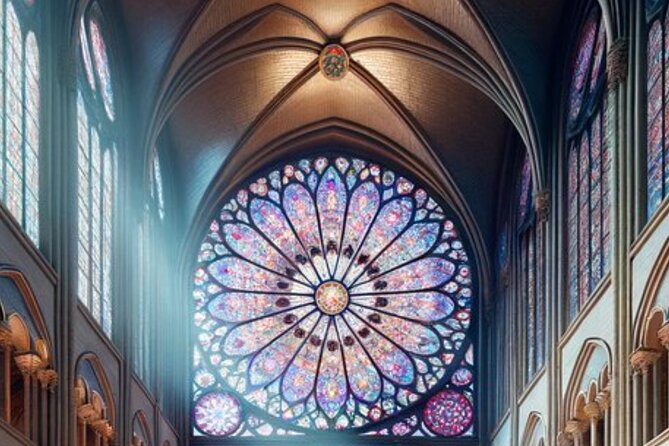
The walk continues with the Pantheon, another 10-minute stop. You’ll hear the “secret” angle here: why King Louis XV vowed he would have it built.
That kind of detail turns the Pantheon from “big famous structure” into “political and personal decision made visible in stone.” You’ll also get a sense of how the Latin Quarter’s monuments aren’t random; they’re tied to rulers, religion, and the evolving idea of what France should remember.
If you’re the type who loves turning monuments into backstories, this stop usually lands well.
Jardin du Luxembourg: your 17th-century reset before you break off
The final big mood change is Jardin du Luxembourg, about 20 minutes. This is your chance to slow down after cathedral scale and street-level mystery.
The guide frames it as a step back into the 17th century, with mention of the Medici palace and the Medici fountain. Even if you’re not sitting for long, the garden gives you space to breathe and to look at Paris from a calmer angle.
This is also a practical finishing move. A lot of people book short walks and then feel rushed ending with a monument you need to navigate away from. Ending in Luxembourg Garden makes it easy to continue your day—whether you head to the metro, grab a snack, or just keep wandering.
Price and value: what $71.20 actually buys you
At $71.20 per person, this isn’t a bargain in the “free walking tour” sense. But it does buy you a focused guide and a clear route through the most story-dense part of central Paris.
Here’s the value math I’d use:
- Cathedral entrance is included, and Notre-Dame entry is free and open to all, so you’re not paying for a special ticket.
- You are paying for the guide’s ability to turn sight-seeing into meaning—especially around Gothic architecture and the 2019 fire story.
- The group size is small (max 6), which typically makes your questions more likely to get answered without the guide juggling everyone.
If you enjoy learning while walking, you’ll feel the cost make sense. If you mainly want quiet sightseeing with zero interpretation, you can absolutely do this route on your own—but you’ll lose the connective tissue the guide provides.
One extra detail that matters: the tour is commonly booked about 45 days in advance. That’s a sign it fills up, and you’ll likely get the best pick of dates by booking sooner rather than later.
Who this tour fits best (and who may want to self-guide)
I think this tour fits best if you like:
- Notre-Dame as more than a photo stop
- Latin Quarter streets with stories attached
- Q-and-A style history you can ask about
- A short, structured walk that ends in a pleasant place
It may be less ideal if you:
- Want a long museum-style experience inside multiple sites
- Prefer long stays at each monument
- Are sensitive to the possibility of changing conditions around cathedral rules or speaking inside
Also, because the tour’s timing moves quickly after Notre-Dame, it helps to keep your expectations aligned. You’re getting a smart overview plus key stories, not a slow, detailed guided study of every single object you pass.
Should you book this Notre-Dame and Latin Quarter walk?
If your top priority is understanding Notre-Dame’s medieval logic and then adding story depth to the Latin Quarter, I’d book it. The strongest praise here is the guide experience—especially Sophia, who’s described as passionate, very professional, and quick to answer questions about the cathedral and the surrounding neighborhood.
You should be cautious only if you’re expecting a long guided interior experience every single day. Rules can limit what happens inside, and you may still want to plan your own time to return for interior views if you care deeply about being inside.
If your schedule is flexible, go for it—just pick good walking shoes and give yourself permission to enjoy the small stops. That’s where the Latin Quarter magic often hides: in narrow lanes, literary doorways, and the kind of details you’d never notice on a self-guided wander.
FAQ
How long is the Notre Dame Mystery and Latin Quarter Walking Tour?
It runs about 2 hours 10 minutes (approx.).
What is the price per person?
The price is $71.20 per person.
What is included in the tour price?
You get an experienced English guide and entrance in the Cathedral (Notre-Dame). Tips are not included.
Where does the tour start and end?
It starts at the Statue de Charlemagne et ses leudes on Île de la Cité (75004) and ends at Jardin du Luxembourg (75006).
Is the tour offered in English?
Yes, the tour is offered in English.
Do I need a separate ticket for the Musee de Cluny stop?
Yes. Musee de Cluny admission is not included, and the stop is brief.
Is there free cancellation?
Yes. You can cancel up to 24 hours in advance for a full refund, and the tour requires good weather.