REVIEW · PARIS
Normandy D-Day Landing Beaches Guided Tour from Paris by minivan
Book on Viator →Operated by France Tourisme · Bookable on Viator
Normandy hits differently when you see it in person. This one-day trip lets you cover the D-Day landing sites efficiently with a small group of up to eight people. The big trade-off is time: some stops can feel fast, especially if you like museum browsing and long walks.
You start early from central Paris and roll into the sights you came for—Omaha Beach, the Normandy American Cemetery, plus Pointe du Hoc and Arromanches (the Mulberry harbor ruins). Along the way, you get a guide who’s meant to explain what you’re seeing, but the depth of narration can vary depending on the guide and the van setup.
In This Review
- Key things I’d plan around before you go
- How this one-day D-Day plan works from Paris
- Price and value: what you’re really paying for
- The morning start: meeting point, timing, and why punctuality matters
- Minivan comfort: small group, but not always spacious
- Omaha Beach: seeing the landing site and then stepping back
- The American Cemetery: why this stop matters more than you expect
- Pointe du Hoc: preserved bunkers, craters, and big sky views
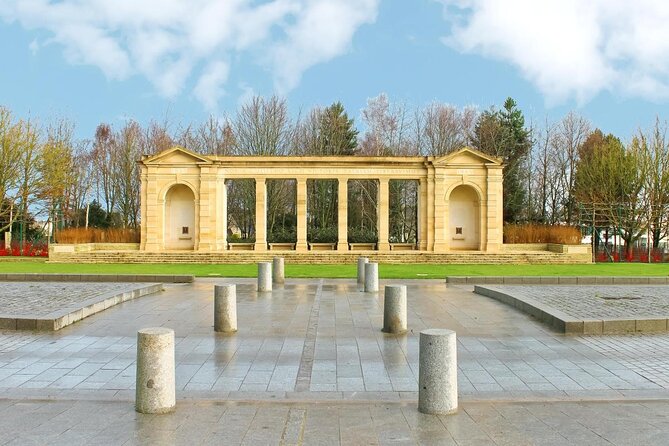
- Arromanches and the Mulberry harbor ruins: the logistics chapter
- Bayeux timing: why you should confirm before you count on it
- How the day can feel: long transit, short stops, and smart priorities
- Guides and interpretation: the biggest variable on the day
- Who this tour is best for
- Should you book this Normandy D-Day minivan tour?
- FAQ
- How long is the Normandy D-Day landing beaches guided tour from Paris?
- What language is the tour guide?
- How many people are in the group?
- Where do we meet in Paris, and what time does the tour depart?
- What are the included stops?
- Is lunch included?
- What transportation is included?
- What fitness level do I need?
- What happens if the weather is bad?
- Can I cancel and get a full refund?
Key things I’d plan around before you go
- Small group (max 8): more chances to ask questions, but you still share limited time at each site
- Air-conditioned minivan: comfortable on a long day, though seating can feel tight in back rows
- Pointe du Hoc included: you’ll walk among preserved bunkers and bomb craters with dramatic English Channel views
- Omaha Beach + Cemetery combo: you get the action-site contrast with the solemn resting place just above it
- Arromanches stop: a technical, moving look at how the Mulberry artificial harbor helped the landing succeed
- Audio may be an issue: in some vans, people farther back had trouble hearing without a microphone
How this one-day D-Day plan works from Paris
If you only have one day in the Paris area, this is a practical way to get to Normandy. You’re not guessing your way around rural roads or trying to coordinate trains. Instead, you’re handed a fixed route, early departure, and a guide who focuses on the main D-Day geography.
The value here is not “stay all day at one museum.” It’s the opposite. You’re stacking several high-impact locations into a single day: Omaha Beach for the landing itself, Pointe du Hoc for the Rangers’ fight over a key objective, and the American Cemetery for the human cost. Then you wrap with Arromanches, where the story shifts from battle to engineering and logistics.
The long day (about 12.5 hours) matters. You’ll be moving. That’s great if you want to see a lot. It can feel rushed if you want slow sightseeing, multiple museums, and lots of lingering.
You can also read our reviews of more guided tours in Paris



Price and value: what you’re really paying for
At about $227.58 per person, you’re paying mainly for three things: transport, scheduling, and guided interpretation. You’re getting a round-trip ride from central Paris by air-conditioned minivan, a guide/driver, and entry-free visits to the key battlefield stops on the day.
If you tried to do it independently, you’d still spend real money on transport. Taxis and private cars add up fast, and public transport requires careful timing. If you drive yourself, you’ll trade the guide’s context for the stress of logistics and parking.
That said, this tour’s value depends on what you want from “guided.” Some experiences run with a strong, narrative style from the person in front of the group. Other days can feel more like a driver-led day with brief commentary at stops. So before you book, be honest about your preference: do you want a thought-through story, or do you mainly want the battlefield scenery with time to wander?
The morning start: meeting point, timing, and why punctuality matters
You meet at 6 Rue de l’Amiral de Coligny, 75001 Paris. The schedule lists an early start, with departure around 7:15 am after a listed start time. This is the kind of trip where being late can ripple through the whole day—pickup gaps and rushed transfers don’t help anyone when you’re also trying to beat traffic and manage crowds.
I’d plan to arrive a few minutes early, even if you think you’re “right on time.” The tour runs like a military-style day plan: get moving, keep the order of sites, and respect the timing at each stop. One late moment can turn a “comfortable visit” into a “quick photo break.”
Minivan comfort: small group, but not always spacious
A max group size of eight is a real plus. Smaller usually means you can hear more, see better, and ask a question without waiting your turn forever.
But the minivan part is where expectations matter. Several accounts mention tight seating—especially for people in back rows or awkward seat positions on longer rides. The practical fix is to dress for comfort (layers, supportive shoes) and accept that “luxury coach bus comfort” isn’t the standard here.
One more thing: hearing. Some people had trouble hearing the guide during the drive because of missing or limited audio. If you’re sensitive to this, try to sit closer to the front so you catch the explanations when the guide speaks while traveling.
Omaha Beach: seeing the landing site and then stepping back
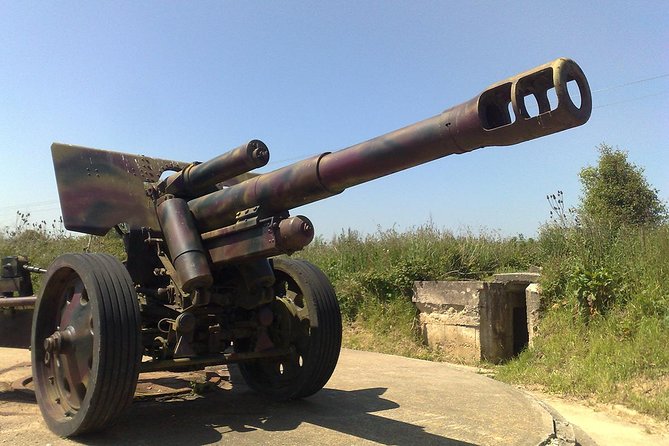
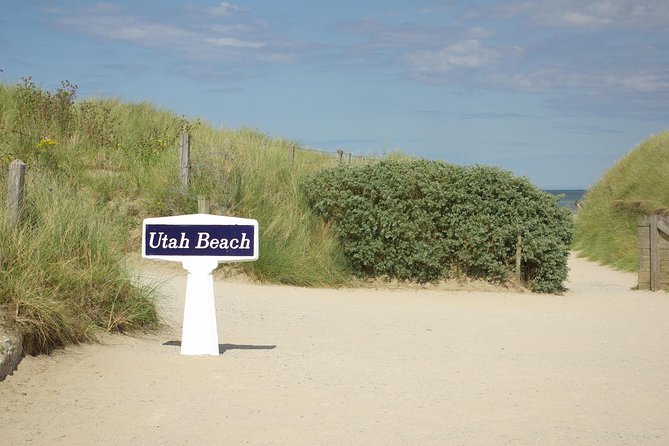
Omaha Beach is the centerpiece for many visitors, and this tour gives it that attention. You’ll learn about Operation Overlord and the scale of losses suffered by Allied forces, then you get time to step onto the shoreline—now peaceful, but historically loaded.
What I like about this stop is the structure: you arrive with context, you walk and look, and you get space for reflection. That contrast—calm coast today, brutal reality then—is one of the emotional engines of the whole day.
The caution is time. Some stops on this style of tour can end up short—Omaha may feel like mostly a photo-and-walk moment rather than the slow, layered sightseeing you might want. If Omaha is the one site you’ll obsess over, bring your patience, and don’t count on long beach strolling.






The American Cemetery: why this stop matters more than you expect

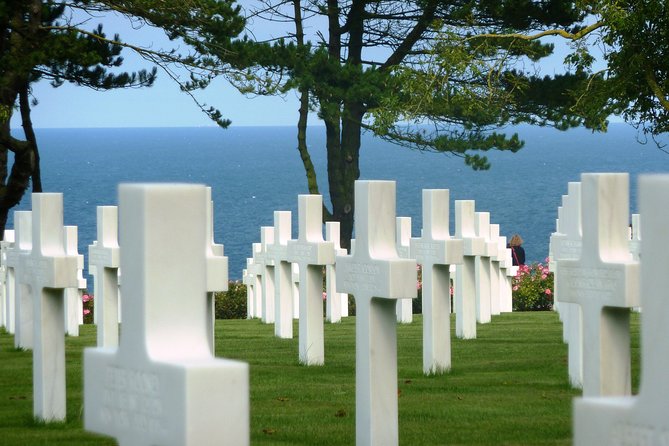
Just above the beach, the Normandy American Cemetery changes the mood completely. It overlooks Omaha Beach, and it’s the final resting place of thousands of American soldiers. The experience is solemn, and it’s exactly the kind of place where you can’t really “speedrun” your feelings.
This tour also offers a chance to visit a modern visitor center with exhibitions, films, and personal stories. That’s where many people get the narrative connections that the battlefield itself can’t explain.
Here’s the practical advice: if the visitor center is important to you, don’t treat this stop like a quick pass. Some days allow about an hour at the cemetery area plus museum time, and if you’re the type who reads everything, you’ll want to prioritize what you care about most.
Even if you skip some exhibits, the cemetery layout gives you an immediate sense of order and scale—rows of names stretching across the hillside. It’s one of the strongest emotional anchors on the day.
Pointe du Hoc: preserved bunkers, craters, and big sky views
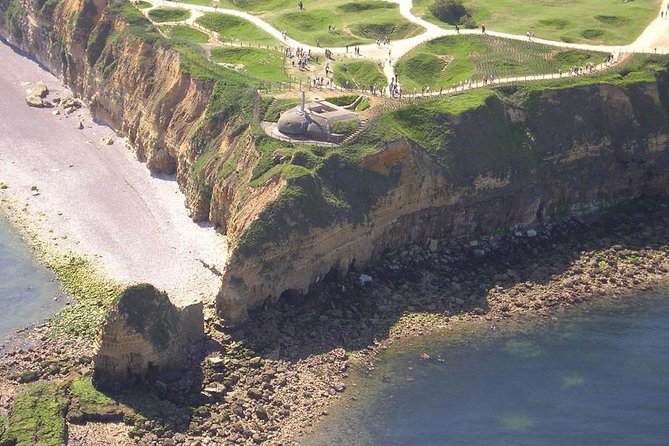
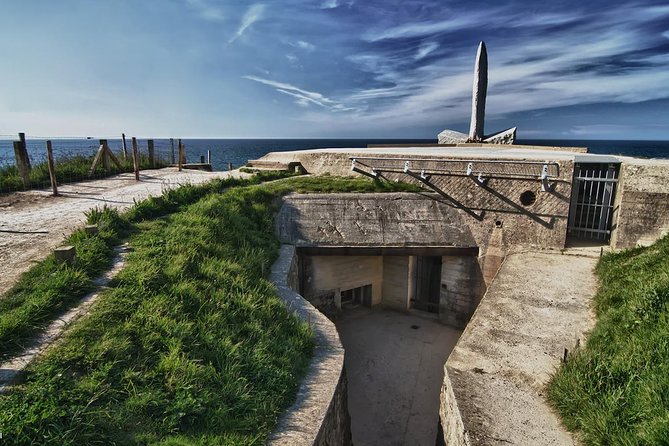
Pointe du Hoc is built for people who want terrain and proof. This was a strategic German fortification, assaulted by U.S. Rangers on D-Day. You’ll walk among preserved bunkers and bomb craters, then look out over the English Channel from a place where the land still feels like a battlefield.
I really like this stop because it’s not just “stand and look.” It’s closer to moving through the story. You can stand where troops would have approached, picture the objective, and see how the landscape shaped what was possible.
Two practical points:
- Wear shoes with grip. Uneven ground and steps can be part of the walk.
- Expect weather to matter. Pointe du Hoc and the channel views are exposed.
Arromanches and the Mulberry harbor ruins: the logistics chapter
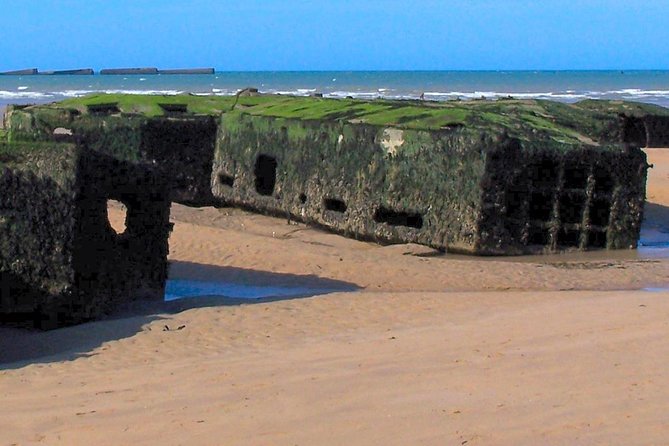
After the intensity, Arromanches offers a different kind of meaning. You pass through the town known for remains of the Mulberry artificial harbor, a remarkable engineering achievement that helped support the Allied invasion.
This stop can feel surprisingly moving because it’s about what had to go right after the fighting. When people talk about D-Day, they often focus on the initial landings. Arromanches reminds you that sustaining the operation required infrastructure, planning, and problem-solving under pressure.
Time here can be flexible compared with some battlefield moments. The day includes a lunch window nearby, and you may also have time to walk around the shoreline ruins and take in the broader view.
Bayeux timing: why you should confirm before you count on it
Bayeux comes up in some versions of the day concept, and it also shows up in actual experiences people described. But your time allocation can vary, and at least one person’s booking felt like Bayeux was included when they expected more time at the beaches instead.
So here’s the rule I’d use: if Bayeux (cathedral area, museums, or a tapestry visit) is part of your must-do list, verify it clearly before you commit. If you don’t, don’t plan your day around it. Treat Bayeux as a possible bonus, not the main event.
How the day can feel: long transit, short stops, and smart priorities
This trip is long because Normandy is about a 3.5-hour ride each way from Paris. That means your “real sightseeing time” lives in the stops themselves.
Many guests found the day packed and sometimes timed tightly: quick photo opportunities at certain sites, limited time at the cemetery, and lunch that can be hurried depending on what’s open and how the schedule holds. On the other hand, when the guide’s explanations land well and the group keeps moving on time, the day can feel purposeful rather than chaotic.
If you want to get the best outcome, pick your priorities in advance:
- If Omaha is your top goal, aim to spend your mental energy there and accept that other sites may be shorter.
- If you’re moved by names and personal stories, prioritize the cemetery visitor center section.
- If you like walking terrain, Pointe du Hoc is where you’ll feel most satisfied.
Also: bring a light layer even in warm months. Normandy weather can change quickly, and you’ll be outside for channel views and coastal stops.
Guides and interpretation: the biggest variable on the day
One of the most consistent themes across the experiences is that the guide quality can swing. Some people got a guide who explained the drive out of Paris with extra historical texture and kept the story flowing between stops. Others felt like the day was mostly a series of drops and short walks with limited interpretation.
You might be with guides such as Reza, Dmitri, Faybien, Max, or others listed in customer feedback. Names aren’t the point. The point is style: some guides translate and narrate constantly; others focus more on moving the group and providing brief stop summaries.
If you care a lot about historical context, don’t just rely on the label “trilingual guide.” Ask yourself what you want: a running lecture in the van, or a targeted explanation at a couple of key moments. For many people, the van narration is a major part of why the trip feels worth it.
Who this tour is best for
This is a good fit if:
- you want to see the major D-Day sites in one day without handling logistics
- you’re comfortable with a long ride and moderate walking
- you prefer a structured route over independent exploration
- you like the combination of battlefield sites and a memorial stop
It’s less ideal if:
- you want hours inside museums and long guided museum experiences
- you strongly dislike tight scheduling and time limits
- you need a very spacious seat for comfort on a 3.5-hour ride
Should you book this Normandy D-Day minivan tour?
If your goal is the landing beaches in one shot from Paris, I think this tour is worth considering. The mix of Omaha Beach, Pointe du Hoc, and the American Cemetery hits the emotional and historical core of D-Day, and the minivan setup is the right size for a small-group day.
Book it if you’re okay with a full schedule and you want your time used for seeing key locations rather than slow museum marathons. Skip it (or look for a longer alternative) if you’re the type who needs lots of time at a single site to read, watch, and wander without feeling rushed.
My final advice: confirm whether Bayeux is truly part of your day and don’t count on long museum time. Then show up early, sit somewhere where you can hear the guide, and focus on what matters most to you. Normandy is powerful—this route helps you meet it in the best possible way given the one-day limit.
FAQ
How long is the Normandy D-Day landing beaches guided tour from Paris?
It runs for about 12 hours 30 minutes (approx.) as a full-day excursion.
What language is the tour guide?
The tour is offered in English, and a professional guide provides EN/ES/FR interpretation.
How many people are in the group?
The experience has a maximum of 8 travelers.
Where do we meet in Paris, and what time does the tour depart?
You meet at 6 Rue de l’Amiral de Coligny, 75001 Paris, France. The start time is listed as 7:00 am, with departure around 7:15 am.
What are the included stops?
The tour includes visits to Pointe du Hoc, Omaha Beach, the Normandy American Cemetery, and it passes through Arromanches.
Is lunch included?
No. Lunch is not included.
What transportation is included?
You get round-trip transport from central Paris in an air-conditioned minivan with a driver/guide.
What fitness level do I need?
You should have moderate physical fitness, since there is walking at the sites.
What happens if the weather is bad?
The experience requires good weather. If it’s canceled due to poor weather, you’ll be offered a different date or a full refund.
Can I cancel and get a full refund?
Yes. You can cancel up to 24 hours in advance for a full refund. Changes made less than 24 hours before the start time aren’t accepted, and refunds won’t apply for later cancellations.