REVIEW · PARIS
Napoleon III’s Paris city tour
Book on Viator →Operated by Paris in person · Bookable on Viator
When Paris turns into modern life, it happens here. This private tour focuses on the Haussmann reconstruction under Napoleon III, when over 70% of the city was reshaped in just 17 years. I especially like how the walk connects big ideas to street-level details, and how the guide story makes the city feel logical instead of random.
Two stops also land hard for me: the outside look at the Opéra Garnier and the industrial-meets-faith finish at Saint-Augustin. One thing to keep in mind: it is a story-heavy walk, so if you want long museum time or ticketed interior visits, you may feel a bit limited since key sights are viewed from outside.
In This Review
- Key things you’ll get from this Napoleon III Paris walk
- Haussmann’s Paris: Why this walk still matters on your trip
- Price and value: what $347.28 for up to 6 people really means
- The route starts at Place Vendôme and teaches you to read the city
- Place Vendôme: the royal model that set the tone for rebuilding
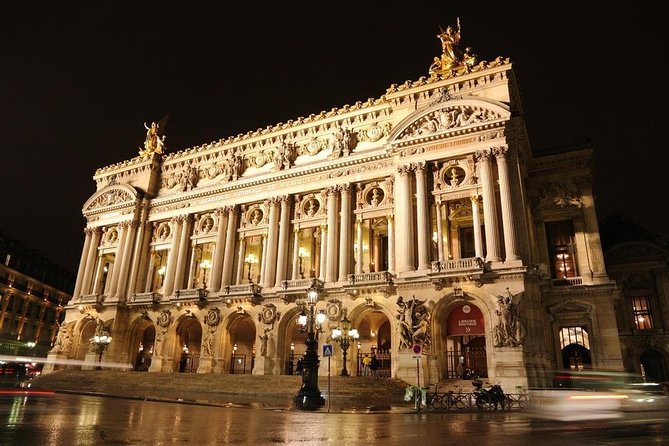
- Palais Garnier outside: seeing the new center without stepping inside
- Banking and shopping as power: Societe Generale to the department-store belt
- A small planning tip for this shopping stretch
- Havre–Caumartin and boulevard Haussmann: the boulevard lesson that clicks fast
- Chapelle Expiatoire: architecture tied to the political fight still in the walls
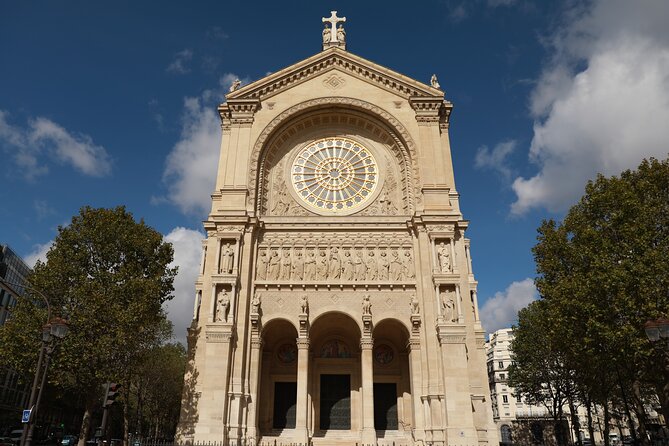
- Saint-Augustin: a steel-first church ending that feels like the future
- The guide experience: art historian depth, small-group comfort
- Practical stuff you should know before you go
- Who this tour suits best
- Should you book Napoleon III’s Paris city tour?
- FAQ
- How long is the Napoleon III’s Paris city tour?
- Is this tour private or shared?
- What is the group size limit and price?
- Where does the tour start and end?
- Are tickets included for the sights?
- Do we get a mobile ticket?
- Is food or drinks included?
- What’s included in the tour price?
- Can I cancel for a full refund, and how late can I do it?
Key things you’ll get from this Napoleon III Paris walk
- A clear Haussmann timeline that explains how Paris became modern in 1853–1870
- An art historian guide who ties architecture to politics, money, and daily life
- Outside viewing of major icons, including Opéra Garnier
- Consumer culture stops at Galeries Lafayette and Printemps
- A boulevard lesson on boulevards Haussmann through the Havre-Caumartin area
- A steel-and-church finale that shows industrial Paris joining the spiritual world
Haussmann’s Paris: Why this walk still matters on your trip
Paris didn’t just “change over time.” Under Napoleon III and Georges Haussmann, it was re-planned fast, brutally, and with a clear vision of what a modern capital should look like. The result is the Paris many of us picture: wide boulevards, grand façades, and neighborhoods designed for movement, commerce, and power.
The tour’s big promise is also its best one: it shows how modern life was born on the ground you’re standing on. You’ll connect industrial life, consumer culture, and politics to real stonework and city layout, not just vague impressions. And because the tour is private, the guide can pace the story to the questions you actually care about.
You can also read our reviews of more city tours in Paris

Price and value: what $347.28 for up to 6 people really means
At $347.28 per group (up to 6), you’re not paying for a bargain spectacle. You’re paying for a professional art historian to guide your specific group for about 2 hours. In a city like Paris, that can be good value because the alternative is either wandering without context or paying for multiple standalone entries and audio guides.
Also, you’re not hauling around a big herd. A small group means you can ask follow-ups, linger when something catches your eye, and still keep momentum. If your group includes a mix of art/architecture fans and people who just want to understand why the streets look the way they do, this format usually works well.
The route starts at Place Vendôme and teaches you to read the city
Your tour begins at 2013 Pl. Vendôme (75001), a strong choice because Place Vendôme is already part of the visual language Haussmann-era Paris loved. You’re standing near a royal square model that helped shape what reconstruction looked like in the second half of the 19th century.
This is where you’ll start noticing something important: Haussmann wasn’t only “updating buildings.” He was rewriting how people experience the city—what you see first, where vistas open, and how streets funnel movement. The guide helps you watch for those patterns as you go, so later stops feel like chapters rather than random stops.
Place Vendôme: the royal model that set the tone for rebuilding
Place Vendôme is beautiful on its own. But the point of the stop is the idea behind it: it became a kind of reference for how Paris wanted to look while rebuilding itself. Even if you’re not an architecture person, you’ll probably feel the logic quickly: consistent design, a clear focal space, and a sense of order.
Since the stop is listed as 10 minutes with admission noted as free, it’s a quick reset. You get enough time to take photos, read the shapes, and then move on while the context is fresh.
Palais Garnier outside: seeing the new center without stepping inside
Next up is the Palais Garnier, the world-famous Opéra Garnier. This is one of the big “Haussmann landmarks” because the opera house became part of the vision for a re-centered Paris—meant to substitute the older symbolic gravity of Notre-Dame.
Important practical note: you’re not entering the opera house. The tour is focused on what it represents from the outside, which is useful if you’re time-limited or if you’re trying to keep this tour story-driven rather than ticket-driven. Expect about 20 minutes here, enough to take in the scale, symmetry, and the sense of theater that Haussmann’s Paris clearly wanted to project.





Banking and shopping as power: Societe Generale to the department-store belt
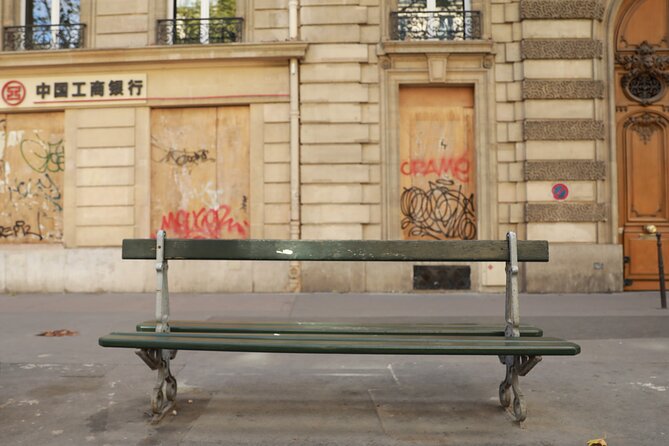
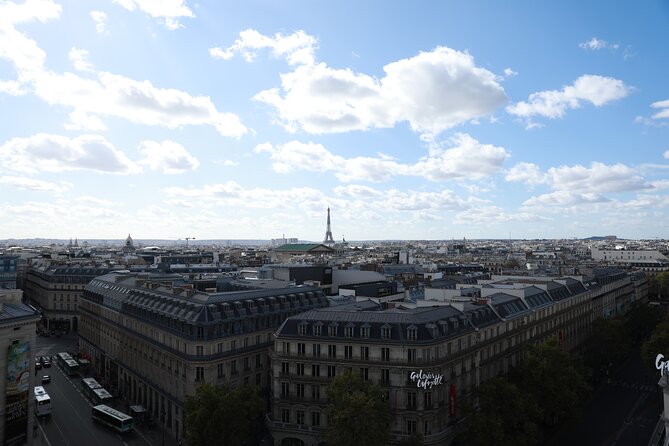
After grand culture comes money and consumption, and the transition is part of what makes this tour fun. You’ll stop at Societe Generale, described as a “cathedral of wealth,” and it’s easy to see why. Banks can feel plain. Here, the building language turns ordinary transactions into something monumental—architecture doing the job of authority.
Then you move into the department-store world with Galeries Lafayette Paris Haussmann and Printemps. These stops treat shopping like more than errands. You’re meant to see it as a cultural system: display, luxury, and the new consumer rhythm of industrial-era Paris. Each stop is scheduled for 10–20 minutes, and admission is noted as free, so you can focus on the exterior identity and the feel of the streets around them without committing to long indoor time.
If you like “why do cities feel the way they do” questions, this segment is a highlight. You’ll start understanding how the Haussmann-era rebuild served not only movement and government, but also everyday modern habits—how people spent, gathered, and showed status.
A small planning tip for this shopping stretch
You’ll be walking and stopping in an area where stores are busy. If you want photos without constant foot traffic blocking your shot, aim to pause for pictures at the edges of each stop rather than directly in the busiest entry points.
Havre–Caumartin and boulevard Haussmann: the boulevard lesson that clicks fast
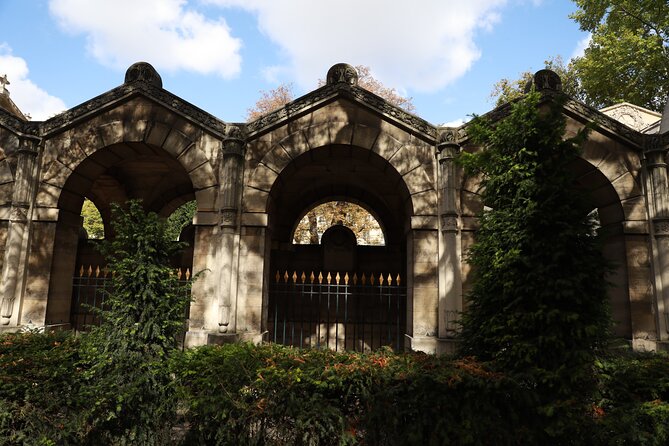
Next is Havre–Caumartin, where you get a “boulevard Haussmann” education in real time. The tour frames boulevards as the prime street type in bourgeois industrial Paris—broad, designed for flow, and perfect for the kind of city life that grew with modern commerce.
This is one of the easiest places to make the Haussmann story click because you can physically feel it. Wide streets change sound, sightlines, and walking pace. The city stops being a medieval maze and becomes a grid of movement. The guide’s commentary helps you notice how that physical design supports the political and consumer goals behind the rebuild.
It’s about 15 minutes here, listed as free admission, which is about right. If you linger too long, the boulevard becomes background. If you go quickly, you miss the “aha.” This stop is timed to land that middle ground.
Chapelle Expiatoire: architecture tied to the political fight still in the walls
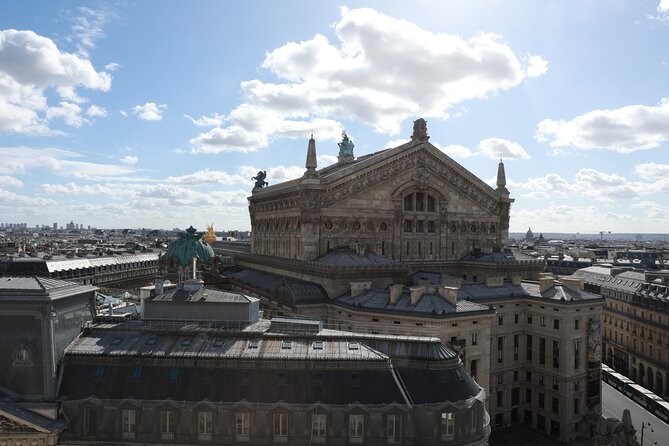
After the consumer and street-design focus, the tour pivots to politics with Chapelle Expiatoire. The stop ties the city’s visual rebuild to France’s second-half-of-the-19th-century divisions and the push to reconcile monarchic aristocrats with a republican bourgeois world still at odds.
What I like about this kind of stop is that it turns “architecture talk” into “human story talk.” Even if you don’t remember every name from school history, you’ll understand the concept: buildings aren’t only pretty. They’re also claims about identity, power, and who gets to belong in the public story of the nation.
You’ll spend about 10 minutes here, with admission noted as free, so again, this is a focused stop. The guide gives you enough to interpret what you see next, not enough to bog you down.
Saint-Augustin: a steel-first church ending that feels like the future
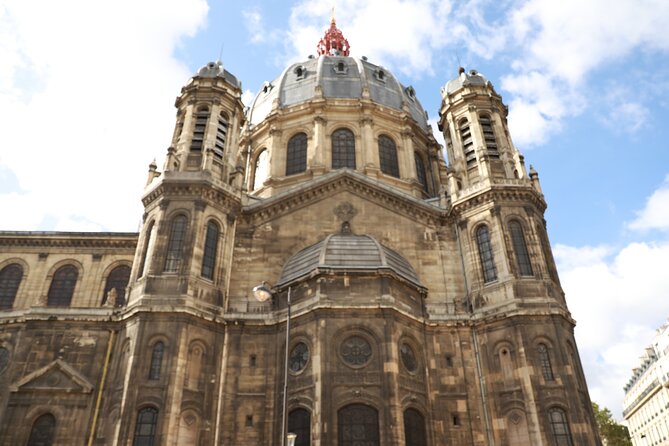
The tour concludes at Saint-Augustin, and it’s a strong ending because it mixes faith with industry. The stop is described as the first church in Paris made with extensive use of steel, symbolizing the pact between the church and the industrial forces shaping modern life.
This matters because it mirrors the broader Haussmann theme: modernization wasn’t only factories and streets. It was also how people reimagined institutions—religion included. Finishing here gives you a visual summary of the whole tour’s thesis: Paris rebuilt itself into the world people wanted next.
The scheduled time is about 10 minutes, and the tour ends around the junction of boulevard Malesherbes and boulevard Haussmann, near Saint-Augustin.
The guide experience: art historian depth, small-group comfort
This is a private tour with a professional art historian guide, and the small group matters more than you might think. In the Haussmann story, there are a lot of moving parts—who decided what, why the rebuild was so radical, and what the new design signaled to the public. A good guide can keep it clear, keep it moving, and answer questions without losing the thread.
From what I’ve seen people highlight about this tour’s guides, Amy and Boris are the kind of hosts who know the topic deeply and can explain it in plain, concrete terms. One of them has also spoken about Haussmann on the Earful Tower podcast, which is a fun clue that their interest goes beyond just memorized tour lines. For me, that’s the difference between a “sightseeing walk” and a story that actually changes how you look at the city.
Practical stuff you should know before you go
This tour runs about 2 hours, and it’s built to be manageable on a busy Paris day. You’ll be out walking across a central route with plenty of major landmarks, so wear shoes you trust.
You also get a mobile ticket, and the tour confirmation is received at booking. It’s designed for most travelers to participate, and service animals are allowed. Since the route is near public transportation, it’s also easy to connect to the rest of your itinerary without feeling trapped.
One more note: no food or drinks are included. That’s fine because it keeps the tour focused, but do plan a snack break either before or after if your day is packed.
Who this tour suits best
This tour is a great fit if you:
- like architecture and want the city explained in a logical way
- want to understand why Paris looks the way it does today
- enjoy the mix of politics, money, and urban design
- prefer small-group interaction over big-group pacing
It may be less ideal if you mainly want interior access, long museum time, or quiet strolls without a lot of historical framing.
Should you book Napoleon III’s Paris city tour?
I’d book it if you want your first big “modern Paris” narrative to come with street-level clarity. The route hits the right anchors—from Place Vendôme to Opéra Garnier’s public face, from the bank and department stores to boulevard Haussmann—and then it lands with Saint-Augustin’s steel-and-faith symbolism.
Also, the value math works better when you’re traveling with friends or family you can bundle into a single group of up to six. You’ll spend more than a basic city walk, but you buy real guidance and a story you can carry with you for the rest of your trip.
If you’re excited by the idea that Paris didn’t just evolve, but was deliberately remade in a short window, this is one of the most satisfying ways to see it in action.
FAQ
How long is the Napoleon III’s Paris city tour?
It lasts about 2 hours.
Is this tour private or shared?
It’s a private tour, so only your group participates.
What is the group size limit and price?
It costs $347.28 per group, up to 6 people.
Where does the tour start and end?
It starts at 2013 Pl. Vendôme, 75001 Paris and ends near Saint-Augustin, around the junction of boulevard Malesherbes and boulevard Haussmann.
Are tickets included for the sights?
The stops listed for the tour indicate admission ticket free for each location, and the tour includes the guided experience. You should still plan around the fact that you’re not entering the Opéra house on this tour.
Do we get a mobile ticket?
Yes, you get a mobile ticket.
Is food or drinks included?
No. Food and drinks are not included.
What’s included in the tour price?
The tour includes a private tour and a professional art historian guide.
Can I cancel for a full refund, and how late can I do it?
Yes, you can cancel for a full refund up to 24 hours before the experience starts.