REVIEW · PARIS
Medieval Paris Private Walking Tour
Book on GetYourGuide →Operated by Paris in person private tours · Bookable on GetYourGuide
Notre-Dame and medieval streets, tightly guided. I like how this tour turns Paris into a real-life time machine, especially at Hotel de Cluny and Notre-Dame. The main catch: it operates rain or shine, so you’ll want weather-ready clothes.
In just 2 hours, you’ll cover a smart stretch of the Left Bank and learn how medieval ideas still shape what you see today—down to the surprising link between the Middle Ages and the modern Pompidou Centre. It’s a private group with a live guide in English or French, and you’ll start right by Cluny la Sorbonne Metro (Line 10).
In This Review
- Key points at a glance
- Starting at Cluny la Sorbonne: the quickest way to read medieval Paris
- Hotel de Cluny: abbots’ residence turned into a Middle Ages museum stop
- Notre-Dame Cathedral: why it’s the focal point of medieval Paris
- The Latin Quarter walk: oldest streets, student energy, and medieval street clues
- Sorbonne and the idea of learning: one of Europe’s oldest universities
- Saint-Jacques-de-la-Boucherie: the Flamboyant Gothic tower you can still see
- Les Halles: the market story behind medieval city life
- Fontaine des Innocents: the oldest intact fountain in Paris
- The Pompidou connection: how modern design ties back to the Middle Ages
- How the guide shapes the tour (and what to watch for)
- Price and value: what $171 per person gets you in 2 hours
- Weather and comfort: rain or shine means plan your outfit
- Who this Medieval Paris tour suits best
- Should you book? My practical take
- FAQ
- How long is the Medieval Paris Private Walking Tour?
- Where does the tour start?
- What are the key stops on the tour?
- Is food or drinks included?
- Is the tour private?
- What languages are the guides available in?
- Does the tour run in bad weather?
- How much does it cost?
- What is the cancellation policy?
Key points at a glance
- Private 2-hour format that keeps the pace focused instead of aimless wandering
- Hotel de Cluny and Notre-Dame as the two anchors of medieval Paris
- Latin Quarter + Sorbonne showing how education shaped city life long ago
- Saint-Jacques Tower and Fontaine des Innocents for architecture and everyday details
- Les Halles for the money-and-market side of medieval life
- Pompidou connection that helps you see modern landmarks with medieval context
Starting at Cluny la Sorbonne: the quickest way to read medieval Paris
You begin at street level in one of the most layered parts of Paris. The meeting point is in front of McDonald’s at Cluny la Sorbonne Metro Station (Line 10), and you’ll spot your guide by the red canvas tote bag. This matters more than it sounds: in medieval neighborhoods, being off by a block can throw off your bearings fast.
From there, the tour builds a story as you walk. You don’t just get dates—you get a way to notice what’s right in front of you: façades, symbols, and street layout that still whisper about older centuries. If you like history you can point at, this style works.
You can also read our reviews of more walking tours in Paris



Hotel de Cluny: abbots’ residence turned into a Middle Ages museum stop
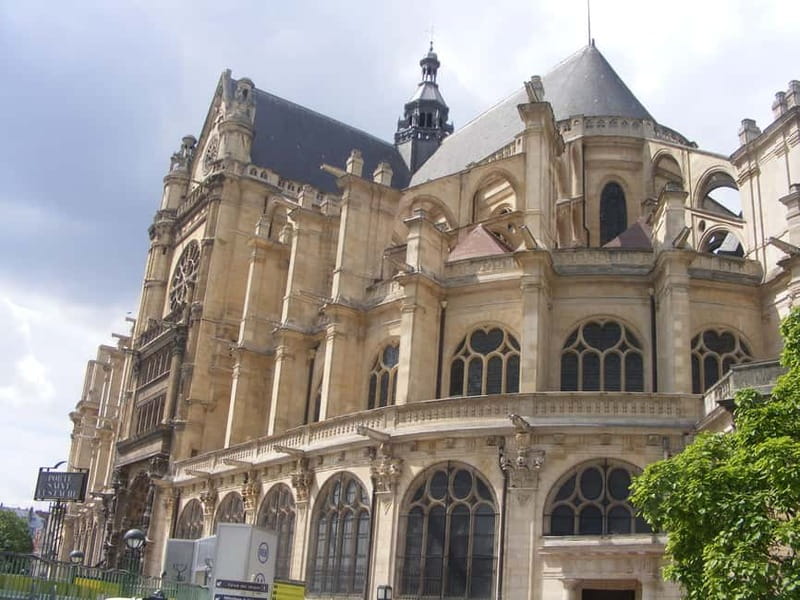
One of the first places you’ll pass is the Hotel de Cluny, the former mansion of the Cluny abbots. Today, it’s home to the Museum of the Middle Ages, and even seeing it from outside helps set the tone: this area wasn’t always a tourist backdrop. It was a hub of influence, power, and culture.
What I like here is the angle. Instead of treating medieval Paris as only big churches and kings, you get a sense of the institutions behind the scenes—religious leadership, patronage, and the art/architecture that followed. Even if you don’t go inside the museum (the tour details don’t promise entry), the stop helps you understand why this neighborhood became so important.
Practical note: you’ll spend time on foot in an older, walkable district. Expect some standing still for explanations, especially around the larger monuments later.
Notre-Dame Cathedral: why it’s the focal point of medieval Paris
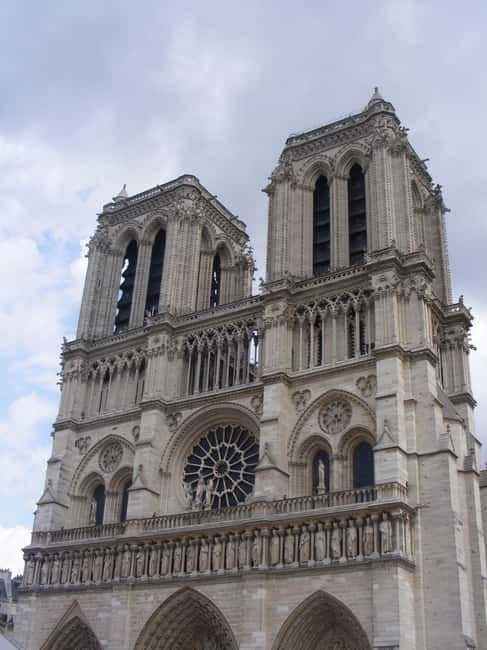
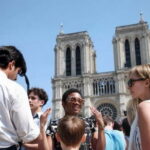
Next comes the main reason most people care about medieval Paris: Notre-Dame Cathedral. For a medieval city, Notre-Dame wasn’t just a building—it functioned like a centerpiece for belief, civic identity, and daily rhythms. This tour treats it that way, with context you can carry beyond the façade.
You’ll learn how the Middle Ages shaped the city’s art and architecture, and you’ll connect what you’re seeing to how people lived. I find that shift helpful: you stop seeing Notre-Dame as a photo spot and start reading it as a landmark that organized the city around it.
There’s also value in timing. Since the tour is only 2 hours, Notre-Dame doesn’t get treated as a random stop you hurriedly admire. You’re usually guided with a purpose—so you leave with a clearer idea of what the Middle Ages meant here.
The Latin Quarter walk: oldest streets, student energy, and medieval street clues
After Notre-Dame, you’ll move into the Latin Quarter, one of the oldest parts of Paris. This is where the tour gets especially fun if you enjoy walking with your eyes open. You’ll pass medieval streets and notice façades that retain medieval symbols, the kind of details most fast sightseeing tours miss.
This part of the city is layered: old streets, medieval-era institutions, and the everyday life that continues to live over older foundations. The result is a walk that feels like you’re tracking the city’s DNA, not just checking off monuments.
If you prefer your history delivered as you go—standing by a wall, then learning what it means—that’s what this section is built for.
Sorbonne and the idea of learning: one of Europe’s oldest universities
You’ll also see the Sorbonne, described in the tour info as one of Europe’s oldest universities in Europe. That matters because medieval Paris wasn’t only about church power. It also had education, debate, and scholars—ideas that helped shape culture and politics over centuries.
The tour’s approach here is practical: it ties the built environment to how people used it. If you’ve ever wondered why certain neighborhoods become “thinking centers,” this is the kind of stop that gives you an answer you can actually visualize.
It’s also a good mental break from the heavier architecture. After Notre-Dame, shifting to a learning-focused landmark keeps the story moving without feeling repetitive.
You can also read our reviews of more private tours in Paris






Saint-Jacques-de-la-Boucherie: the Flamboyant Gothic tower you can still see
Another highlight is the Saint-Jacques Tower, identified as the Flamboyant Gothic tower that remains from the 16th-century Church of Saint-Jacques-de-la-Boucherie. Even when the original church isn’t fully intact, what’s left can still teach you a lot—style, craftsmanship, and what mattered enough to build with ambition.
This is one of those stops where you can get more out of it by looking for shape and ornament. The tour helps you connect that architecture to the Middle Ages, so the tower isn’t just pretty; it becomes meaningful.
One consideration: towers and church remnants often require a bit of patience—time to look, angles to spot details, and room for the guide to explain what you’re seeing. It’s worth it, but it’s not a quick drive-by.
Les Halles: the market story behind medieval city life
You’ll learn about Les Halles, including its mercantile history. This is a side of medieval Paris that many tours treat like an afterthought. Here, it’s treated as essential: markets are where everyday life happens, where goods move, and where city wealth and social change show up in plain view.
For you, the value is that it broadens the Middle Ages beyond cathedrals. You start to understand the economy that fed the city and supported the institutions you’ve already seen.
If you’re the kind of traveler who likes “how did people actually live?” questions, this section likely lands well. It turns the Middle Ages into a functioning system rather than a set of monuments.
Fontaine des Innocents: the oldest intact fountain in Paris
A major stop is the Fontaine des Innocents—called the oldest intact fountain in Paris in the tour description. A fountain sounds like a small detail until you remember what water meant in historical cities: life, hygiene, and community structure.
I like this stop because it gives you a daily-life view of the Middle Ages. Instead of focusing only on grand architecture, you get a piece of infrastructure that connects to routine. It also makes your walking route feel complete, since you’ve covered institutions, churches, and markets—then you see the practical public element that served people.
This is also a good place to slow down mentally. The tour is only 2 hours, so having at least one “watch and absorb” moment helps you convert information into memory.
The Pompidou connection: how modern design ties back to the Middle Ages
One of the more intriguing claims in the tour overview is the connection between the Middle Ages and the modern Centre Pompidou. This isn’t presented as a random fun fact. It’s framed as a way to understand how ideas and urban culture can echo across time.
For you, this can change how you experience Pompidou on your own later. Instead of seeing it as only ultra-modern architecture, you’ll have a lens for thinking about how Paris reuses, transforms, and reinterprets urban identity across centuries.
I’d treat this as a payoff moment. By the time you hear the explanation, you’ve already walked through medieval institutions and street clues. So the Pompidou link doesn’t feel forced—it feels like the final chapter of the story.
How the guide shapes the tour (and what to watch for)
This tour is private, with a live guide available in English or French. That matters because medieval Paris rewards questions. If you want to ask why a façade matters or how one landmark connects to another, a private guide format makes it easier.
One review note highlights a guide named Isabella, described as very knowledgeable and nice. If you get her (or another guide with a similar style), you’ll likely enjoy the balance between big landmarks and small, specific details you wouldn’t pick up on your own.
What you can do to get more value: bring curiosity about symbols on buildings and the way the city is organized. The tour’s focus on medieval signs and architecture means your attention to street-level details will pay off.
Price and value: what $171 per person gets you in 2 hours
At $171 per person for a 2-hour private walking tour, you’re paying for three things: time, access to interpretation, and focus. You’re not just buying a route—you’re buying someone to connect the dots between monuments that are often separated by what feels like modern city noise.
Is it “cheap”? No. Is it fair for the experience? For many travelers, yes—especially if you want more than basics. If you’re the type who reads plaques for fun or you like walking with a plan, the per-person cost can feel less steep because you’ll leave with a clearer mental map of medieval Paris.
Who I’d recommend it for:
- Couples or small groups who want a guided walk instead of a large group tour
- People who want medieval Paris without spending half a day piecing it together
- First-time visitors who want a strong historical orientation in a short window
Who might hesitate:
- If you only want quick photo stops and don’t care about context
- If you want museums with long interior time (this format is built around walking and landmark storytelling)
Weather and comfort: rain or shine means plan your outfit
The tour runs rain or shine, and you’ll be outside for a good chunk of the 2 hours. So think about comfortable shoes and a rain layer you can handle without fighting your gear every few minutes.
This is especially relevant because medieval streets can feel a bit uneven, and you’ll likely stop more than once for explanations. Dress for walking first, then for looking good in photos second.
Who this Medieval Paris tour suits best
This tour fits travelers who like history that can be seen. If you enjoy noticing older symbols on buildings, reading architecture, and connecting medieval institutions to the Paris you already recognize, you’ll probably love the way the story is structured.
It also suits people who don’t want a long itinerary. In 2 hours, you get a concentrated set of stops: Hotel de Cluny, Notre-Dame, the Latin Quarter, Sorbonne, Saint-Jacques Tower, Les Halles, Fontaine des Innocents, and the Pompidou connection.
Should you book? My practical take
I’d book this tour if your goal is to understand medieval Paris fast and in a human way. The stops are well chosen, and the theme is consistent: life, art, and architecture in the Middle Ages, tied back to what you can still see and recognize.
I’d think twice if you hate being outside in bad weather or you prefer museum-only plans. Since it’s rain or shine and built around walking, you’ll get the best experience if you’re comfortable with a guided city stroll.
If you want, tell me your travel dates and the time of day you prefer. I can help you pick a sensible start time window for pairing this with other nearby sights.
FAQ
How long is the Medieval Paris Private Walking Tour?
It’s a 2-hour private walking tour.
Where does the tour start?
Meet your guide in front of McDonald’s at Cluny la Sorbonne Metro Station (Line 10). Look for the guide with a red canvas tote bag.
What are the key stops on the tour?
The tour includes places such as Hotel de Cluny, Notre-Dame Cathedral, the Latin Quarter, the Sorbonne, Saint-Jacques-de-la-Boucherie (the Flamboyant Gothic Saint-Jacques Tower that remains), Les Halles, and the Fontaine des Innocents, plus a connection to the modern Centre Pompidou.
Is food or drinks included?
No. Food and drinks are not included.
Is the tour private?
Yes. It’s listed as a private group.
What languages are the guides available in?
The live guide is available in English and French.
Does the tour run in bad weather?
Yes. It operates rain or shine.
How much does it cost?
The price is listed as $171 per person.
What is the cancellation policy?
There is free cancellation up to 24 hours in advance for a full refund.