REVIEW · PARIS
Le Marais Private Walking Tour
Book on Viator →Operated by Paris in person · Bookable on Viator
Marais changes every corner. This private, art-history guided walk is a fast way to read the neighborhood like a book: I love how it connects aristocratic mansions to the Jewish quarter, and I love the art historian angle that makes buildings feel like clues. One thing to consider: it’s a 2-hour on-foot route, so wear shoes you trust and expect a steady stroll.
I also like that you start in the city’s older layers and work toward today’s art and design energy, without the usual museum rush. You’ll pass big names and quieter corners, and your guide ties it all together—from Place des Vosges to the Pletzel area—so the Marais feels less like a postcard and more like a living neighborhood with memory.
Logistically, the private part matters: it’s priced per group (up to 6), you get a mobile ticket, and the route ends at Place de la Bastille. The pace is described as moderate, and the stops are mostly straightforward to reach since you’re near public transportation.
In This Review
- Key things that make this tour click
- Entering Le Marais via Les Halles, Paris’s older heart
- From Hôtel-de-Ville to Centre Pompidou: how Paris rebrands neighborhoods
- La Rue des Rosiers and the Pletzel story: Paris’s Jewish quarter thread
- Hôtel de Sully courtyard: aristocratic life written in stone
- Place des Vosges: the square where the stories keep walking
- Ending at Place de la Bastille: from old prestige to modern Paris
- Value for money: what you’re paying for with a private art historian
- Who this tour fits best (and who might want something else)
- Little planning tips to make your walk smoother
- Should you book Le Marais Private Walking Tour?
- FAQ
- How long is the Le Marais Private Walking Tour?
- Is this tour private or group-based?
- How many people can be in the group?
- What’s included in the price?
- Are any entrances or tickets included?
- Where does the tour start and end?
- Is food or drinks included?
- Are service animals allowed?
- Is there a cancellation option?
Key things that make this tour click
- Private 2-hour format that keeps you moving but still leaves room for questions
- Art historian leadership with serious context for what you’re seeing
- A route that links eras: nobility → Jewish quarter → working-class change → today’s design crowd
- Most stops are free to enter, with Centre Pompidou handled from the outside only
- A clear end point at Place de la Bastille, great for continuing your day on foot
Entering Le Marais via Les Halles, Paris’s older heart
Most people think of the Marais as one neat “zone.” This tour treats it like a series of chapters. It starts at Les Halles, one of the oldest and most lively slices of Paris life. Even if you’re not the type to chase markets or food streets, Les Halles sets the tone: this is a city that always had trade, workers, and daily movement—not just palaces.
What I like here is the way the guide frames buildings and street patterns as social history. You’re not just looking at walls. You’re noticing how power and everyday life sit side by side. That mindset carries you through the rest of the walk, especially once the route shifts into the part of Paris that reads like administration and prestige.
A practical note: because the walk is about 2 hours total, that early stretch helps you get your bearings fast. If you tend to wander without meaning to, this start is a good antidote.
You can also read our reviews of more walking tours in Paris



From Hôtel-de-Ville to Centre Pompidou: how Paris rebrands neighborhoods
Next you head toward the 4th arrondissement’s power center near Hôtel-de-Ville, the administrative heart of the city. The guide points out how the city organizes itself physically. It’s not glamorous in the way a palace is, but it’s important. Paris runs on institutions as much as it runs on icons.
Then comes Centre Pompidou. The big detail: you’re discussing the museum from the outside on this walk, not paying in to go inside. That’s actually smart if your goal is to understand why the Marais became a magnet for art and design. Pompidou is tied to the story of transformation—what happens when a major cultural magnet appears and people start revaluing nearby space.
This stop also helps you spot the rhythm of modern Paris: once something “new” lands, it changes who feels at home where. The Marais went from aristocratic refuge to an area shaped by a Jewish community, then through working-class phases—and now it’s known for fine art, high fashion, and gourmet dining. Centre Pompidou sits in the middle of that shift like a hinge.
If you’re someone who loves architecture, you’ll probably enjoy the fact that your guide links style decisions to social ones. If you’re more into street life, you’ll still get value because you’ll understand why the neighborhood feels different block to block.
La Rue des Rosiers and the Pletzel story: Paris’s Jewish quarter thread
La Rue des Rosiers is one of the key streets tied to the Jewish community of Paris, and it’s also among the older streets in the city. This is where the tour stops feeling like general background and starts feeling personal to the place.
The guide brings in the idea of Pletzel—an area often linked with Jewish neighborhood life—and you get a sense of how that identity has shaped the Marais even as the neighborhood evolved. You’ll also notice how history can exist at multiple levels: street names and long-standing communities on one side, then modern storefronts and shifting demographics on the other.
I like that the tour doesn’t treat the Jewish quarter as a static museum label. It’s presented as part of the Marais’s changing life. That matters, because it helps you avoid a common trap: seeing the Marais as only “cute streets and pretty buildings.” It’s also where real communities left their mark.
Hôtel de Sully courtyard: aristocratic life written in stone
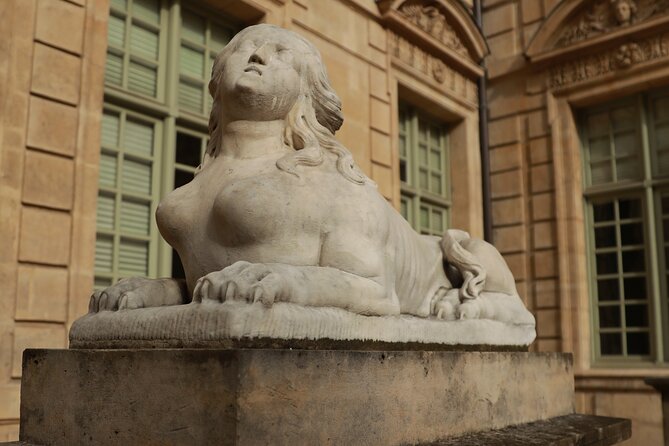
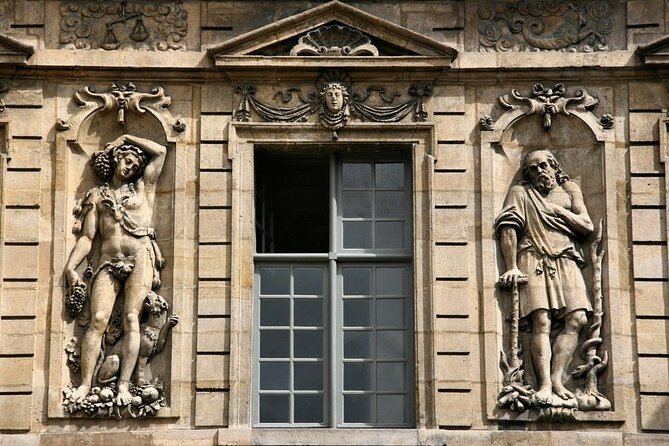
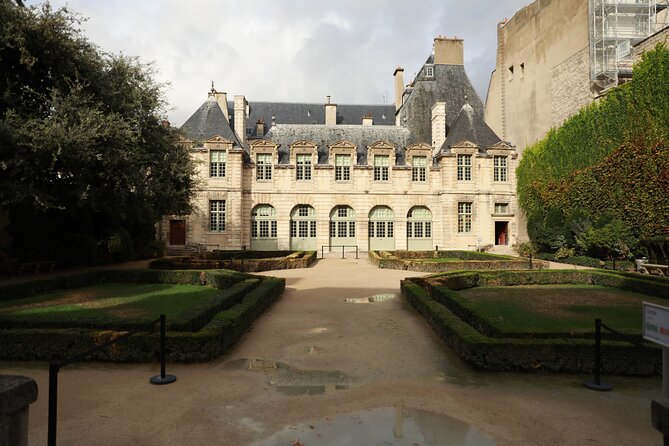
One of the most satisfying stops is the Cour et jardin de l’Hotel de Sully. This is a great example of the hôtel particulier—those 17th-century aristocratic Parisian mansions. From the way the guide talks about it, you understand that this wasn’t just a fancy home. It was a statement: status, wealth, and a lifestyle built into design choices.
Courtyards like this are perfect for a walking tour because you can slow down without feeling stuck. Your guide points out what makes the space work and what it would have meant to the people living there. You get a small taste of the “nobility era” that the Marais is famous for, but you also learn how those structures later fit into new realities.
This stop is also a good place to ask questions. If your guide is the art-history type (and many are, including some with advanced academic credentials), you’ll likely get answers that connect architecture to culture, not just to trivia.
Place des Vosges: the square where the stories keep walking
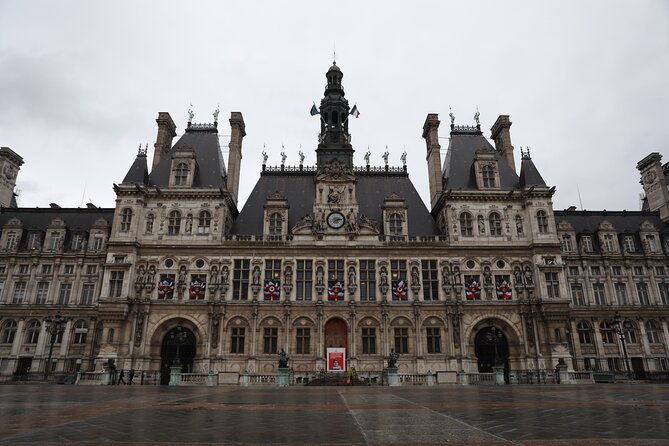
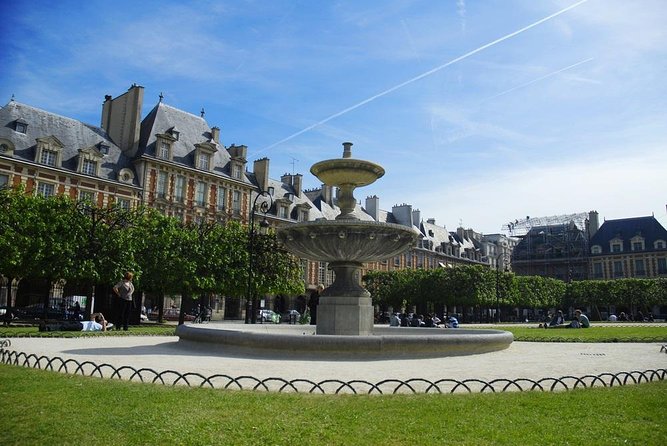
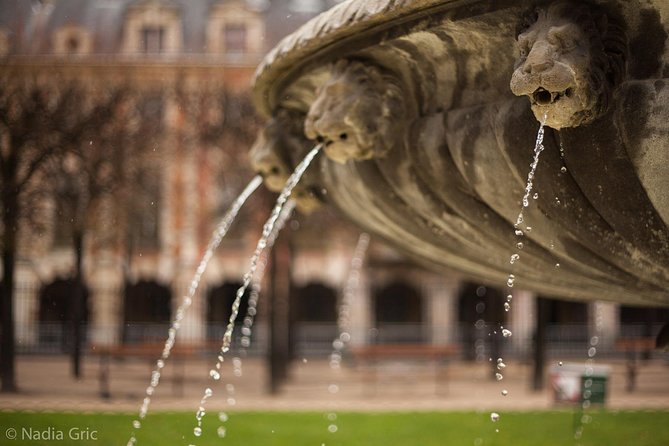
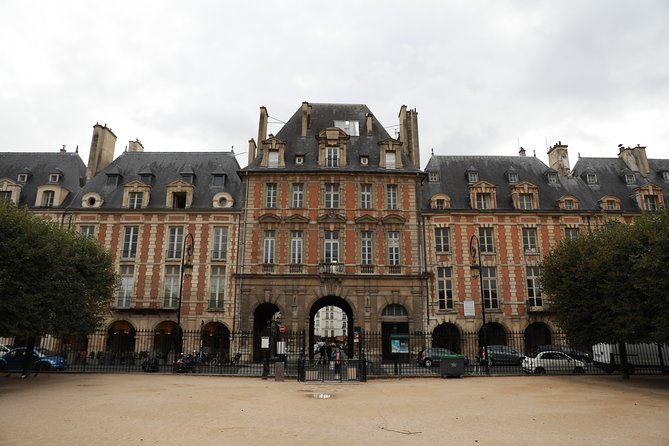
Place des Vosges is one of the highlights of any Marais day, and the tour gives it the attention it deserves. It’s described as the place Royale in the past and is often said by locals to be the most beautiful square in the world. Even if you don’t buy that superlative, the space has a calm, symmetrical pull that makes you stop and look up.
I love squares like this because they help you “reset” the tour. After courtyards and community history, a grand public space gives your brain a place to organize what you learned. The guide can connect what you saw earlier with why the Marais became such a stylish destination later on.
This is also a stop where you’ll probably notice the practical side of sightseeing: the more you understand what a place used to be, the more you appreciate what it is now. Place des Vosges turns into a lesson in how Paris keeps reusing excellent bones.
You can also read our reviews of more private tours in Paris






Ending at Place de la Bastille: from old prestige to modern Paris
The tour closes at Place de la Bastille, which is historically important on a scale that’s hard to overstate. Even if you come here planning to do something else after the walk, this end point works well. It’s a recognizable destination where you can branch out—food, museums, Metro connections, or just more walking.
And it’s a fitting ending. The Marais story is about transformation over time. Ending at Bastille reinforces that theme: Paris history isn’t trapped in one district. It flows into the next street, the next square, the next era.
If you like a clean finish—rather than getting dropped off randomly in the middle of a maze—this end point is a plus.
Value for money: what you’re paying for with a private art historian
At $403.34 per group (up to 6) for about 2 hours, this is not a budget tour. But for a private experience, it can be good value—especially if you split the cost with friends or family.
Here’s the useful math: if you max out the group at 6 people, you’re roughly around $67 per person. If you’re a smaller group, the per-person cost climbs, so you’ll want to be sure you actually want private pacing and Q&A rather than a general group walk.
What you’re buying is direction and context. This is led by an art historian guide, and some guides linked to this experience include people like Mila (friendly, well-spoken, responsive to needs) and Stephanie (enthusiastic, prepared, and full of anecdotes). There’s also mention of an art-history PhD guide named Isidora, which signals that the tour can go beyond basic sight-seeing into serious interpretation.
One small consideration from a past experience: starting with a quick orientation map can make the first 10 minutes even smoother. If that matters to you, ask your guide at the beginning to show where you’ll go next—then you’ll feel locked in from step one.
Who this tour fits best (and who might want something else)
This works best if you want:
- A private, 2-hour stroll with questions welcomed
- A guide who can connect architecture and art context to neighborhood history
- The Marais story told as change over time, not as a single theme
It’s also a good option if your group includes people with different interests—history fans, art people, and those who just like pretty places. The route mixes aristocratic mansions, community history, city landmarks, and big-picture transformation.
It might be less ideal if you want lots of indoor time. Centre Pompidou is handled from the outside, and food and drinks aren’t included. Think of this as a “see and understand” tour more than a “relax and snack” plan.
Little planning tips to make your walk smoother
- Bring comfortable shoes. The tour is moderate fitness level, and you’ll be on your feet for the full time.
- Have your group agree on priorities. If you want more time in a specific area—like Place des Vosges or La Rue des Rosiers—private format makes that easier.
- Expect free access for most stops, with Centre Pompidou not included for museum entry. If you want to go inside Pompidou, that’s a separate plan.
Should you book Le Marais Private Walking Tour?
Yes, if you’re excited by the idea of the Marais as a changing neighborhood—nobility to Jewish quarter roots to modern art and fashion—and you’d rather have an art historian guide than wander alone with a phone map. The private format is also a big deal for families and small groups who want their pace and questions respected.
Skip it or consider another style if you only want a quick photo loop, need lots of indoor stops, or you’re traveling with a group that would benefit more from a cheaper shared tour. Also, if you hate walking, keep in mind you’re committing to a 2-hour route.
For the right traveler, this is one of those experiences that makes Paris feel smarter. You leave with better eyes, not just better pictures.
FAQ
How long is the Le Marais Private Walking Tour?
The tour lasts about 2 hours.
Is this tour private or group-based?
It’s a private tour. Only your group participates.
How many people can be in the group?
The price is per group, up to 6 people.
What’s included in the price?
A professional art historian guide is included, and the tour itself is included.
Are any entrances or tickets included?
Most stops are free to access. Centre Pompidou is discussed from the outside on this tour, and museum admission is not included.
Where does the tour start and end?
It starts at 14 R. de Turbigo, 75001 Paris, and ends at Place de la Bastille (75004).
Is food or drinks included?
No. Food and drinks are not included.
Are service animals allowed?
Yes, service animals are allowed.
Is there a cancellation option?
Free cancellation is available up to 24 hours in advance for a full refund.