Paris has a medieval side most people miss. This Hidden Paris walking tour guides you through the medieval Marais beyond the main sights, with the best energy for photos and people-watching—plus a classic late-afternoon French goûter to keep you going.
What I like most is how the walk stays easy to follow while still feeling like you’re seeing the neighborhood the way locals do. I also really appreciate the built-in sweet stop: you’ll have a goûter-style treat, including a local meringue called a merveilleux at Saint-Gervais. One thing to consider: this is more of a history-and-neighborhood tour than a full-on food crawl, and some stops are brief—so if you’re hoping for lots of tasting time, calibrate your expectations.
In This Review
- Key highlights worth planning around
- A 3pm stroll through the medieval Marais, not just postcard Paris
- Stop-by-stop: what you’ll actually do in each area
- Getting oriented fast at Centre Pompidou (even if you don’t go inside)
- Le Marais: the preserved medieval core (and how to spot it)
- Stravinsky Fountain: quick photos, bigger meaning than you expect
- Hôtel de Ville: medieval power, executions, and a changing city
- Saint-Gervais and the merveilleux goûter: the best kind of break
- Rue des Rosiers: Jewish Quarter energy and where to grab your own next bite
- Place des Vosges: Victor Hugo’s square and the “slow down” payoff
- Place de la Bastille: Revolution trigger, then dinner mode
- What’s included (and what’s not), so you don’t get surprised
- Group size and pace: why it feels personal, but still fast
- Price and value: what $55.87 buys you for two hours
- Who should book this tour (and who should skip it)
- My booking advice: when to go and what to bring
- Should you book this Hidden Paris: Explore Medieval Marais walking tour?
- FAQ
- How long is the walking tour?
- Where does the tour start and end?
- What time does the tour begin?
- How much walking is involved?
- Is the tour vegetarian-friendly?
- What is included in the price?
Key highlights worth planning around
- A real afternoon Marais loop: the route hits the neighborhood when it’s lively, not quiet and sleepy
- A French goûter moment: you’ll be treated to a merveilleux sweet during the walk
- Photo-friendly landmarks: Stravinsky Fountain and the square views give you quick, satisfying stops
- Jewish Quarter on Rue des Rosiers: the pedestrian street is ideal for browsing and quick bites nearby
- Revolution-era context: Hôtel de Ville and Place de la Bastille bring the city’s turning points into focus
- Small group feel (max 12): you get time for questions without a giant crowd moving you along
A 3pm stroll through the medieval Marais, not just postcard Paris
If your Paris trip is short, the Marais can feel like a blur of crowds and “we should see that” checklists. This tour is built to slow that down. You start at Centre Pompidou and then head into the Marais with an eye for the older fabric of the neighborhood—medieval streets, historic buildings, and those less-frequented corners that don’t show up in every photo set.
The timing also matters. Starting in the afternoon (3:00 pm) gives you the daytime-to-evening shift that the Marais does well. Streets look more relaxed, shopfronts are open, and the neighborhood feels like it’s actually being used—not staged.
And while you’ll pass the big-name spots (Place des Vosges, for example), the route is also about connective tissue: how those places link to each other, and why the Marais has had so many roles in Paris life—from courts and executions to modern creative culture nearby.
You can also read our reviews of more walking tours in Paris



Stop-by-stop: what you’ll actually do in each area
This tour covers about 2 km on foot in roughly 2 hours, with brief segments at each stop. That’s the tradeoff: you move often, but you also get a compact overview that helps you map the neighborhood fast.
Getting oriented fast at Centre Pompidou (even if you don’t go inside)
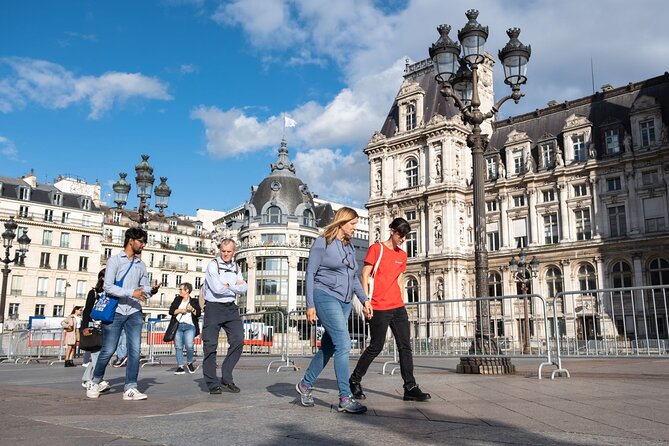
You’ll begin in front of Centre Pompidou, a major modern art landmark in a striking contemporary building. Even if you don’t plan to pay for museum time, it’s a useful starting point: the guide sets context for how Paris moves from eras and styles.
This first stop is short—about 10 minutes—and it works like a warm-up. You’ll get a sense of what you’re looking for later in the Marais: the way architecture and streets preserve layers of time.
Practical note: because it’s a walking tour, your “museum” experience here is more about city reading than gallery time. If you want longer indoor time at Pompidou, you’ll need to do that separately.
Le Marais: the preserved medieval core (and how to spot it)
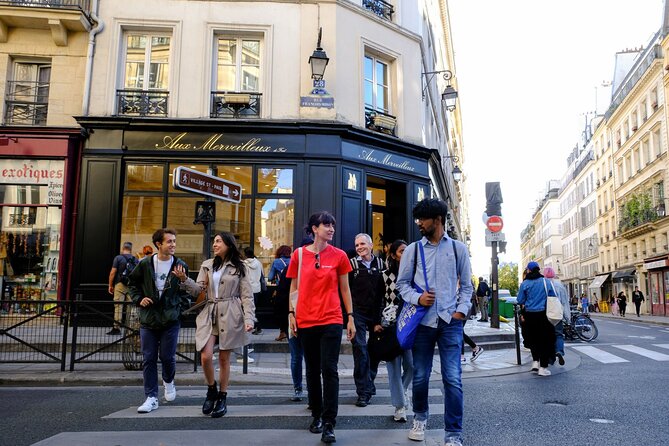
Next comes Le Marais, framed as one of Paris’s best-preserved medieval areas. In just 15 minutes, the goal isn’t to exhaust the neighborhood. It’s to teach you how to recognize medieval Paris while you’re walking: street patterns, building shapes, and the feel of older blocks compared with newer Paris growth.
This is also where the tour earns its “hidden” framing. The Marais is famous, but the most interesting parts are often the ones between the headline sights. When you learn what to look for, you start noticing those quiet details on your own after the tour ends.
If you’ve only seen the Marais from a tram of bus stops and camera angles, this segment is a reset. You’ll leave with a mental map, which is what makes the neighborhood fun later, when you’re deciding where to go for dinner.
Stravinsky Fountain: quick photos, bigger meaning than you expect
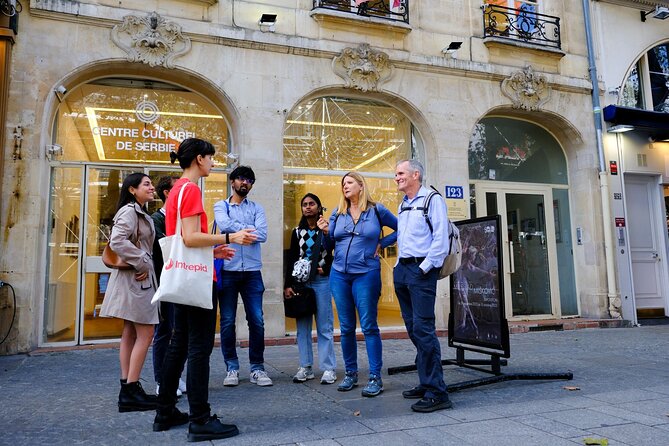
The Stravinsky Fountain is about 15 minutes of stopping, looking, and taking photos. It’s also a reminder that the Marais doesn’t only belong to medieval Paris. Nearby creative culture shows up in surprising ways—even in public space.
You’re not going to spend ages here, but that’s kind of the point. It gives you a visual break in the middle of the walking rhythm, and it’s a good place to pause and regroup before you head toward the more political-historical landmarks.
Bring your phone camera if you like crisp architecture shots. The fountain is one of those Paris “I didn’t expect that” moments, and you’ll understand why once the guide frames it.





Hôtel de Ville: medieval power, executions, and a changing city
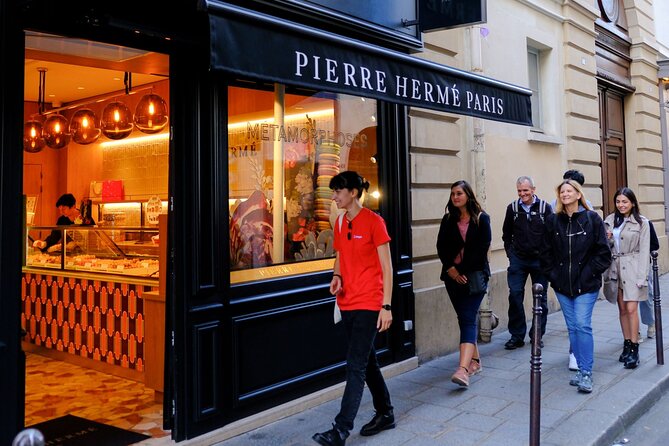
At Hôtel de Ville (Paris’s town hall), you get a more serious angle. The stop lasts about 15 minutes, and it includes an important historical note: executions were carried out on the esplanade in front of it, and the first beheading by guillotine took place there.
This is one of the moments where the tour earns its history focus. The building itself is remarkable, but the guide helps you connect the site to real events that shaped France. It’s not just “look at this pretty facade.” It’s “this square held trauma, power, and public spectacle.”
If you prefer lighter sightseeing, this stop still works, because it’s handled as part of the larger Marais story—not as a lecture. Just be ready for the tone to shift for a short while.
Saint-Gervais and the merveilleux goûter: the best kind of break
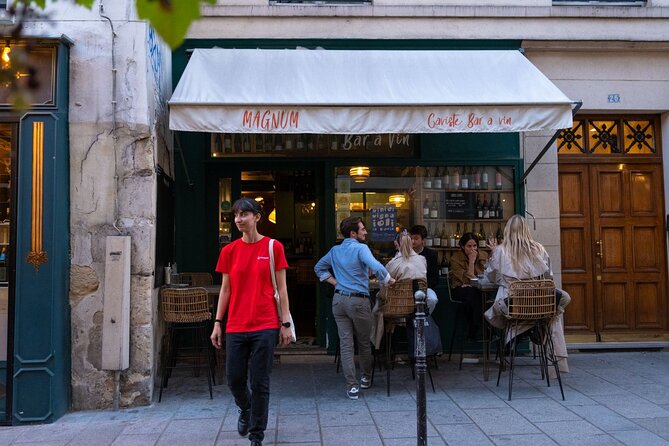
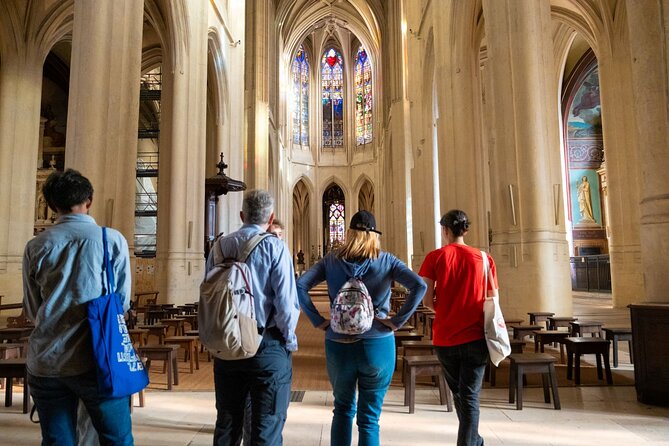
The tour swings toward Church of Saint-Gervais, passing the church just behind the square and getting a glimpse of the interior. The interior time is brief, but it can be a genuinely lovely pause in the walking.
Then comes the part that many people remember most: you’ll fuel up with a sweet treat. The guide takes you through the tradition of a late-afternoon French goûter, and you’re treated to a local meringue called a merveilleux.
This is great for real-world touring. You’re on your feet for close to two hours, and the tour is planned so the sugar hits when you actually need it—rather than at the end when you’re ready to quit. If you’re sensitive to sweetness, note that merveilleux is rich, so consider pacing yourself.
Diet note: vegetarians can be catered for, based on the tour information.
Rue des Rosiers: Jewish Quarter energy and where to grab your own next bite
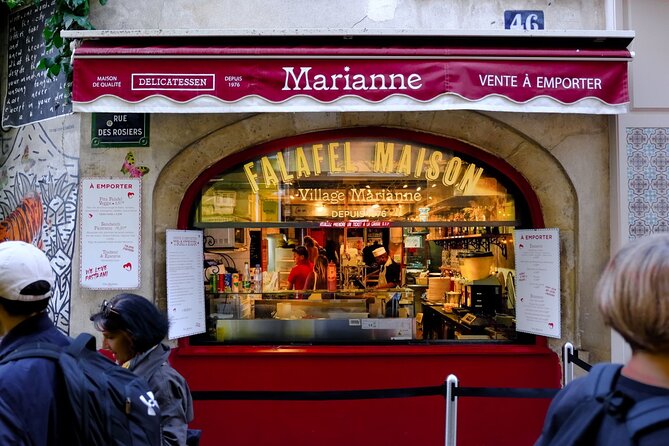
From Saint-Gervais, it’s a short walk to La Rue des Rosiers, the heart of Paris’s Jewish community. You’ll spend about 15 minutes here, and it’s mostly about atmosphere and context—this is a pedestrian street packed with food choices.
You’ll likely smell and see a lot: falafel stands and Jewish-influenced delis. Even if you don’t stop for a full meal during the tour, it’s one of the best places to set yourself up for dinner afterward.
Important expectation check: the tour includes a sweet pastry goûter, but additional food and drink beyond that isn’t included. So think of Rue des Rosiers as your springboard. After the tour, you’ll know what you’re looking at—and you can choose based on your tastes and budget.
Place des Vosges: Victor Hugo’s square and the “slow down” payoff
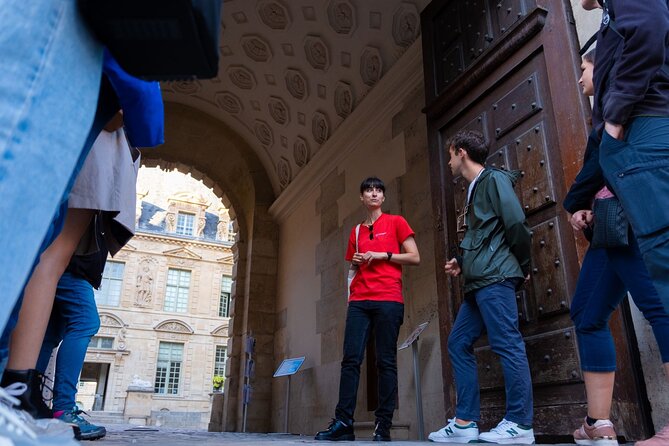
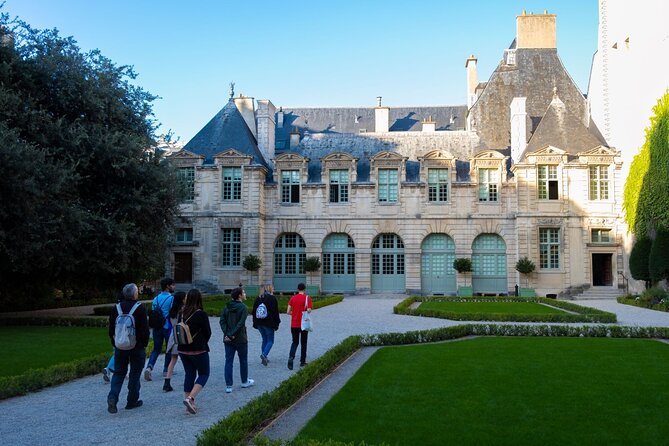
Place des Vosges is one of Paris’s oldest and best-looking squares, tied here to national writer Victor Hugo. You get around 15 minutes, which is the right amount for a square stop on a walking tour: enough time to appreciate the geometry, take photos, and absorb why this place matters.
This stop also acts like a breather. The earlier parts of the route mix modern and medieval references, and then this square gives you a calmer space to reset.
If you want to turn the tour into a half-day with a view, this is a smart time to consider what you’ll do next. The square is a natural “wait, I want to linger here” kind of place.
Place de la Bastille: Revolution trigger, then dinner mode
The final segment takes you to Place de la Bastille, with about 15 minutes at the site. This is former prison land that was captured on July 14, 1789, a spark that helped trigger the French Revolution.
It’s a powerful way to end an afternoon walk. You started near a modern arts icon, then you moved through medieval neighborhood fabric, and now you land in an area tied to political rupture. The guide’s job here is to connect the dots so it doesn’t feel like random sightseeing.
Afterwards, the area near Bastille is full of bars and restaurants, so you’re set up to continue your evening without needing to plan a detour.
What’s included (and what’s not), so you don’t get surprised
Here’s the practical truth: you’re paying for guidance, route expertise, and one included sweet stop. The tour includes:
- a taste sweet local pastry
- local English-speaking guide
- a walk that highlights medieval parts of the Marais and key sights along the way
What is not included is additional food and drink. That matters because some people go in expecting this to be a heavy tasting tour. Based on how the route is structured, your guaranteed edible moment is the sweet goûter, not a multi-item meal.
Some guides may add extra local context during the walking segments—like pointing out where the neighborhood’s best food choices are—but you should plan your own additional snacks or dinner separately.
Group size and pace: why it feels personal, but still fast
This tour caps at 12 travelers, and that small size is a real quality boost in Paris, where group tours can sometimes feel like a moving herd. With fewer people, it’s easier to hear the guide, ask questions, and stop for photos without constantly negotiating crowd flow.
Still, the route is compact. You hit eight major stops, and each is only about 10–15 minutes. That’s why some people find it can feel rushed if you’re hoping for long “stay and read” time at each site. If you want slow museum-style attention, consider this as your orientation tour, not your only Marais day.
Price and value: what $55.87 buys you for two hours
At $55.87 per person for about 2 hours and 2 km of walking, the “value” comes from three things:
1) a local English-speaking guide
2) structured access to multiple historic stops in one loop
3) an included French pastry goûter (the merveilleux moment)
For first-time visitors, this is a smart way to reduce guesswork. You’re not just walking in a pretty area. You’re learning how to read the neighborhood, so you can make better decisions after the tour—where to wander next, what to prioritize, and what’s worth your attention.
If you already know the Marais well and you’re only looking for a couple of highlights, it may feel pricier than a self-guided stroll. But if you want a guided “map and meaning” experience in a short window, this price makes sense.
Who should book this tour (and who should skip it)
This tour is a great fit if you:
- want a short, guided Marais loop without needing museum tickets
- like history with real city context (not just dates)
- enjoy a sweet pastry break during the walk
- prefer a small group over a large bus-style crowd
It may be less ideal if you:
- want long stays at each stop
- want a full food-and-wine tasting menu as part of the included price
- need lots of indoor time at churches and museums (the church and Pompidou segments are brief)
If you’re traveling with kids, the tour is child-friendly, and children under 6 join free based on the tour info.
My booking advice: when to go and what to bring
Pick this tour when you want an afternoon “get my bearings” plan. The 3:00 pm start is especially good if you want daylight for photos at fountains and squares, then a smooth path into dinner afterward.
For comfort:
- wear shoes you can walk 2 km in without thinking about it
- bring a light layer if the weather shifts
- bring a reusable water bottle if you tend to get thirsty while sightseeing
And on the sweet-stop side, don’t plan a huge dessert dessert after this. You’ll already get your goûter.
Should you book this Hidden Paris: Explore Medieval Marais walking tour?
Yes, if you want a guided, small-group afternoon that helps you understand the Marais instead of just seeing it. The mix of medieval streets, Revolution landmarks, and a real French goûter break makes it a strong value for the time.
If your main goal is maximum food sampling, pick a tour marketed as a full tasting route. But if you want history, neighborhood texture, and a pastry moment you’ll actually enjoy during the walk, this is an excellent bet.
FAQ
How long is the walking tour?
The tour lasts about 2 hours.
Where does the tour start and end?
It starts at 123 Rue Saint-Martin, 75004 Paris and ends at Place des Vosges, Pl. des Vosges, Paris.
What time does the tour begin?
The start time is 3:00 pm.
How much walking is involved?
The tour covers about 2 km (1.2 mile) of walking.
Is the tour vegetarian-friendly?
The tour can cater for vegetarians.
What is included in the price?
The tour includes a local English-speaking guide and a taste sweet local pastry as a goûter. Additional food and drink are not included.