REVIEW · PARIS
Harlem in Paris : the Birth of Jazz in France (Small Group Walking Tour)
Book on Viator →Operated by Visit the Hidden Paris · Bookable on Viator
Jazz in Pigalle has better street-level proof than books. This small-group walking tour traces how Black performers shaped French nightlife, with real musician names and club corners you can still stand on. I love the blend of performers and places, especially in a neighborhood where the skyline still hints at the 1920s–30s scene.
Two things I really like: first, the start is more than a lecture—Ellen uses music, photos, and videos on a tablet so you hear the era while you walk through it. Second, the stops connect famous headlines (Josephine Baker, Louis Armstrong) to less-remembered figures (Eugene Jacques Bullard, Bricktop, Valaida Snow, Alberta Hunter). The only watch-out is that not every former club has survived as a functioning venue, so a little imagination helps, especially at the Rue Victor Massé stop.
In This Review
- Key highlights at a glance
- Entering the jazz world: Ellen’s A/V intro sets the pace
- Place Blanche and Chez Josephine: Josephine Baker’s Paris comeback street
- Rue Mansart: Louis Armstrong, choucroute, and a Django link
- Rue Pierre-Fontaine and Zelli’s: where Eugene Jacques Bullard turned war into jazz
- Place Blanche again: Bricktop and Valaida Snow’s Jazz Ladies legend trail
- Rue Victor Massé: Alberta Hunter and the reality of a club that closed
- How much walking you really do in 2.5 hours
- Price and value: is $107.84 fair for this kind of tour?
- Who should book this Harlem in Paris jazz tour
- Should you book this tour or skip it?
- FAQ
- How long is the Harlem in Paris walking tour?
- What time does the tour start?
- Where do you meet, and where does the tour end?
- Is the tour offered in English?
- Is this a small group or private tour?
- What is included in the tour price?
- Are food and beverages included?
- Is the tour ticket mobile?
- Are there admissions at the stops?
- What if weather is bad?
- Can I get a full refund if I cancel?
Key highlights at a glance
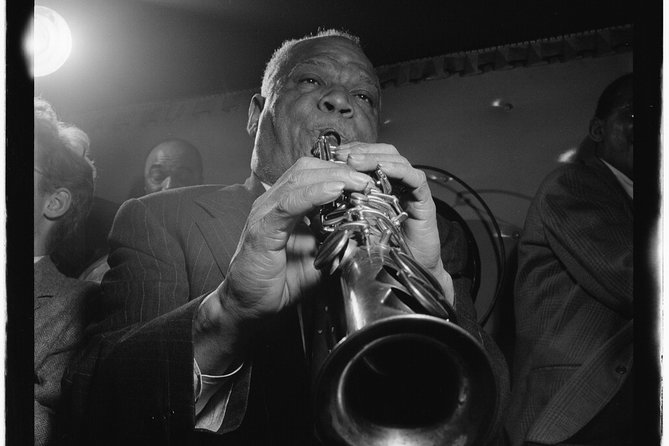
- A/V storytelling before you walk, led by Ellen with music, photos, and videos
- Stop-by-stop focus on major Black jazz figures tied to specific Pigalle streets
- Pigalle’s Place Blanche keeps showing up, letting you compare performers across the same corner
- Inside-the-moment details, like Armstrong’s food stop and the choucroute connection
- Zelli’s era meets Eugene Jacques Bullard, the fighter pilot who later played drums
- One club is closed now, which makes the Alberta Hunter segment feel even more poignant
Entering the jazz world: Ellen’s A/V intro sets the pace
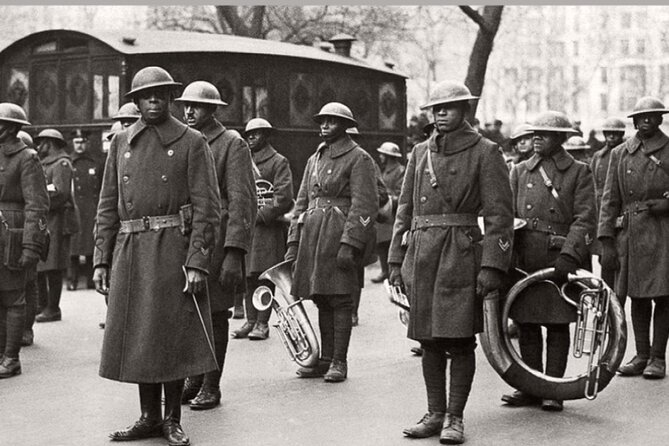
I like tours that teach you how to look. This one starts with a sit-down intro at a nearby hotel setting where you get the story first, then you move outside with better context. Instead of powering through names, Ellen uses a tablet with a mix of visuals and audio so the people you’ll hear about actually feel real.
It’s also a smart pacing choice for a 2.5-hour experience. You’re not stuck listening to facts while your legs go numb. Then, once you’re outside, you’re able to connect what you see—street corners, façade spaces, and the general layout of Pigalle—to who performed there and what kind of sound drew people in.
You can also read our reviews of more walking tours in Paris



Place Blanche and Chez Josephine: Josephine Baker’s Paris comeback street
The tour begins near Place Blanche at the spot associated with Josephine Baker’s club, Chez Josephine. The name matters because Baker isn’t just mentioned—she’s framed as a star who turned Paris into a new chapter of her life. She’s often described as the Black Venus of Paris, and the details here connect that nickname to a real address she lived at from 1925 until her death in 1975.
What I find useful is how the story is linked to her route into France. Baker didn’t arrive as a mystery; she came in 1925 as a dancer for the NY Syncopated Orchestra, with Sidney Bechet traveling with her as a young clarinet player. From there, she headlined the orchestra’s show Revue Negre, commissioned for the Theatre des Champs-Elysees.
Ellen’s framing helps you understand why this was so disruptive. The show was bold: 13 dancers, 12 musicians, and Baker at age 18, described as wearing feathers while headlining an audacious performance. Standing in the Pigalle area now, you don’t see the original performance stage, but you do get a better sense of why this neighborhood became a magnet for modern nightlife.
What to watch for: even if the club itself isn’t operating the way it once did, Place Blanche still has the energy of a crossroads. When you’re looking around, keep the timeline in mind—Baker’s arrival, her instant rise, and her later lifelong place in Paris.
Rue Mansart: Louis Armstrong, choucroute, and a Django link
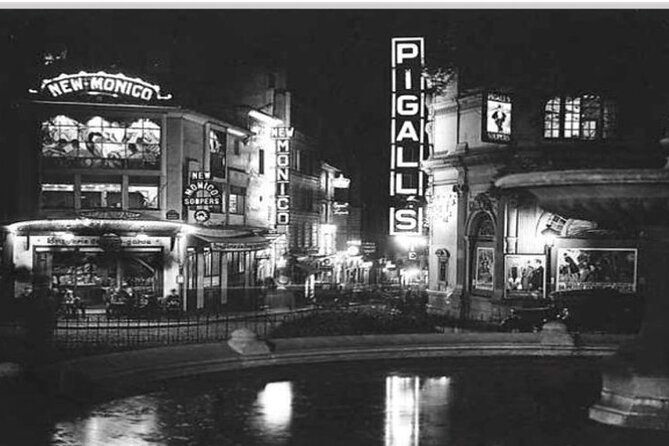
Next comes Rue Mansart, tied to Louis Armstrong. This stop is short, but it’s one of those details that makes the past feel human: Armstrong apparently dined at a bistro there after rehearsals in a recording studio just up the street. And yes, the memorable note is choucroute—sausage and cabbage—which gives you a very everyday Paris detail amid all the larger-than-life musician talk.
Even more interesting is how the stop connects to local swing: the same place is described as where Armstrong met Django Reinhardt, the Gypsy Jazzman who would later become one of Europe’s key guitar voices. That meeting matters because it shows jazz wasn’t a one-way import. In Pigalle, it mixed with local talent and tastes until you get something distinctly French in its sound and scene.
Practical tip: at this kind of stop, don’t just stare at the building. Look for a sense of proximity—where a rehearsal studio would have been, and how a musician would likely move between recording and meals. That mental map turns a quick stop into something you’ll remember longer.
Rue Pierre-Fontaine and Zelli’s: where Eugene Jacques Bullard turned war into jazz
On rue Pierre-Fontaine, you’re pointed toward Zelli’s, described as a mythical Paris cabaret of the 1920s. Zelli’s is presented as one of the city’s most popular clubs thanks to its avant garde jazz. The value for you isn’t only in knowing the name—it’s in what Zelli’s represents: a place where the era’s experimentation had an address.
Then the story zooms into Eugene Jacques Bullard, introduced here as the son of a freed slave from Martinique. He became the first African American fighter pilot in history, flying 30 missions for France and downing two German planes. For a moment, the tour jumps time: it’s no longer just club culture, it’s war history too—and it helps explain why certain musicians and performers didn’t fit the simple entertainer narrative.
After the war, Bullard learned drums and was hired as a musician at Zelli’s, rising to manager. With backing from Joe Zelli, he then opened his own night club, the Grand Duc, mixing hot jazz with soul food and becoming one of the most popular spots in Paris.
Why I think this stop works: it connects three worlds you might otherwise keep separate. You get performance, business leadership, and historical context all tied to one street segment. Even if the building no longer functions as it once did, the story gives you a mental movie of how the neighborhood would have moved after dark.
Place Blanche again: Bricktop and Valaida Snow’s Jazz Ladies legend trail
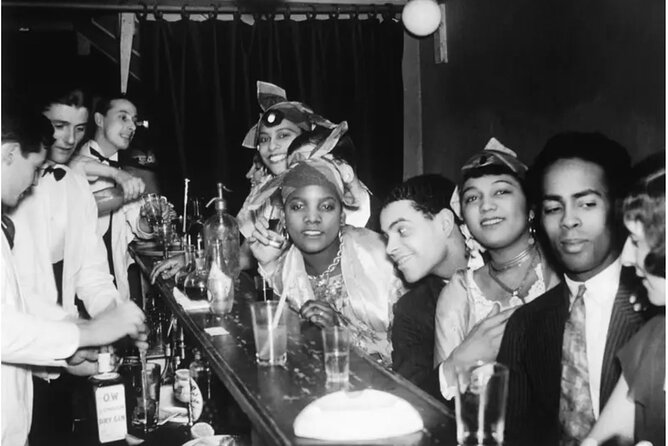
Place Blanche becomes a theme stop in the tour, and I like that repetition. It lets Ellen compare different kinds of stardom without sending you down a hundred unrelated side streets.
First up is Bricktop, called Queen of Pigalle. Ellen’s story focuses on how she arrived with very little—$24 in her pocket—and then built connections with royalty and celebrities once she established herself. That arc is the kind of immigrant-to-icon story that feels grounded because it’s anchored to the idea of Pigalle as a platform, not just a party destination.
Then you meet Valaida Snow, introduced with a strong ranking from Louis Armstrong: she’s described as the second best trumpet player in the world. The details help you picture her as a true all-in-one performer—she played eight different instruments, sang, danced, and charmed audiences across Europe in the 1930s.
The tour doesn’t skip the harsh turn. In 1940, while playing in Denmark, she was arrested by the Nazis. Ellen’s explanation of how she was saved in a prisoner exchange, returned to the US, and then later recovered enough to resume her jazz career adds weight to the glamour you’re seeing in the earlier stories.
What to do while you’re there: listen for the pattern in Ellen’s telling. Each performer has a different “how”: how they arrived, how they got booked, how they survived disruption, and how their sound continued. That makes the stop feel less like a list and more like a chain of decisions.





Rue Victor Massé: Alberta Hunter and the reality of a club that closed
The Rue Victor Massé stop brings a change in tone, because the club connected to the story is described as closed, a victim of Covid. Standing there matters because it reminds you how fragile nightlife history can be. Even when the artists’ legacies survive, the physical spaces don’t always make it.
In front of the closed club, Ellen tells the story of Alberta Hunter. She’s framed as extraordinarily talented, with roots in the Harlem and Paris Jazz Age. At some point in the 1940s, Hunter shifted away from music, working as a nurse for 20 years. Then, at age 83, she was persuaded to come out of retirement—and she became a star again, with the story emphasizing her sublime voice.
I appreciate how this ending balances the tour’s earlier glamour. You finish with a performer who didn’t just shine during the peak years. She returned, changed the terms of her life, and did it in a way that says: the music could outlast the moment.
Small practical note: since this stop is more about listening to a story than sightseeing a working venue, bring the same attention you’d use in a museum lecture. Let the audio and visuals help you picture the room that isn’t there anymore.
How much walking you really do in 2.5 hours
This is a walking tour, but it’s not a forced march. The walking portion covers about 2 km across roughly six locations, with most time spent mixing the A/V storytelling with quick street stops.
That means two things for your planning:
- Wear comfortable shoes, especially if you’re doing Pigalle in the heat or rain.
- Don’t expect constant “big view” sightseeing moments—some stops are short, and the building may have changed since the clubs ran.
If you’re traveling with kids or a stroller, the route is described as easy to walk. For me, that’s important because it signals the tour can work for mixed groups. It’s also offered in English, and it notes that most travelers can participate, with service animals allowed.
Price and value: is $107.84 fair for this kind of tour?
At $107.84 per person for about 2 hours 30 minutes, this isn’t bargain-bin pricing. But I think it’s aimed at people who want more than a photo walk.
Here’s what you’re paying for, based on what the experience includes:
- Guided interpretation of multiple key figures (from Josephine Baker and Louis Armstrong to lesser-known names like Eugene Jacques Bullard)
- Music, photos, and videos that support the street stories
- Multiple named stops tied to specific addresses or street segments in the Pigalle area
- A small-group setup, plus the experience is private for your group only
You should also factor in that the stops are described as free to access individually, so your money isn’t mostly going toward admissions. Instead, it goes toward the guide’s work and the A/V production that turns history into something you can hear and see in real time.
If you’re the kind of traveler who enjoys context—how jazz moved, who built clubs, who collaborated—you’ll feel like your time was well spent. If you only want long outdoor wandering with minimal narrative, you may prefer a self-guided Pigalle walk.
Who should book this Harlem in Paris jazz tour
This works best for you if you’re:
- a jazz fan who wants names and connections tied to real streets
- interested in how Black performers shaped French nightlife, not just American jazz history
- the kind of traveler who appreciates A/V support while walking
- traveling as a duo or small family group and want an organized route
It also suits people who like compact tours. You get a focused stretch of Pigalle with a clear theme: the birth and spread of jazz culture in France through the performers who made it happen.
If you’re expecting a large museum-style stop with lots of indoor exhibits, adjust your expectations. This is street-based storytelling, with several short stops and one notable club closure acknowledged as part of the story.
Should you book this tour or skip it?
Book it if you want a guided Pigalle walk that connects Josephine Baker, Louis Armstrong, Django Reinhardt, Zelli’s, and a lineup of major performers to specific corners you can stand on. I’d also recommend it if you learn well through hearing recordings and seeing old photos alongside the route.
Skip it if you’re mainly chasing broad sightseeing or you hate any tour where the buildings aren’t working venues anymore. The story is strong, but parts of the route require you to use your imagination.
In short: for the $107.84 price tag, you’re buying guided storytelling plus A/V support, not a passive stroll. If that matches your travel style, this is a very smart use of a couple hours in Paris.
FAQ
How long is the Harlem in Paris walking tour?
The tour runs about 2 hours 30 minutes.
What time does the tour start?
It starts at 2:00 pm.
Where do you meet, and where does the tour end?
You meet at Artemisia Montmartre, 11 Rue Fromentin, 75009 Paris. The tour ends at Place Pigalle, Pl. Pigalle, Paris.
Is the tour offered in English?
Yes, it’s offered in English.
Is this a small group or private tour?
It’s described as a private tour/activity, meaning only your group participates.
What is included in the tour price?
The experience includes music, photos, and videos throughout the tour.
Are food and beverages included?
No, food and beverages are not included.
Is the tour ticket mobile?
Yes, it includes a mobile ticket.
Are there admissions at the stops?
The stops are listed with admission ticket free.
What if weather is bad?
The experience requires good weather. If it’s canceled due to poor weather, you’ll be offered a different date or a full refund.
Can I get a full refund if I cancel?
Yes. You can cancel up to 24 hours in advance for a full refund. If you cancel less than 24 hours before the start time, the amount paid is not refunded.