REVIEW · PARIS
Paris: Ticket Entrance to Science Experiences Museum
Book on GetYourGuide →Operated by Science Expériences · Bookable on GetYourGuide
Science and spectacle share the same walls here. Science Expériences is a ticketed, 90-minute science course inside an 850 m² museum at Bercy Village, built to make big ideas feel like something you can see and feel. The museum sits at the crossroads of a business park and an expo zone, so it has that modern, show-at-the-speed-of-light vibe.
I like that the course is educational but not stodgy. You move through themed stops that cover the borders of the universe, the depths of the abyss, the center of the Earth, and end with quantum physics ideas like lasers, teleportation, and levitation. I also like the use of show tech such as virtual reality, video mapping, and multisensory, emotional presentations.
One thing to consider before you go: if you expect to test everything like a hands-on lab, you may feel more watching and listening than doing. Some parts can feel more like a guided presentation than a full menu of interactive experiments.
In This Review
- Key things to know before you buy
- Science Expériences at Bercy Village: a modern “science show” in Paris
- The 90-minute flow: from universe edges to quantum tricks
- Room 1: the borders of the universe
- Room 2: the depths of the abyss
- Room 3: the center of the Earth
- Final stop: quantum physics with laser, teleportation, levitation
- What’s included vs what you may pay for on site
- The big question: how hands-on is it, really?
- Language and signage: plan to focus, not multitask
- Price and value: does $1,178 per person make sense?
- Who should book Science Expériences (and who should think twice)
- Tips to get the most out of your visit
- Should you book this ticket?
- FAQ
- How long is the Science Expériences ticket experience?
- Where is Science Expériences located?
- How much does it cost?
- What is included with the ticket?
- What is not included?
- What kinds of science topics will I see?
- Does the experience have an instructor?
- Is the venue wheelchair accessible?
- Can I reserve now and pay later?
- Is free cancellation available?
Key things to know before you buy

- 850 m² of science storytelling at Bercy Village
- A 90-minute course with a clear flow of themed rooms, from space to quantum
- Built with show tech: virtual reality and video mapping plus multisensory effects
- Designed by a committee of experts, aiming for learning through entertainment
- Quantum-themed endings: laser, teleportation, and levitation concepts
- Extra options may be sold on site (including VR simulators and an audio guide)
Science Expériences at Bercy Village: a modern “science show” in Paris

If you like science as a movie, not a textbook, this is your kind of stop. Science Expériences is set up as a course through a chain of rooms. The museum uses entertainment techniques to translate heavy topics into experiences you can follow without a degree in physics.
The location also makes sense. Bercy Village is not hidden away; it’s an actual destination area. That matters because you can slot this into a Paris day without worrying about complicated transit changes or odd hours. The museum’s size, 850 m², tells you you are getting a real, purpose-built venue rather than a small pop-up.
What you’re buying is not a single exhibit you wander. You’re buying entry to a structured experience, led by an instructor. That framing is important: you should treat it like a guided show with stops, not like an open museum where you choose your own path.
You can also read our reviews of more tours and experiences in Paris



The 90-minute flow: from universe edges to quantum tricks
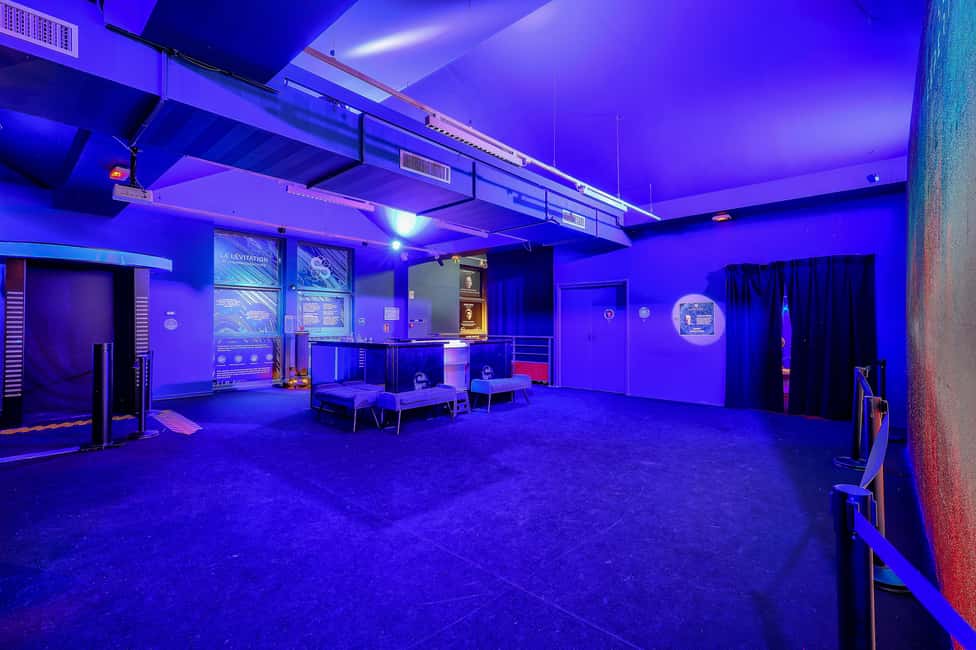
The course is designed as a progression. You start with questions that feel cosmic, then move downward into darker, deeper “what’s beneath everything” territory, then circle back toward something very small and weird: quantum physics.
Here’s how the pacing typically feels, and what you should watch for as you go.
Room 1: the borders of the universe
This opening stop sets expectations. Instead of starting with formulas, the museum leads with the idea that the universe has edges and mysteries you can think about. Expect large-scale visuals and presentation techniques built for your attention, not your speed-reading.
Practical note: in a sequence like this, the first room helps you understand how the museum wants you to interact. If you spend the first few minutes figuring out how to follow along, the later rooms will move faster.
Room 2: the depths of the abyss
Next comes the “deep” section, which uses the same idea—big concept, dramatic presentation. The museum leans on multisensory and emotional techniques, so this is often where people feel the show more than they analyze it.
If you’re traveling with kids, this is the part that tends to hook them: the visuals and the atmosphere match the language of science, but in story form. If you’re an adult, you’ll likely enjoy the way the museum uses contrast—space to abyss—to make the journey memorable.
Room 3: the center of the Earth
Then the museum turns from space and darkness to something grounded and structural: the center of the Earth. The goal here is likely to connect everyday geology with dramatic “what’s inside” concepts.
This is where your brain usually switches gears. You stop thinking only about imagination and start thinking about mechanisms—heat, layers, and how the planet changes. Even if the museum doesn’t give you a lab-style explanation, it can still help you build a mental map.
You can also read our reviews of more museum experiences in Paris






Final stop: quantum physics with laser, teleportation, levitation
The ending themes are quantum physics: lasers, teleportation, and levitation. You’re not being asked to solve physics problems. You’re being asked to accept the mind-bending premise long enough to enjoy the demonstration and takeaway.
Here’s what makes this finale valuable for you: quantum concepts are famous for being abstract. A show-style presentation lets you anchor the ideas to something visible (light and motion) and emotionally understandable (the feeling that reality can behave differently than you expect).
If you love science visuals, this last section is usually the payoff. If you’re hoping for deep, step-by-step explanations, you may wish there were more time spent on the “why,” not only the “what you saw.”
What’s included vs what you may pay for on site
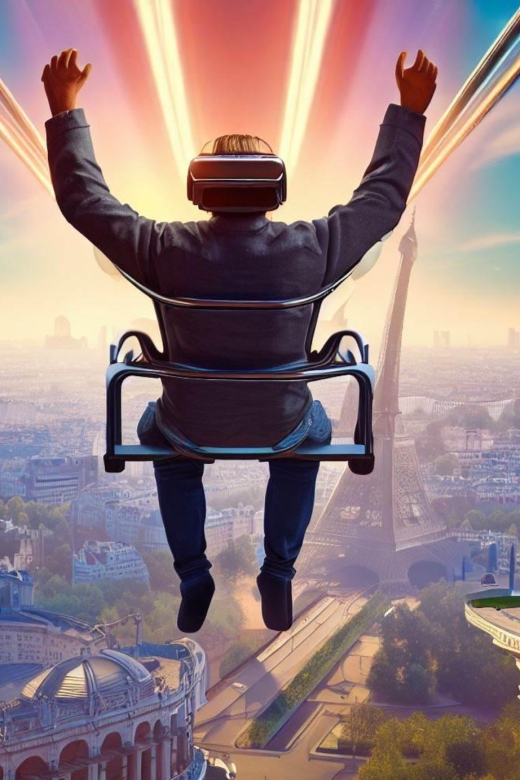
Your ticket covers entry to the Science Expériences course. That course is the main event: the rooms, the guided progression, and the museum’s core presentation approach using show tech like virtual reality and video mapping.
But the experience also has add-ons. Not included are options you can pay for on site—specifically VR simulators and an audio guide. The listing also notes there are other paid options available on location.
So here’s the practical mindset I recommend: think of your ticket as covering the foundation, then decide whether you want extra narration or extra tech. If you’re the type who loves background detail, budget a bit extra for the audio guide. If you care more about the “wow factor,” consider the VR simulators if they’re offered when you arrive.
The big question: how hands-on is it, really?
Science Expériences aims to make learning entertaining, but the balance between doing and watching can vary by stop and by setup. Some visitors find they do a lot of listening and not enough testing, and that’s a legitimate concern if you came expecting a hands-on science playground.
At the same time, the museum uses multisensory and emotional presentations and includes at least some show formats that likely feel interactive in the moment. And there’s at least one strong positive theme in the experience: families report it feels varied and fun, with kids able to enjoy it at different ages.
So how do you decide where you fall?
- If you want a science show that moves quickly and uses tech to keep you engaged, you’re a good fit.
- If you want to press buttons, conduct mini-experiments, and leave with a sense of lab-style accomplishment, you might feel under-satisfied.
My advice: don’t go in with a lab-expectation. Go in with a show-expectation, and you’ll get more enjoyment out of it.
Language and signage: plan to focus, not multitask

A common challenge in places like this is dividing your attention. The museum experience can require you to track visual cues while also listening to an instructor and possibly to audio support.
Some people found it hard to read pan-backs/signage while also keeping up with everything happening in the room. Others had trouble managing audio guide listening at the same time as the instructor.
You can fix this easily with one simple strategy: pick one source of direction at a time. When you’re entering a new space, take a breath, watch what the room is doing first, then listen for the instructor’s cue. If you choose to use the audio guide (paid on site), commit to it for one segment at a time rather than trying to multitask through everything.
Price and value: does $1,178 per person make sense?
Let’s talk straight numbers. The listed price is $1,178 per person, for a 90-minute course.
That’s a high figure for a museum ticket, so value hinges on what you want from the experience:
- You’re paying for a purpose-built, expert-designed science course that uses big production tools like virtual reality and video mapping.
- You’re paying for convenience: a structured program, not a DIY hunt for exhibits across a large museum.
- You might still pay extra on site for VR simulators and an audio guide, depending on your interests.
So when does it feel worth it? If you’re traveling with kids or you want a science-themed “event night” that feels like entertainment first and education second, the format can justify the cost because it’s designed to work as a whole experience.
When does it feel risky? If you only want lots of hands-on experiments, or if you expect every element to be interactive and perfectly functional, a pricey ticket can sting. Also, if you’re sensitive to audio/signage clarity, you’ll want to go in with patience and focus.
One more data point to consider: the overall rating is 3.3 out of 5 based on 6 ratings. That’s not a disaster, but it’s also not a slam dunk. I’d treat it as a sign to align expectations with a “science show” rather than a “hands-on lab.”
Who should book Science Expériences (and who should think twice)
This ticket tends to fit best with:
- Families with children, especially kids who like visuals and learning through play
- Adults who enjoy science concepts when they’re presented as demonstrations and stories
- Travelers who want a timed, contained activity that doesn’t eat half a day
It may be less satisfying if:
- You want a hands-on science workshop where you control experiments and leave with tangible results
- You need very detailed explanations and plenty of time per topic
- You’re sensitive to divided attention (signage, audio, instructor cues happening at once)
Tips to get the most out of your visit
Here are a few ways you can make the experience smoother and more rewarding.
- Arrive a few minutes early. A 90-minute show moves with production pacing. If you’re rushed, you’ll miss the room-to-room flow.
- If you’re bringing kids, help them treat it like chapters in a story: universe, abyss, Earth, quantum. That makes the jumps easier to understand.
- Decide how you’ll handle audio. Since the audio guide is not included, and some people struggle with multitasking, it can be smarter to focus on the instructor unless you truly want the extra narration.
- Keep expectations aligned with the format. The museum uses VR, video mapping, and multisensory effects, which is where you’ll get the best payoff.
Should you book this ticket?

I’d book Science Expériences if you want a timed science event at Bercy Village that uses show technology to make big ideas feel accessible. The topics are fun and the structure takes you on a journey from cosmic scale down to quantum oddness.
I’d think twice if you’re paying a premium expecting a fully hands-on lab experience. A few people report they mostly listen instead of test, and that some elements can feel disorganized or hard to follow at peak moments. If that sounds like you, look for a different type of science outing in Paris.
If you match the mood—science as entertainment with real educational intent—you’ll likely come away with at least a few moments that stick.
FAQ
How long is the Science Expériences ticket experience?
The duration is 90 minutes.
Where is Science Expériences located?
It’s at Bercy Village in Ile-de-France, France (Paris area).
How much does it cost?
The price is listed as $1,178 per person.
What is included with the ticket?
Entry to the Science Expériences science course, featuring the museum’s themed rooms and presentation approach.
What is not included?
VR simulators and an audio guide are not included, along with other paid options available on site.
What kinds of science topics will I see?
The course moves through themes including the borders of the universe, the depths of the abyss, the center of the Earth, and quantum physics such as laser, teleportation, and levitation.
Does the experience have an instructor?
Yes, there is an instructor.
Is the venue wheelchair accessible?
Yes, it is wheelchair accessible.
Can I reserve now and pay later?
Yes, you can reserve now and pay later.
Is free cancellation available?
Yes, you can cancel up to 24 hours in advance for a full refund.