REVIEW · PARIS
ESSENTIAL MONTMARTRE Walking Tour: the essential highlights+MORE!
Book on Viator →Operated by Black Cat Tours · Bookable on Viator
Montmartre is best seen on foot. This 3-hour walking tour threads the neighborhood’s biggest landmarks and lesser-known art corners, with a guide who explains the place like a local. I especially like that you get to choose from three start times, so you can match your day, not the other way around.
I also like the way the route mixes famous views with hands-on street storytelling. You hit the Sacré-Cœur interior, then drift through places tied to artists and music culture, with many stops listed as admission free.
One thing to plan for: Montmartre is hilly and stair-heavy, and the wind can be real. If your group is slower or you hate uphill stretches, wear solid shoes and keep an eye on pacing so you still enjoy every stop.
In This Review
- Key things I’d pencil into your day
- Why this Montmartre walk feels like a guided neighborhood tour
- Meeting at Anvers and warming up for the uphill part
- Rue de Steinkerque to the Sacré-Cœur hill route
- Inside Sacré-Cœur: the calm pause with city views
- Place du Tertre: artists at work and why the square still matters
- The small vineyard break: Vigne du Clos Montmartre
- Le Moulin de la Galette and Moulin Blute-Fin: windmills, art myths, and real geometry
- Bateau-Lavoir: where modern art history starts to feel close
- A quick hit of Moulin Rouge, then the wall-walker sculpture
- Le Lapin Agile and the feel of old-school Montmartre entertainment
- Dalida: statue, then the home you can still picture
- Van Gogh’s House: the Theo link that makes the story make sense
- Café des Deux Moulins: the Amélie filming connection
- Rue des Abbesses: an easy stroll with a strong Paris approval
- Finishing at Moulin Rouge: how to plan your last hour after the tour
- So, is it worth $59.13 for you?
- Should you book this Montmartre tour?
- FAQ
- How long is the Essential Montmartre Walking Tour?
- Where does the tour start and end?
- How much does the tour cost?
- Is the tour offered in English?
- What size is the group?
- Are admission tickets included for the stops?
- Is there a coffee stop?
Key things I’d pencil into your day
- Three start times: pick the one that avoids your worst crowds and energy level
- Small group (max 20): easier questions, easier navigation on narrow streets
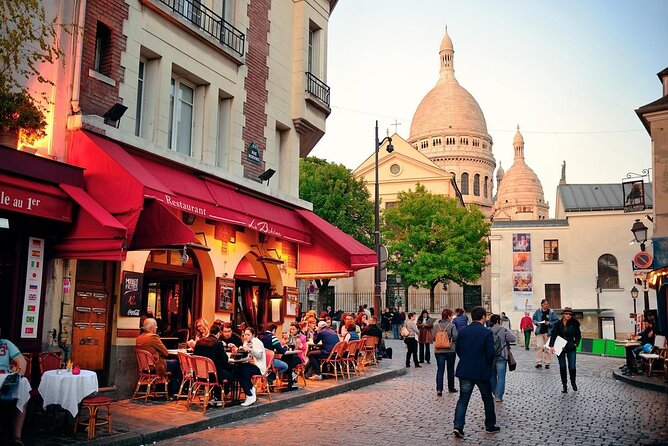
- Sacré-Cœur from street to dome views: you’ll get the big skyline moment without rushing
- Artist Montmartre in real places: Place du Tertre plus art-site landmarks tied to modern creators
- Windmills and cabaret culture: Le Moulin de la Galette area and Le Lapin Agile on the same loop
- Finish at Moulin Rouge: you end at a photo magnet with momentum for dinner nearby
Why this Montmartre walk feels like a guided neighborhood tour
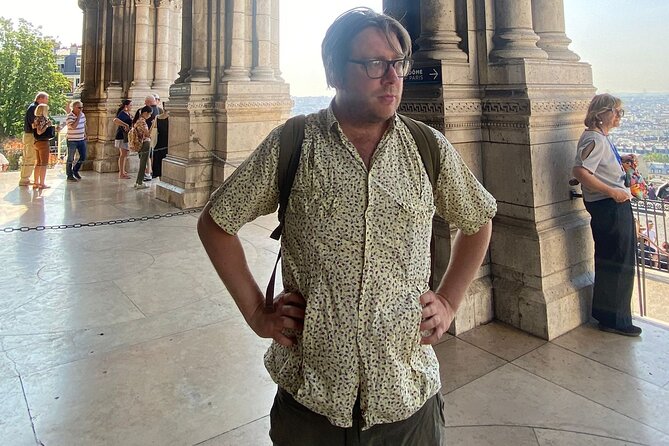
This tour is built for getting your bearings fast in Montmartre, then learning why the neighborhood became the stage for art, music, and reinvention. You’re not just ticking off postcards. You’re walking a path that goes from the hills and basilica viewpoints, down through the artist working zones, and toward the entertainment streets around Moulin Rouge.
At $59.13 per person for about 3 hours, it’s the kind of value that works if you want a tight overview without paying for a bunch of separate attractions. Many stops are ticket-free, and the tour includes a coffee stop while keeping other food costs off you. With a maximum of 20 people and English narration, it’s also easier than the huge bus-style crowd scene.
One practical note: because it ends at Moulin Rouge, plan your return to your hotel from there. It’s lively, central, and busy enough to feel “right” for an evening start, but you’ll want to keep your meetup points in your head.
You can also read our reviews of more walking tours in Paris



Meeting at Anvers and warming up for the uphill part
You start at Anvers (75018 Paris). It’s a smart starting point because it’s close to the neighborhood’s transit rhythm. You then head toward the gardens near Sacré-Cœur, building your way uphill as the streets steepen.
This is where the tour starts doing a lot with a little time. You get to see how the neighborhood climbs, not just arrive at a viewpoint and call it “Montmartre.” The first stretch also sets you up for what comes next: a funiculaire ride up to the basilica area.
What I think matters here: your legs learn the terrain early. You’ll know within minutes if your group needs slower steps, more photo breaks, or a brief regroup.
Rue de Steinkerque to the Sacré-Cœur hill route
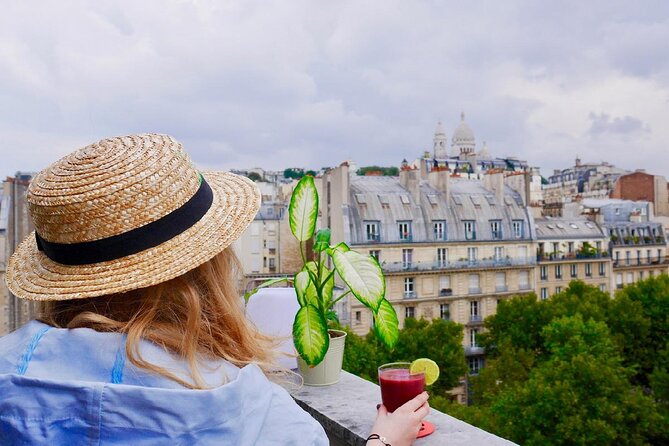
Stop 1 is Rue de Steinkerque, with a walk toward the Gardens of Sacré-Cœur, then up to the basilica area by funiculaire. The time allocation is around 20 minutes, and the key value is orientation: you’re getting the neighborhood in layers—streets, viewpoints, and the basilica zone all in one arc.
Even if you’ve seen Sacré-Cœur from afar before, this segment helps you understand why it dominates the skyline and why people keep coming back for that exact angle over Paris.
Also: because the stop is marked as admission ticket free, you’re not burning time or money just to get started.
Inside Sacré-Cœur: the calm pause with city views
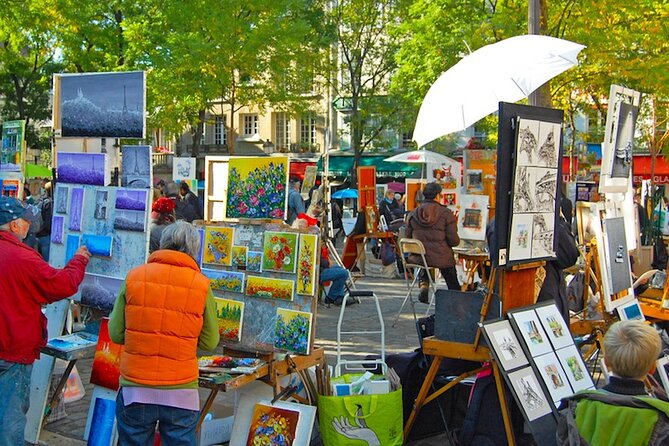
Stop 2 is the Basilique du Sacre-Cœur de Montmartre. Expect about 20 minutes, and the focus here is the moment of serenity inside—that shift from noisy street life to stone quiet.
This part matters because Sacré-Cœur isn’t only about the view. The best experience is stepping into the airy interior and then letting the scale hit you again when you look out over the city.
If you’re going with kids or people who hate long museum blocks, this stop is a good length. It’s long enough for the vibe to land, but short enough that nobody feels trapped.
Place du Tertre: artists at work and why the square still matters
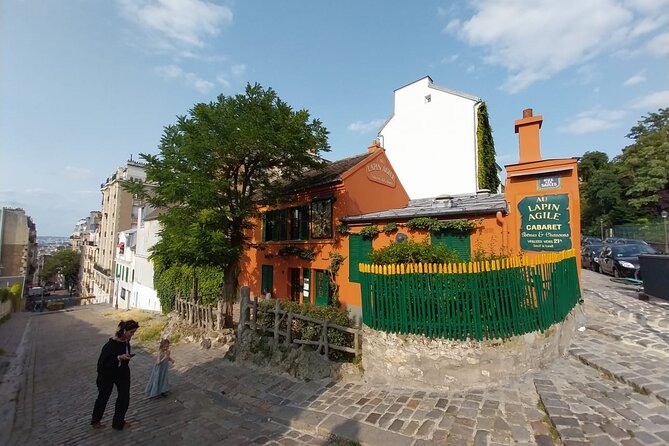
Stop 3 is Place du Tertre, roughly 15 minutes. This is the classic medieval-style square where you can watch local artists working in the open. You’ll see portraits, caricatures, and all kinds of styles—some realistic, some more free-form.
What’s valuable about this stop is that you’re not just looking at “street art.” You’re watching a long-running culture of making art on the spot. It also helps you understand Montmartre’s economy of attention: visitors want a story, and artists want a moment.
The downside is obvious if you’ve got low tolerance for crowds. Place du Tertre can be busy. In that case, take the time to look for small details—the way artists set up, the tools laid out, the rhythm of their work—so it feels like culture, not chaos.






The small vineyard break: Vigne du Clos Montmartre
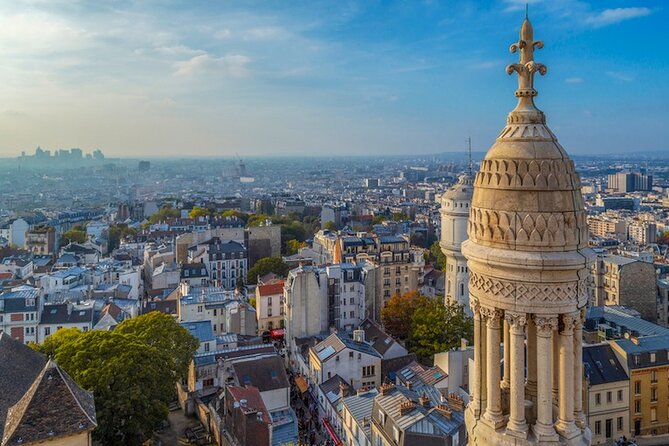
Stop 4 is Vigne du Clos Montmartre, about 10 minutes. This is a historic vineyard area in Montmartre, and it gives you a nice reset from squares and stone landmarks.
I like including this kind of stop because it reminds you Montmartre isn’t only a stage for artists. It has older, quieter roots too—land that once produced food, not just photos.
If the day is gray or windy, this short pause can feel almost sheltered. Even if you don’t care about vineyards, it’s a refreshing change of scenery.
Le Moulin de la Galette and Moulin Blute-Fin: windmills, art myths, and real geometry
Stop 5 is Le Moulin de la Galette, about 10 minutes. The tour frames it as the last remaining windmill in Montmartre, with Moulin Blute-Fin nearby—so you get the full windmill picture instead of just one isolated landmark.
It also ties the windmills to the legendary Bal de le Moulin de la Galette, depicted in paintings by major names including Renoir and Picasso. Even if you’re not a painter, knowing the cultural reference helps you “read” the structure in front of you.
One practical thing: windmills make great photo stops, but they also mean open-air exposure. If weather is rough, build in extra patience for coats, hats, and footing.
Bateau-Lavoir: where modern art history starts to feel close
Stop 6 is Le Bateau-Lavoir, about 15 minutes. This is one of the most interesting stops on the walk because it hits the idea of an artistic hub. The tour connects the site to Pablo Picasso, Le Douanier Rousseau, Amedeo Modigliani, Henri Matisse, Georges Braque, Guillaume Apollinaire, and Jean Cocteau, among others.
The useful takeaway isn’t memorizing names. It’s understanding why Montmartre mattered: creative people needed rooms, studios, cheap spaces, and a place where conversation and experimentation were close.
For art lovers, this stop can change how you see the neighborhood. For non-art lovers, it’s still a strong story—because you’re standing in a place that helped shape what art became.
A quick hit of Moulin Rouge, then the wall-walker sculpture
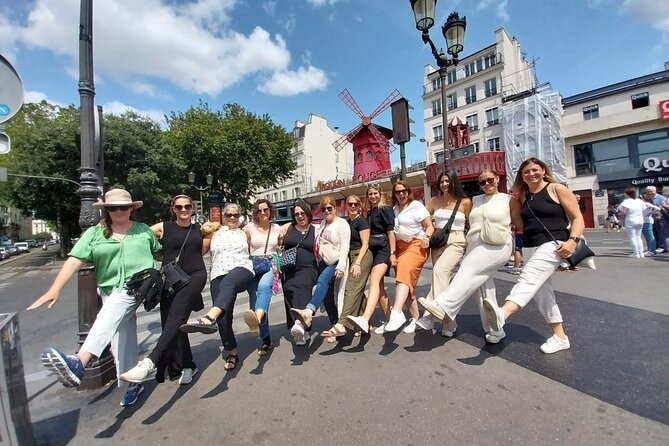
Stop 7 is Moulin Rouge, about 10 minutes, but the Moulin Rouge show isn’t included. Think of this as a street-facing visit: you’ll get the landmark look, not a ticketed performance.
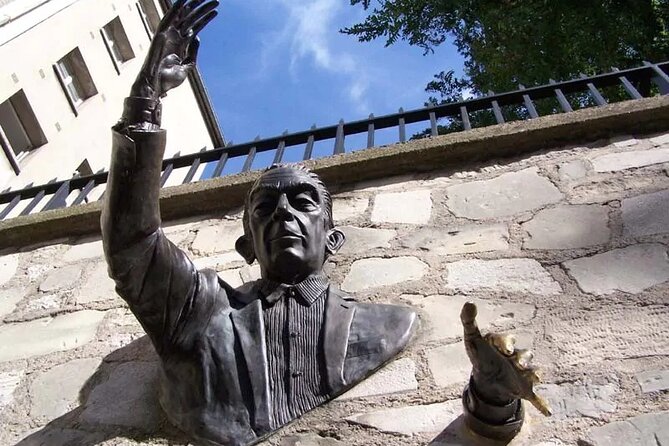
Stop 8 is Le Passe-Muraille, about 5 minutes. This curious sculpture of a man passing through a wall is based on a story by novelist Marcel Ayme. Short as it is, it’s one of those details that makes Montmartre feel like it runs on character and legend.
If you’re traveling with kids, this is a strong “blink and you’ll grin” moment. It also adds variety after the big monuments.
Le Lapin Agile and the feel of old-school Montmartre entertainment
After that, you’ll get to Le Lapin Agile, a historic cabaret venue. The tour highlights that it was frequented by notable Montmartre figures including Pablo Picasso, Max Jacob, Blaise Cendrars, and others.
Why I like this stop: it links art to live performance. Montmartre wasn’t only painters and writers; it was also where people went to laugh, play music, and stay out late.
If you’re the type who enjoys planning your evenings, this stop can nudge you to look for a night of French folk music and humor while you’re in town. Even if you don’t book anything during the tour, you leave with a better sense of what “cabaret Montmartre” actually means.
Dalida: statue, then the home you can still picture
Next you’ll see a Dalida statue (about 5 minutes), then La Maison de Dalida (about 10 minutes). This is a pop-culture angle that makes sense for modern visitors who don’t live in a purely classical art mindset.
It also fits the pace: after entertainment history at Le Lapin Agile, you continue with a later era of Montmartre celebrity. You get a sense of how the neighborhood keeps generating icons across generations.
Van Gogh’s House: the Theo link that makes the story make sense
Stop 11 is Van Gogh’s House, around 5 minutes. The tour frames it as where Vincent Van Gogh lived with his brother Theo.
This is a quick stop, but adding the Theo connection helps. It turns Van Gogh from a single-name hero into part of a bigger support story—family, collaboration, pressure, and persistence.
Even if you already know the broad outline of his life, a short visit like this helps you place the artist into the physical neighborhood context.
Café des Deux Moulins: the Amélie filming connection
Stop 12 is Café des Deux Moulins, about 10 minutes, tied to the movie Amélie (Le destin fabuleux d’Amélie Poulain). The tour points you to the places where the film was shot.
I like movie-linked stops when they do more than name-drop. Here, it gives you a new reason to look up at details—doorways, street angles, and the way cafés sit right in the flow of Montmartre life.
Just keep it realistic: this is still a working neighborhood café area, not a theme park. Be respectful and don’t expect “production-day magic.”
Rue des Abbesses: an easy stroll with a strong Paris approval
Stop 13 is Rue Des Abbesses, about 15 minutes. The tour calls it a charming street and notes it was featured as one of the most beautiful streets in Paris by The Guardian.
This is a softer, calmer finish within the route—perfect for lingering, taking photos, and letting everyone catch their breath.
If you’ve walked the whole time, this is also where you feel the payoff: you’ve seen Montmartre’s big icons, and now you’re seeing its everyday beauty.
Finishing at Moulin Rouge: how to plan your last hour after the tour
The tour ends at Moulin Rouge (82 Bd de Clichy, 75018 Paris). It’s famous, it’s busy, and it’s exactly where you’ll want to decide what you do next.
A smart approach: don’t rush out the moment the tour ends. Use the final minutes to orient yourself to nearby streets for dinner, desserts, or a quick drink—then step away from the heaviest crowds.
If your group is tired (and it often is after hills and stairs), consider eating somewhere you can sit comfortably. Montmartre’s entertainment area can stay lively late, so planning a calm stop helps you avoid turning the evening into a marathon.
So, is it worth $59.13 for you?
I think this tour is a good buy if you want a tight, well-paced Montmartre overview with strong storytelling. The value comes from a few practical wins: a small group size, English guiding, many admission ticket free stops, and a clear route that ends right where you’ll want to be for nightlife.
It’s not the best choice if you dislike steep streets, long uphill blocks, or you’re the type who prefers fully ticketed museum time over neighborhoods and street culture.
Also, build in flexibility. Reviews include comments about guides and pacing, and there are also rare cases where the tour can be canceled for unforeseen reasons. If Montmartre is a must, I’d keep other plans light on that day.
Should you book this Montmartre tour?
Book it if:
- You want the classic highlights plus artist-linked spots in about three hours
- You’d rather walk with guidance than wander and guess
- You like stops that mix big sights with small stories, including Dalida and Le Passe-Muraille
Skip it or plan carefully if:
- Your group needs flat ground and minimal stairs
- You’re only interested in Moulin Rouge as a show (since the show is not included)
- You want a slow, linger-all-day pace rather than a structured loop
If you fall in the first group, this tour is an efficient way to understand Montmartre’s “why,” not just its “what.”
FAQ
How long is the Essential Montmartre Walking Tour?
It’s listed as about 3 hours.
Where does the tour start and end?
It starts at Anvers 75018 Paris, France and ends at Moulin Rouge, 82 Bd de Clichy, 75018 Paris.
How much does the tour cost?
The price is $59.13 per person.
Is the tour offered in English?
Yes, it is offered in English.
What size is the group?
This tour has a maximum of 20 travelers.
Are admission tickets included for the stops?
Many stops are listed as admission ticket free. Moulin Rouge is a stop, but the show is not included.
Is there a coffee stop?
Yes, the tour includes a stop for coffee during the tour. Snacks and drinks are not included.