REVIEW · PARIS
Desire on Display: The Homoerotic Louvre Tour (Max 6 people)
Book on Viator →Operated by Fat Cat Tours · Bookable on Viator
A Louvre tour with a different angle is worth it. This one uses a LGBTQ+ historical lens to help you see famous works in a new way, while still covering the Louvre’s must-dos. I like the small group size (max 6) because it keeps the pace calm and you can actually ask questions.
Two things I’d prioritize: first, you get help navigating the museum so the scale doesn’t overwhelm you, and second, the guide’s perspective turns the big highlights into story-driven moments, including time at the Mona Lisa. The possible drawback: this tour isn’t for ultra-light planning—large backpacks and luggage aren’t allowed, and strollers can’t be accommodated.
Key points at a glance
- Max 6 people means more Q&A and less waiting around
- An accredited guide helps you move through the Louvre without getting lost
- You’ll see major works plus less obvious connections
- The approach is framed as LGBTQ+ history, not just visual scandal
- You end at the Mona Lisa, with a new way to look at it
- Moderate fitness is required, plus no large bags or strollers
In This Review
- Meet at Louis XIV: Why the Start Matters in the Louvre
- The Homoerotic Lens: More Than You Think the Title Means
- What You’ll Actually Do Inside: A Guided Route With Stops You Can Feel
- Mona Lisa at the End: Why Ending Here Can Improve How You See It
- Navigation Help You’ll Notice: Don’t Let Size Beat You
- Practicalities That Matter: Bags, Strollers, and Getting There
- Price and Value: What $214.84 Buys You in the Real World
- Who This Tour Is For (and Who Might Want Another Option)
- Tips to Get More Out of Your 2.5 Hours
- Should You Book This Louvre Tour?
- FAQ
- How many people are in the group?
- How long is the tour?
- What does the price include?
- Is the entrance ticket included, and what is it priced at?
- Where do we meet?
- Is it in English?
- Is food or drinks included?
- What should I know about bags and stroller use?
- What’s the minimum age?
- What’s the cancellation policy?
Meet at Louis XIV: Why the Start Matters in the Louvre
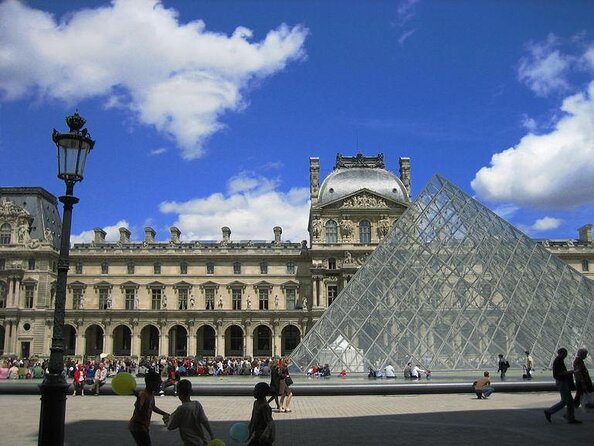
This tour begins at 8 Pl. du Carrousel, 75001 Paris, and you meet your guide at the statue of Louis XIV on a horse. That matters more than it sounds. The Louvre can feel like a maze even when you’ve got a map. Starting with a clear landmark helps you get your bearings fast, and you waste less time trying to locate your group.
The group stays tiny—up to 6 travelers. In practice, that changes the vibe immediately. You’re not stuck listening over shoulders or watching people funnel through crowds. You can ask direct questions, and your guide can slow down for clarifications when you want them.
This is a 2 hours 30 minutes outing, in English, with a mobile ticket. That length is long enough to hit the key moments, but not so long you feel fried afterward. If you’re the type who likes structure—meet, walk, stop, talk, repeat—this format fits well.
The Homoerotic Lens: More Than You Think the Title Means

The title is bold, but the tour itself is framed as history and perspective. One reviewer described it as more of a gay history of civilization than purely erotic content. That’s a big deal for how you experience the art. Instead of treating the Louvre like a set of disconnected masterpieces, you’re encouraged to look for how culture, identity, and storytelling show up across time.
That same review mentioned learning about gay history dating back to the ninth century BC. Even if you don’t know where to look inside the Louvre for that kind of thread, the guide’s job is to point you toward the connections. You end up seeing the museum as a conversation across centuries, not just a checklist.
What I like about this approach is that it doesn’t require you to be an expert. The point isn’t to memorize dates. It’s to understand why certain works resonate more deeply when you know the context the guide brings. For many people, that changes the whole emotional temperature of the visit.
You can also read our reviews of more tours and experiences in Paris.



What You’ll Actually Do Inside: A Guided Route With Stops You Can Feel
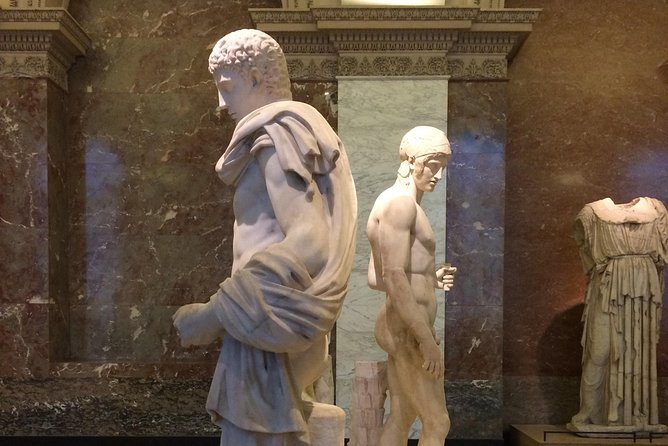
You enter the Louvre with your accredited guide, and the tour keeps to a single main stop: the museum itself. Within that, the route is built around pacing and story. The goal is not to drag you through every wing. It’s to focus on the works that best support the tour’s theme and keep the experience coherent.
There’s also a practical benefit here: you won’t be wandering alone. The big win of a guided route is mental. When you’re on your own, you spend energy making decisions. With a guide, you spend that energy looking—at details, compositions, and the way different works echo each other.
The itinerary is designed to include the Louvre’s big names, with a stop at the Mona Lisa. The Mona Lisa can be visually underwhelming if you’re expecting a quiet, movie-scene moment. But the reviewer who rated this tour highly said they had a whole new appreciation of the work after seeing it through the guide’s lens. Even if you’ve seen it before, this framing can still make it hit differently.
Mona Lisa at the End: Why Ending Here Can Improve How You See It
A lot of visitors aim for the Mona Lisa early and then spend the rest of the day feeling rushed. This tour builds toward it. That matters because your brain is calmer by the time you get there, and you’ve already learned how your guide wants you to look.
Ending with the Mona Lisa also sets up a satisfying payoff. You’re not just ticking a box. You’ve had time to understand the theme and the guide’s way of connecting stories across artworks. Then you arrive at the museum’s most famous portrait with a fresh interpretive toolkit.
If you’re someone who finds the Louvre intimidating, this “build and land” style can reduce stress. You’re not constantly thinking about what you’ll do next. You’re moving through a plan.
Navigation Help You’ll Notice: Don’t Let Size Beat You
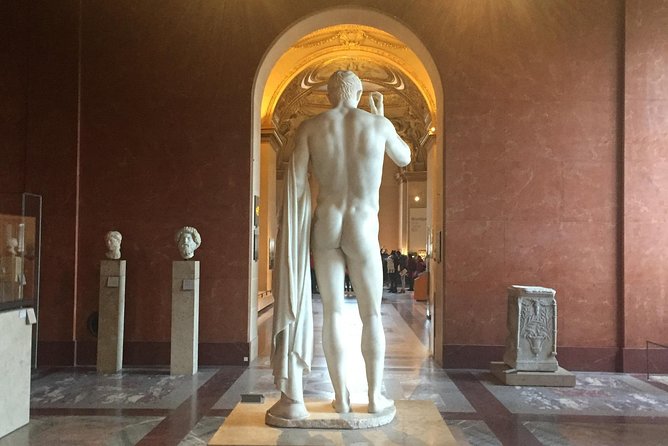
The Louvre is massive. Without help, many first-timers end up doing two things: backtracking and giving up. This tour is built to prevent that. One of the highlights is helping you navigate so you won’t be overwhelmed by the museum’s size.
In a small group, that navigation becomes even more useful. The guide can adjust the route based on what the group is enjoying, and you’re less likely to get separated. Plus, with max 6 travelers, you’re not playing catch-up around turns and staircases.
You should still plan like a Louvre visitor. Wear comfortable shoes and keep your schedule tight. The tour lasts about 2.5 hours, and you’ll likely be on your feet most of that time. The physical requirement is described as moderate fitness, so it’s best for people who can comfortably walk and stand for long museum stretches.
Practicalities That Matter: Bags, Strollers, and Getting There
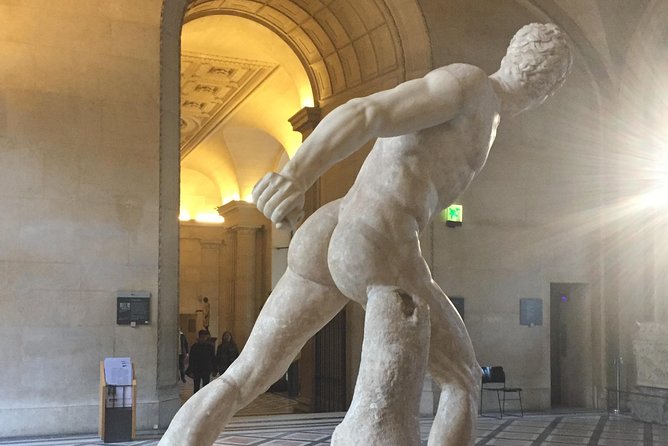
This is one of those tours where logistics affect your day more than usual. Large backpacks and luggage aren’t permitted in the Louvre. Strollers and pushchairs can’t be accommodated on this tour. So pack light, or you’ll end up dealing with storage rules that can cut into your experience.
On the good side, the meeting point is near public transportation, and the tour uses a mobile ticket. You won’t need to juggle paperwork.
Also note the minimum age: 18 years. And while free admission rules are listed for visitors under 18 and EEA residents under 26 with proof, this tour’s minimum age still applies for participation. If you’re within the age ranges covered by the Louvre’s free-admission rules, bring the required ID and proof of residency in case it’s relevant for your situation.






Price and Value: What $214.84 Buys You in the Real World
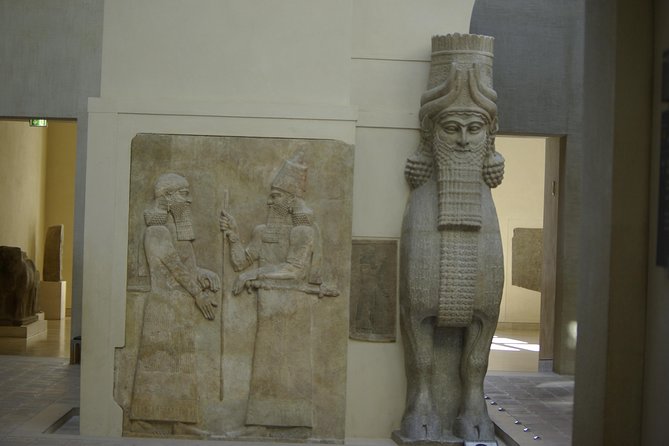
At $214.84 per person, this isn’t the cheapest way to see the Louvre. But the structure makes the price easier to justify.
Here’s what’s included:
- A professional guide
- A museum entrance ticket (listed as €28 for adults)
- The tour runs about 2 hours 30 minutes with a small-group format
There’s also mention of group discounts. Even without doing a spreadsheet, that small group factor is part of what you’re paying for. You’re not just buying access to rooms—you’re buying someone’s time, judgment, and ability to turn a crowded museum into a guided story.
If you’re considering going on your own, ask yourself what you’d pay for:
- fewer decisions,
- less confusion,
- and a thematic route that changes what you notice.
That’s what the money buys here. It’s also helpful if you want context without spending hours researching before you arrive.
One more value signal: this tour is commonly booked about 60 days in advance on average. Demand tends to show when a tour is well run and consistently satisfying.
Who This Tour Is For (and Who Might Want Another Option)
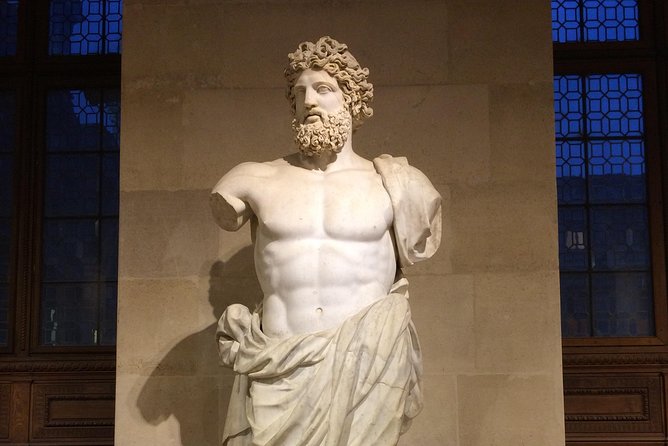
This tour feels tailor-made for people who want art with context and an LGBTQ+ viewpoint. If you care about history and how people interpret culture across time, you’ll probably enjoy the “secret angle” feeling described in the glowing reviews—where you leave thinking you learned something you couldn’t easily find alone.
It’s also a solid fit for anyone who gets overwhelmed in big museums. The whole point here is support: route planning, pacing, and explanation.
I’d be cautious if:
- you need stroller access (not accommodated here),
- you plan to bring large luggage,
- or you’re looking for a strictly traditional museum approach with no thematic lens.
Because the theme is central, it changes how the museum is presented. If you’re mainly there for a quiet, self-paced viewing spree, a small guided thematic tour might feel too directed.
Tips to Get More Out of Your 2.5 Hours
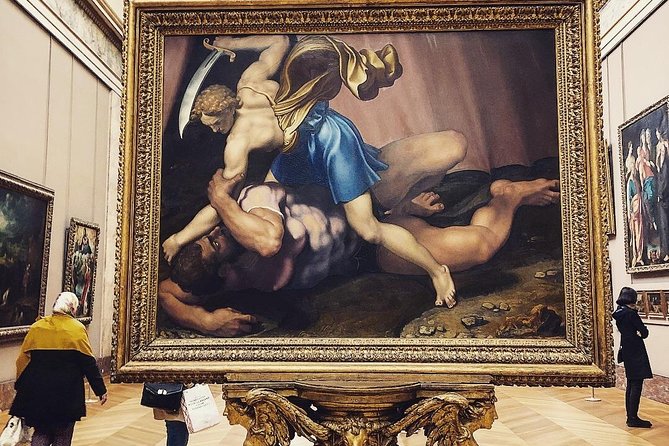
Bring the right expectations: this is a guided experience with stops, not open-ended wandering. You’ll get the most from it if you’re willing to listen and ask questions along the way.
A few practical moves:
- Travel light. Large backpacks and luggage are not permitted inside.
- Wear shoes you can walk in for long stretches. The fitness level is moderate, not couch-level.
- If you qualify for free admission rules tied to age or EEA residency, bring the correct ID and proof, just in case.
- If you care about the theme, come ready to think about how identity and culture show up in art—not only what’s shown, but why it was made and how it was read.
Should You Book This Louvre Tour?
If you like your art with context and you want a Louvre visit that feels guided but personal, I think you should book. The best reasons are simple: small group size, real navigation help, and a perspective that makes major works—especially the Mona Lisa—land differently.
I’d skip it if you need stroller support, plan to arrive with large luggage, or you want a purely self-paced visit. And if the word homoerotic makes you worry the tour will be more titillation than history, note that reviews describe it as rooted in LGBTQ history and civilization, with the big highlights included too.
My take: for most people who want something smarter than a standard highlights tour, this one offers strong value for the format. You’ll finish with a clearer map of what you saw and a story-shaped way to remember it.
FAQ
How many people are in the group?
The tour has a maximum of 6 travelers.
How long is the tour?
It runs about 2 hours 30 minutes.
What does the price include?
The tour includes a professional guide and an adult admission ticket for the museum.
Is the entrance ticket included, and what is it priced at?
Yes. The listed adult entrance ticket is €28.
Where do we meet?
Meet at 8 Pl. du Carrousel, 75001 Paris, France, at the statue of Louis XIV on a horse.
Is it in English?
Yes, the tour is offered in English.
Is food or drinks included?
No. Food and drinks aren’t included.
What should I know about bags and stroller use?
Large backpacks and luggage aren’t permitted in the Louvre. Strollers and pushchairs cannot be accommodated on this tour.
What’s the minimum age?
The minimum age is 18.
What’s the cancellation policy?
You can cancel for a full refund if you cancel up to 24 hours in advance of the experience start time. Free cancellation applies under that window.