REVIEW · PARIS
Paris Louvre and Orsay Museums Masterpieces Private Day Tour
Book on Viator →Operated by Meeting the French · Bookable on Viator
Two museums, one art-fueled morning. This private Louvre and Musée d’Orsay day tour is built for fast, high-impact sightseeing, with skip-the-line entry through the Carrousel du Louvre. I really like that your guide can shape the route around what you care about, from the big names like the Mona Lisa to the stories behind works such as the Venus de Milo and The Raft of the Medusa.
The main trade-off is simple: the itinerary is only about 5.5 hours total, so you’re seeing highlights, not the full universe of either museum. If you’re the type who wants deep, artist-by-artist background for every painting, you might feel the time squeeze and hope for a more stretched explanation.
Even with that, the format can be a win—especially if you’re spending only one day on the art giants and want your pacing handled. Guides like Sophie, Virginia, David, and Helen show up again and again in bookings, and the common thread is guidance that helps you see the masterpieces instead of just walking past them.
In This Review
- Key Things That Make This Tour Worth Your Time
- Why This Louvre + Orsay Combination Gets You More Art per Hour
- The Morning Start: Hotel Pickup Options and Your 9:30 Meet-Up
- Entering the Louvre via the Underground Carrousel du Louvre
- The Louvre in Two Hours: How Highlights Become a Real Viewing Plan
- Lunch Break Freedom: Using Your Time Around the Louvre
- Musée d’Orsay: Impressionist and Post-Impressionist Masterpieces in a Former Train Station
- Walking Between the Museums: A Short Transfer With Big Payoff
- Group Size, Private Guides, and Why Some People Feel It’s Money Well Spent
- Tips to Maximize Your Two-Hour Louvre and Two-Hour Orsay Visits
- Should You Book This Private Louvre and Orsay Day Tour?
- FAQ
- How long is the Louvre and Orsay private tour?
- Is this tour private?
- Are entrance tickets included?
- Do I need to pay for lunch?
- Is hotel pickup available?
- How do you get from the Louvre to Musée d’Orsay?
- What language is the tour offered in?
- Does the tour include skip-the-line access?
Key Things That Make This Tour Worth Your Time
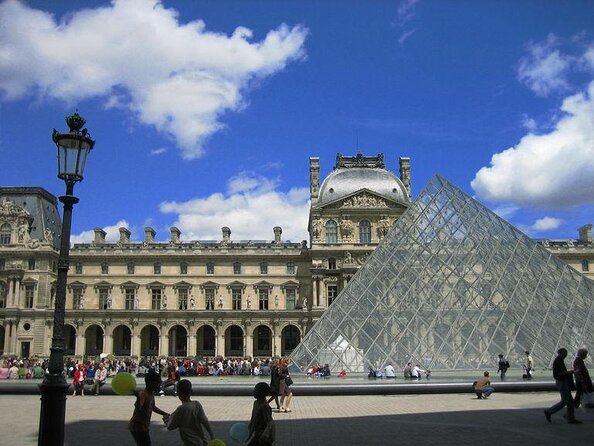
- Carrousel du Louvre entry: you start in an underground route that cuts the usual slowdown
- Two museum stops, 2 hours each: enough time to hit the classics without feeling totally rushed
- Small private group: designed for an intimate experience (overview mentions up to four; the cap is stated as a maximum of six)
- A lunch break on your terms: you get free time to eat nearby at your pace, then rejoin the guide
- Musée d’Orsay in the former train terminal: big Impressionist and Post-Impressionist highlights in a beautiful setting
- Real guidance, not just a map: you’re encouraged to ask questions and linger at the pieces you care about most
Why This Louvre + Orsay Combination Gets You More Art per Hour
If you’ve ever stood in the Louvre and felt your brain go into overload mode, you already understand the appeal of a plan. The Louvre is huge. Orsay is smaller, but still packed with major works. Doing both in one day makes sense because they’re different styles and different eras, back-to-back.
What I like about this tour format is that it doesn’t ask you to figure everything out at once. You meet in central Paris (with an option for hotel pickup within ZIPs starting with 75), then you’re guided through the most famous works without losing half the day to logistics. You’ll also have a human explaining what you’re looking at, not just pointing to labels.
The route is also practical. You start at the Louvre first, then move to Musée d’Orsay with a walk of about 10 to 15 minutes between the two. That’s short enough to stay efficient, and long enough that you’re not stuck inside a vehicle all day.
You can also read our reviews of more private tours in Paris



The Morning Start: Hotel Pickup Options and Your 9:30 Meet-Up
Your day begins around 9:30 am. The standard start point is in the Louvre area, near Cour Napoléon and the Pyramide du Louvre—specifically at Louis XIV sous les traits de Marcus Curtius (copie). Your guide meets you there, and you travel from the start point to the Carrousel du Louvre area.
If you select the hotel pickup option, your guide can meet you at any hotel within Paris city limits (ZIP codes beginning with 75). The tour description also mentions private one-way transport from your hotel for that option. If you don’t choose pickup, transport to the Louvre is on you.
One detail that matters: the tour says the morning trip uses either metro or a comfortable minivan. That’s helpful if you’re trying to stay oriented on arrival without spending time hunting stations.
Entering the Louvre via the Underground Carrousel du Louvre
This is where the tour’s “worth it” argument starts. Instead of fighting the longest lines at street level, you enter through the underground Carrousel du Louvre area. It’s near the museum and acts like a shortcut to get you inside sooner.
For the Louvre part, you get about 2 hours with your private guide. That’s a tight window, but the Carrousel entrance means you’re spending your limited time looking, not waiting.
Practical note: even with skip-the-line access, the Louvre can still feel crowded. It has that layered, endless-hallway feeling. A good guide helps you avoid the worst bottlenecks and makes the time feel controlled.
In at least one real booking experience shared with the tour, there was an evacuation due to a bomb threat. That’s not something you can plan for, but it’s a reminder that major museums can have security disruptions. If you’re traveling at a flexible pace, keep your expectations light on days like that.
The Louvre in Two Hours: How Highlights Become a Real Viewing Plan
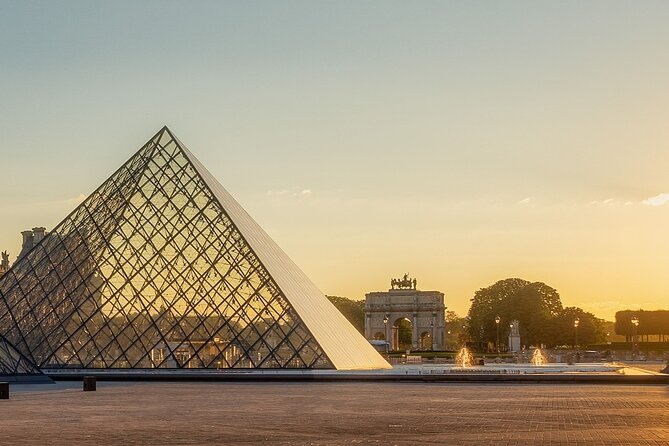
The Louvre isn’t a museum you “finish” in one day. It’s more like a set of neighborhoods. This tour treats the Louvre like a highlight route: you’re there for 2 hours, and the guide brings you to major works plus context.
You can expect stops and stories around big names, including:
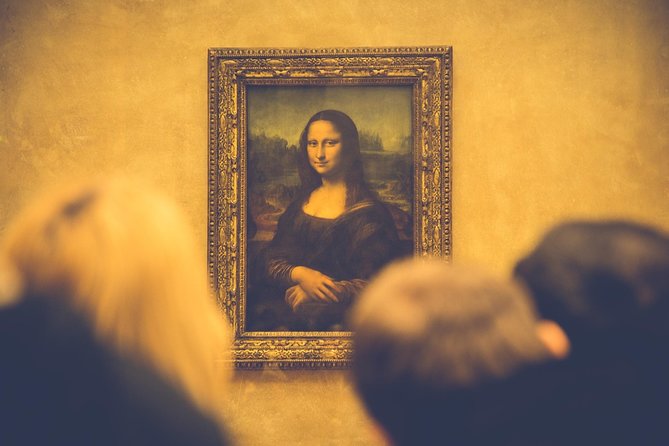
- Mona Lisa
- Venus de Milo
- The Raft of the Medusa
- works associated with artists such as Rembrandt and Delacroix
The tour is also described as flexible. You’re invited to tell your guide which works you care about most. That matters because the Louvre’s famous pieces aren’t just famous for being famous. Some of them are famous because of technique, politics, or the story around how the painting survived and what it represented at the time.
Here’s how the guide approach becomes valuable: instead of giving you a laundry list of facts, the tour is framed around anecdotes and history tied to what you’re actually seeing. In one booking experience, Sophie was singled out for making the whole Louvre visit feel manageable in a dense crowd—basically, she gave a plan so the building didn’t swallow the day.
Still, keep your expectations matched to the time. Two hours means you’ll see major works, but you won’t see even a fraction of the collections. If your personal Louvre mission is very specific—like spending time on one wing or one theme—this tour is best when you want the headline masterpieces and the stories behind them.
Lunch Break Freedom: Using Your Time Around the Louvre
Midday is your free time for lunch. Food and drinks are not included, so you’ll pay out of pocket. The tour’s structure is designed so you can step away and grab something nearby, then return for the Orsay portion.
This is a good moment to do two things:
- Eat something quick so you don’t lose your afternoon energy
- Reset your eyes. The Louvre can be intense, and a short break makes the colors and light of Orsay feel like a change of scene
Since the lunch window is on your terms, I’d plan for a simple strategy: pick something close to the Louvre area rather than wandering too far. Your schedule is designed around rejoining your guide at Musée d’Orsay.
You can also read our reviews of more museum experiences in Paris





Musée d’Orsay: Impressionist and Post-Impressionist Masterpieces in a Former Train Station
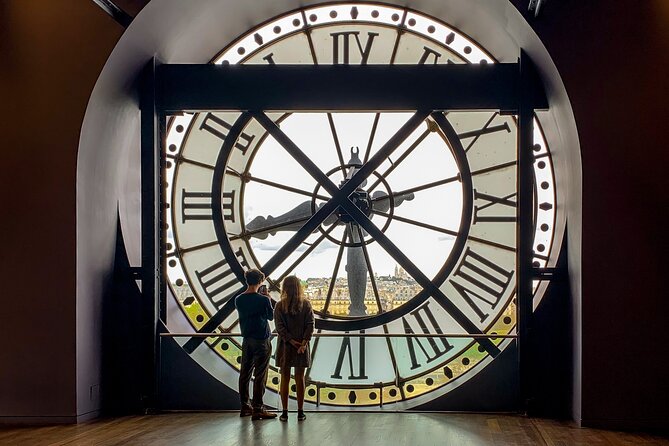
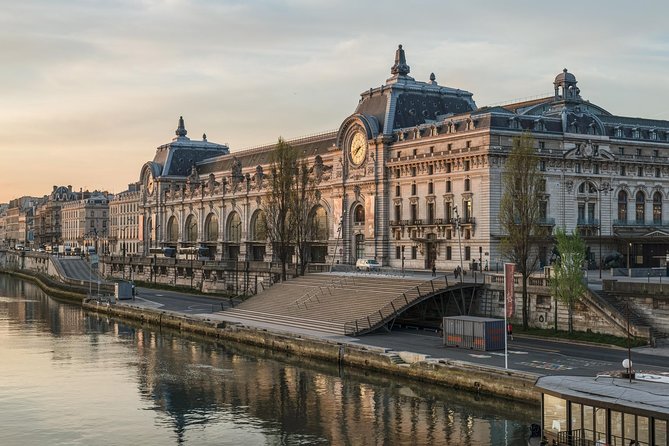
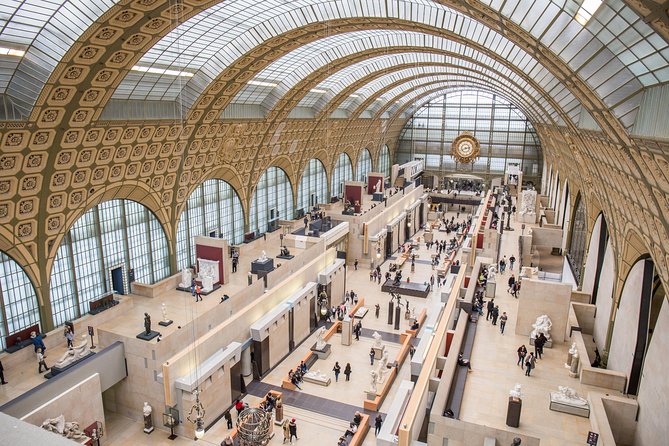
Then comes Orsay. Musée d’Orsay is housed in a former Beaux-Arts train terminal, and the building itself helps you enjoy the art. For this half, you get another 2 hours with guided highlights.
The museum’s collection focuses on European works from the second half of the 19th century, and it includes more than 4,000 artworks. It’s also described as having the largest Impressionist and Post-Impressionist collection in the world, with major names such as:
- Monet
- Renoir
- Van Gogh
- Gauguin
- Rodin
- plus artists including Seurat and Cézanne
The experience is set up similarly to the Louvre: skip-the-line access is part of the promise, and your guide shows highlights while sharing stories to help you understand why these works matter.
One helpful detail: the Orsay portion tends to be easier to navigate than the Louvre because the museum is smaller and has a clear identity. You’ll still get guided help, but you’re less likely to feel totally lost.
Also worth knowing: in one booking experience, skip-the-line access at the Orsay entrance didn’t work as smoothly as expected on the first try. The guide improvised with an alternate quick route for covered passages and then made up for time. That’s rare, but it’s why I suggest you keep a little flexibility in your day even when a tour promises speed.
Walking Between the Museums: A Short Transfer With Big Payoff
You’ll go by foot between the two museums, a walk of about 10 to 15 minutes. That’s not long enough to feel like a transfer, and it’s short enough to keep you on schedule.
If you like the “Paris-between-places” feeling, this walk is a plus. You’re not stuck inside a vehicle. You get to switch from the Louvre’s grandeur energy to Orsay’s bright, different vibe.
This also means you should wear shoes you can walk in for real. Even with guides, you’ll be moving through rooms, stopping often, and possibly dealing with crowd flows in each museum.
Group Size, Private Guides, and Why Some People Feel It’s Money Well Spent
The pricing is not small: $747.02 per person for this private 5 hours 30 minutes (approx.) tour. So you should judge it as a value question: what does this buy you?
In practical terms, you’re paying for:
- Private time with a guide (your pace, your questions)
- Skip-the-line routing via Carrousel du Louvre and entry convenience at Orsay
- A “highlights” selection that helps first-timers and time-limited travelers see the masterpieces without getting overwhelmed
And the “private” part matters. This tour is described as limited to a maximum of four people for intimacy, but it also states a maximum of six people per group. Either way, it’s not a giant bus group, which usually means more attention and fewer bottlenecks in the route.
In the positive bookings, guides were praised for depth and planning. David, Helen, Virginia, and Sophie were all mentioned as excellent guides who helped visitors avoid line chaos and turn the Louvre from overwhelming to doable. In at least one case, Virginia even helped with early context about the Louvre’s origins, starting from its fortress-era roots.
But here’s the balanced reality check: one booking felt the guide didn’t provide much more than a printed guide style of information, and for the price, the visitor expected a more expert-level art history experience. Translation: tour quality can still depend on the guide assigned to your date, and your personal appetite for detail matters.
My advice: if you’re the type who wants a lot of explanation, arrive ready with questions. Tell your guide what you want: technique, political context, or simply how to look at the work without missing meaning.
Tips to Maximize Your Two-Hour Louvre and Two-Hour Orsay Visits
You’ll get the best results if you treat this like a guided viewing session, not a museum checklist.
Here’s what I’d do before you go:
- Pick 6 to 10 must-sees for the Louvre (even if you won’t see all of them, it helps your guide aim)
- Pick a smaller list for Orsay, since the style focus is strong and the highlights are easier to match to your interests
- Ask for “how to look” tips, especially for the big names. A good guide can make the same painting feel different once you know what to notice
During the tour, don’t be shy about lingering. The tour description suggests you can linger in front of your favorite pieces as long as you like. That matters because your attention is the best translator of art.
Also: plan your photo behavior. Museums can limit photography in certain areas, and crowd flow can interrupt. Let your guide point you to the best viewing positions first, then decide whether to photograph.
Should You Book This Private Louvre and Orsay Day Tour?
Book it if:
- You only have one day (or a tight window) for the Louvre and Orsay
- You want skip-the-line convenience plus a clear route so you don’t lose time
- You like the idea of a guide tailoring the visit to what you care about
- You’d rather pay for focus than spend hours figuring out logistics and priorities
Skip it (or consider a different format) if:
- You’re hoping to study the museums like a graduate seminar. This is designed for highlights in a limited time block
- You’re very price-sensitive and expect consistently deep commentary. One booking criticized the level of info versus cost, and that kind of mismatch can happen when you’re paying premium rates
If you fall into the first group, this is a strong, practical way to see the most famous works and learn how to look at them. Two hours at each museum can feel short, but with the Carrousel entrance and a real guide leading the path, the day stays purposeful instead of chaotic.
FAQ
How long is the Louvre and Orsay private tour?
It runs about 5 hours 30 minutes (approx.), with 2 hours at the Louvre and 2 hours at Musée d’Orsay, plus a midday lunch break.
Is this tour private?
Yes. It is a private tour/activity, and only your group participates. The details provided mention it is limited to a maximum of six people per group, and the overview also notes an intimate group limited to four.
Are entrance tickets included?
Yes. Admission tickets are included for both the Louvre (adult ticket is listed as €22) and Musée d’Orsay for the guided portions.
Do I need to pay for lunch?
Lunch is not included. You’ll have free time to continue exploring the Louvre on your own or to have lunch at a nearby café (own expense).
Is hotel pickup available?
Hotel pickup is available as an option. Your guide can meet you at hotels within Paris city limits where ZIP codes begin with 75. If you don’t choose pickup, transport to the Louvre is at your expense.
How do you get from the Louvre to Musée d’Orsay?
You walk between the two museums, about 10 to 15 minutes.
What language is the tour offered in?
The tour is offered in English.
Does the tour include skip-the-line access?
The tour description says you’ll bypass long queues at both museums. One booking example notes that skip-the-line access worked smoothly at the Louvre, but did not work as expected at the Orsay entrance on the first attempt, with an improvisation to recover time.