REVIEW · PARIS
2 Hour Private Opera Garnier Guided Tour
Book on Viator →Operated by Iuliana Pintea · Bookable on Viator
One building turns Paris into theater.
This private 2-hour tour is one of the best ways to see Palais Garnier’s highlights like the Grand Staircase, and I like how the route is built around stories, not just sights. The one catch: tickets aren’t included, so you’ll need to sort admission separately before you arrive.
With your guide, Iuliana Pintea, you’ll move from the outside world into a Paris of 1889 court life, where the opera house was both a stage and a status symbol. Expect a guided walk that connects the building’s design choices to how people actually behaved inside it, from prestigious entry points to the big public rooms.
You’re done in about 2 hours, which is perfect if you want the Garnier experience without using up half a day. It’s also designed for most visitors and is in a convenient central location near public transportation—easy to plug into a busy Paris itinerary.
In This Review
- Key moments that make this tour worth your time
- Entering Palais Garnier: where the building starts telling stories
- The Rotonda and the feeling of a prestigious arrival
- The Grand Staircase: how the opulence becomes understandable
- Auditorium time: lodge views and the Chagall ceilings
- Divers galeries, salons, and the Grand Foyer: the rooms between the spotlight
- The guide’s stories: architect details and 1889 Paris social norms
- Tickets aren’t included: plan your entry so the tour doesn’t get awkward
- Price: is $692.36 per group good value?
- Who should book this private Garnier tour?
- Should you book the 2-hour Private Opera Garnier Guided Tour?
- FAQ
- How long is the 2 Hour Private Opera Garnier Guided Tour?
- Is the tour private?
- Is the tour offered in English?
- Where do we meet for the tour?
- Are tickets included in the price?
- What parts of Palais Garnier will we visit?
- What time does the tour run?
- Who is the guide?
- What is the cancellation policy?
- Is the tour suitable for most travelers?
Key moments that make this tour worth your time
- Rotonda entry for the most prestigious spectators gives you a real sense of how power worked inside the opera house.
- Grand Staircase views and the lodge perspective help you understand the layout fast, instead of getting lost in the crowds.
- Auditorium focus with the Chagall-painted ceilings turns a famous artwork into something you can actually place in the room.
- Fantôme de l’Opera stop adds pop-culture context without turning the tour into a costume party.
- Divers galeries, salons, and the Grand Foyer let the guide connect architecture to social life, not just decoration.
Entering Palais Garnier: where the building starts telling stories
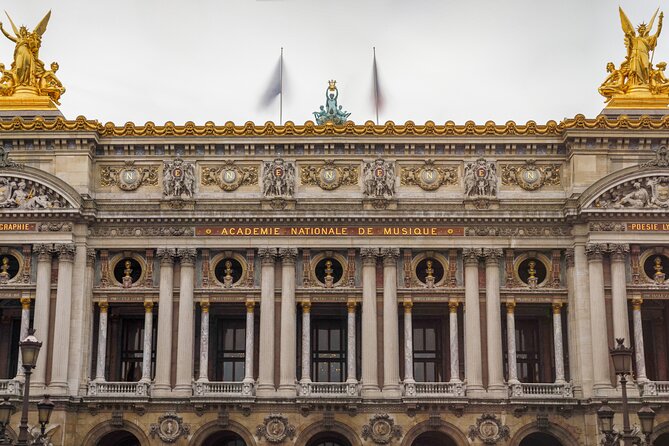
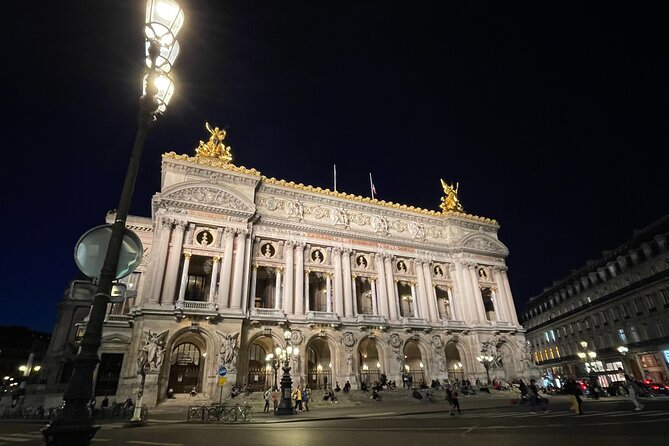
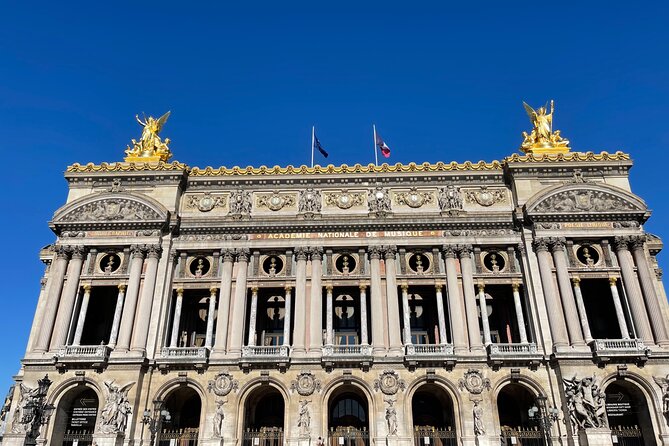
Palais Garnier is one of those Paris spots where the exterior already sets expectations. The moment you meet at Place de l’Opéra, you’re at the center of it all, and the building’s scale makes sense right away. It’s also a good sign for practical travelers: you’re meeting in a central area with public transportation nearby, so you’re not committing to a long walk across town.
Once you’re inside, you go through security control first, then the tour shifts into “this is how the opera house works” mode. I like that the experience doesn’t just jump to the most famous room. It starts with positioning—where you enter, why that entry mattered, and what that says about the kinds of people who came here.
You can also read our reviews of more guided tours in Paris



The Rotonda and the feeling of a prestigious arrival
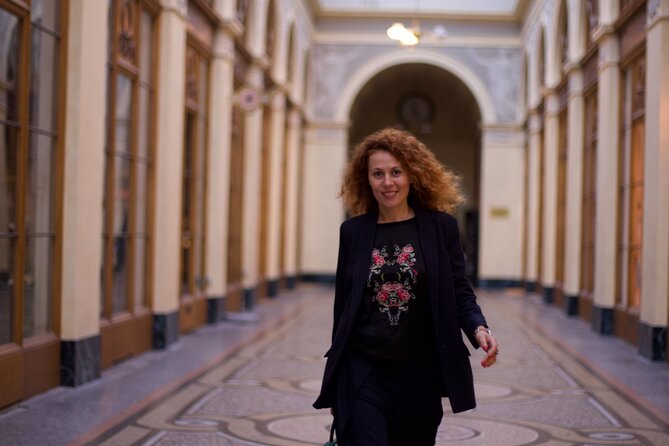
The tour’s first major interior theme is the Rotonda—described as the entrance for the most prestigious spectators. That detail matters. In a building like this, entrances weren’t an afterthought. They were part of the show. Getting a guided path to this area helps you read the building like a map of social rank.
After the security check, you’re taken under the Rotonda rather than immediately funneled through the most obvious tourist flow. That means you can understand the logic before you start looking upward and outward. It also sets a calm pace: you’re not trying to figure out where to stand or what to notice while everyone else is moving.
If you’re the type who enjoys architecture but hates random wandering, this beginning is a strong match. You’ll get orientation fast, then the guide can make the next rooms make sense.
The Grand Staircase: how the opulence becomes understandable
Next comes the Grand Staircase, described as the route that leaves you blown away by its decor. I love this part because it’s one of the few interiors in Paris where the design is clearly built for spectacle.
Here’s the key value for you: the staircase isn’t just “beautiful.” It’s a stage for arriving, being seen, and moving into position. A private guide can point out details you’d otherwise miss—how the space directs you, how the scale creates drama, and why it would have felt like stepping into a different world.
The guide also frames this transition as time travel into late 19th-century Paris. That works best when you think about the opera house as both entertainment and public theater. It’s where people went to perform their taste and status, not just their appreciation for music.
Auditorium time: lodge views and the Chagall ceilings
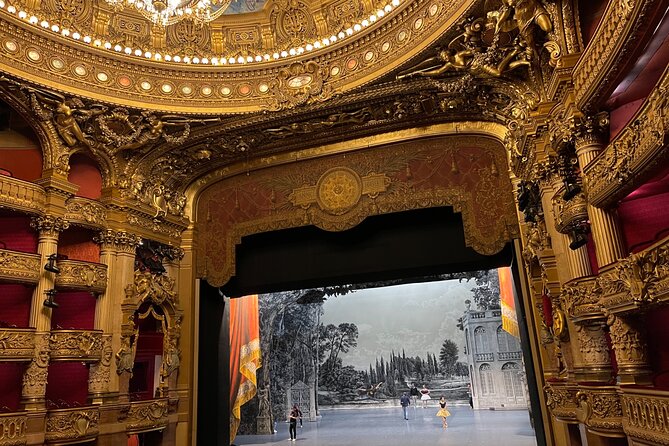
After the Grand Staircase, the tour continues toward the auditorium area, with a big highlight: a view from a lodge. Standing where you can admire the auditorium layout is a smart move. Without that perspective, you can look at the room and still not understand how it’s organized or why it feels so theatrical.
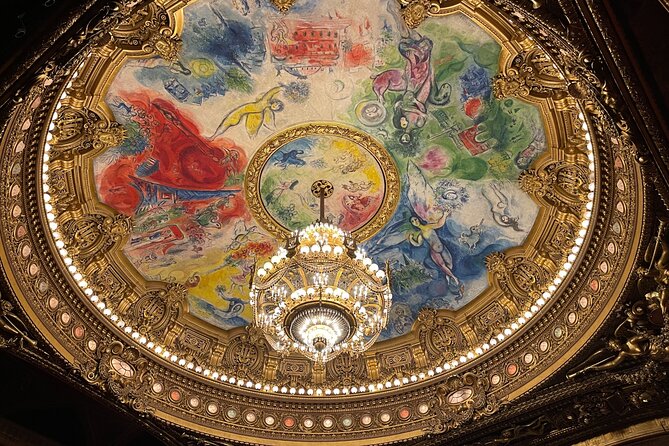
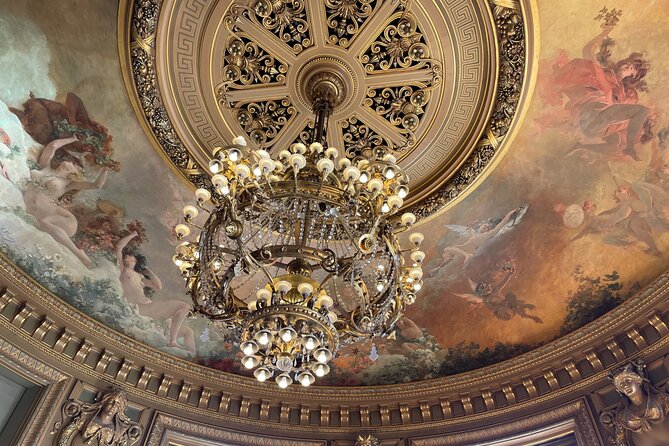
One of the standout art notes here is the ceiling painted by Chagall. Seeing it in context—above a room where audiences once sat and watched—turns a famous name into something you can actually track spatially. You’re not just looking up because you should. You’re looking up because the guide places it in the experience of the space.
This is also where the tour leans into the cultural side of Palais Garnier. The itinerary mentions meeting the Fantôme de l’Opera, and even if you’re not a hardcore fan, it’s a useful reminder that this building has layers. It’s a real opera house, but it’s also a magnet for story, imagination, and references that people keep returning to.
Divers galeries, salons, and the Grand Foyer: the rooms between the spotlight
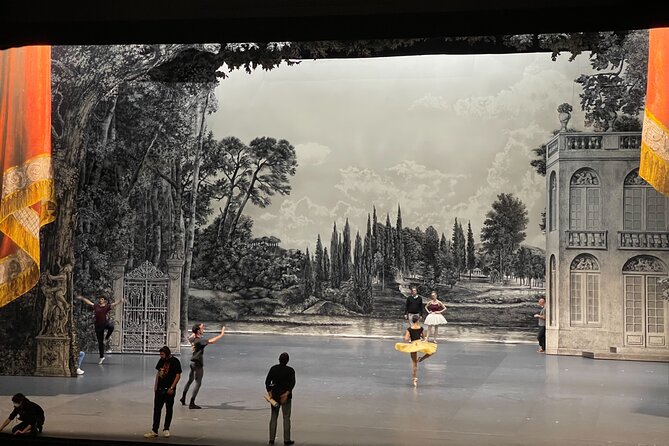
The middle of the tour is where things often get skipped by self-guided visits. Here, you follow into the divers galeries and richly decorated salons, then move to the splendid Grand Foyer. I like this sequence because it fills the gaps between the big-name moments.
In practical terms, the galleries and salons help you see how the building functions beyond the stage. These are the circulation spaces—where conversation, display, and movement happened before and after performances. The Grand Foyer, in particular, is the kind of room that rewards slowing down. It’s grand, yes, but it also helps you understand the building’s rhythm: arrive, circulate, gather, then settle into the auditorium.
The guide’s job in these rooms is to connect the visuals to meaning. Based on the way the experience is described, you’re not just walking through decoration. You’re being shown how design choices link back to the experience of being there—what people would have noticed, where attention would go, and how the building was engineered to support a certain kind of evening.
You can also read our reviews of more private tours in Paris






The guide’s stories: architect details and 1889 Paris social norms
A tour like this lives or dies by the guide’s storytelling. The best part of this experience is that it doesn’t treat Palais Garnier as a static museum object. It treats it like a working symbol of its era.
You’ll hear insider-style information about the architect and how he won the contract to build the opera house, plus how life worked for opera goers of high society when the building opened. That matters because Palais Garnier wasn’t designed only for acoustics and seating. It was designed for public life, reputation, and the choreography of an evening out.
From there, the tour adds meaning to design and construction innovations. Even if you don’t care about engineering in daily life, the guide’s framing makes it easier to appreciate why certain choices were made—and what it would have felt like back in the day.
This is also where the “time travel” idea becomes useful. You’re not asking the building to do extra work. The guide gives you a lens, and suddenly the whole visit feels coordinated.
Tickets aren’t included: plan your entry so the tour doesn’t get awkward
One practical note: admission tickets are not included. That means you’ll need to buy your entry separately to participate smoothly.
This matters because Palais Garnier is a security-controlled site. If you show up without the right ticket setup, you can end up losing time right when the tour is supposed to start flowing. So do yourself a favor: arrange entry ahead of time and check that your ticket matches the date you booked.
Also note the timing window in the provided hours. The experience is listed between 10:00 AM and 4:00 PM, Monday through Sunday, within the overall date range shown. If you’re trying to stack this with another museum that runs later in the day, keep the afternoon cutoff in mind.
Price: is $692.36 per group good value?
The price is listed as $692.36 per group, for up to 8 people, for about 2 hours. The value question is simple: how many people are in your party?
- If you fill the group to 8, the cost is roughly $86.55 per person for the guided portion.
- If you come as a smaller group, your per-person cost rises fast, but you still get the private format, the pacing, and the guided route.
What you’re paying for isn’t just someone to walk beside you. It’s a structured interior experience designed around key spaces—Rotonda entry, Grand Staircase, lodge views, and the Grand Foyer—plus a guide who ties the architecture to social life and the stories tied to this building.
If you’re the only opera person in your group, this can still be worth it because the tour focuses on architecture, design decisions, and the way people used the space, not only musical details.
If you’re traveling solo and you’re on a tight budget, a private tour can feel steep. But if you split it with family or friends, it becomes much easier to justify.
Who should book this private Garnier tour?
This tour fits best if you want:
- A guided walkthrough that actually explains what you’re seeing (especially if you don’t want to guess your way through ornate rooms).
- Architecture plus stories, with attention to how high society operated when the building opened.
- A short, focused experience lasting about 2 hours that doesn’t turn into a half-day project.
It’s also a smart pick if Palais Garnier is on your must-see list but you’d rather get the meaning than just the photos.
You might choose something else if you’re only interested in quick exterior views, or if you prefer long, unguided wandering at your own pace with no structured route.
Should you book the 2-hour Private Opera Garnier Guided Tour?
Yes—if you like your Paris sights with context. Palais Garnier is one of those places where a guide changes everything: the route, the order, and the way you understand why spaces look the way they do. The private format, led by Iuliana Pintea, is especially valuable because it’s built around key moments like the Rotonda entrance for prestigious spectators, Grand Staircase drama, lodge views into the auditorium, and the Chagall ceiling you can actually place in the room.
Before you book, plan one thing: you’ll need tickets separately. Once that’s handled, this is a very strong use of a couple hours in central Paris—ideal for couples, families with older kids, small friend groups, and anyone who wants to leave with more than a memory of pretty rooms.
FAQ
How long is the 2 Hour Private Opera Garnier Guided Tour?
It runs for approximately 2 hours.
Is the tour private?
Yes. It’s a private tour for only your group, with up to 8 people per group.
Is the tour offered in English?
Yes, it’s offered in English.
Where do we meet for the tour?
You meet at Place de l’Opéra, Pl. de l’Opéra, Paris, France, and the tour ends back at the same meeting point.
Are tickets included in the price?
No. Admission tickets are not included.
What parts of Palais Garnier will we visit?
You’ll see major interior areas including the Rotonda, the Grand Staircase, the auditorium from a lodge, divers galeries, richly decorated salons, and the Grand Foyer. The tour also mentions the Chagall-painted ceiling and the Fantôme de l’Opera.
What time does the tour run?
The listed opening hours are 10:00 AM to 4:00 PM, Monday through Sunday.
Who is the guide?
The experience provider is Iuliana Pintea, and the tour includes guided narration.
What is the cancellation policy?
This experience is non-refundable and cannot be changed for any reason.
Is the tour suitable for most travelers?
It’s listed as Most travelers can participate.