REVIEW · PARIS
WW1 Australians in the Somme -Villers Bretonneux, Le Hamel – Day trip from Paris
Book on Viator →Operated by ADRIAN ROADS · Bookable on Viator
Australian names, silent craters, and preserved trenches. This is a seven-person Somme day built around Australia’s WWI role, with a driver-guide who handles the driving and gives you the story behind each site. You’ll move through major memorials and museums without worrying about navigation, and you’ll get time at the places that matter most to Australians who served on the Western Front.
One trade-off: it’s a long day, roughly 12 to 13 hours, and no lunch is included, so you’ll want to plan ahead for food and energy after the morning sites.
In This Review
- Key things to know before you go
- A small-group Somme day from Paris (that starts early)
- Villers-Bretonneux: the Australian National Memorial tower and 10,773 names
- Le Hamel memorial park: Monash’s combined attack and preserved trenches
- Lochnagar Crater: the mine sprung at 7:28 a.m. on 1 July 1916
- Windmill Memorial at Pozières: why Charles Bean mattered
- The 2nd Australian Division memorial: bronze bas-reliefs and a statue rebuilt
- Péronne’s Historial de la Grande Guerre: trench artists and uniforms in a 13th-century castle
- Price and value: what $300.06 buys you (and what it doesn’t)
- Who this day trip is best for
- A realistic day plan: pacing, comfort, and what to bring
- Should you book this WW1 Australians in the Somme day trip from Paris?
- FAQ
- How long is the WW1 Australians in the Somme day trip from Paris?
- What’s the group size for this experience?
- What language is the tour offered in?
- What’s included in the price?
- Is lunch included?
- What happens if weather is poor?
Key things to know before you go
Small group (max 7) means you can actually hear the commentary and ask questions when something clicks.
Guide-led route and navigation saves time and keeps you from wasting energy figuring out where to stand and what to focus on.
Major Australian memorials first (Villers-Bretonneux and Le Hamel) set the emotional tone early.
Lochnagar and Pozières are big, visual experiences—crater and memorial terrain you can’t really fake with pictures.
End at the Historial de la Grande Guerre in Péronne for context and hands-on war artifacts, including trench artists like Otto Dix.
A small-group Somme day from Paris (that starts early)
This day trip is built for one thing: keeping you moving through the Somme without turning the day into a do-it-yourself logistics problem. You leave from the Théâtre du Lido on the Champs-Élysées area at 6:30 am, travel by air-conditioned vehicle, and spend the day hopping between key sites tied to Australian forces in WWI.
What I like about the format is simple. With a small group—up to seven—you’re not stuck with a bunch of people talking over your guide. And because the guide handles navigation, you can pay attention to the places themselves. These are sites where details matter: names, trench lines, battlefield objectives, and what was preserved after the war.
The day is long, though. Expect you’ll want to eat at some point because lunch isn’t included, and the pace can feel full from morning through late afternoon. If you’re the type who powers through with snacks and water, you’ll do great. If you rely on structured meals, plan your break.
You can also read our reviews of more tours and experiences in Paris



Villers-Bretonneux: the Australian National Memorial tower and 10,773 names
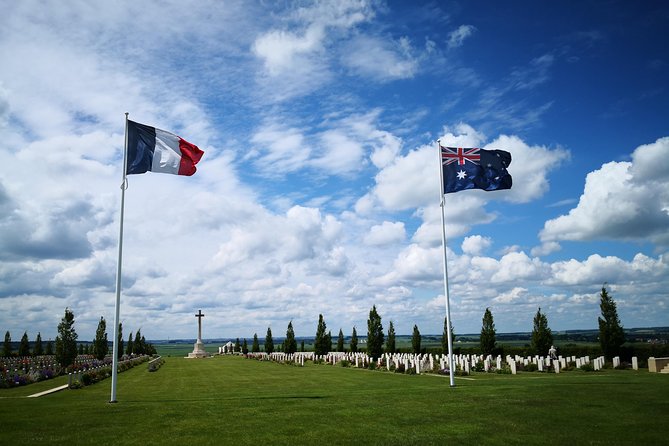
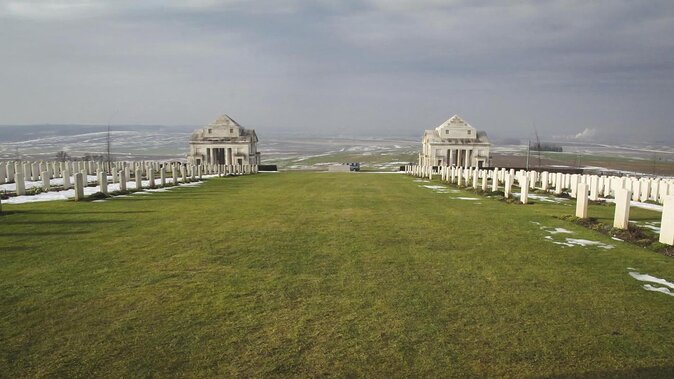
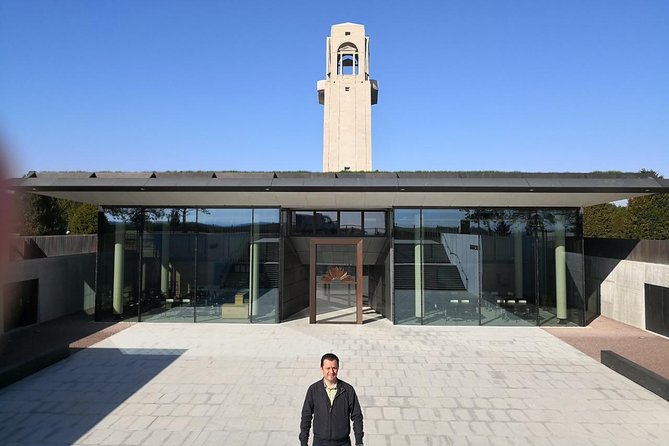
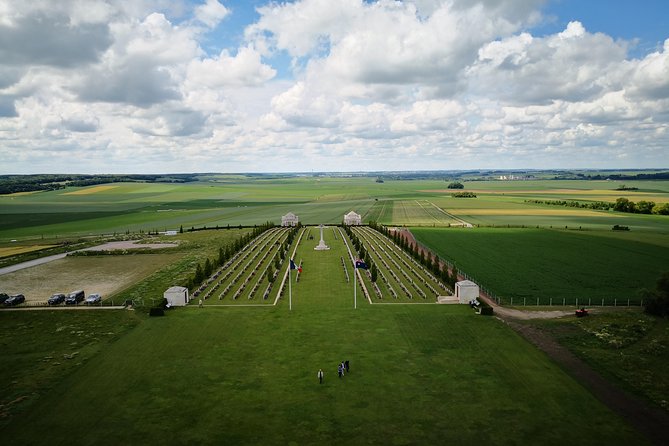
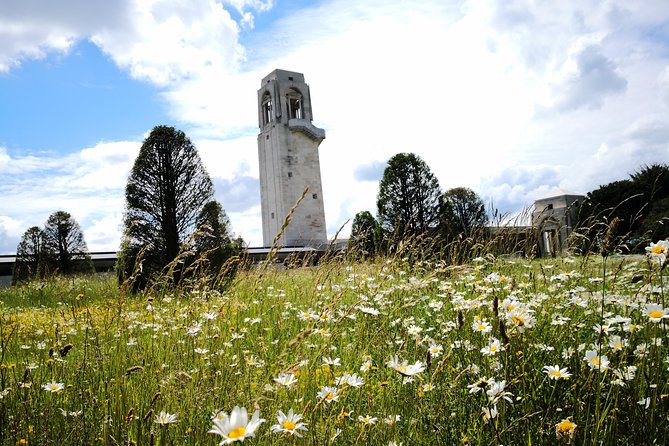
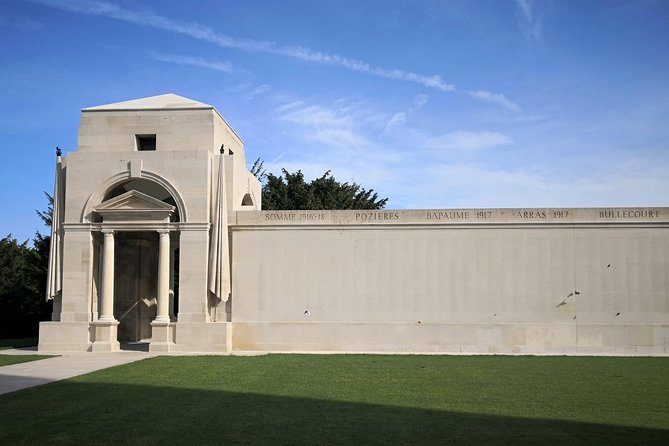
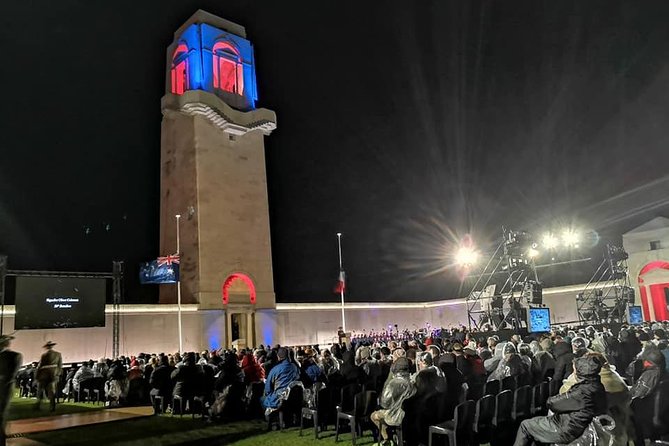
Your first stop is the Australian National Memorial in Villers-Bretonneux. It’s the main memorial in France for Australian military personnel killed on the Western Front in WWI who have no known grave. The memorial lists 10,773 names—a huge number that lands differently when you’re reading them in person.
This site is also tied to a specific battle moment: it was chosen to commemorate the role Australian soldiers played in the Second Battle of Villers-Bretonneux (24–27 April 1918). That connection matters. It turns the memorial from a generic WWI stop into a story with a beginning and purpose.
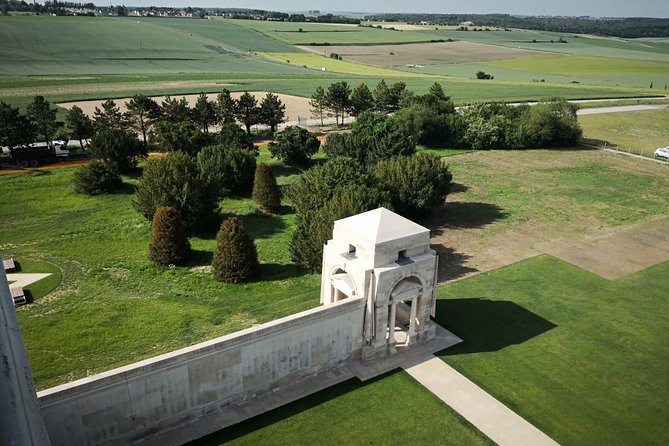
The design is by Sir Edwin Lutyens, and that’s worth pausing for. The memorial features a tower inside the Villers-Bretonneux Military Cemetery, along with a Cross of Sacrifice. Panels and walls carry names of the missing dead, and the main inscription appears in both French and English on either side of the entrance.
Practical tip: plan on using the full time here (about 40 minutes). Don’t rush. You’ll get more out of the reading and the setting when you slow down.
Le Hamel memorial park: Monash’s combined attack and preserved trenches
Next up is the Australian Corps Memorial at Le Hamel, tied to the battle on 4 July 1918. This is one of those sites where the background makes the landscape make sense. The memorial explains how General Monash launched a hugely successful attack with infantry, artillery, air forces, and tanks working together—described as the first time those elements were combined in this way.
The memorial park was created in the village of Le Hamel by the Australian state and inaugurated in 1998. You’ll find panoramic displays and explanatory panels that help you understand the strategic challenge the troops faced. Several trenches have been preserved, which is a big difference from memorials that are purely architectural or symbolic.
The emotional value here comes from the mix: battlefield purpose plus the physical leftovers. When you look at preserved trenches while hearing the guide’s explanation of what the attack required, the day stops being only about remembering. It also becomes about understanding decisions—how hard it was, and why success mattered.
This stop is shorter (about 30 minutes), so come in ready to listen closely. If you’re the kind of person who likes to read everything, you may want to skim first and come back to the panel points that your guide highlights.
Lochnagar Crater: the mine sprung at 7:28 a.m. on 1 July 1916
Lochnagar Crater is one of the most visually striking stops on the day. It comes from the Lochnagar mine, an underground explosive charge planted by the British during WWI, set up secretly and ready for 1 July 1916, the first day of the Somme offensive.
The crater’s scale is given with precision: it left a hole about 98 ft (30 m) deep and 330 ft (100 m) wide. That’s the kind of number you can’t fully grasp until you stand there. It also helps explain why this part of the Somme is remembered the way it is—this was not a small tactical shift. It was preparation on a brutal scale.
The British named the mine after Lochnagar Street, the trench from which the gallery was driven. And the mine was dug by the Tunnelling Companies of the Royal Engineers under German field fortifications known as Schwabenhöhe (Swabian Height).
You’ll also hear that the mine was one of 19 mines placed beneath German lines on the British section of the Somme front to assist the infantry advance. The charge was sprung at 7:28 a.m., and British troops captured and held the crater. Still, advances on either flank didn’t go as intended due to German small-arms and artillery fire.
This stop is brief (around 10 minutes), but it’s designed to be felt quickly. If you’re sensitive to sights that look like impact zones, use the time you need to orient yourself before moving on. And if you’re visiting outside of July 1, you won’t see the annual religious service—but it is held each year at the crater on 1 July, which adds a living rhythm to the site.
Windmill Memorial at Pozières: why Charles Bean mattered
The Windmill site at Pozières is an Australian memorial created in the 1930s at the suggestion of Australia’s official war historian, Charles Bean. The reasoning is powerful and blunt: the site marks a ridge described as more densely sown with Australian sacrifice than any other place on earth.
During the Battle of the Somme, the Australian Imperial Force suffered 23,000 casualties over seven weeks in 1916, and more than 6,700 died in the countryside around the Windmill. That casualty framing matters here. It keeps the Windmill from becoming only a memorial photo stop. The guide’s job at this point is to connect what you see to what that number actually meant.
One unique detail makes this stop hit harder: in 1993, soil from the Windmill site was cast over the coffin of Australia’s Unknown Soldier during his funeral at the Australian War Memorial in Canberra. It’s a physical link between a place in France and an act of national remembrance back home.
Time-wise, this is again about 10 minutes. Don’t treat it like filler. Use it as a hinge between earlier story-building sites and the later memorials, where you’ll keep seeing how different locations represent different parts of the same war.






The 2nd Australian Division memorial: bronze bas-reliefs and a statue rebuilt

Mont Saint-Quentin has an Australian First World War memorial context, and on this day you visit the 2nd Australian Division memorial on the road from Bapaume to Péronne. This one is special because it’s the only one of the five Australian division memorials that was initiated by members of the division.
The memorial base was erected in 1925, and it includes bronze bas-reliefs showing men hauling and pushing a gun and men advancing with bayoneted rifles and hand-grenades. Atop it is an Australian soldier thrusting his bayonet through a German eagle. The sculptor is identified as Charles Web Gilbert.
Then comes the part that adds a second layer to the story: in 1940, German soldiers smashed the memorial. A replacement statue—of a thoughtful Australian soldier looking down—was erected in 1971, sculpted by Stanley Hammond.
You’ll get about 10 minutes here. Since the facts are visually specific, take a slow minute to look at the bas-reliefs and the figure. Even if you don’t read every panel detail, the “before and after” history of the memorial itself is a reminder that memory is something people fight to preserve.
Péronne’s Historial de la Grande Guerre: trench artists and uniforms in a 13th-century castle
After the main outdoor sites, you end at the Historial de la Grande Guerre in Péronne, with free access included. The building is a 13th-century medieval castle that houses the WWI museum experience.
This is where the day becomes more than memorial visits. You’ll see large exhibits of uniforms and weapons designed and used by soldiers during the conflict. That physical, museum-style context helps you connect what you heard outside to what soldiers actually carried and wore.
The Historial also has a permanent collection of Trench Artists, including work by Otto Dix. These artists are presented here as testimony of the war’s atrocities through sketching and very graphic etchings.
This portion lasts about 1 hour, which is enough for a first pass if you stay focused on what the guide points you toward. If you’re the kind of person who likes to read every label, you might want to keep your pace controlled so you still get the main collections in your hour.
Price and value: what $300.06 buys you (and what it doesn’t)
At $300.06 per person, this is not a budget day trip. But you are paying for a specific combination: the long-distance transport by air-conditioned vehicle, a driver-guide, and admission to the Historial de la Grande War in Péronne.
The other sites you visit—Villers-Bretonneux, Le Hamel memorials, Lochnagar Crater, Windmill, and the 2nd Division memorial—are listed with free admission tickets in the schedule. So the cost isn’t about entry fees to every stop. It’s about the guided sequencing, time saved on navigation, and the value of someone explaining what you’re seeing as you go.
What you should expect not to be included: lunch. That’s the main practical gap. If you budget for lunch (or bring snacks early in the day), you’ll feel the day is priced more reasonably because you’re not paying entry fees all day—just transportation and interpretation.
This tour is also limited to seven people, and that small-group cap is part of what you’re paying for. On bigger tours, you often lose the chance to slow down at the sites that deserve it.
Who this day trip is best for
This is a great fit if you want your WWI day trip to be more than scenic stopping points. If you care about Australia’s WWI role and want the story threaded through multiple memorial sites, the guide-led structure helps a lot.
It also works well if you have family members with different interests. The outdoor sites are emotional and factual; the museum adds hands-on detail with artifacts and trench art. One review you might relate to is that the mix worked for teenagers too, which makes sense. The day isn’t only solemn. It’s also visual, structured, and explanatory.
If you prefer totally self-guided travel, this might feel a bit scheduled. But if you’d rather follow a route where the guide tells you what matters most at each stop—and you don’t want to manage transport across the Somme yourself—this format is built for you.
A realistic day plan: pacing, comfort, and what to bring
Because you’re moving from site to site, think in terms of “short stops with big meaning.” Several stops are only 10 minutes, which means you’ll get orientation and key points, then move on. In other words: this isn’t a slow walking tour where you linger for hours. You’ll still have time to look, just not unlimited time.
For comfort:
- Dress for early morning and changing weather. You’re outside for parts of the day.
- Bring water. You’ll be on the road for most of the day.
- Since lunch isn’t included, bring something you can eat, or plan to buy food on your own during the day.
Should you book this WW1 Australians in the Somme day trip from Paris?
I’d book it if you want a focused Australian WWI route that doesn’t require you to become a battlefield navigator. The small group cap and the guide-led storytelling are the difference here, especially when you’re moving between memorials like Villers-Bretonneux and Le Hamel, then shifting into the crater at Lochnagar and the museum in Péronne.
Skip it (or think twice) if you strongly prefer unstructured travel, or if long days with limited breaks will drain you. Also, take the no-lunch detail seriously—plan food before you go so you don’t end the day hungry and rushed.
If your goal is a meaningful Somme day that feels organized, personal, and connected—from names on the memorial walls to trench art inside a medieval castle—this one is hard to fault.
FAQ
How long is the WW1 Australians in the Somme day trip from Paris?
It runs about 12 to 13 hours.
What’s the group size for this experience?
It has a maximum of 7 travelers.
What language is the tour offered in?
It’s offered in English.
What’s included in the price?
The price includes an air-conditioned vehicle, a driver guide, and admission to the Historial de la Grande War in Péronne.
Is lunch included?
No, lunch is not included.
What happens if weather is poor?
The experience requires good weather. If it’s canceled due to poor weather, you’ll be offered a different date or a full refund. You can cancel for a full refund up to 24 hours before the start time.