REVIEW · PARIS
Versailles Revolution Tour – 1789
Book on GetYourGuide →Operated by Baptiste Barennes · Bookable on GetYourGuide
Revolution in Versailles starts with your feet. This interactive walk turns the town around the palace into a working stage for the French Revolution story. It’s built around the moment people arrived for the General Estates in May 1789, so you’re not just watching history from the sidelines.
What I especially liked: the tour connects big ideas like the Declaration of the Rights of Man and the Citizen to very specific places in Versailles, and your guide (often Baptiste) uses real context so each stop feels like it matters. One possible drawback: you’ll be walking in the town near the palace, and there’s no access to the castle itself.
In This Review
- Key points before you go
- A two-hour “1789 on the ground” walk near Versailles
- Where you start: Louis XIV’s statue, then you’re in the right story
- Arms Square: the General Estates opening procession moment
- Hôtel des Menus-Plaisirs: where the Revolution begins
- Royal Tennis Court and June 20: the oath moment lands differently outdoors
- Linking Marie-Antoinette, Louis XVI, and the fall of favorites
- Paris Avenue: the women’s march and the reality of collective action
- American Independence in Versailles: from Lafayette to the treaty end
- What you get for $41: value in a focused, local route
- Tour length, pacing, and who this fits best
- Tips to get the most from the 1789 role play
- Should you book the Versailles Revolution Tour – 1789?
- FAQ
- Where do I meet the guide?
- Is there access to the Palace of Versailles during this tour?
- How long is the Versailles Revolution Tour – 1789?
- What languages is the live guide?
- Is this tour wheelchair accessible?
- What do I receive at the end of the tour?
- Can I cancel for a refund, and can I pay later?
Key points before you go
- Interactive role as a deputy in 1789: you’re guided through the day like you belong to the Estates.
- A tight route with major turning points: Arms Square, Menus-Plaisirs, the Royal Tennis Court, and more.
- You get the American link too: Lafayette’s thread leads to the treaty end of the American Independence war.
- Marie-Antoinette and Louis XVI are part of the street-level story, not just names on a timeline.
- Tour end includes a take-home print: a reproduction engraving (like a redesigned old Versailles map).
- English and French guides, and the route is wheelchair accessible.
A two-hour “1789 on the ground” walk near Versailles
Versailles is famous for the palace. But this tour makes a smart choice: it focuses on the streets and buildings around the palace, where the drama of 1789 took on real momentum. You start with the premise that you’re a deputy who came for the General Estates, and that framing changes how you listen. Instead of collecting facts, you follow a chain of cause and effect.
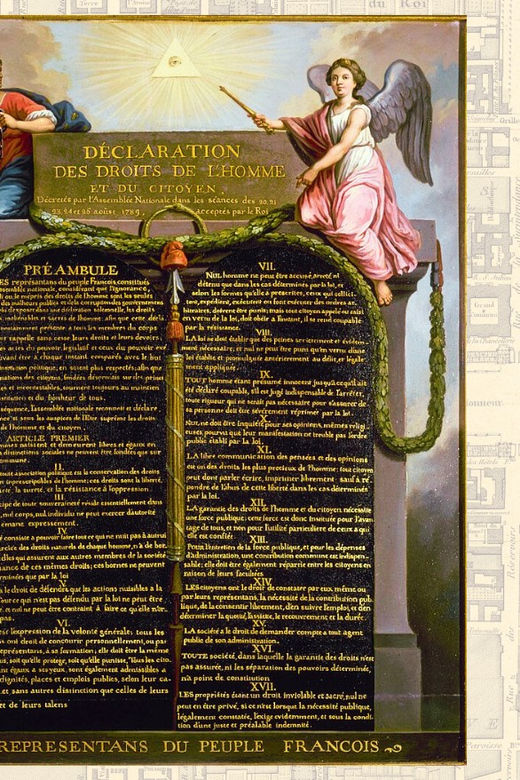
You’ll cover four themes in a way that feels practical: the French Revolution, Marie-Antoinette and Louis XVI, the Declaration of the Rights of Man and the Citizen, and the American Independence story. The pacing is the key. In about two hours, you move through places tied to the opening of the Estates, the spark of revolution, the Tennis Court Oath, the women’s march, and the later treaty that ended the American war.
The vibe is also part education, part performance. When a guide hands you a role in the story, you tend to remember details. And the tour is designed to keep you moving, so the “big history” doesn’t feel like a lecture you have to endure.
You can also read our reviews of more tours and experiences in Paris.



Where you start: Louis XIV’s statue, then you’re in the right story
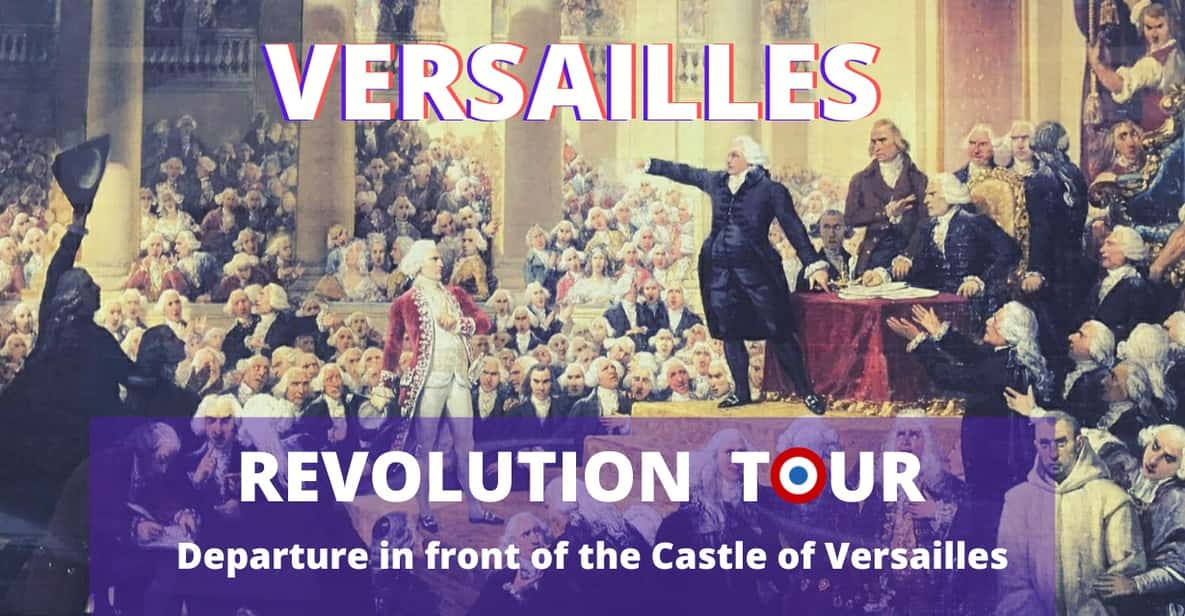
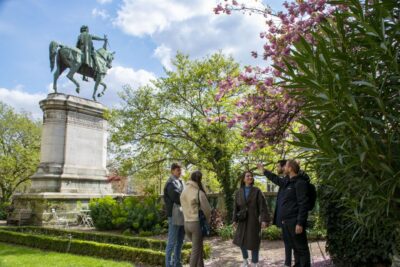
Meet at the equestrian statue of Louis XIV in front of the Castle of Versailles. It’s a big statue, and the setup is simple: it’s the one you should see, near the Arms Square area. This matters more than you might think. With tours like this, if you start with confusion, the historical framing can fall flat before it even begins.
From the first minutes, you’ll be directed along the route with the logic of May 1789 in mind. You’re not going to a museum room and then leaving. You’re walking through the town in the order the revolution story unfolds, with your guide pointing out how each building links to a decision, a conflict, or a public moment.
If you like to orient yourself fast, this is a good match. The landmarks are visible, the route is compact, and your job is basically to keep up and ask questions when you get one. The tour is offered in English and French, which is useful if you’re traveling with someone who wants to switch languages in the middle of a sentence.
Arms Square: the General Estates opening procession moment
The tour begins with the General Estates story at Arms Square, tied to the procession that marked the opening. This is the kind of starting point that helps you understand why 1789 got loud so quickly. The General Estates weren’t just another meeting. They were a political collision set in motion in a highly public way.
Here’s what you should listen for: how the ceremony and the crowd energy create expectations, and how those expectations turn into pressure. Your guide builds the context so you can see the stakes. You’ll also learn how the Estates became a gateway for revolution—less like a single event, more like the match to a long-simmering fuse.
Practical note: expect to walk and stand in open areas. If you’re sensitive to sun or wind, plan for it. Versailles in motion can be breezy, and you’ll be outdoors for the duration.
Hôtel des Menus-Plaisirs: where the Revolution begins
Next comes Hôtel des Menus-Plaisirs, described as where the French Revolution began. This stop is valuable because it shifts the story from court-life background into something more immediate. Instead of treating revolution as a concept, you’re anchored to a place connected with action.
You may also get access to unusual space nearby depending on day-to-day conditions. I like tours that let you step into a courtyard or interior area when it’s possible, because it breaks up the “walk and look” pattern. When access works, the building stops being a photo location and becomes a setting you can picture with people in it.
This is also where your guide’s craft shows. It’s easy to say a revolution began. It’s harder to explain what that beginning looked like from the ground: who felt threatened, who felt empowered, and how quickly the tone changed.
Royal Tennis Court and June 20: the oath moment lands differently outdoors
Then you reach the Royal Tennis Court, and the focus becomes the tennis court oath on June 20. This is one of the most famous moments of the Revolution, but the outdoor placement helps you feel how public defiance works. It’s not private rebellion. It’s a move made in view of others.
What I find helpful here is the way the guide ties the oath to later demands—especially the move toward a statement of rights. Even if you already know the big headlines, you’ll likely pick up the logic behind them: institutions resist, people escalate, and a new idea of legitimacy starts replacing the old one.
If you’re the type who likes to ask why people acted when they did, this is a good point to do it. The oath moment sets up everything that follows, including why political language like rights and representation becomes urgent, not theoretical.






Linking Marie-Antoinette, Louis XVI, and the fall of favorites
A stop at Hôtel de Madame du Barry brings you to the last favorite of Louis XV, and it’s a clever contrast point in the story. Revolution doesn’t only come from one policy failure. It also grows from perception: favoritism, inequality, and a sense that power is being used for personal comfort while the public pays the price.
From there, you’ll keep hearing how the Revolution era reshapes reputations and legitimacy, including the place of Louis XVI and Marie-Antoinette in the narrative. The tour’s highlight list frames them directly, and the route gives you a street-level way to connect royal identity to political backlash.
This is a good moment to tune your listening. If you go in thinking you’ll only cover “facts and dates,” you’ll miss part of why 1789 happened. Pay attention to the emotional physics: resentment builds, symbolism matters, and public trust erodes.
Paris Avenue: the women’s march and the reality of collective action
Next is Paris Avenue, tied to the arrival of the walk of the women. This is one of the most human stops on the route because it centers collective action. It also widens the story beyond elites and deputies into the people forcing events to change.
Even without getting dramatic, your guide will help you visualize how marches operate: direction, momentum, and attention. The key value is that it breaks the pattern of focusing only on court decisions. When people move as a group, it reshapes what leaders can do next.
If you’re traveling with someone who finds political history dry, this is often where the tour clicks. Collective action is easy to imagine, and it makes the later Declaration-style language feel more connected to lived pressure.
American Independence in Versailles: from Lafayette to the treaty end
Finally, the tour brings you to the former Foreign Affairs Hotel, connected with the treaty of Versailles that ended the American Independence war. This section is smart because it shows Versailles isn’t only about French turmoil. It’s also about international turning points, and you’ll walk away understanding why Lafayette’s name keeps echoing across the ocean.
The value here is perspective. When you place the American war’s conclusion into the same Versailles space, you get a broader sense of the era. Rights talk wasn’t created in a vacuum. It moved through minds, propaganda, alliances, and political debates that crossed borders.
If you like connections, this is your payoff stop. The guide weaves together the Revolution storyline and the American thread so it feels like one era with different fronts, not unrelated trivia.
What you get for $41: value in a focused, local route
At around $41 per person for a 2-hour guided experience, the value comes from focus. You’re not paying for a long day in a palace that you may already be doing anyway. You’re paying for interpretation of the Revolution story in the place it happened, built around a route that you likely wouldn’t piece together on your own.
Included in the price:
- the guided tour itself
- a take-home reproduction of an engraving of Versailles (an older map redesigned, with others available depending on the example you get)
- everything you need for the tour experience as sold
Not included:
- access to the Palace of Versailles itself
That last point is the biggest “value” detail to understand. If what you want is a classic palace visit with rooms and halls, this won’t replace that. But if you want context and story along the streets tied to 1789, this tour can be a perfect complement. In many itineraries, it helps you make sense of why the palace era and the Revolution era feel locked together even when you don’t go inside.
Tour length, pacing, and who this fits best
Two hours is a sweet spot for history on foot. It’s long enough to cover multiple turning points and short enough to keep energy. You’ll be walking around Versailles town near the palace. Comfortable shoes matter more here than in a quick stop-and-snap visit.
This tour fits best if:
- you want to understand the Revolution through the places tied to it
- you like guides who explain how politics happens in real life
- you’re traveling with time limits but still want a meaningful cultural experience
- you’re interested in the link between French events and American Independence
It may fit less well if:
- you mainly want palace rooms and interior sights
- you prefer self-guided wandering with lots of free time
- you’re expecting a purely academic lecture without role-play or street-level storytelling
Tips to get the most from the 1789 role play
Bring a curious mindset and plan to ask at least one question. The tour is interactive, and your guide’s job is easier when you engage.
A few practical ideas:
- Wear shoes that handle cobblestones and uneven ground.
- Bring water, because even a compact route can feel long in warm weather.
- If you already know the big events, listen for the connections between them: how a procession becomes pressure, how pressure becomes rights language, and how that rights language echoes outward.
Also, keep expectations realistic about access. The tour is designed for the town’s historic spots, and it doesn’t promise castle entry. That’s fine. The trade-off is you get to walk the Revolution’s trail instead of spending all your time inside the palace walls.
Should you book the Versailles Revolution Tour – 1789?
Book it if you want a concentrated, story-led walk that explains 1789 in context and ties in Marie-Antoinette, Louis XVI, rights language, and the American link through Lafayette and the treaty. It’s also a strong pick if you want a guide who can make Versailles feel like a lived-in place during the Revolution rather than a distant chapter in a book.
Skip it only if you’re mainly chasing the palace interiors and you don’t want a walking route. For that, you’d plan a palace-focused day instead.
If your goal is to understand why 1789 became inevitable, this tour gives you a clear path through the most important streetside moments.
FAQ
Where do I meet the guide?
Meet at the equestrian statue of Louis XIV, in front of the Castle of Versailles. It’s a large statue and there is only one.
Is there access to the Palace of Versailles during this tour?
No. The tour takes place in the town of Versailles close to the castle, but there is no access to the castle itself.
How long is the Versailles Revolution Tour – 1789?
The duration is 2 hours.
What languages is the live guide?
The live tour guide is available in English and French.
Is this tour wheelchair accessible?
Yes, the tour is wheelchair accessible.
What do I receive at the end of the tour?
At the end, you receive a reproduction of an engraving of Versailles, such as an old Versailles map that has been redesigned.
Can I cancel for a refund, and can I pay later?
Yes. You can cancel up to 24 hours in advance for a full refund, and you can reserve now and pay later.