REVIEW · PARIS
Verdun 1916 and AEF Meuse Argonne offensive 1918 – Private tour (2,7 pax)
Book on Viator →Operated by ADRIAN ROADS · Bookable on Viator
WWI lived here, hour by hour. This private Verdun 1916 and Meuse-Argonne WWI offensive tour ties major battlefield memory sites together with an English-speaking guide, so the day feels meaningful instead of chaotic. I especially like the Verdun Memorial Museum makeover, with its glass-caged replica battlefield and a large video wall that recreates the pounding ground.
You start early, but that helps you beat the crowds. I also like the round-trip transit from Paris in an air-conditioned vehicle for a small private group, and that makes it easier for a guide like Regis to tailor the story to a family connection. The main drawback is the long day—about 13 to 14 hours—starting at 6:30 am.
Expect a serious, reflective route: ossuary remains, a trench memorial for buried-alive soldiers, and the American cemetery with 14,246 graves. Plan for good weather since the tour notes a weather dependency, and wear comfortable shoes for walking on uneven memorial grounds.
In This Review
- Key highlights if you care about WWI details
- From Paris at 6:30 am: how the private WWI day actually runs
- Memorial de Verdun: the 1916 replica battlefield and the museum’s new emotional punch
- Douaumont Ossuary and Bayonet Trench: when the memorial is both evidence and warning
- Montfaucon American Monument: Liberty above the view of the 26 September 1918 attack
- Fort Douaumont: Gamma guns, the 8-month occupation, and what it cost to retake
- Meuse-Argonne American Cemetery: 14,246 graves laid out with careful order
- Lunch, pacing, and comfort tips for a 13–14 hour WWI day
- Price and value: what $595.71 per person buys you (and when it doesn’t)
- Should you book this Verdun and Meuse-Argonne private tour?
- FAQ
- How long is the tour and what time does it start?
- Where do we meet in Paris?
- Is this a private tour?
- Is the tour offered in English?
- Which stops are included, and are entrance tickets included?
- What’s included for food and drinks?
- Is hotel pickup and drop-off included?
- What if weather is bad or I need to cancel?
Key highlights if you care about WWI details
- New Verdun Memorial Museum: a glass-caged 1916 battlefield replica plus a 100 sq. metre video wall
- Douaumont Ossuary with names and scale: small exterior windows and plaques honoring French soldiers
- Bayonet Trench: a stark marker for soldiers buried alive after a June 12, 1916 shell explosion
- Montfaucon American Monument: 60 metres tall, topped by a Liberty statue, with an observation platform
- Fort Douaumont’s brutal math: Gamma guns, the February 25, 1916 German capture, and the October 24, 1916 French retaking
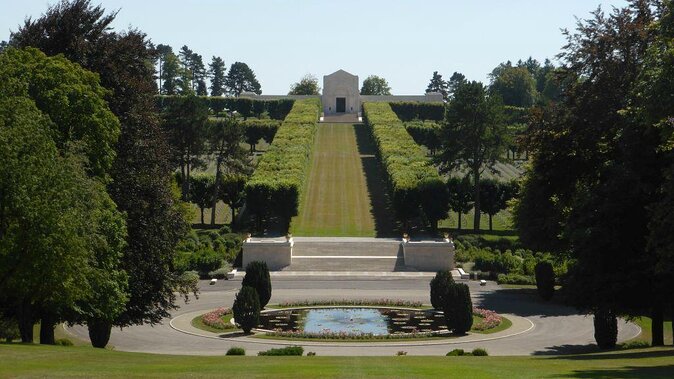
- Meuse-Argonne American Cemetery: 130.5 acres, long rows of headstones, central pool, and chapel views
From Paris at 6:30 am: how the private WWI day actually runs
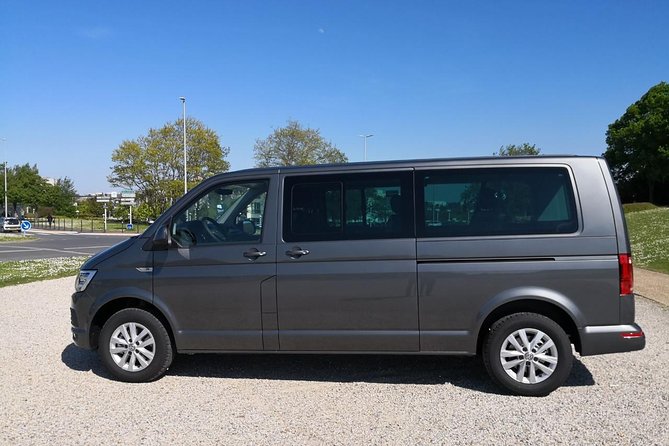
This is a full-day outing built around one practical idea: you shouldn’t spend a day of remembrance wrestling with trains, parking, and transfers. You meet at Théâtre du Lido, 116 Av. des Champs-Élysées (75008 Paris) at 6:30 am, then ride out in an air-conditioned vehicle and end back at the same meeting point.
The duration runs 13 to 14 hours, so treat it like a marathon, not a quick stop-and-snack. You get a light lunch—sandwiches with salad, plus soft drink and coffee—so you’re not searching for food far from the sites. Hotel pickup and drop-off aren’t included, so you’ll want to plan how you’ll reach the meeting point that early (and do it without rushing).
Tickets are handled in the flow of the day. The tour uses a mobile ticket, and admission is included for Memorial de Verdun and Fort Douaumont. Other sites on the route are free to enter. The tour is offered in English, and it’s a private experience for your group only (listed as 2–7 pax).
And yes, it’s somber. If you get uncomfortable in places where war is shown as human loss—not just dates and maps—this may be heavy. I’d still argue it’s respectful heaviness, the kind that makes the story stick.
You can also read our reviews of more private tours in Paris



Memorial de Verdun: the 1916 replica battlefield and the museum’s new emotional punch
Verdun can be a hard story to picture. The Verdun Memorial Museum (with admission included) is designed to fix that, and it does it fast.
You’ll spend about 1 hour here. The centerpiece is a replica of the 1916 battlefield placed within a glass structure. Around it, a video wall covers 100 sq. metres, and the audiovisual presentation recreates the violence of the battle—showing the tremors and the ground contortions from shellfire. It’s not just images; it’s built to make your brain connect the scale of suffering to a real space.
What I like most is that the museum doesn’t trap you in the gloom. The top floor is filled with light and opens to terraces with panoramic views over the surrounding countryside. It’s a reminder that this was farmland and villages before it became a battlefield, and that the land still holds the outlines of what was destroyed.
Practical tip: plan to slow down at the terraces. Even a short pause helps you shift from museum intensity to the quiet reality outside.
Douaumont Ossuary and Bayonet Trench: when the memorial is both evidence and warning
After Verdun, the day turns from museum theater into material reminders. The Douaumont Ossuary is one of the hardest stops to shake off, and it’s also one of the most direct.
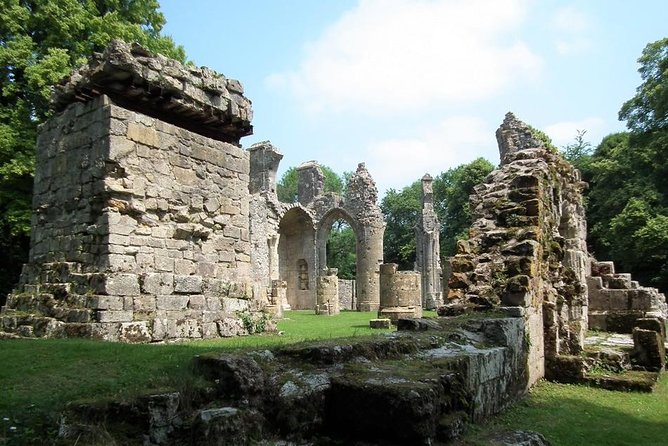
You’ll have about 30 minutes and the site is free. Through small exterior windows, you can see skeletal remains of at least 130,000 unidentified combatants of both nations filling alcoves along the lower edge of the building. Inside, the ceiling and walls carry plaques with names of French soldiers. The ossuary was built on the initiative of Charles Ginisty, Bishop of Verdun, and it’s designated a national cemetery.
This stop works best when you treat it like a place of counting what cannot be counted. The names and numbers don’t feel like trivia once you’re standing there.
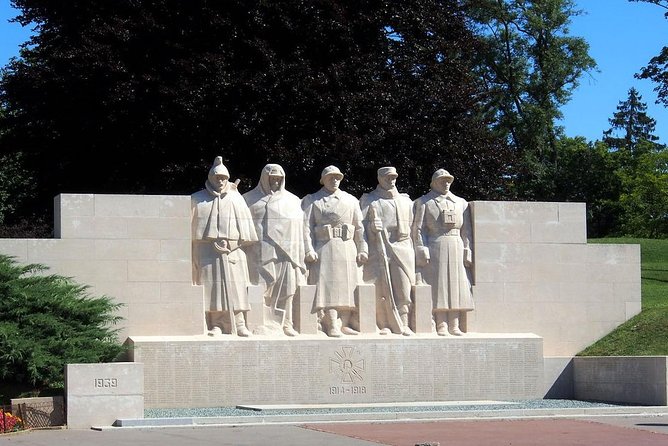
Next comes something simpler, but equally haunting: Tranchée des Baïonnettes. You’ll spend about 10 minutes and it’s also free. The memorial is a massive concrete slab supported by massive pillars. It honors French soldiers who were buried alive after a shell explosion during the Battle of Verdun on June 12, 1916. The only clue that led to discovery was the tip of their bayonets showing above ground.
That last detail matters. It turns a vague tragedy into a specific, grim image. It also keeps the focus on soldiers as people, not just statistics.
If you’re sensitive to graphic reminders, this is the point where you might need to step back. You can still respect the memorial without rushing through it.
Montfaucon American Monument: Liberty above the view of the 26 September 1918 attack
Then the focus shifts to the AEF (American Expeditionary Forces) and the Meuse-Argonne Offensive. The American Monument in Montfaucon is your viewpoint stop, and it’s built for perspective.
You’ll have about 40 minutes, and the site is free. The memorial commemorates the victory of the American First Army in the Meuse-Argonne offensive. It was built by the American Battle Monuments Commission, which is a U.S. government agency that also maintains the memorials.
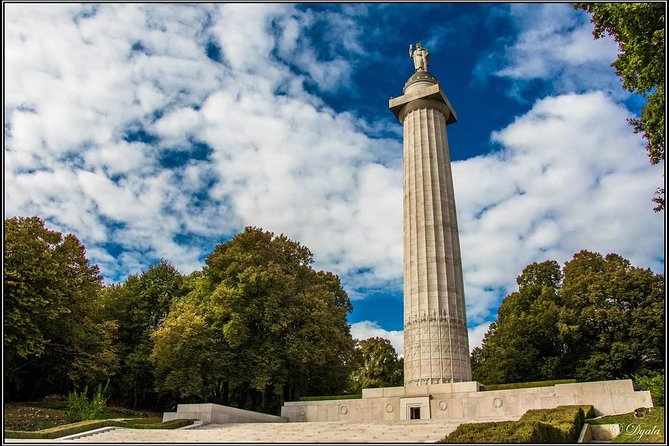
The monument is 60 metres tall and topped by a Liberty statue. The key placement detail is that it stands opposite the front line held by the First American Army on the morning of 26 September 1918, when the attack launched. That means you’re not just looking at scenery. You’re looking from one side of the story toward the ground where the offensive began.
There’s also an observation platform you can climb to for a view of almost all the ground captured during the offensive. Opening times are displayed outside, so check what’s posted when you arrive.
This is the stop I’d pick if you want the battle to become geography in your mind. You’ll probably leave with a stronger sense of direction: where the lines were, what “captured ground” actually looks like from above.
Fort Douaumont: Gamma guns, the 8-month occupation, and what it cost to retake
Fort Douaumont is a major reality check. It’s bigger, harder, and more strategic than the memorials you’ve seen so far.
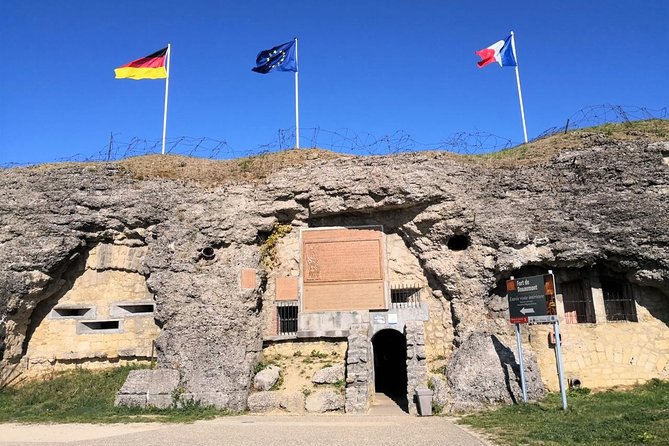
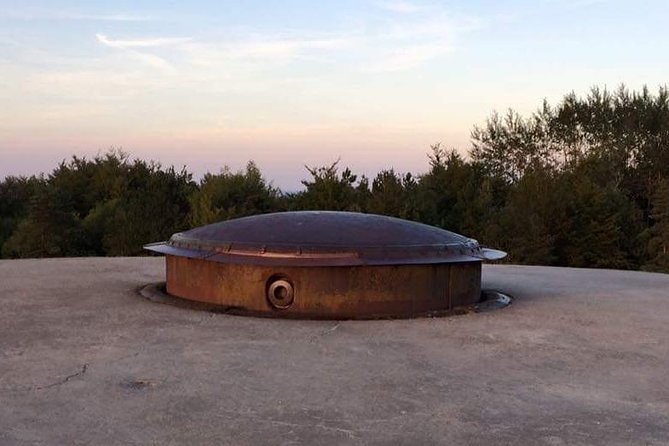
You’ll spend about 40 minutes here, and admission is included. Fort Douaumont was the largest and highest fort among a ring of 19 defensive works built to protect Verdun beginning in the 1890s. By 1915, the French General Staff concluded even the best-protected forts couldn’t resist German 420 mm Gamma guns.
When the Battle of Verdun began, the fort was occupied by about 60 French soldiers. On February 25, 1916, the Germans took it without combat—only four days after the battle started. Germany celebrated the capture as a major victory, and Fort Douaumont stayed in German hands for about 8 months as shelter and a key support point on the right bank of the Meuse.
The retaking came later and came at a terrible price. On October 24, 1916, French colonial troops finally took over: the Morocco Colonial Infantry Regiment and the 43rd Senegalese Tirailleurs Battalion. Marshal Pétain said it cost the lives of 100,000 French soldiers to retake the fort.
This stop is for people who want to understand how WWI worked as a machine: artillery power, fortified positions, and slow, costly reversals. It’s also a place where the numbers stop feeling abstract.





Meuse-Argonne American Cemetery: 14,246 graves laid out with careful order
To finish the day, you visit the Meuse-Argonne American Cemetery. This is the emotional bookend, and it’s also structured in a way that helps you walk with purpose.
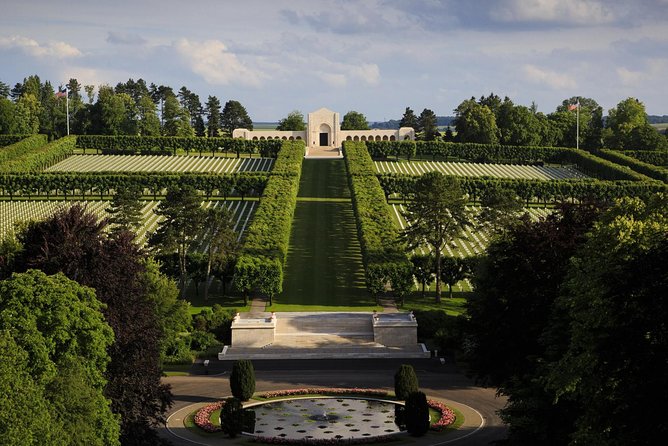
Plan on about 2 hours. The site is free. It’s the largest U.S. military cemetery in Europe, with more than 14,000 graves. The cemetery and memorial covers 130.5 acres, with a total of 14,246 burials. Most of the men here lost their lives during the Meuse-Argonne Offensive.
As you walk, you’ll see immense rows of white headstones rising in long regular lines beyond a wide central pool to the chapel on the ridge. It’s orderly, but it doesn’t feel clinical. It feels like the place is doing its job: giving each person a space to be remembered.
Your historian guide shares stories tied to the fighting in the area and explains the highest military decorations awarded for gallantry. That turns the cemetery from a list of names into a clearer human map of what happened around you.
If you have family connections, this is the moment to slow down the most. Even without a specific name, you can still honor the purpose: pause, read carefully, and give the place your full attention.
Lunch, pacing, and comfort tips for a 13–14 hour WWI day
The tour includes a light lunch—sandwiches with salad, plus soft drink and coffee. That’s helpful on a day where the main goal isn’t eating; it’s staying focused and not getting knocked off balance by hunger.
Because the day starts at 6:30 am and runs about 13 to 14 hours, your comfort matters. Wear shoes that handle uneven ground and plan for lots of walking and standing at memorials. Bring a layer too. Early mornings and long outdoor pauses can feel cooler than you expect, even in fair weather.
One more practical point: since the route depends on good weather, don’t assume it will run no matter what. If conditions are poor, you may be offered a different date or a refund (the tour notes this).
The pace is structured by timed visits—1 hour at the museum, 30 minutes at Douaumont, 10 minutes at Bayonet Trench, 40 minutes for Montfaucon, 40 minutes for Fort Douaumont, then 2 hours at the American cemetery. That rhythm keeps the day moving, but it still gives you real time where it counts: the museum and the cemetery.
Price and value: what $595.71 per person buys you (and when it doesn’t)
At $595.71 per person, this isn’t a budget day trip. The value comes from the fact that you’re paying for a trained English-speaking guide, private logistics, and a full-day route that covers multiple high-impact memorial sites without you doing the heavy planning.
What’s included is practical: round-trip transportation from Paris, air-conditioned vehicle, a light lunch, and admission for Memorial de Verdun and Fort Douaumont. Several other sites on the route are free, which helps keep costs tied to what actually matters: the guide time and the ability to move efficiently between distant locations.
For a private group of 2–7, you also get flexibility in how the guide explains things—especially if someone in your party has family ties. In a family-focused account of this tour, the guide Regis reportedly tailored details so the day connected more directly to where relatives would have marched and stayed, and that kind of personalization can turn a history visit into something unforgettable.
When might the price feel steep? If you’re the type who only wants a single highlight and then photos, you may feel the day is too long and too heavy. Also, if you hate early starts, the 6:30 am departure can be a deal-breaker.
Should you book this Verdun and Meuse-Argonne private tour?
If you care about WWI history and you want a guided day that links Verdun 1916 to the 1918 Meuse-Argonne offensive, I think this tour is a strong match. It’s built around the sites that help you understand not only what happened, but what those events meant in space and in human loss.
Book it if you want:
- a private, English-guided route across the most important memorials
- time at the Verdun Memorial Museum and the Meuse-Argonne American Cemetery
- a day that moves with purpose, not random stops
Skip it if you’re looking for a light sightseeing day, if you struggle with emotionally intense memorials, or if you can’t handle a 13–14 hour schedule starting at 6:30 am.
FAQ
How long is the tour and what time does it start?
The tour runs about 13 to 14 hours and starts at 6:30 am. It ends back at the same meeting point.
Where do we meet in Paris?
You start at Théâtre du Lido, 116 Av. des Champs-Élysées, 75008 Paris, France.
Is this a private tour?
Yes. It’s listed as a private tour/activity, and only your group participates (shown as 2–7 pax).
Is the tour offered in English?
Yes. The tour is offered in English.
Which stops are included, and are entrance tickets included?
You visit: Memorial de Verdun, L’Ossuaire de Douaumont, Tranchée des Baïonnettes, Montfaucon American Monument, Fort Douaumont, and the Meuse-Argonne American Cemetery. Entrance is included for Memorial de Verdun and Fort Douaumont; the other listed memorial sites are free.
What’s included for food and drinks?
You get a light lunch with sandwiches with salad, plus soft drink and coffee.
Is hotel pickup and drop-off included?
No. Hotel pick-up and drop-off are not included.
What if weather is bad or I need to cancel?
The tour requires good weather. If it’s canceled due to poor weather, you’ll be offered a different date or a full refund. You can cancel up to 24 hours in advance for a full refund; canceling less than 24 hours before the start time is not refunded.