REVIEW · PARIS
The Paris “Rive Gauche” tour in a vintage Citroën 2CV
Book on GetYourGuide →Operated by Hubert a Paris · Bookable on GetYourGuide
Paris by low-slung classic car feels different. Citroën 2CV + an art-history guide named Clément turns big sights into a story you can actually remember. I also like the way the tour is planned around quick stops, then back into the car with French music, so you keep moving without feeling rushed.
You’ll get a “Paris you can breathe in” route: the tour favors preserved streets and calmer neighborhoods on the Left Bank, not just the postcard lanes. You also get help that’s useful, not generic: the guide helps with photo spots and shares restaurant and museum recommendations so your next day in the city feels guided.
One consideration: this is a small vintage vehicle, and the tour runs in different weather conditions, so plan for wind, sun, or rain and bring what you need. Also, keep in mind there’s been at least one no-show report in the past, so I’d confirm day-of and make sure you have the operator contact info.
In This Review
- Key highlights you’ll feel right away
- Why a vintage Citroën 2CV beats the usual bus tour
- Starting at Place des Victoires: a smart way to get oriented
- Palais-Royal Quarter and Place Vendôme: beauty at walking-speed, then car-speed
- Arc de Triomphe and the Eiffel Tower: classic icons without the long lines
- Invalides and the 6th Arrondissement: the part that rewards the art-history angle
- Saint-Sulpice and the Latin Quarter: old streets, quick context, good walking later
- Notre-Dame: a quick visit with the right pre-context
- Food, stops, and the quiet power of efficient timing
- Price and value: $106 for a private 2-hour ride
- Weather, comfort, and what to bring
- Who should book this 2CV tour (and who might not)
- Should you book the Paris Rive Gauche 2CV tour?
- FAQ
- Where does the tour start?
- How long is the tour?
- What vehicle do you ride in?
- What’s included in the price?
- Is food included?
- Is the tour wheelchair accessible?
- What should I expect about weather?
Key highlights you’ll feel right away
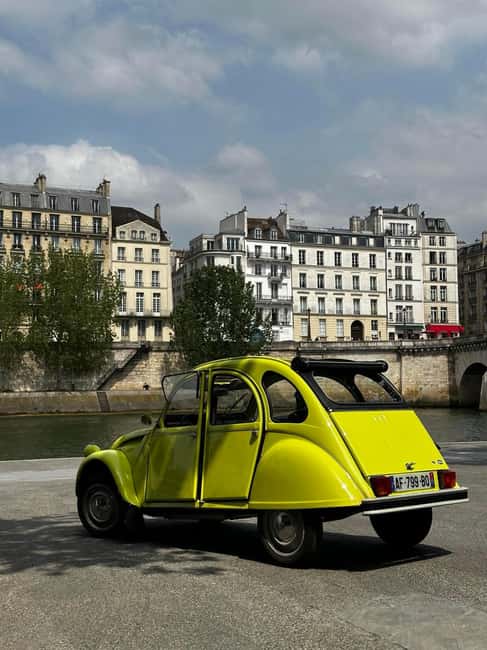
- Open-air viewing from the 2CV: the roof opening makes architecture easier to frame.
- Clément-style art history context: you’ll get explanations that connect monuments, not just names.
- Left Bank focus with discreet streets: the route includes Saint-Germain and the Latin Quarter vibe.
- Targeted photo stops: the guide times stops to help you get good angles.
- Local address recommendations: museums, restaurants, and bars are part of the package, not an afterthought.
Why a vintage Citroën 2CV beats the usual bus tour
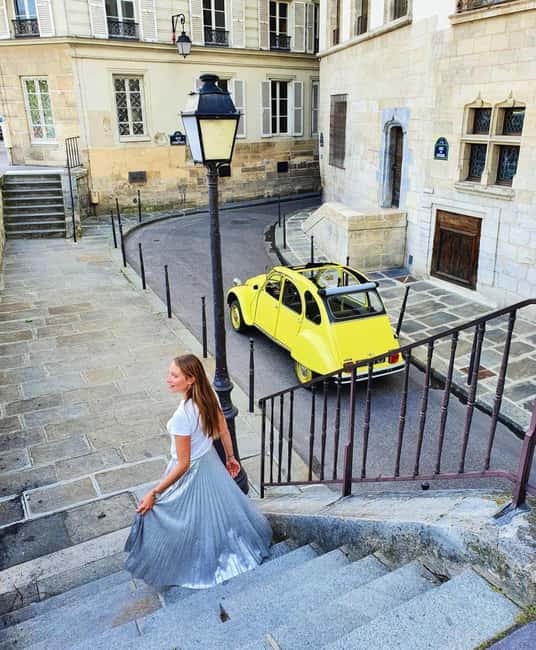
A normal bus or walking tour can be efficient. A vintage 2CV is efficient in a different way: it changes your pace and angles. From that low-slung ride, you see buildings closer and flatter, especially when the roof opening lets you tilt your head up at façades instead of ducking under them.
The other big advantage is the guide. When the guide is an art-history specialist like Clément, the tour stops feeling like a checklist. You’re more likely to notice details you’d otherwise miss: how a square is shaped, why a church looks the way it does, and what a major monument signals in the city’s layout.
And yes, the photo help matters. The tour includes multiple stops where you can get pictures, and the guide takes photos too. That’s a small thing, but it saves time and avoids the awkward, phone-on-a-stick moment.
You can also read our reviews of more tours and experiences in Paris.

Starting at Place des Victoires: a smart way to get oriented
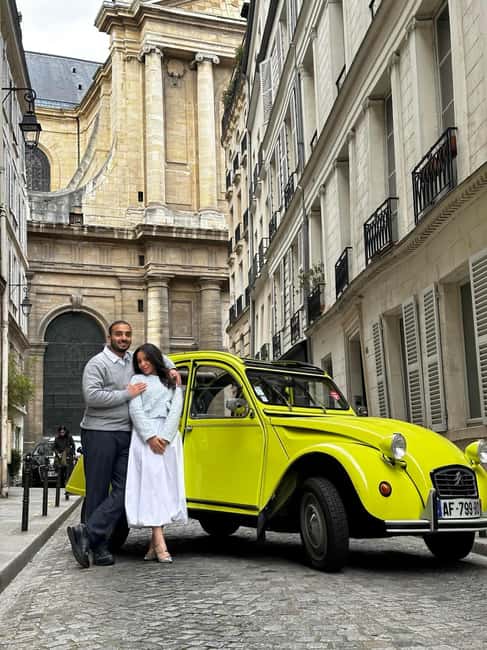
The tour begins at Place des Victoires, which is an excellent “start line.” It’s central enough to orient you fast, and it helps the whole route feel logical rather than scattered.
You’ll likely have a short visit right at the meeting area, then you transition into the car for the first stretch. Those early minutes are useful because they set the rhythm: you’re not stuck staring at your map while traffic and crowds do their thing. Instead, you settle in and let the route build your mental map.
If you like to learn as you go, this is a good setup. Place des Victoires is one of those spots where you can start spotting the scale of the streets and how the city opens and tightens as you move.
Palais-Royal Quarter and Place Vendôme: beauty at walking-speed, then car-speed
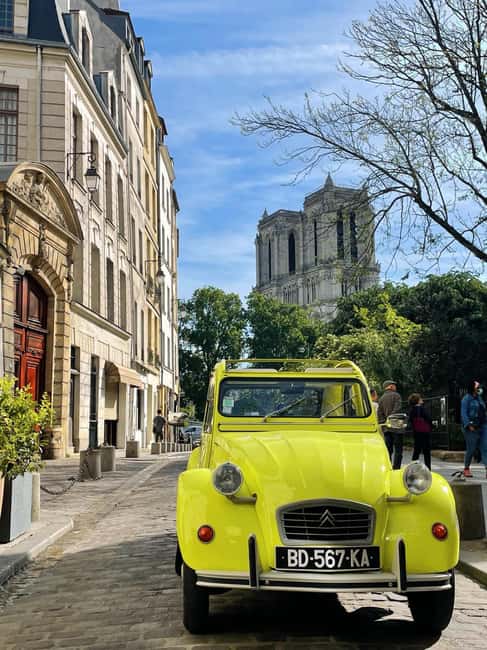
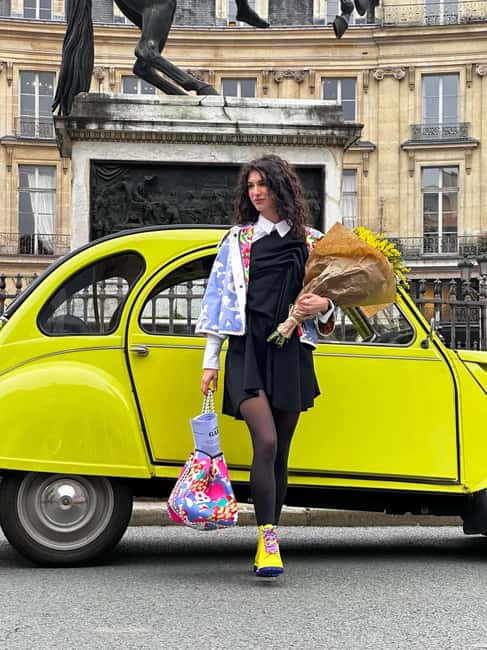
Next up is the Palais-Royal Quarter, with a short stop designed for getting the vibe. This part of Paris is all about structure: planned spaces, elegant streets, and the feeling that the city was made for strolling long before “strolling” became a trend.
After that, you head toward Place Vendôme for a photo stop. Place Vendôme is one of the most photogenic squares you’ll see in this kind of short tour. Even with just a few minutes, it’s enough time to capture the geometry: the way the buildings wrap the square and the way the light changes across façades.
Here’s the practical upside: the photo stops aren’t random. They’re placed where you can actually take decent pictures from the car angle or with a quick step out. If you’re the type who hates spending 20 minutes hunting for the perfect spot, you’ll appreciate the timing.
Arc de Triomphe and the Eiffel Tower: classic icons without the long lines
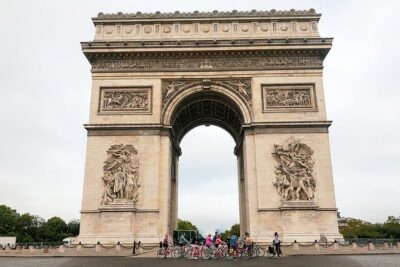
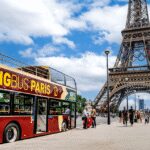
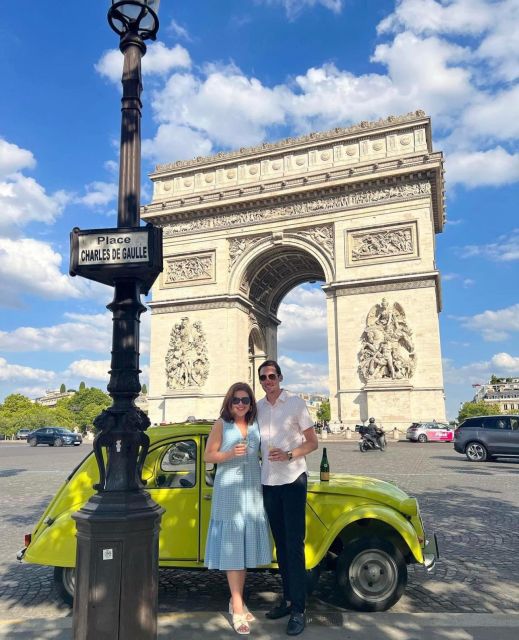
The tour includes Arc de Triomphe for another timed photo stop. You won’t get a full visit inside, but that’s not the point here. The point is seeing how the monument sits within the city’s axes and traffic flow, and getting that postcard view without turning the tour into a multi-hour detour.
Then you head for the Eiffel Tower area. This stop is brief, but it’s well-placed for a reason. If you’ve been in Paris for even a day, you’ve seen people photograph the Eiffel Tower from the same couple of angles. Getting there as part of a moving route gives you different perspectives, especially with the roof opening that helps you frame architecture quickly.
One caution: your photo will depend on timing and sun. If the weather is strong, you’ll want sunglasses and a way to keep your phone steady. If it’s windy, hold on to anything light, because the open-air feel makes movement more noticeable.
Invalides and the 6th Arrondissement: the part that rewards the art-history angle
After the big-name landmarks, you slow down into the more interpretive stops.
At Invalides, you’ll have a short guided moment. Even in a few minutes, the guide’s art-history context can help you “read” the place instead of just passing it. You’ll understand why it’s a landmark in the first place, not only that it exists.
Then the tour spends time in the 6th Arrondissement, including another guided segment. This is the kind of neighborhood stop that works best when you’re interested in how Paris connects its major sites. The route helps you see the city as a system: monuments, neighborhoods, and streets all reinforcing each other.
If you’re coming with even a light curiosity about art and architecture, this is where you’ll feel the guide’s value most. If you want only views and no explanations, you might find the guided minutes a bit dense. Still, it’s short enough that it doesn’t drag.

Saint-Sulpice and the Latin Quarter: old streets, quick context, good walking later
Next is Church of Saint-Sulpice, with a short visit window. Saint-Sulpice can be one of those churches people pass by without knowing what to look for. A guide can change that fast by pointing out what matters visually—placement, style cues, and why it holds attention in the cityscape.
Then the Latin Quarter gets a guided segment. This is the Left Bank atmosphere most visitors hope for: students’ energy, bookish side streets, and the feeling that you’re walking through older Paris rather than a theme-park version of it.
You’ll also be able to enjoy the neighborhood because the tour design doesn’t just throw you onto a busy sidewalk. You’re alternating between car time and short stops, which helps you keep your energy. The car isn’t just a novelty here; it’s a way to reduce the “stand around” time and protect your schedule.
Notre-Dame: a quick visit with the right pre-context
The final major stop is Notre-Dame Cathedral, with a short visit window. A few minutes at a cathedral can feel too short if you go in cold. That’s why the earlier stops matter: you’re learning the city’s visual logic as you go, so you’re more likely to notice the elements that define the building’s presence.
Also, the tour includes a final ride stretch after the stop, which helps you finish with a sense of flow instead of feeling like you’re dropped in the middle of a crowd and told to figure it out.
If you plan to spend more time in the area after the tour, this is a good way to set your route. You’ll leave with enough orientation to choose your next move.
Food, stops, and the quiet power of efficient timing
This tour is structured around movement plus brief interpretation. You’re not paying for a long stop in every location. You’re paying for the combination of a vintage car ride, multiple key viewpoints, and guided context in a time window of about 2 hours.
That makes it a solid option on a tight schedule. For example, if you’re arriving in Paris and want a fast start without spending the whole day on transit, this fits. If you only have one day for the Left Bank, the route gives you a concentrated overview plus recommendations for what to do next.
One more useful detail: water bottles are included. Paris can be deceptively tiring, even in good weather. Having water covered helps you stay focused on the sights instead of hunting for a shop every time you walk two blocks.
Food is not included, so plan a meal after. Same with tipping: tips aren’t included, so budget something you feel is fair based on the service.
Price and value: $106 for a private 2-hour ride
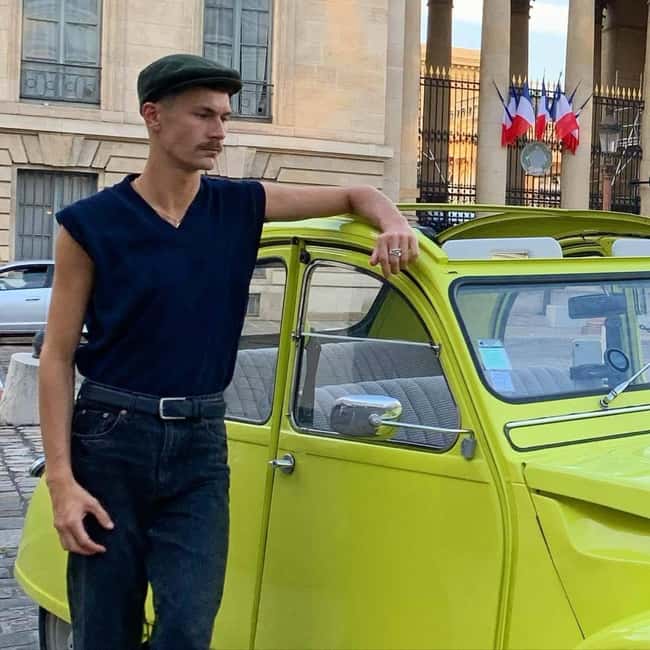
At $106 per person for 2 hours, you’re buying three things at once: the vintage car experience, guided context, and the “local next steps” recommendations.
Here’s how I think about value in a case like this:
- You’re paying more than a standard walking tour, but less than a full-day private guide plus multiple taxis.
- The car itself is a big part of what you’re getting. It’s not just transport; it’s part of the viewing experience with the roof opening and a slower, more scenic pace.
- The guide’s role matters. When the guide is an art-history specialist like Clément, the tour becomes more than a sightseeing circuit. You’re better positioned to enjoy museums and neighborhoods afterward because someone gives you direction.
If you’re traveling as a group, private tours can feel expensive until you compare them to the cost of paying for separate taxis, separate entrances, and separate guide time. This is one of those tours where the structure helps you “buy back” time.
Weather, comfort, and what to bring
The tour notes that it happens in both good and bad weather conditions. That means you should pack for reality, not postcard weather.
Because this is a vintage car ride with an open roof option, you’ll want:
- sun protection if it’s bright
- a light rain layer or umbrella if rain shows up
- something warm for evenings or windy days
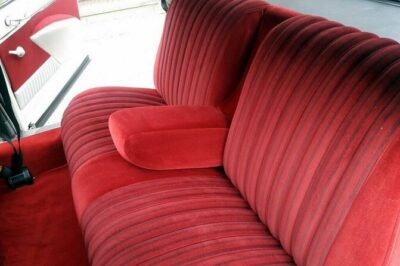
Comfort-wise, remember: a 2CV is small and designed for a different era. It’s fun, not cushy. If you’re sensitive to tight seating or uncomfortable in older vehicles, consider that in advance.
One small practical tip: plan your clothing so you can move quickly for photo stops. The stops are short, so you’ll be stepping in and out, adjusting phones and bags, and getting back to the ride fast.
Who should book this 2CV tour (and who might not)
This tour is a good match if you want:
- art-history context without spending all day in museums
- a Left Bank-focused route with recognizable icons mixed in
- a guided plan that includes photo help and restaurant and museum recommendations
- a private-group pace, so you’re not squeezed between strangers
It may not be ideal if you:
- need long, in-depth visits at each major site (this is not that format)
- prefer completely flexible wandering on your own schedule
- get easily frustrated by weather changes or brief stop durations
Also, a note on reliability: there has been a reported instance where the driver did not show up. That doesn’t erase the overall strong reviews, but it’s a reason to treat day-of confirmation as part of your plan. Keep your messages ready and double-check contact details.
Should you book the Paris Rive Gauche 2CV tour?
I’d book this if you’re excited by the idea of seeing Paris from a vintage car and you want guided context that makes the city feel less random. The combination of roof-opening views, an art-history guide like Clément, multiple high-impact photo stops, and practical recommendations (restaurants, museums, bars) is exactly the kind of value that works well in a short time window.
I’d think twice if you need lots of indoor time, you can’t handle weather changes, or you’re very sensitive to the comfort limits of a classic vehicle. In those cases, a more standard vehicle or a different format might fit better.
If you do book, go in with the right mindset: this is a smart, fast route that helps you understand Paris quickly, then points you to where to go next.
FAQ
Where does the tour start?
The meeting point is Place des Victoires in Paris.
How long is the tour?
The tour lasts 2 hours.
What vehicle do you ride in?
You ride in a vintage Citroën 2CV, including a roof opening so you can admire architecture.
What’s included in the price?
Bottled water is included. The tour also includes guided visits and photo stops.
Is food included?
No, food is not included.
Is the tour wheelchair accessible?
Yes, the tour is listed as wheelchair accessible.
What should I expect about weather?
The tour is designed to run in both good weather and bad weather, so pack accordingly.