REVIEW · PARIS
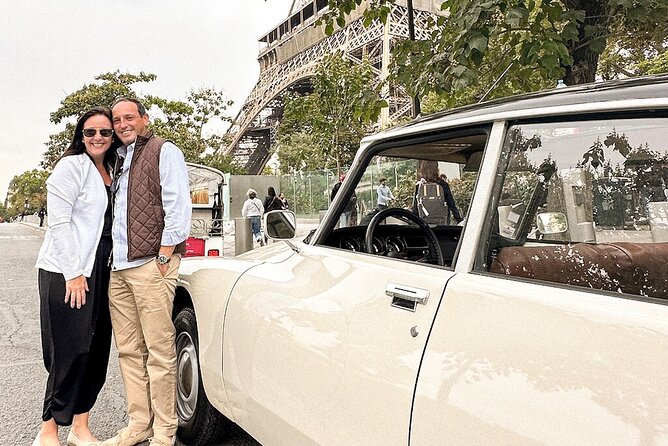
The Essentials of Paris in a Classic Open Top Car Citroën DS
Book on Viator →Operated by Classic 60's Paris Tours · Bookable on Viator
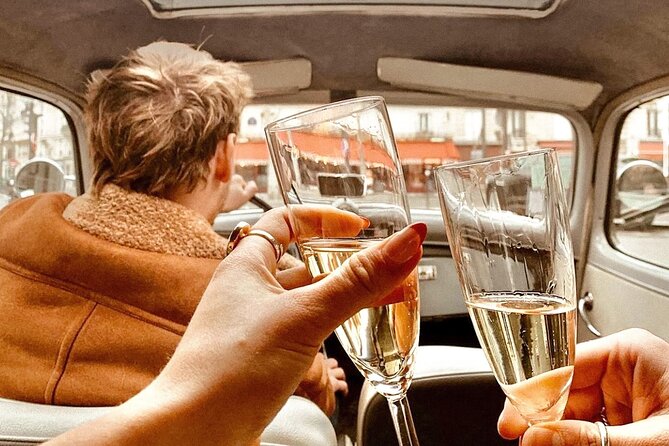
Paris looks great from a street corner. It looks even better from an open-top car. This private loop in a classic Citroën DS is built for quick first impressions, with major landmarks packed into one smooth ride and your guide Benjamin ready to answer anything. I like that you get real local context as you go, not just names and dates.
The experience also has a comfort edge: heated seats, plenty of legroom, bottled water, and a professional driver keeping things safe. One thing to consider: Paris traffic can slow the route, and with an open-top vehicle you’ll want to dress for wind and temperature changes.
In This Review
- Key things to know before you go
- Why the Citroën DS works for a fast, classic Paris loop
- Price and logistics: pickup rules, group size, and why it saves time
- From La Madeleine to the Tuileries and Place de la Concorde
- Champs-Élysées, Arc de Triomphe, and Eiffel Tower views
- Orsay, Louvre, and the show-stopper bridges of the Seine
- Opera Garnier, Montmartre streets, and Sacré-Cœur panorama
- Île de la Cité and the Latin Quarter: Notre-Dame to the Panthéon
- Small practical tips for a smooth 3-hour ride
- Should you book the Essentials of Paris in a Classic Open Top Car?
- FAQ
- What is the duration of the tour?
- How many people are in a group?
- Is pickup available?
- What vehicle is used?
- Is bottled water included?
- Is the tour in English?
- Are children allowed?
Key things to know before you go
- Private guide Benjamin (English) so you can ask questions on the fly
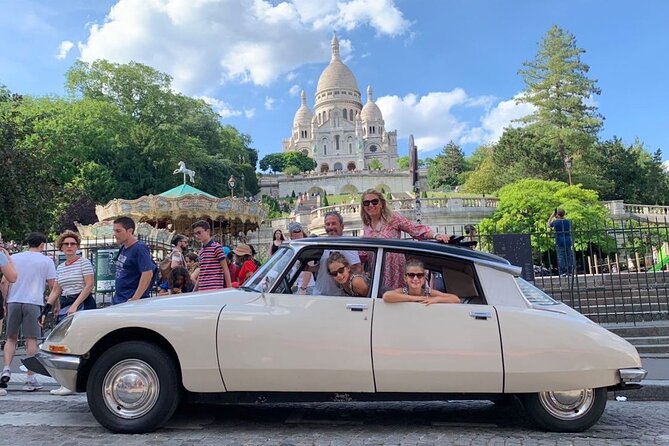
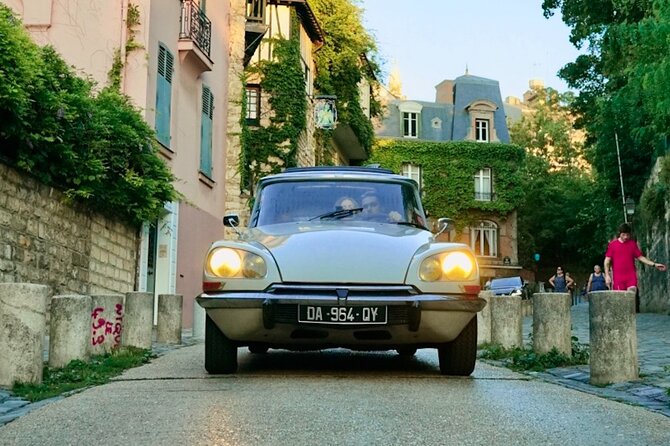
- Classic open-top Citroën DS with heating and comfy seating for a 3-hour “greatest hits” loop
- Hotel pickup and flexible drop-off inside much of central Paris (with a few arrondissement limits)
- Photo-friendly pacing with short stops at big landmarks rather than long museum time
- Most departures between 10AM and 4PM to reduce traffic pain
Why the Citroën DS works for a fast, classic Paris loop
This tour is all about seeing Paris quickly and pleasantly. An open-top car changes your experience from looking at monuments to feeling the city flow around you—wide boulevards, quick turns near iconic buildings, and those “wait, that’s right there” moments near the Seine.
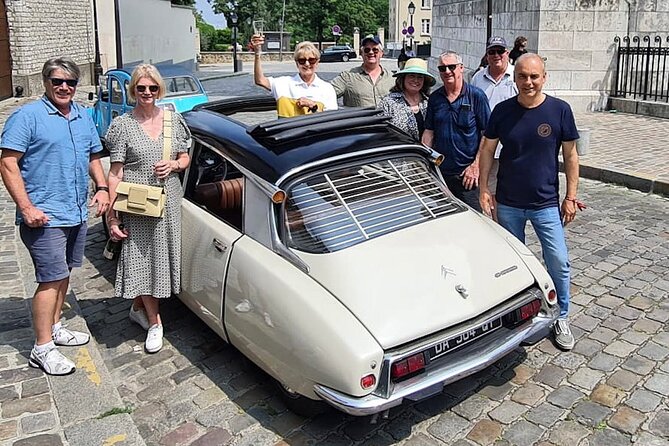
What I appreciate is the blend of old-school style and practical comfort. The Citroën DS is classic and photogenic, but you’re not freezing in winter-grade discomfort thanks to heating and comfortable seats with legroom. That matters because this isn’t a slow, stop-and-stroll day; it’s a concentrated 3-hour overview.
The private guide format is the real multiplier. Benjamin can tailor his commentary to what you care about—architecture, politics, art, neighborhoods—and you can ask questions as you ride. If you’re a first-timer, that helps you avoid the common trap: seeing a list of sights without understanding how they connect.
You can also read our reviews of more tours and experiences in Paris.



Price and logistics: pickup rules, group size, and why it saves time
The price is $480.44 per group (up to 4) for about 3 hours. For a family or a small group, that can be good value because you’re paying for private transport, a private guide, and the time savings of not figuring out routes and parking.
The other big “value” point is pickup and drop-off. You can choose where you want to start (within the allowed areas) and where you want to end at the finish. That reduces friction on travel days—especially if you’re moving hotels, arriving late, or trying to fit sightseeing between reservations.
Two practical cautions:
- Pickup/drop-off is not available in the 3rd, 4th, 10th, 11th, 12th, 19th, and 20th arrondissements, and not at Le Marais, Bastille, République, or Gare du Nord.
- Best schedules are between 10AM and 4PM to reduce traffic jams—because Paris traffic is real and it can eat into a short tour.
If your hotel isn’t in a listed area, you’ll need to coordinate with the supplier after booking. If you’re unsure, pick a central meeting point option like the front of Hôtel Crillon (10 place de la Concorde, 75008) or the front of the Panthéon (Place du Panthéon, 75005).
From La Madeleine to the Tuileries and Place de la Concorde
You start by setting eyes on grand Paris architecture right away. La Madeleine is impressive even before you get close: its neoclassical façade gives you that “center of power and style” feeling. If you’re the kind of traveler who notices details, the interior decoration is worth a look when the timing allows.
Then you roll into the Tuileries Gardens, a green ribbon connecting two of Paris’s most famous anchors—the Louvre area and Place de la Concorde. Even if you only pause briefly, this is a good place to reset. The gardens give you shade, open sightlines, and a break from road noise, which makes the next wave of landmarks more enjoyable.
From there, Place de la Concorde hits with scale and symmetry. The focal point is the Luxor Obelisk, a literal bridge between civilizations: an ancient Egyptian monument standing in the heart of France’s modern ceremonial space. Around the square you’ll get classic Paris scenes—fountains, statues, and the sense that this city is always staging something.
Here’s the tradeoff: because the loop is compact, you’re mostly getting views and quick on-foot moments rather than lingering for hours. If you want deep museum time, save that for another day.
Champs-Élysées, Arc de Triomphe, and Eiffel Tower views
Next comes one of Paris’s best-known streets: the Champs-Élysées. This is luxury-meets-history terrain, and it’s also a great “orientation” stretch. Even from the car, you get the rhythm of the avenue and how it links the grand monuments above street level.
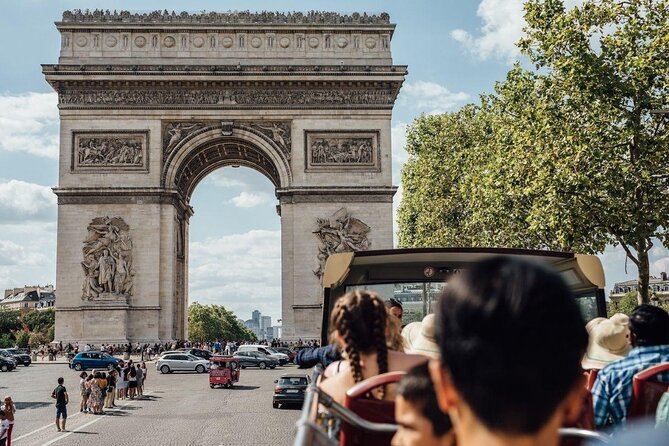
As you move toward the Arc de Triomphe, you’re stepping into France’s national memory. The sculptural details under the arch are powerful, and the location makes it a natural spot to understand the city’s big geometry.
Then you get close to the Eiffel Tower area, with a helpful mix of perspectives. The tour includes time near the Eiffel Tower so you can see it clearly without committing an entire day to ticket lines. You also pass through the broader area around the tower, including the École Militaire viewpoint zone.
One practical note: the Eiffel Tower is popular, and the surroundings can feel crowded. The advantage of this tour is that you’re not trying to “solve Paris” while everyone else is doing the same thing. You’re guided past the hard parts and given short windows to take photos and lock in your first mental map.
If you’re sensitive to noise or wind, remember it’s an open-top experience. You’ll be okay, but bring a layer. Small comfort choices matter more here than on a fully covered tour.
Orsay, Louvre, and the show-stopper bridges of the Seine
Paris really earns its reputation when you get onto (and across) the Seine. This part of the ride is about big-breath views: the kind of scenes that make you understand why people keep returning.
You’ll head through areas around Les Invalides, with its golden dome dominating the skyline. It’s a strong reminder that Paris isn’t only romance and art; it also carries military and national stories in stone and gold. Then you’ll continue toward the Pont Alexandre III, one of Paris’s most ornate bridges. Expect golden sculpture work and sweeping views that make your photos look like they belong on postcards.
The route also takes you by major museum zones and central highlights, including Musée d’Orsay and the Louvre area. With limited time, think of these as “place markers.” You’ll get what you need to decide what to see properly later—impressionist masterpieces at Orsay or a full Louvre day if that’s your priority.
The tour doesn’t just stop at icons; it also includes classic riverside connections like the Pont de la Concorde and the Pont Neuf, giving you different angles on the same city core. Add Place Vendôme for luxury vibes and Opéra Garnier for architectural drama, and you’ve got a nice sweep of styles in a short window.
The drawback here is time pressure. You’ll see a lot, but you won’t “do” everything deeply in one outing. That’s not failure—that’s the point. This is built as an efficient overview so you can plan a smarter second day.




Opera Garnier, Montmartre streets, and Sacré-Cœur panorama
Now for the mood shift. Paris gets hillier, older, and more cinematic. The tour includes passage through areas like Pigalle and Moulin Rouge, so you can recognize the neighborhood quickly and place it in your mental map. Even if you’re not there for nightlife, seeing these streets from the city loop helps you understand how Montmartre became a stage for artists and performers.
As you climb toward Montmartre, you’ll move through streets and viewpoints that feel more local than the central boulevards—think Rue de l’Université energy near the Eiffel area, then the Montmartre streets like Rue Lepic and Rue de l’Abreuvoir. You’ll also pass Moulin de la Galette, Van Gogh’s House, and Place du Tertre, where painters and cafés live side by side.
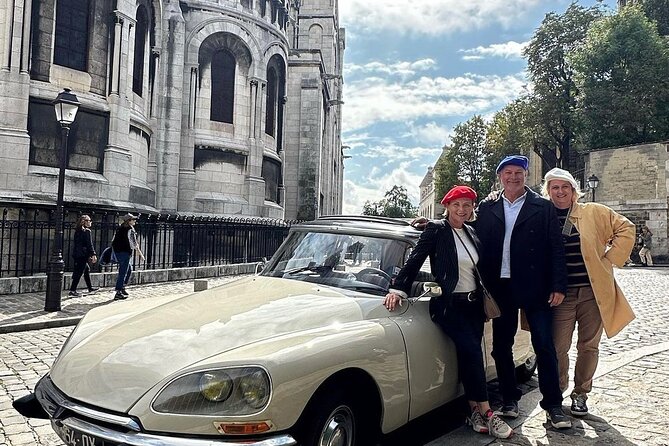
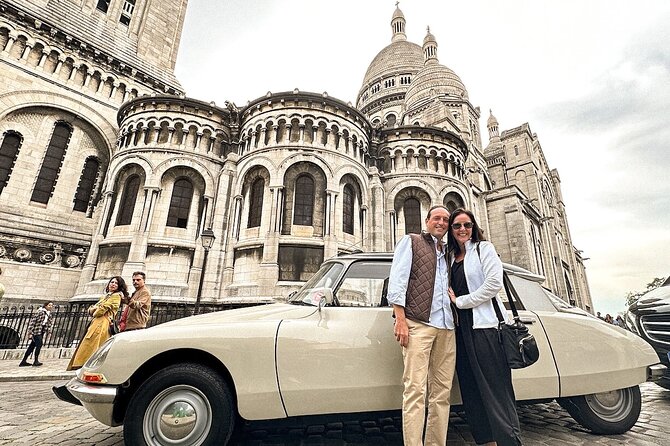
The best payoff is Sacré-Cœur. You get a short visit window with time to admire the basilica and the panoramic views. The white-domed look is unmistakable, and the view helps you connect the dots: where all the major sights sit relative to each other.
You’ll also spot smaller, memorable Montmartre moments—like the Wall of I Love You—and the photo-friendly stair-and-street layout. Just be aware: Montmartre can mean walking on uneven surfaces. The car helps, but the neighborhood still asks for a little mobility.
If you prefer a trip that feels structured but not rushed, this is a good match. If you want one long museum day, you’ll likely feel slightly annoyed that the tour is staying on the move.
Île de la Cité and the Latin Quarter: Notre-Dame to the Panthéon
Paris’s historical center is the heart of this loop: Île de la Cité and the surrounding river islands. You’ll stop near Notre-Dame Cathedral and take in the Gothic look that defines this part of town. The cathedral area is iconic for a reason, and even a short visit gives you that “this is the core” feeling.
Then comes Sainte-Chapelle, known for its stained-glass impact. Even if you don’t go inside for long, the building and setting help you understand why people plan serious time there. This tour’s strength is helping you prioritize: it points you toward what deserves a return visit with more time and tickets.
Next, you head into the Latin Quarter, passing landmarks that track intellectual and civic life. You get a time window at the Panthéon, a neoclassical mausoleum honoring major French figures. Nearby you’ll also pass sights like La Sorbonne and other church and university-area landmarks that define the neighborhood’s older academic vibe.
This area is also where the tour can feel especially “Parisian” to everyday life. You’ll pass through squares and streets connected with cafés and literary tradition—like the Shakespeare and Company area and classic Saint-Germain-des-Prés surroundings. If you’re the type who likes to understand what kind of city Paris is beyond monuments, this section helps.
A final highlight in this segment is the mix of political and cultural symbols: you’ll pass places like the French National Assembly and later the Senate area (Palais du Luxembourg), plus Jardin du Luxembourg for classic people-watching energy.
Small practical tips for a smooth 3-hour ride
A few things will make your day go smoother.
1) Dress for open-top weather. Even with heating, you’ll feel wind when the car turns and when you pause. Bring a layer you can handle quickly.
2) Plan for quick looks. This is an overview tour. Expect “see and photograph” moments rather than “complete museum day.”
3) Write down your must-ask questions. Benjamin can tailor the story as you ride—so if you care about art, politics, or neighborhood history, note it ahead of time.
4) Use the pickup/drop-off flexibility. If you’re hopping from hotel to another plan, choose an end location that reduces transit time after the tour.
5) Bring patience for traffic. The tour runs about 3 hours and includes time that can be affected by road conditions, especially between late morning and afternoon.
One last comfort detail: bottled water is included. Alcohol isn’t, though you can purchase it. If you’re tempted to bring a celebratory drink, save it for after you’re finished riding.
Should you book the Essentials of Paris in a Classic Open Top Car?
If you’re on a first trip and want a fast, classic introduction to Paris, I’d book it. The tour does exactly what it promises: it gives you a big-picture sweep with an expert guide and the kind of “I can see it all” comfort that’s hard to replicate when you’re figuring out transit on your own.
It’s also a smart pick if you value convenience: heated seats, a professional driver, and the ability to start and end where you want inside the allowed zones. At $480.44 per group up to 4, it can work well when shared, especially because you’re buying time and guidance, not just transport.
I’d hold off if you’re expecting lots of long indoor visits, step-by-step museum access, or a perfectly silent audio environment no matter the weather. Also double-check whether your hotel is in an eligible pickup area and whether you want to stay away from excluded neighborhoods.
Overall, this is a “get your bearings fast” Paris experience—done in style, with enough flexibility to help you plan the rest of your trip.
FAQ
What is the duration of the tour?
It runs for about 3 hours.
How many people are in a group?
It’s private, for your group only, with pricing listed per group up to 4 people.
Is pickup available?
Pickup is offered, and you can choose a start and end location within central Paris. There are limits: pickup/drop-off isn’t available in the 3rd, 4th, 10th, 11th, 12th, 19th, and 20th arrondissements, and it’s not available at Le Marais, Bastille, République, or Gare du Nord.
What vehicle is used?
You ride in a classic open-top Citroën DS with heating and comfortable seats with plenty of legroom.
Is bottled water included?
Yes, bottled water is included.
Is the tour in English?
Yes, it’s offered in English.
Are children allowed?
Children under 10 aren’t allowed due to no seat belt on the back seats.