REVIEW · PARIS
Paris with Love Private Guide & Driver
Book on Viator →Operated by A private exceptional guide · Bookable on Viator
Paris in half a day is a tall order.
This private highlights route hits the biggest landmarks with clear historical context, plus a relaxed stop for coffee or tea along the way. You can either stay mostly on foot or switch to door-to-door vehicle transfers if you book the driver option.
Two things I like a lot: you get a guide who ties the sights to the timeline of Parisian history, and you’re not stuck in a long bus line watching from a distance—you actually walk the city’s iconic viewpoints. One thing to consider: the day is packed, so if you’re the type who wants deep time at one place (especially around the Eiffel Tower), you may wish you had more than four hours.
In This Review
- Quick hits before you go
- Price and what you’re really buying for $154.99
- How the route works: from Eiffel views to medieval Paris
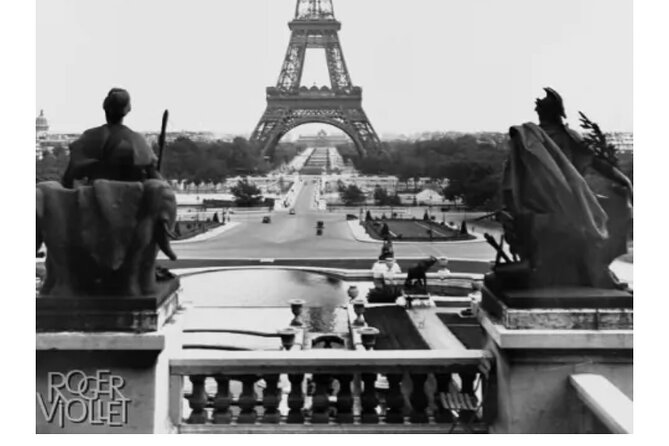
- Trocadéro: the Eiffel Tower from the best angle
- Eiffel Tower + Champs de Mars: what you can do in 15 minutes
- École Militaire: the Napoleonic connection you’ll remember
- Invalides exterior: Napoleon’s resting place area
- Petit Palais (and a real break): art + a coffee or wine moment
- Grand Palais exterior stop: a smart museum teaser
- Pont Alexandre III: cinematic Seine moments
- Champs-Élysées + Arc de Triomphe: the big parade avenue
- Place de la Concorde: from guillotine history to fountains
- Louvre-area stop + Pont des Arts: the Seine’s photo line
- Île de la Cité: the core of old Paris
- Palais de l’Institut de France: the writers’ jury vibe
- Pont Neuf and Fontaine Saint-Michel: old bridges and student-town cues
- Shakespeare and Company: a bookstore worth stopping for
- Notre-Dame Cathedral: the emotional anchor
- The best parts: why this tour works for most first-timers
- One realistic drawback: it’s fast, so you’ll need to choose your priorities
- Should you book Paris with Love Private Guide & Driver?
- FAQ
- What’s the duration of the Paris highlights tour?
- Where does the tour start and where does it end?
- Is pickup and drop-off included?
- What language is the tour offered in?
- What’s included in the price?
- Which attractions have admission included or not included?
- Is free cancellation available?
Quick hits before you go
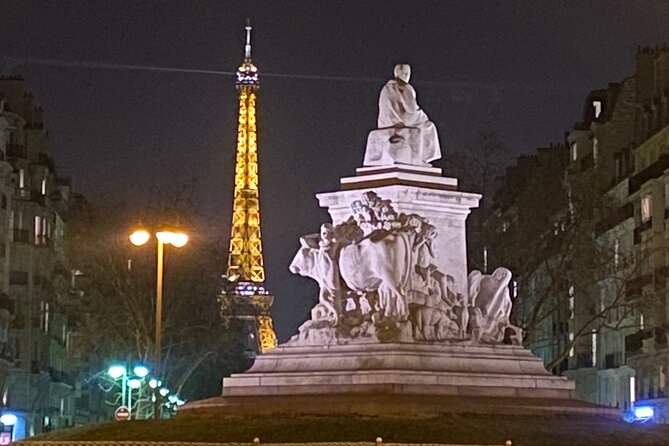
- Trocadéro start: the classic Eiffel Tower photo viewpoint, framed by the Palais de Chaillot area
- Eiffel Tower + Champs de Mars: fast loop by the monument and one of Paris’s most famous garden settings
- Napoleon-era highlights: École Militaire and the Invalides exterior, timed for quick hits
- Art pause: Petit Palais is a scheduled stop with admission included, plus a planned coffee or wine break
- Iconic Paris walk stretch: Pont Alexandre III, Champs-Élysées, and Arc de Triomphe viewpoints
- Old Paris finale: Île de la Cité stops with Notre-Dame and the royal chapel linked to Louis IX’s treasures
Price and what you’re really buying for $154.99
At $154.99 per person for about four hours, this tour isn’t trying to be a bargain-basement “see everything in one trip” deal. What you’re paying for is the private format: one professional guide, your group together, and an optional luxury car with a driver for smoother movement between distant stops.
That private structure matters in Paris, where walking distances add up fast and traffic can waste time. If you choose the private driver option, you also get pickup and drop-off, which helps you avoid the stress of timed metro connections and saves your legs for the sightseeing parts that actually matter.
If you’re on a short visit and want a curated spine of Paris highlights, this price can feel fair. If you already know you’ll want long museum time or big-ticket “go inside everything” energy, you’ll probably feel the limits of a half-day route.
You can also read our reviews of more guided tours in Paris


How the route works: from Eiffel views to medieval Paris
This tour is built as a one-direction flow that starts with the Eiffel Tower “wow” and then spirals east toward Île de la Cité. You’ll bounce between major monuments and quick context stops—enough time to see, orient, and get a story attached to each place.
The tour ends at Notre-Dame Cathedral’s area, which is a smart choice. If you keep exploring afterward, you’re already where the old-city energy lives: bridges, bookshops, squares, and the next wave of neighborhoods.
You’ll also have flexibility in pacing depending on whether you’re on foot or using the private driver. On foot, you’ll move at a steady walk between key sights. With the driver option, you’ll trade some walking for faster repositioning.
Trocadéro: the Eiffel Tower from the best angle
Your first major stop is Trocadéro, specifically the viewpoint area by the Palais de Chaillot. This is where many first-time visitors instantly understand why the Eiffel Tower is still the Eiffel Tower. From here, the tower feels framed and intentional, not just “in the distance.”
Chaillot’s setting also adds variety. The Palais de Chaillot is tied to Art Nouveau architecture and sits in a museum-and-theater zone, so even if you don’t go inside, you get a sense of how this area balances monument views with culture.
Time is short here (about 10 minutes), so treat it like a “lock in the mental map” stop. If you’re a photo person, use this time to get your clean Eiffel shots before the tour moves on and your positioning changes.
Eiffel Tower + Champs de Mars: what you can do in 15 minutes
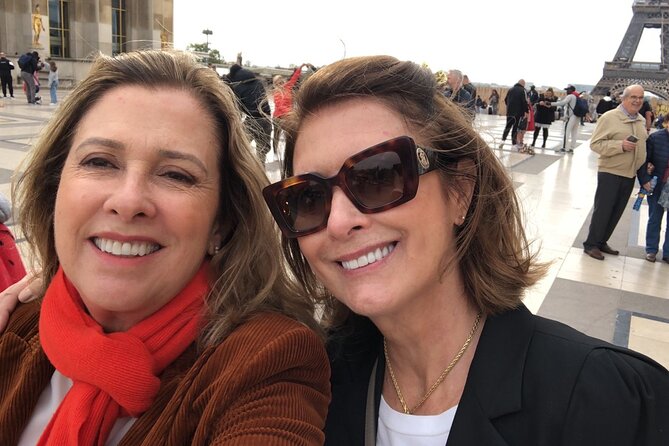
Next you’ll walk to the Eiffel Tower area (the tour budgets about 15 minutes for this highlight). The itinerary describes a loop around the monument, plus time by the Champs de Mars gardens.
Two practical notes:
- The Eiffel Tower admission ticket is not included, so your time is mainly for exterior views and the surrounding atmosphere.
- 15 minutes is enough to take in scale, circle a bit, and understand the layout—but not enough for a full summit experience.
If you want the views without overcommitting your schedule, this still works well. You’ll leave with that “I get it now” feeling about the building’s design, the way the surrounding garden space anchors it, and why this site dominates postcards for a reason.
École Militaire: the Napoleonic connection you’ll remember
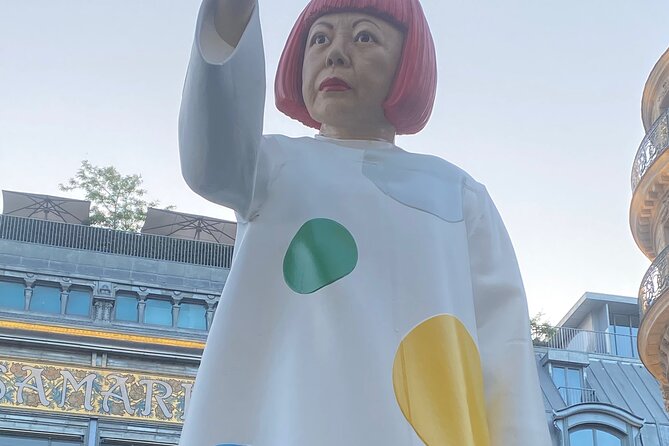
You’ll stop at École Militaire for a quick look (about 5 minutes). This is one of those places where a short visit pays off because it links several time periods together.
The tour points out that the school was built under King Louis XV, and it also connects to Napoleon’s era—before he became Emperor of France. It’s also associated with French cavalry heritage. Even if you don’t go deep inside (no admission is listed here), the exterior and setting help you place “Napoleon Paris” in a real, physical location.
This kind of stop is where a good guide changes the experience. Instead of just seeing stone, you start seeing the timeline.
You can also read our reviews of more private tours in Paris






Invalides exterior: Napoleon’s resting place area
Next up is Les Invalides (about 10 minutes), described as a military-focused complex built in the 17th century under the Sun King. The standout detail here is that it’s the home of Napoleon’s coffin, even though the tour lists this stop as exterior.
That matters because the Invalides area has a specific kind of weight. It’s not a generic monument; it’s tied to French military history and later national ceremony. The tour also mentions it as a place for presidential homages and as headquarters for major generals—another reminder that the site keeps a formal role long after its original purpose.
If you want to go inside, you’ll likely need extra time beyond the half-day schedule. But as a historical anchor, this stop works.
Petit Palais (and a real break): art + a coffee or wine moment
The itinerary then shifts into a calmer, culture-forward pace at Petit Palais (about 15 minutes). Here, admission is listed as included, and the tour frames it as a fine arts museum with architecture that matches its collections.
A key benefit: you’re not just walking past a landmark. You’re scheduled for a break. The tour specifically notes coming here for a gap and a coffee or wine. That’s not a small detail in a packed four-hour day. In a city that can exhaust you, you need a reset that isn’t just standing in a queue.
What you’re likely to get out of Petit Palais is an “art museum in miniature” feel—enough time to see standout works and the vibe of the building without turning the tour into a full museum day.
Grand Palais exterior stop: a smart museum teaser
You’ll pass Grand Palais (about 5 minutes). The tour highlights it as an impressive palace structure tied to early 20th-century fine arts architecture, plus its role as a space for major temporary exhibitions.
Since there’s no admission listed here, this stop feels like a “look, recognize, and remember” moment. It’s useful if you want to understand where the city’s big exhibition culture lives. It’s also a shortcut to understanding why people line up for major Paris art shows—because the buildings themselves give away the scale.
Pont Alexandre III: cinematic Seine moments
Next is Pont Alexandre III (about 10 minutes), described as one of the city’s most luxurious bridges and famous for film and photo moments.
Bridges in Paris are more than shortcuts. They’re stage sets. This one is especially designed for drama, with a view that helps you appreciate the Seine as a major “axis” of the city rather than just a river.
Plan to use this time to slow down and look around. If your guide keeps moving too fast, ask for a couple minutes to stand still. This is one of the sights that rewards patience.
Champs-Élysées + Arc de Triomphe: the big parade avenue
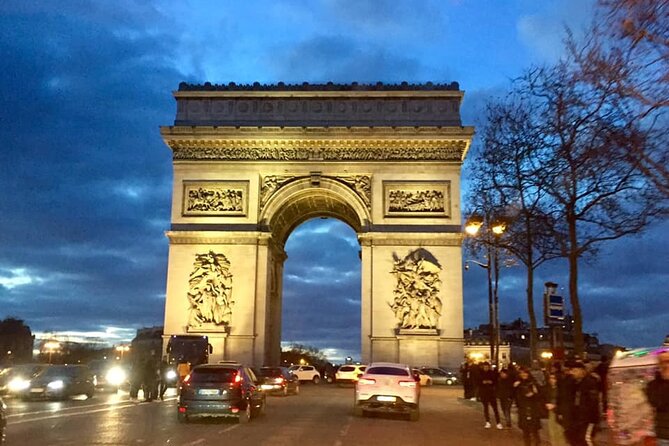
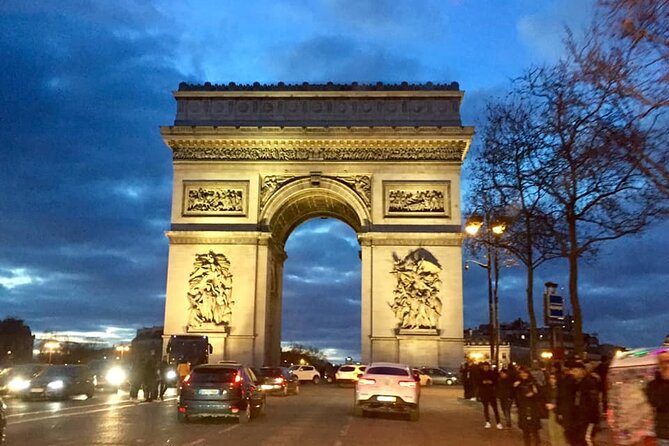
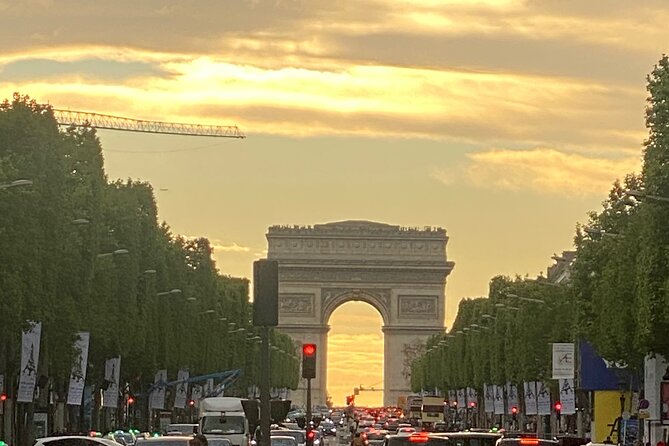
The tour includes a stop along Champs-Élysées (about 10 minutes), including the idea of two different halves: the luxury side with major landmarks and the green-garden side. The tour notes it’s tied to parades and major national marches, including July 14th celebrations, and it points toward presidential palace area context.
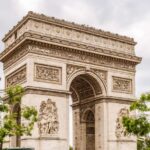
Then you reach Arc de Triomphe for a quick viewpoint (about 5 minutes). The Arc’s ticket is listed as not included, so you’re mainly getting a look outward—especially the view of the Arc from the middle of the Champs-Élysées.
If you’re expecting a “go up the Arc” experience, this timing won’t deliver it. But it does give you the orientation you’ll need later when you spot it from other angles in the city.
Place de la Concorde: from guillotine history to fountains
At Place de la Concorde (about 10 minutes), you’ll hit a high-meaning square. The tour frames it as historically emblematic—connected to the guillotine—and then contrasts that with the present-day look: two fountains inspired by Versailles, plus the obelisk from Ramses time.
This is another “short stop, strong context” moment. The square is visually open, which means you’ll see the surrounding geometry quickly. In a few minutes you can start understanding why it’s used for ceremony and why Parisian central spaces feel like stages.
Louvre-area stop + Pont des Arts: the Seine’s photo line
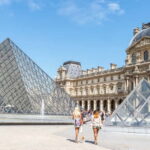
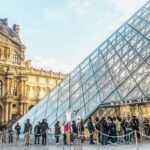
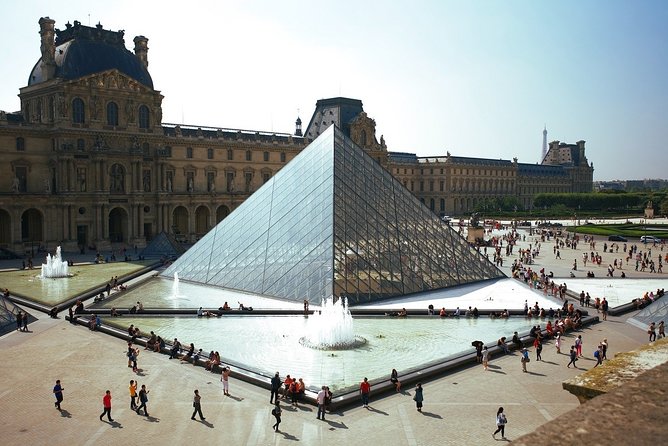
The itinerary includes Louvre Museum as a pass-by and orientation stop (about 15 minutes), with admission not included. The tour description connects the palace history to the end of royal residence in Paris and the shift toward Versailles.
If you’re not going in, you’ll still benefit. You’ll start to see how this part of Paris works: museums, palatial scale, and the way the Seine and bridges shape movement.
Then you go to Pont des Arts (about 10 minutes). This is described as a small wooden and iron bridge with a historic view and a bohemian vibe. Even in a short stop, bridges like this help your brain connect “monuments” to “neighborhood rhythm.” You get both structure and atmosphere.
Île de la Cité: the core of old Paris
Now the tour turns into the heart of the city: Île de la Cité (about 10 minutes). The tour frames this island as starting point for Paris history, tied to Jules Caesar and the earlier name Lutece.
The idea here is simple: you’re stepping into the oldest layers of the city, where royal and religious power and Roman-era remnants all stack in one small geographic space.
Palais de l’Institut de France: the writers’ jury vibe
You’ll make a stop at the Palais de l’Institut de France (about 5 minutes), described as the Paris Academy and the home of the “Immortals,” the jury for top writers. Even with little time, this stop gives you a different lens on Paris than monuments alone.
It’s a reminder that Paris is not just stone and view decks—it’s also institutions, language, and cultural governance.
Pont Neuf and Fontaine Saint-Michel: old bridges and student-town cues
Next are two quick stops along the Seine:
- Pont Neuf (about 5 minutes), noted as the oldest bridge of Paris with a view down the river. It’s connected to Henri IV’s era.
- Fontaine Saint-Michel (about 5 minutes), which marks a main point of the Latin Quarter.
These are short enough that you won’t get lost in details—but you’ll get orientation. They’re also a nice contrast after Île de la Cité: you feel the city shifting from royal center toward the lively, student and bookish energy.
Shakespeare and Company: a bookstore worth stopping for
A small stop at Shakespeare and Company (about 5 minutes) rounds out the literary mood. The description ties it to early Paris publishing history and names like Hemingway, James Joyce, and Gertrude Stein in its orbit.
Even if you don’t buy a book, stopping here can reset your mindset for the rest of the day. Paris feels less like a sightseeing checklist and more like a place where words mattered.
Notre-Dame Cathedral: the emotional anchor
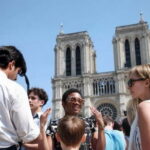
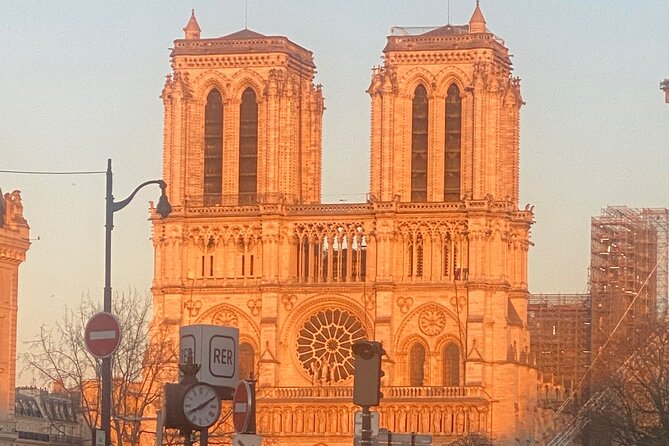
Finally, the tour reaches Notre-Dame de Paris (about 10 minutes). The tour describes it as the soul of Paris, a medieval masterpiece from the 12th century, and highlights major historical events tied to it, including the crowning of Napoleon and Josephine and the marriage of Henri IV.
Even if you’ve seen Notre-Dame in photos a thousand times, the first real view in person usually hits differently. It’s tall, it’s specific, and it feels like it belongs to the city rather than just hovering above it.
After Notre-Dame, you’ll also stop at a royal chapel linked to Louis IX and the treasures of the kingdom, including a description of relics like a gold book and the crown of Christ. The tour emphasizes the chapel’s interior beauty, especially compared to other royal chapels.
This “grand cathedral + royal chapel” combo is a strong ending. You leave with two different kinds of sacred grandeur: public and royal.
The best parts: why this tour works for most first-timers
Here’s what stands out based on the tour’s design and how people talk about it:
- Guided context beats guessing. The tour isn’t just a string of landmarks. It builds a timeline so each stop feels connected instead of random.
- Pace that respects your time. The route aims to cover the highlights without making it feel like a sprint. Many people appreciate that it doesn’t constantly rush.
- Photo-smart viewpoints. The Trocadéro start isn’t accidental. The tour puts you in positions that are known for great shots.
- A real pause inside a strong museum stop. Petit Palais being included with a planned coffee or wine break is a smart way to keep your energy up.
If you want to get a lot done and also feel like you still had a good time, that balance is the point.
One realistic drawback: it’s fast, so you’ll need to choose your priorities
The biggest trade-off is simple: this is a half-day highlights tour, not a full-day “slow travel” experience. That means:
- Eiffel Tower time is limited, and the Arc de Triomphe is mostly exterior viewing.
- Museums like the Louvre are listed as not included in admissions during this window.
- If you’re the type who wants to linger at one building, you may find the schedule tight.
My practical advice: if you have a must-do inside ticket (like the Eiffel Tower), plan that separately. Use this tour to get orientation, history, and the best external viewpoints. Then choose one location to go deeper on your own schedule.
Should you book Paris with Love Private Guide & Driver?
Book it if you want:
- A private half-day overview that helps you understand what you’re seeing
- A route built around iconic Paris priorities, not random detours
- Optional car help if you don’t want to spend all four hours on foot
- A guide who connects monuments to stories, and a break that isn’t just standing in line
Skip it (or consider adding extra time elsewhere) if you:
- Want long museum hours and interior-heavy sightseeing in the same four hours
- Know you’ll be happiest spending the majority of your day at the Eiffel Tower
- Are picky about language nuance and prefer to verify accent comfort before you start (the tour is offered in English, but experiences can vary)
If you’re short on time and you want a confident, high-impact first visit spine, this is a solid bet.
FAQ
What’s the duration of the Paris highlights tour?
It’s about 4 hours (approx.).
Where does the tour start and where does it end?
The tour starts at 1 Pl. du Trocadéro et du 11 Novembre, 75116 Paris, France, and ends at Notre-Dame Cathedral of Paris, 6 Parvis Notre-Dame – Pl. Jean-Paul II, 75004 Paris, France.
Is pickup and drop-off included?
Pickup and drop-off are included if you choose the private driver option. If you’re doing the walking option, pickup is not included (meeting is at Trocadéro).
What language is the tour offered in?
The tour is offered in English.
What’s included in the price?
Included are a professional guide, a summary of Paris history, coffee and/or tea, and (if you book it) a luxury car with private driver.
Which attractions have admission included or not included?
Petit Palais admission is included. Eiffel Tower, Arc de Triomphe, and Louvre Museum admissions are not included.
Is free cancellation available?
Yes. You can cancel for a full refund up to 24 hours in advance.