REVIEW · PARIS
Paris Vintage Tour by Night on a Sidecar with Champagne
Book on Viator →Operated by RETRO TOUR · Bookable on Viator
A vintage sidecar ride makes Paris feel electric. This Paris Vintage Tour by Night strings together major sights at dusk, plus quick get-down photo stops and complimentary Champagne as you cruise between neighborhoods. Two things I’d jump on fast: the Champagne time at a signature Seine/Eiffel moment, and the built-in breaks that actually get you in front of iconic backdrops. One thing to keep in mind: big events can disrupt streets and make the drop-off less convenient than usual.
What makes this tour click is the pace. In about 2 hours, you’ll get a night-drive flow that a bus just can’t match, from the Louvre area through covered passages, then up into Montmartre. And because it’s a private setup, you’re not squeezed into a crowd. If you’re the type who hates traffic and prefers strict timetables, the road layout in Paris can be a wildcard—but the guides are used to working around it.
In This Review
- Key highlights that matter (and why)
- Why a sidecar at dusk beats most Paris sightseeing
- Champagne, photo stops, and that night-time “yes, we’re in Paris” feeling
- From Saint-Germain-des-Prés to the Louvre and Place Vendôme photo zone
- Palais-Royal and Galerie Vivienne: Paris in miniature, covered and cinematic
- Palais Garnier and the can-can era: opera glamour from the street
- Montmartre’s calmer lanes, then Sacré-Cœur inside
- Arc de Triomphe and the Eiffel Tower Champagne moment
- Les Invalides and the Saint-Germain wrap-up
- Price and value: $215.06 for 2 hours, and what makes it worth it
- Who should book this sidecar tour (and who might not love it)
- Ride tips that make your evening smoother
- Should you book Paris Vintage Tour by Night on a Sidecar with Champagne?
- FAQ
- How long is the Paris Vintage Tour by Night?
- What does the tour cost?
- Is pickup available?
- Is this a private tour?
- Is Champagne included?
- Do I need tickets for the Eiffel Tower or Sacré-Cœur?
Key highlights that matter (and why)
- Champagne between sights: You’re not just watching the city; you’re stopping for a pour at the right moments.
- Camera-friendly get-down photo stops: Quick, purposeful pauses so you can actually shoot the monuments.
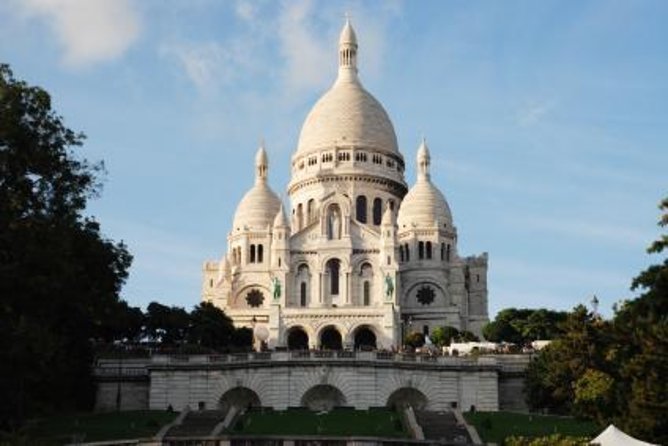
- Montmartre plus Sacré-Cœur interior: You don’t only view it from the street; the Basilica visit is timed in.
- Retro sidecar seating for pairs: One passenger in the basket seat and one behind the driver, with a half-ride switch possible.
- High satisfaction rate: 4.9 rating with 98% recommending this ride.
- English-speaking guide team: Confirmed at booking, plus the route is explained as you go.
Why a sidecar at dusk beats most Paris sightseeing
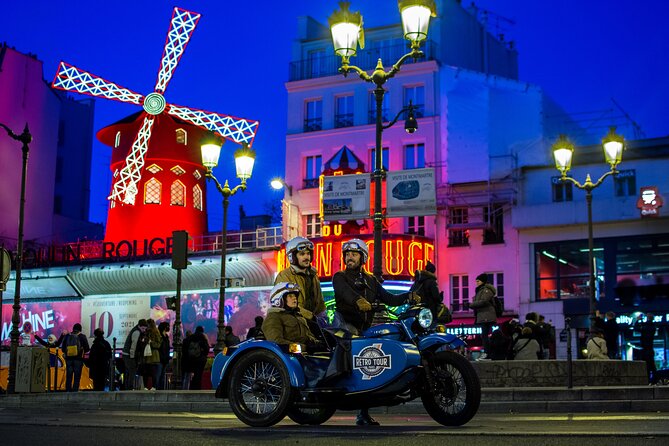
Paris looks different when the light softens. Street texture shows up. Stone turns warm. And monuments stop feeling like background and start feeling like characters. On this tour, the timing is the whole idea: you’re moving through the city early evening when it’s photogenic but still lively.
The sidecar format adds two practical advantages. First, it’s compact, so you can slide through areas where larger vehicles struggle. Second, it creates a “you’re part of it” feeling—every stop is close enough to step out and frame the shot without turning it into a full walking tour.
Now, a fair warning: because you’re in real traffic, your exact drive moments can shift on nights with road closures. The good news is that the operator typically plans alternatives when crossings or roads get blocked.
You can also read our reviews of more wine tours in Paris

Champagne, photo stops, and that night-time “yes, we’re in Paris” feeling
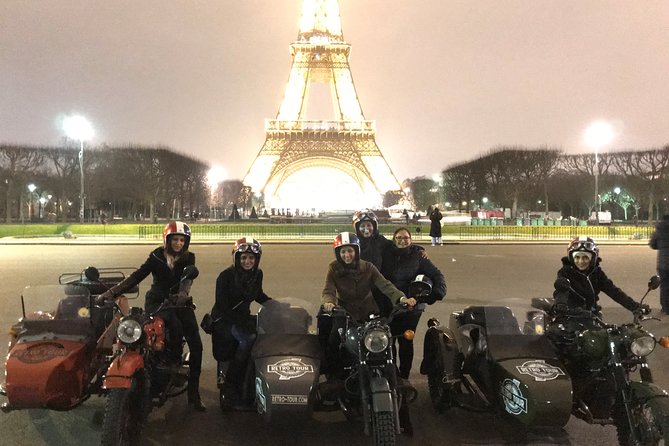
This is a sightseeing tour with a party-sized accent. Complimentary Champagne is included, and it’s not treated like a random add-on. You’re set up to enjoy it at a notable moment—especially when the Eiffel Tower is involved—so it feels like part of the experience, not a snack.
The other big value is the stop strategy. The route includes short get-down photo stops at major landmarks, like the Louvre area, Place Vendôme, and Palais Garnier, plus timed moments where you can take photos and then roll on. This matters because Paris sightseeing often becomes either too fast (just passing) or too slow (endless waiting and lines). Here, you get a mix.
What I also like for first-timers: you’ll get the “what am I looking at” story as you move. That’s how the buildings start making sense without turning your evening into a lecture.
From Saint-Germain-des-Prés to the Louvre and Place Vendôme photo zone
Your meeting point is Church of Saint-Germain-des-Prés, 3 Pl. Saint-Germain des Prés, 75006 Paris. The tour ends back at the same location, which is a comfort on a night tour when you don’t want to negotiate transport after your ride.
Once you’re rolling, the route sets you up with fast hits on the Right Bank’s most recognizable shapes:
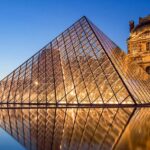
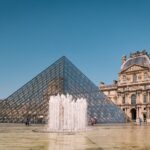
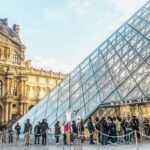
- Le Louvre: You’re treated to the scale and landmark status of the museum area, with the Seine nearby as the framing context. Even if you don’t go inside, the exterior landmark value is huge at night.
- Rue de la Paix and Place Vendôme: This stop is built for pictures. You’ll pause near the architecture that shapes the space into a distinct octagon-like feel, and you get the Napoleon I connection—the Vendôme Column was erected to commemorate the Battle of Austerlitz.
Photo reality check: these pauses are short, which is the point. If you want museum-level time, this isn’t that. But if you want night photos without losing your evening, the timing works.
Palais-Royal and Galerie Vivienne: Paris in miniature, covered and cinematic
Next you shift into a part of Paris that feels like a secret even when it’s right in front of you. The tour doesn’t treat covered passages like trivia—it gives them as “here’s why this is Paris.”
You’ll pass by:
- Palais-Royal: Known for the former royal palace footprint in the 1st arrondissement. You’ll see how the entrance court faces Place du Palais-Royal opposite the Louvre, and you’ll get context on the arcades and what’s left today, including the columns that remain after the Galerie d’Orléans was demolished in the 1930s.
- Galerie Vivienne: Another classic covered passage, linked in the story to success during the Second Empire and the broader passage culture between the Palais-Royal, the Bourse area, and the Grands Boulevards.
This is the kind of stop where the value isn’t just visuals. It helps you understand why Paris feels layered: power, commerce, fashion, and leisure all share space in the same walkways and facades.
Palais Garnier and the can-can era: opera glamour from the street
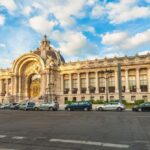
One of the tour’s most “wow, that’s real” moments is Palais Garnier (the opera house). Built from 1861 to 1875, it’s known for its opulence and for being designed by Charles Garnier. You’ll get the scale—1,979 seats—and the story that it was originally called the Salle des Capucines because of its boulevard location before it became Palais Garnier.
This works best if you like architecture and period details. You’ll do a picture stop outside, then move on rather than getting stuck in long waits.
As you continue, you also get the background on the can-can as a performance that started as a seductive dance associated with courtesans and later became a broader cabaret phenomenon across Europe. You won’t be forced into a show, but the historical context makes the entertainment culture in the area make sense when you see the surroundings.
You can also read our reviews of more evening experiences in Paris

Montmartre’s calmer lanes, then Sacré-Cœur inside
After the grand central sights, the tour turns toward Montmartre’s more intimate mood. You drive through the “village of Montmartre” vibe—romantic, slightly winding, and very different from the grand boulevards.
One of the most interesting route details here is the way the drive threads small streets:
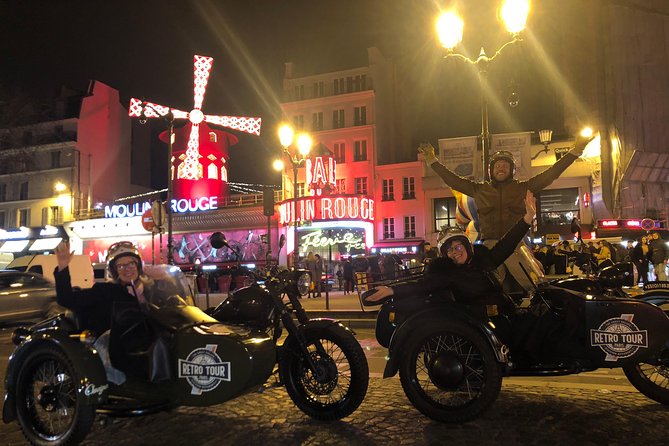
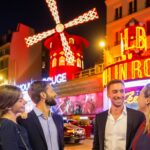
- You’ll pass toward Rue Lepic, near Moulin de la Galette, and there’s a note about Rue d’Orchamps and the quieter feel of that area. From a house perspective, you can even catch views toward the Moulin Rouge wings against the sky.
Then comes the main spiritual-photo payoff:
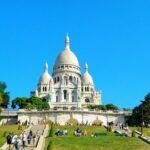
- Basilique du Sacré-Cœur de Montmartre: You’ll take a walk inside to enjoy the architecture and take pictures. This includes admission ticket and is timed at about 15 minutes.
Practical tip: Basilica interiors can feel brighter or colder depending on the time of day. Bring a light layer. Also, 15 minutes isn’t long, so have your camera ready and aim for your key shots first.
Arc de Triomphe and the Eiffel Tower Champagne moment
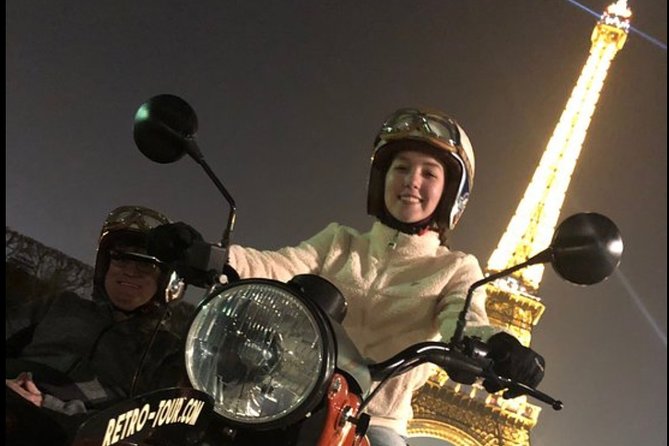
As the tour continues west, you hit the big symbolic centerline of modern Paris:
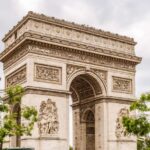
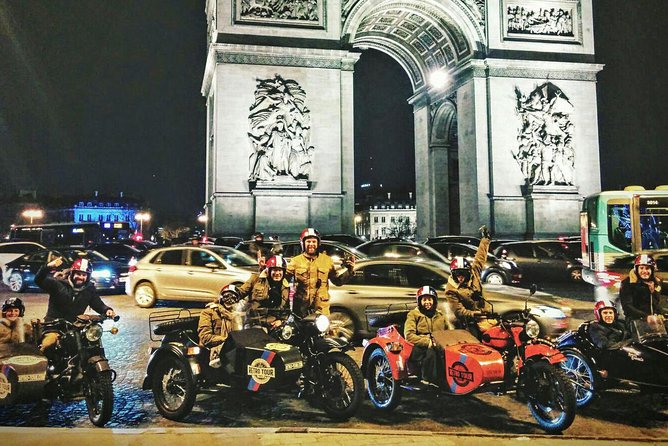
- Arc de Triomphe: You’ll get the story behind the monument honoring those who fought and died in the Revolutionary and Napoleonic Wars, with names of French victories and generals inscribed inside and out. There’s also the Tomb of the Unknown Soldier from World War I beneath the vault.
Then the tour reaches the Eiffel Tower:
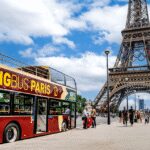
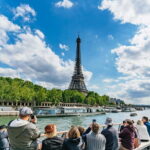
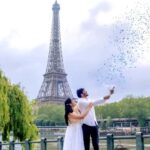
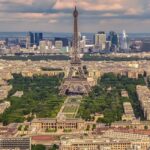
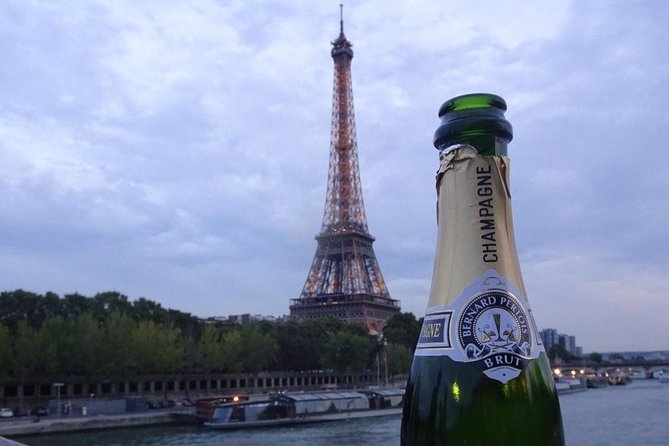
- Eiffel Tower: You’ll stop for explanations of the architecture and history, then you’ll have time for photos and a walk-around view. You also get the signature Champagne time in front of the monument.
Important detail: the Eiffel Tower admission ticket is not included, so you’re enjoying the tower from the outside and nearby viewpoints, not doing an entry ticket plan. That’s actually a good fit for a 2-hour evening tour—you get the Eiffel moment without betting your whole schedule on security lines.
Les Invalides and the Saint-Germain wrap-up
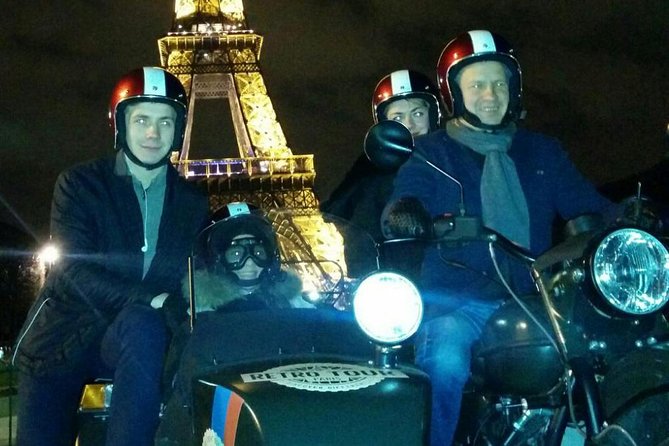
In the late part of the ride, you pass by Les Invalides—the complex of buildings connected to France’s military history. It’s in the 7th arrondissement and is known for museums and monuments tied to that theme.
After that, you’re also given context for the Saint-Germain area vibe: classic cafés like Les Deux Magots, Café de Flore, Le Procope, and Brasserie Lipp. This area is also tied to the existentialist movement in the 1940s and 1950s, associated with Jean-Paul Sartre and Simone de Beauvoir. You’ll hear how the neighborhood connects to the arts too, including École des Beaux-Arts and the Musée national Eugène Delacroix.
Then it’s back to your starting point near Saint-Germain-des-Prés. Having the return match the meeting point is a big plus for a night ride.
Price and value: $215.06 for 2 hours, and what makes it worth it
At $215.06 per person for about 2 hours, this tour isn’t the cheapest way to see Paris—and it shouldn’t be. You’re paying for:
- A vintage motorcycle and sidecar experience, not a standard bus.
- Complimentary Champagne.
- Guided narrative as you move through many areas.
- Short photo stops at multiple major landmarks.
- A Basilica interior visit with an admission ticket included.
If you’re comparing it to a “see three sights” tour, the value comes from density. In one night you cover Louvre/Vendôme energy, Palais-Royal passage charm, opera-area glamour, Montmartre’s vibe, and Eiffel Tower payoff. You also get a guide who explains what you’re looking at while you’re moving, so you’re not stuck waiting.
Also, it’s rated very highly: 4.9 with 48 reviews and 98% recommending it. In my experience, that combination usually means the experience matches the pitch.
Who should book this sidecar tour (and who might not love it)
This is a fantastic match if:
- You want Paris at night with photos and story, not just driving past everything.
- You’re traveling as a couple of two and want a memorable shared moment.
- You like a fun, slightly adrenaline-leaning vibe where the guide keeps things organized.
It may be less ideal if:
- You’re extremely sensitive to road noise, bumps, or the feel of being on an open vehicle.
- You need long interior museum time at any single site.
- Your priority is quiet, slow strolling with no surprises—traffic and route changes can happen.
Families can work well. The ride is described as feeling safe and fun, and it’s private to your group, so you won’t be trapped in someone else’s pace.
Ride tips that make your evening smoother
A few practical things will help your evening go better:
- Bring your camera ready: the stops are built for photos, so don’t plan to stop and then dig for your lens.
- Wear something comfortable for seating: the sidecar seating has one passenger in the basket seat and one behind the driver, with a half-ride switch possible. Plan how you’ll share that.
- Expect night weather swings: even in good seasons, evenings can cool quickly.
- Go with curiosity: the best parts are when you listen—stories about Napoleon’s column, Palais Garnier’s origins, Arc de Triomphe symbolism, and can-can culture make the visuals land harder.
- Have a flexible mindset about streets: major events can change roads and crossings. If that happens, the operator may adjust where you’re dropped near a bridge rather than driving right to the exact spot.
Guides have been praised for clear English and friendly engagement. Names that have shown up with strong praise include Roman and Louis, Fabien, and Alex (noted for training in architecture), plus Max, Olivier, and Dennis. That pattern matters: you’re not stuck with a stiff tour script.
Should you book Paris Vintage Tour by Night on a Sidecar with Champagne?
If you want a high-impact first night in Paris, this is one of the best ways to do it. You’ll get the Eiffel Tower moment with Champagne, you’ll collect real photos from multiple landmarks, and you’ll ride through neighborhoods in a way that feels more personal than a standard tour.
I’d book it if:
- You’re excited by the idea of a vintage sidecar and want something memorable.
- You’re traveling with a pair where sharing the experience matters more than squeezing in every museum.
I’d hold off if:
- You hate the idea of road changes and want a perfectly fixed route.
- Your dream Paris evening is mostly quiet walking with minimal vehicle time.
FAQ
How long is the Paris Vintage Tour by Night?
It’s about 2 hours.
What does the tour cost?
The price is $215.06 per person.
Is pickup available?
Pickup is offered, but if your hotel isn’t listed, you’ll need to come to the meeting point at Church of Saint-Germain-des-Prés (3 Pl. Saint-Germain des Prés, 75006 Paris).
Is this a private tour?
Yes. It’s private, meaning only your group participates.
Is Champagne included?
Yes. Complimentary Champagne is included during the tour, including Champagne time in front of the Eiffel Tower.
Do I need tickets for the Eiffel Tower or Sacré-Cœur?
The Basilique du Sacré-Cœur de Montmartre admission ticket is included. The Eiffel Tower admission ticket is not included.