REVIEW · PARIS
Paris TV Show Tour in a Open Top Vintage French Car Citroen DS
Book on Viator →Operated by Classic 60's Paris Tours · Bookable on Viator
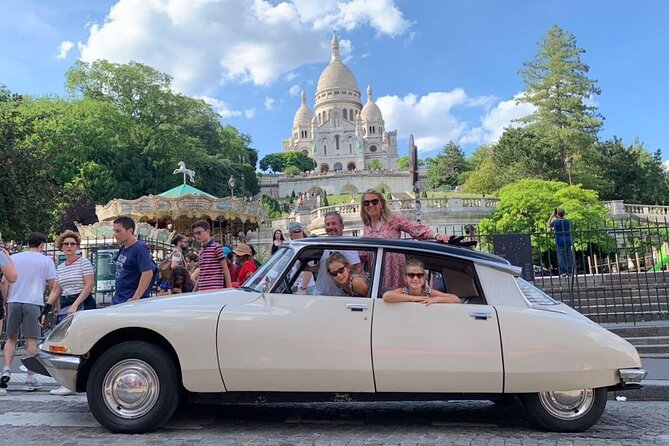
Paris looks different from a vintage open-top Citroën DS. This private tour blends Emily-style filming locations with real Paris streets, from the Latin Quarter to Montmartre and the Seine. You get pickup from central hotels, plus a driver-guide who knows how to turn a few hours into a full day’s worth of sights.
I especially like how the car experience feels practical, not just gimmicky: the seats have heating and plenty of legroom, so you’re comfortable even when the weather changes. I also like the pacing of the stops, which are short enough to cover a lot, but long enough to get a few solid photos and hear the story behind the landmark.
One thing to keep in mind: this is mostly a sightseeing-drive with brief photo stops, so if you’re hoping for long indoor visits at every major site, you’ll want a separate plan. And because it’s open-top, you’ll feel the weather more than you would on a standard van.
In This Review
- Key highlights you should care about
- Riding the Citroën DS: comfort, style, and why you’ll remember it
- Benjamin and your private plan: the value of a guide who adapts
- The route starts in the Latin Quarter and keeps the stories moving
- Île-Saint-Louis and Île de la Cité: the Seine’s historical center
- Palais Royal to Vendôme to Opéra: elegant Paris in tight time
- Montmartre stairs to Sacré-Cœur: show energy on an artistic hill
- Le Mur des Je t’aime: a quick stop that hits emotionally
- Courcelles and Parc Monceau: quieter Paris after the big sights
- Arc de Triomphe and Eiffel Tower: icons, but with a driver’s advantage
- Seine romance and grand bridges: Pont Alexandre III to the Champs-Élysées
- Louvre and beyond: quick culture moments without the museum stress
- Price and logistics: is $540.95 per group worth it?
- Who should book this Citroën DS Paris TV show tour?
- Should you book it?
- FAQ
- How many people can fit in the tour?
- How long is the Paris tour?
- What language is the tour offered in?
- Do you pick up and drop off at hotels?
- Where can we meet if hotel pickup isn’t available?
- Are kids allowed?
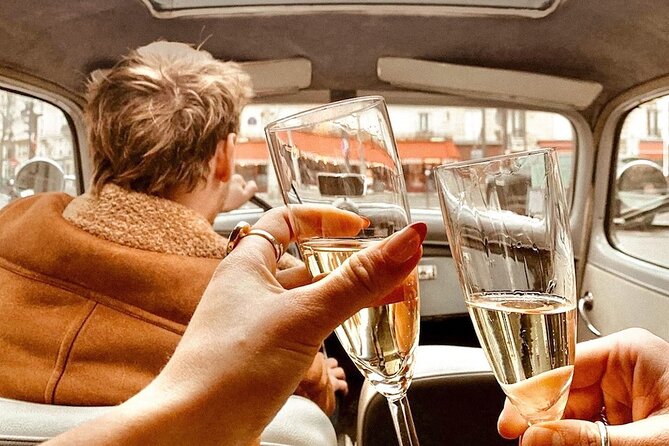
- Is alcohol included?
- What happens if the weather is bad, or if we need to cancel?
Key highlights you should care about
- Open-top vintage comfort: heated seats and a classic Citroën DS with room to stretch out
- Private group only: just your party, with personal attention from Benjamin
- Show spots plus real neighborhoods: Emily-style filming locations mixed with history and local context
- Photo-friendly route: frequent stops for viewpoints, streetscapes, and “everyone’s taking pictures” moments
- Central hotel pickup and drop-off: within specific areas of Paris to reduce transit stress
Riding the Citroën DS: comfort, style, and why you’ll remember it
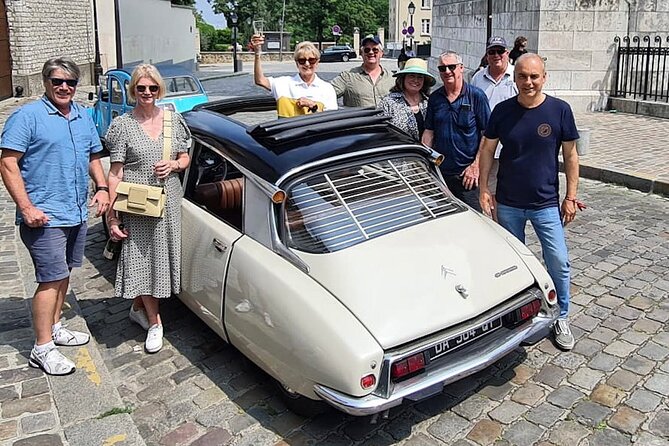
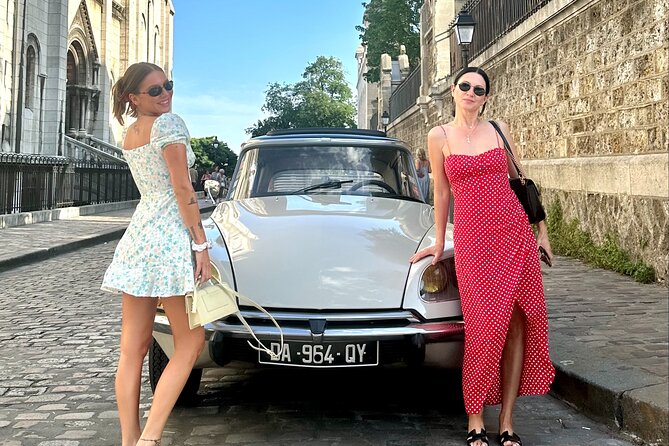
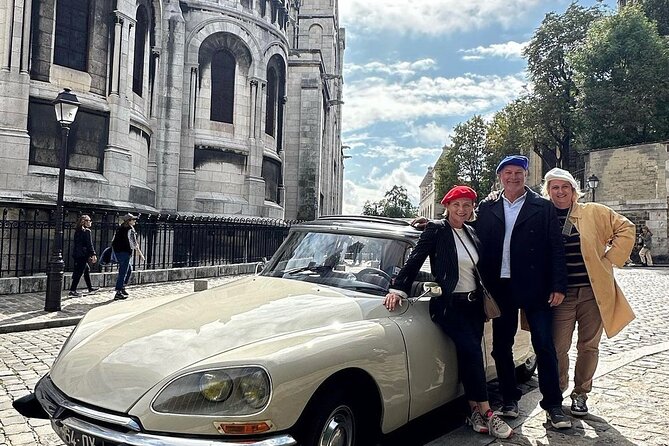
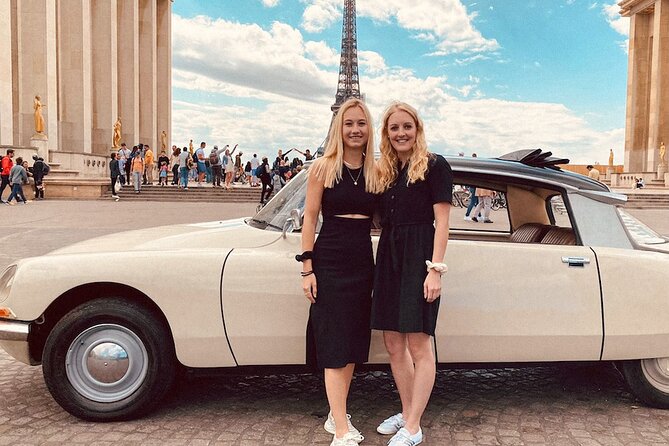
There’s Paris sightseeing, and then there’s Paris sightseeing in a classic French Citroën DS. The big difference here is how quickly you get into the city. You’re not stuck in traffic on public transport. You’re not searching for the next stop. You’re just rolling through the streets with a driver who keeps things moving while still making time for photos.
The car setup matters. The seats are heated, and the tour notes promise very comfortable seating with plenty of legroom. That changes the feel of a 3 to 4 hour outing. Even if it’s chilly or there’s a light breeze, you’re not forced into the stiff, cold posture that some open-top experiences create.
And yes, the car draws attention. More than once, groups described feeling like they were in the spotlight, not just sightseeing. The instant photo factor is real: people take pictures, stare a little, and sometimes the tour turns into a mini street performance of its own.
You can also read our reviews of more tours and experiences in Paris



Benjamin and your private plan: the value of a guide who adapts
This tour is private, and that’s where the experience starts to pay off. You’re not waiting for strangers to catch up, and you’re not following some fixed script that ignores your interests. Benjamin is the guide-driver, and the reviews and tour details point to a mix of city history, show details, and practical flexibility.
What that means for you on the ground:
- If you care more about photography than facts, he can lean into photo moments.
- If you want a stronger history thread, he gives you that too.
- If weather or timing shifts, you’re not stuck in a rigid plan.
The most praised aspect is how he connects show locations to the actual streets where they sit. If you’re an Emily in Paris fan, you’ll get the fun references. If you’re not, you’ll still benefit from the way he explains what you’re seeing and why these places matter in Paris’s story.
There’s also a fun detail from one group: they managed to spot and chat with Pierre Gadot during the tour. Whether that happens to you or not, the takeaway is the same. The guide is watching the moment, not just the checklist.
The route starts in the Latin Quarter and keeps the stories moving
You begin in the Latin Quarter area, which is a smart start because it sets the tone: students, old streets, bookish Paris energy, and landmarks clustered close enough to make short stops meaningful.
From there, the focus shifts to major anchors around the Panthéon and the 5th arrondissement. The Panthéon itself is a huge neoclassical presence, and even from outside or at a quick stop, it gives you that sense of France honoring its big names. Nearby, Place de l’Estrapade is the kind of quiet square you’d miss if you only chased the biggest sights. It’s a useful pause early on, because after it you’ll be moving again, and you want at least one calmer pocket to reset.
Then you slide into Saint-Germain-des-Prés, where two café names come up for a reason. Le Café de Flore and Les Deux Magots aren’t just famous because they’ve been in books and on screens. They represent the Paris habit of turning cafés into offices, meeting rooms, and idea factories. If you like people-watching, this is where you’ll get it without needing tickets or long lines.
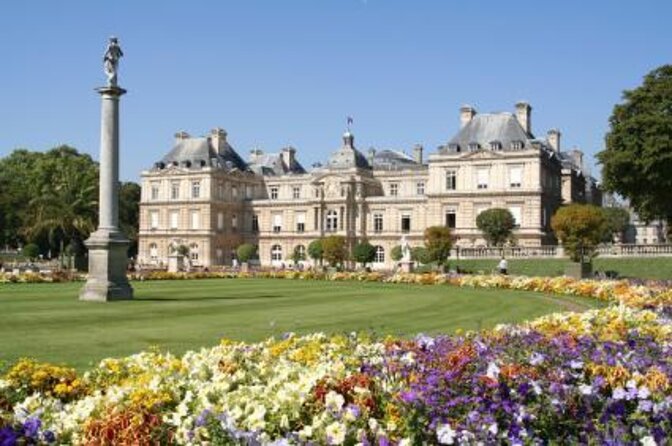
Next, you pass into the area’s romance and leisure. There’s a stop described as an emblematic lovers place in Paris, then time near the Jardin du Luxembourg. The gardens are a classic reset button. You get fountains, paths, and a calmer pace after the street scenes. It’s also a strong photo and walking stretch if you want one part of the tour that feels slower.
You’ll also touch on Le Champo cinema, called an institution for film buffs. That’s a nice bridge for show fans, because Paris film culture isn’t separate from Paris streets. It grows out of them.
And as you move, you’ll stop near a public spot by the Banque de Paris area where street bands and singers show up. That’s one of those details that makes a driving tour feel more like being dropped into real neighborhoods rather than just watching landmarks from afar.
Île-Saint-Louis and Île de la Cité: the Seine’s historical center
One of the easiest ways to judge a Paris tour is whether it hits the river properly. This one does. You spend time around Île-Saint-Louis, including a traditional restaurant stop known for Berthillon ice cream. Even if you don’t buy anything, the stop is meaningful because it puts you on a quieter island side of Paris rather than the most tourist-squeezed riverfront.
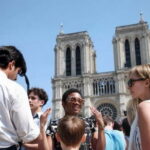
Then the tour reaches Île de la Cité, the historic heart of Paris, where Notre-Dame and Sainte-Chapelle are part of the atmosphere. Even with short stop time, being here matters because you can feel how the city grew around the river. It’s the kind of place where your photos look better because the streets and stonework are old enough to do the work for you.
A quick note on expectations: most of these stops are brief. You’ll likely view and photograph more than you’ll thoroughly tour inside each building. If your must-do list includes inside visits, plan those separately and use this tour for the best possible “outside orientation” first.
Palais Royal to Vendôme to Opéra: elegant Paris in tight time
After the river history, the tour glides into the more polished, architectural side of central Paris.
You’ll spend time at Jardin du Palais Royal. The arcades and classic gardens are a perfect contrast to the Latin Quarter. It feels calmer and more designed, with an easy flow for quick photos. You’ll also see the Colonnes de Buren, the striped column artwork that’s become a photo magnet. It’s the kind of spot where even a quick stop feels satisfying because the lines are dramatic and the angles work.
From there, the tour threads through places like Galerie Vivienne, a covered passage with 19th-century character. If you enjoy old shopping streets and glass-roof spaces, this is a great place to pause because it feels like you’re stepping into a different era without leaving the city center.
Then you reach the luxury and spectacle zone around Place Vendôme and the Vendôme Column. It’s a clean “wow” moment: polished facades, designer storefronts, and a big monument that’s easy to frame.
Opéra Garnier is another key stop. It’s ornate, dramatic, and hard to ignore even if you only spend a short amount of time there. This is the section of the tour where you start thinking, yes, Paris really does put on a show.


Montmartre stairs to Sacré-Cœur: show energy on an artistic hill
Montmartre is where many people want their Paris tour to become a movie. The Montmartre stairs and narrow lanes help you get there fast. Even if you don’t climb far, being in the right streets shifts the whole mood of your day.
Place du Tertre is where you’ll feel the artists’ energy. You’ll see painters working and cafés pulling in visitors. It’s lively in an old-school way, with a lot of human-scale motion.
Rue de l’Abreuvoir gets a spot in the route too. It’s picturesque, lined with older houses, and it offers that village-feel that Montmartre is known for. You get the sense you’re in a place that feels less like a big city district and more like an old neighborhood that absorbed the city around it.
Then comes Basilique du Sacre-Cœur, with the white domes that define Montmartre’s skyline. The quick stop is still worth it because the views over Paris give you context. Sacré-Cœur is also a good mental checkpoint: after the busy hill streets, you can breathe and reframe the city.
Rue Lepic appears next, and it’s a street where cinema and local life overlap. The tour also includes time around Moulin Rouge, including the red windmill façade. If you’re a show fan, this is the zone where the look and mood match what you might already picture.
And then you reach La Maison Rose, a pink bistro. The tour description ties it to artist history, and in practice it’s one of those stops where color alone makes the photo work. If you want one “turn the camera on” moment, this is it.
Le Mur des Je t’aime: a quick stop that hits emotionally
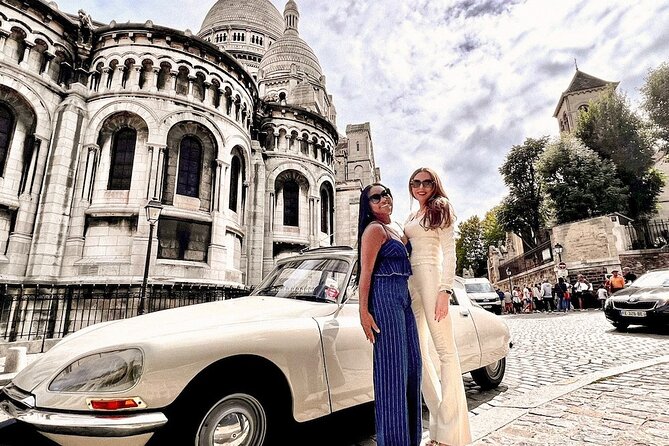
Le Mur des Je t’aime in Montmartre is small in time but big in effect. It’s a wall of Je t’aime in over 300 languages, and it works even if you’re not trying to get a perfect picture. It’s one of those landmarks where the meaning is straightforward and the visuals are instantly readable.
You’ll walk away from it with more than photos. You’ll remember the idea: Paris compresses romance, language, and public art into one spot.
Courcelles and Parc Monceau: quieter Paris after the big sights
Not all Paris tours give you the “less frantic” part of the city. This one adds Parc Monceau and the Courcelles neighborhood area, which is a nice mid-route shift.
Parc Monceau is described as landscaped with statues, winding paths, and a calmer atmosphere. Courcelles is nearby with elegant architecture and quiet streets. This is the portion of the day that helps your brain stop scanning for the next landmark and start appreciating the city’s rhythm.
It’s also smart if you want photos that feel less like postcards and more like you’re walking through real Paris streets where people actually live.
Arc de Triomphe and Eiffel Tower: icons, but with a driver’s advantage
Then the tour ramps into the grand monuments zone.
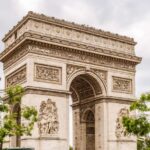
Arc de Triomphe is the centerpiece-style stop here. Even with brief time, it’s a powerful scale moment, and the location helps you understand the city’s geometry.
After that, you move toward the Eiffel Tower area, with stops close to École Militaire and Rue de l’Université. This is useful because you’re not just seeing the tower. You’re also seeing how the surrounding streets and formal buildings frame it.
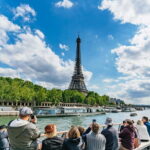
You’ll spend time at the Eiffel Tower itself, and the short stop is long enough to get photos from the right angles and feel the atmosphere change when you hit that landmark zone.
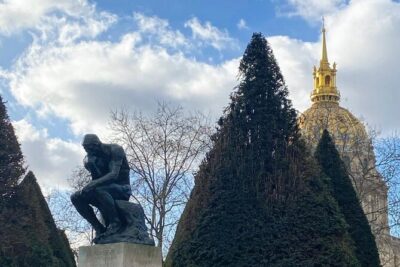
The tour keeps going with the Élysée Palace area and Les Invalides. Élysée is a symbol of power and history, and Les Invalides adds a military heritage focus, capped by Napoleon Bonaparte’s tomb area and the famous golden dome presence.
Seine romance and grand bridges: Pont Alexandre III to the Champs-Élysées
Pont Alexandre III is next in the flow, and it’s a standout because it’s described as opulent with golden sculptures and wide views. That bridge is a classic “Paris looks expensive” moment.
Then you reach the Champs-Élysées, Paris’s most iconic avenue. It’s also the kind of street that you’ll either love or find too commercial, depending on what you’re in the mood for. Either way, the stop works because you’re there as part of a guided route, not wandering alone with limited time.
La Madeleine comes next, with a grand neoclassical façade and decorated interior (as described). Then the route continues toward Grand Palais, with its glass-domed splendor.
Pont de la Concorde and the Luxor Obelisk add another layer of historical depth. The tour then includes Petit Palais, described as a quieter architectural and art space in a garden setting.
You also get time to drift along the Seine or stroll across bridges. That’s a big deal in a driving tour, because it breaks up the “stare from the curb” effect and lets you feel the river’s pull.
Louvre and beyond: quick culture moments without the museum stress
The last stretch centers on the Louvre area and the surrounding gardens.
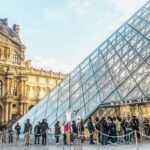
You’ll pass the Pyramide du Louvre and then spend time near Place de la Concorde. The Tuileries Gardens sit in between, giving you green space and easy walking from one major landmark to the next.
The Musée d’Orsay is included as well, with its Impressionist and Post-Impressionist focus, housed in a restored former railway station. The key point for your planning: you’re not being sent on a full museum mission in this time window. You’re being oriented to a cluster of cultural icons so you can decide what’s worth a return visit.
Price and logistics: is $540.95 per group worth it?
At $540.95 per group (up to 4), this isn’t a bargain bus tour. It is a private car experience, and the value comes from three things that matter in Paris:
- Time savings: hotel pickup and a route that hits multiple areas in one session.
- Comfort: heating seats and real legroom, which you’ll feel over 3 to 4 hours.
- A guide who can adapt: Benjamin’s mix of Paris history and show-location context, plus the ability to tailor to your interests.
For two people, it can be a smart splurge because you’re splitting the cost. For solo travelers, it’s pricier than standard public tours, but the comfort and private attention may still feel worth it if your time is short.
A practical logistics note: pickup and drop-off are offered for centrally located Paris addresses, but not everywhere. You can choose pickup or meeting points, and the tour states pickups are not available in the 3rd, 4th, 10th, 11th, 12th, 19th, and 20th arrondissements. It also doesn’t pick up/drop off at Le Marais, Bastille, République, or Gare du Nord. If your hotel is outside the coverage area, you’ll need to coordinate the meeting point after booking.
Best schedules are between 10AM and 4PM to avoid heavy traffic.
Who should book this Citroën DS Paris TV show tour?
Book it if:
- You want a private, comfortable way to see a lot of Paris in a single day segment.
- You’re an Emily in Paris fan and want show locations worked into the real neighborhoods.
- You care about photo stops and don’t want to drag a family or a group around on foot for every segment.
- You value a guide who can flex when you ask for photos, slower pacing, or a more historical angle.
Skip it if:
- You want mostly indoor museum time and long guided entries at major sites.
- You’re traveling with kids under 10, since the tour notes children under 10 aren’t allowed due to seat belt limitations on the back seats.
- You’re expecting a fully rain-proof plan; the experience requires good weather.
Should you book it?
If you’re trying to get your bearings quickly, this is one of the more fun ways to do it. The classic Citroën DS adds real charm, and the private format means you’re not stuck in a herd. Benjamin’s approach, especially the combination of Paris context and show details, is exactly what turns a driving tour into more than just sightseeing.
I’d book it for a first or second day in Paris when you want orientation and photos, and when you’d rather spend your energy choosing where to return than trying to cover everything in one exhausting walk.
FAQ
How many people can fit in the tour?
The price is per group, up to 4 people.
How long is the Paris tour?
It lasts about 3 to 4 hours.
What language is the tour offered in?
It’s offered in English.
Do you pick up and drop off at hotels?
Pickup and drop-off are included at centrally located hotels, but not all areas are covered. Pickup is offered inside Paris except in the 3rd, 4th, 10th, 11th, 12th, 19th, and 20th arrondissements, and it does not pick up or drop off at Le Marais, Bastille, République, or Gare du Nord.
Where can we meet if hotel pickup isn’t available?
You can meet at the front of Hôtel Crillon (10 place de la Concorde, 75008 Paris) or at the front of the Panthéon (Place du Pantheon, 75005 Paris).
Are kids allowed?
Children under 10 years old are not allowed due to no seat belt on the back seats.
Is alcohol included?
No, alcoholic beverages are not included.
What happens if the weather is bad, or if we need to cancel?
The experience requires good weather. If it’s canceled due to poor weather, you’ll be offered a different date or a full refund. There is free cancellation up to 24 hours in advance for a full refund.