REVIEW · PARIS
Paris: Semi-Private Tour of the Louvre Museum and Mona Lisa
Book on GetYourGuide →Operated by the tour guy · Bookable on GetYourGuide
The Louvre can overwhelm you fast. This semi-private tour keeps it manageable with a small group and a guide who talks art, not trivia.
I especially love the skip-the-line advantage paired with a tight maximum group size of 6. That combo means you spend your time looking at art, not shuffling like a human queue. One review singled out guide Marion for nonstop, story-driven guidance that helped the highlights land in your brain.
One thing to plan for: even with skip-the-ticket-line access, you may still hit a security wait. In high season, that delay can reach about 20 minutes.
In This Review
- Key things to know before you go
- Meeting at the Louvre Pyramid (and how to find your group)
- How skip-the-line really helps (and where the wait can still happen)
- Why a 6-person group makes the Louvre feel doable
- Ancient foundations: seeing Greek and Roman sculpture first
- Raphael, Botticelli, Bernini, and da Vinci: art with the why attached
- Napoleon’s world and the French Crown Jewels
- The Medusa and other dramatic storytelling stops
- Standing before the Mona Lisa: what to do with your minutes
- After the tour: how to use your extra time wisely
- Logistics that can make or break the day
- Price and value: is $123 a fair trade?
- Who this tour fits best (and who might want something else)
- Should you book this Louvre semi-private tour?
- FAQ
- How long is the Louvre semi-private tour?
- What is the group size?
- Is it actually skip-the-line?
- Where do we meet for the tour?
- What should I bring?
- What is not included in the price?
- Is photography allowed?
- Can I bring luggage or large bags?
- What’s the cancellation policy?
- Is the tour suitable for wheelchair users or mobility impairments?
Key things to know before you go
- Small group of 6: enough personal attention to ask questions without the guide shouting over a crowd.
- Skip-the-line entry: you get in faster, then use the time well for major works.
- A guide who narrates the why: you’re not just seeing names like Raphael or da Vinci, you’re getting the story behind them.
- Mona Lisa time with context: you’ll know what to look for before you stare.
- You’re not stuck in one room: the tour moves across big-ticket areas, from ancient sculpture to Napoleon-era drama.
- Security can still slow you down: build in buffer time, especially in peak months.
Meeting at the Louvre Pyramid (and how to find your group)
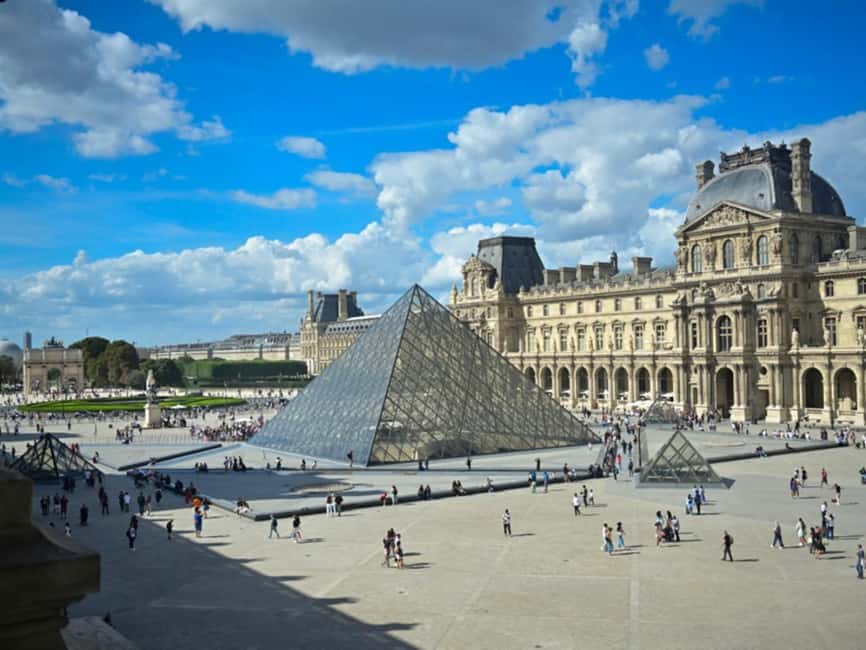
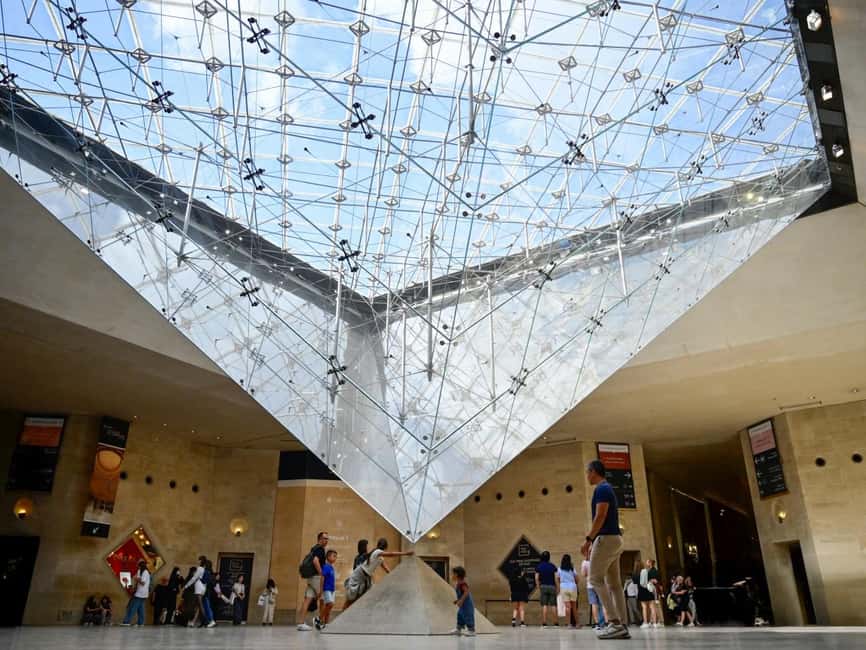
Your tour meet-up is in front of the Louvre Pyramid, at the equestrian statue of Louis XIV. The guide—or a representative—will be holding a sign with The Tour Guy on it, so it’s worth arriving a few minutes early and not trusting your ability to spot pyramids instantly.
Plan on walking. The Louvre is all corridors and staircases, and the tour is 150 minutes, not a slow stroll. Comfortable shoes matter more than you think, because you’ll be moving at a guided pace.
Also note the tour does not include hotel pickup or drop-off. You’ll be on your own for getting to the meeting point, but that also helps the timing stay tight.
You can also read our reviews of more private tours in Paris



How skip-the-line really helps (and where the wait can still happen)

This experience includes skip-the-line entry to the Louvre. In practice, that means you avoid the worst of the ticketing bottleneck and you use your guided time inside the museum.
That said, skip-the-line is not magic. There can still be a wait at security. The information you’re given is pretty direct: even with skip-the-ticket-line access, security delays in high season can be up to 20 minutes.
My advice: treat your start time like a target, not a guarantee. If you’re trying to pack in multiple timed activities the same day, leave breathing room.
Why a 6-person group makes the Louvre feel doable
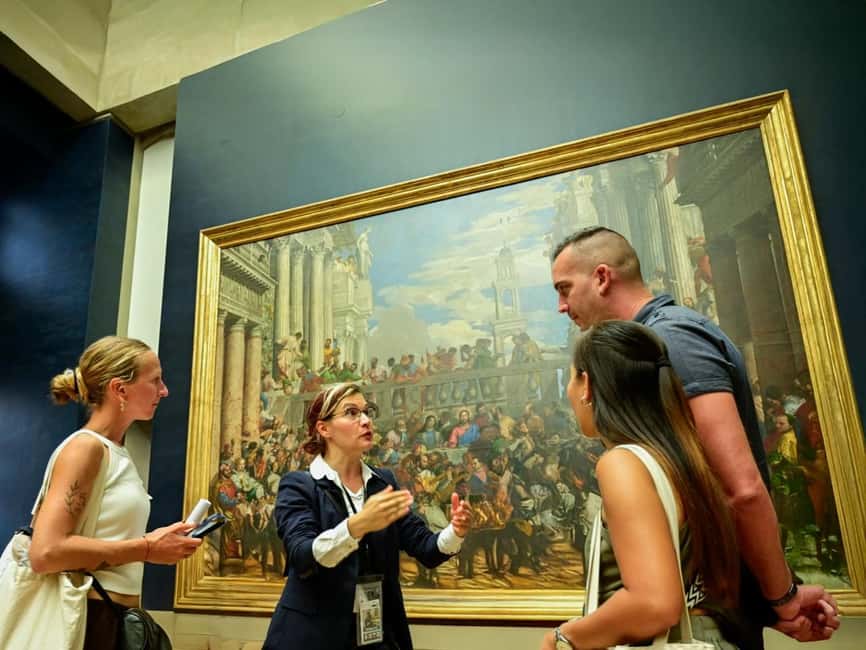
The Louvre is enormous. Even with a map, it can feel like you’re chasing random rooms. A small group changes the energy. When there are only six of you, your guide can pace the route around the day’s crowd pressure, and you’re less likely to get separated by the next wave of tourists.
You also get a better rhythm of listening. With a larger tour, you hear sound bites and you move on. With six, you get to actually follow the story from one masterpiece to the next.
From the reviews, this is exactly what people valued: trained guidance through busy areas, plus a guide who kept talking and kept you oriented so the highlights didn’t feel like a checklist.
Ancient foundations: seeing Greek and Roman sculpture first
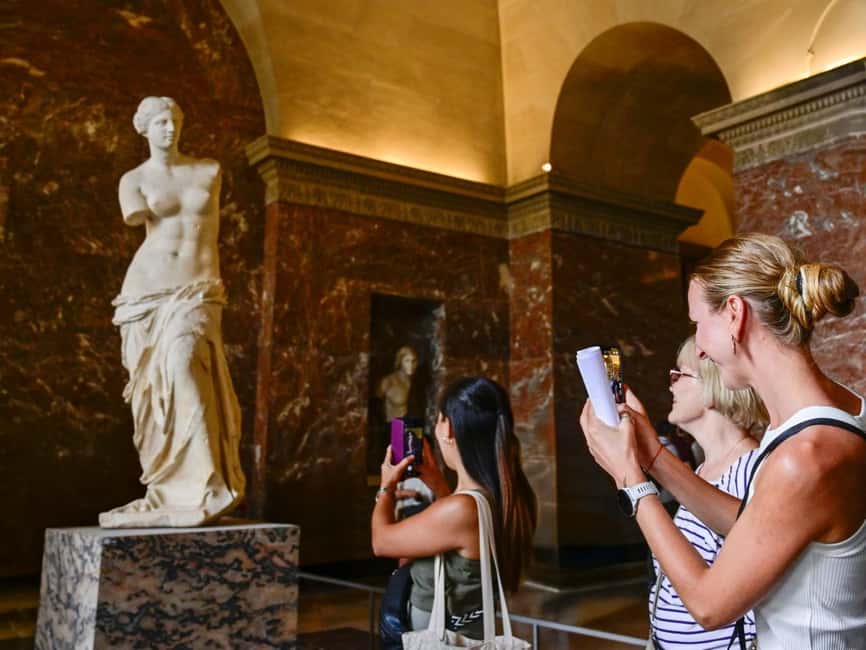
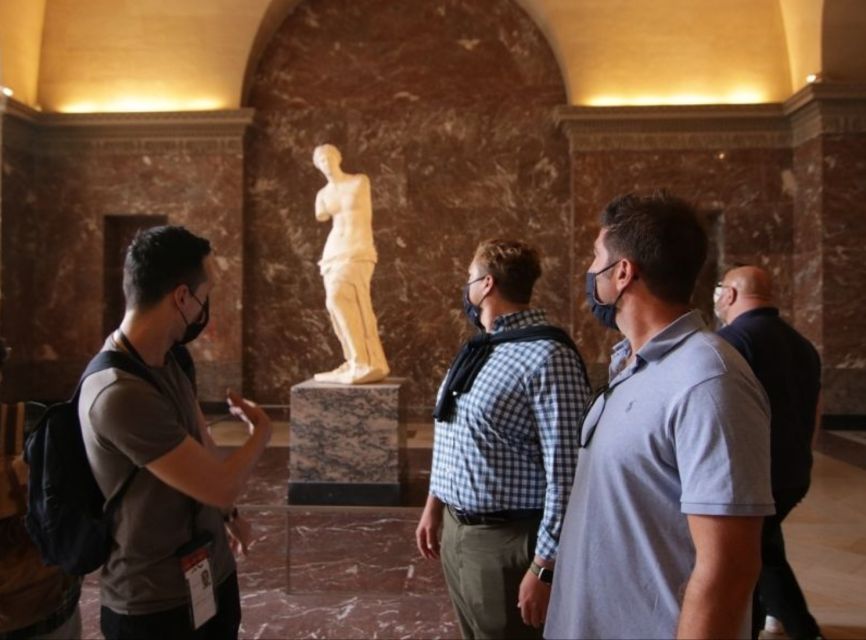
The tour starts with the Louvre itself, not just what the Louvre contains. You’ll learn about the ancient foundations of the palace and you’ll get a first look at Greek and Roman statues.
Starting here is smart. When you arrive at a museum like this, your brain wants the famous faces right away. But seeing ancient sculpture early gives you a frame: how the Louvre became the Louvre is part of the experience. It also helps the later works feel connected instead of random.
If you like context—how collections formed, how buildings evolved—this early block is a strong payoff.
Raphael, Botticelli, Bernini, and da Vinci: art with the why attached
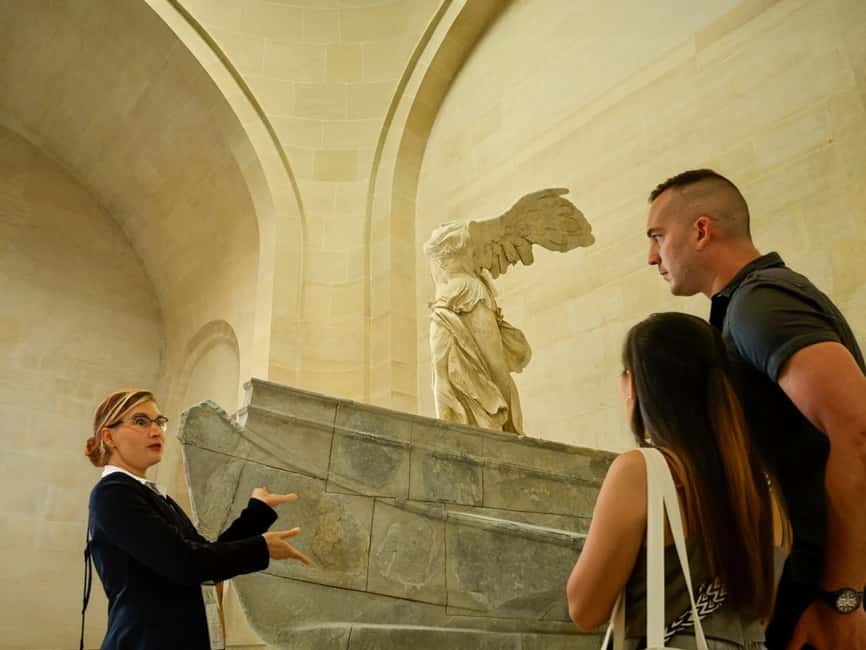
After the ancient section, you move into major masterpieces tied to some of the biggest names in Western art. The tour highlights work by Raphael, Botticelli, Bernini, and da Vinci.
What you’ll appreciate is not only what they painted or sculpted, but the stories your guide tells to explain why the works matter. The point isn’t to memorize art history facts. It’s to understand what you’re seeing while you’re standing in front of it.
If you’ve ever looked at a museum piece and thought, I know I’m supposed to care, this is the antidote. Your guide helps you spot details worth noticing, so the masterpieces land with meaning rather than just size.
You can also read our reviews of more museum experiences in Paris






Napoleon’s world and the French Crown Jewels
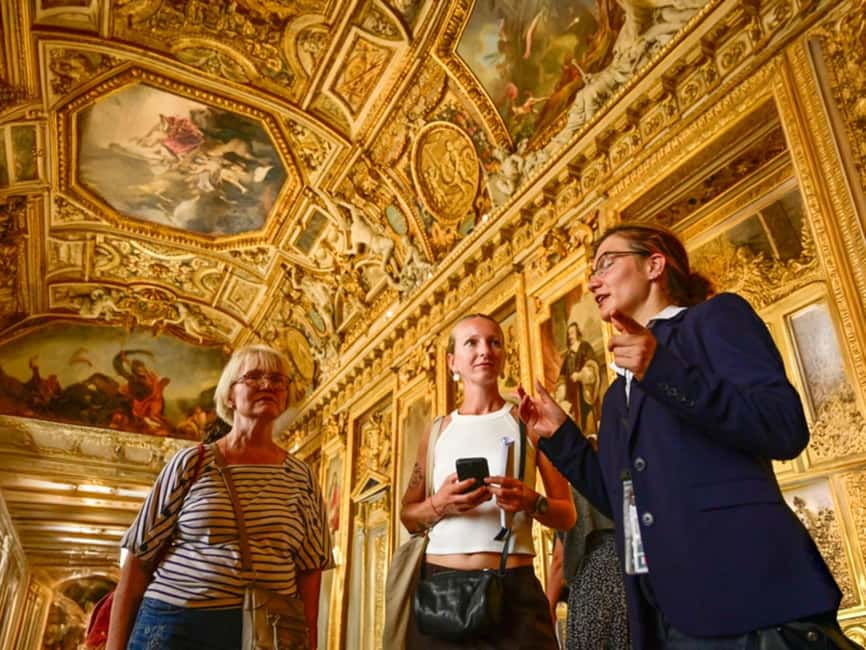
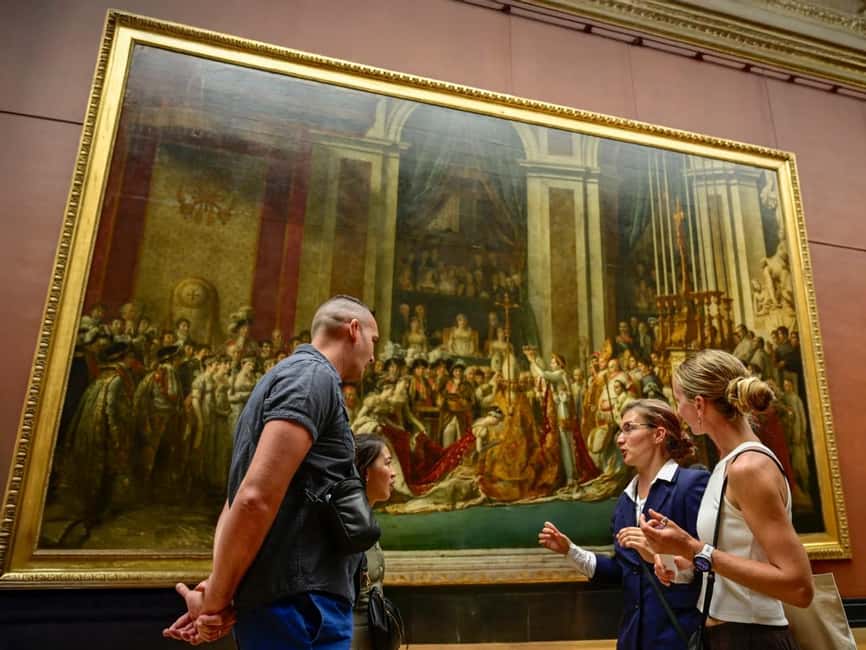
One of the stand-out items on this tour is the inclusion of the French Crown Jewels and the Coronation of Napoleon.
That section matters because it brings the Louvre out of the role of quiet gallery. These works are about power, ceremony, and symbolism. They also show you a different side of the museum: not just paintings and sculpture, but statecraft and spectacle.
You’ll also hear the Louvre’s story stretch forward from its ancient roots into more modern drama. When you’re walking through, it helps to have a guide tying the time periods together so you don’t feel like you’re bouncing between eras.
The Medusa and other dramatic storytelling stops
The tour also flags Raft of the Medusa and includes a number of larger-than-life pieces meant to grab your attention.
Raft of the Medusa is the kind of painting people remember because it feels urgent and human, not polite and distant. Seeing it with guidance helps you understand what’s going on beyond the surface scene—what the work is reacting to and why it became so influential.
You also visit the Wedding Feast at Cana, which is described as a grand scene you can almost hear. That kind of stop is ideal for museum beginners too, because you can respond emotionally first, then learn what to look for.
These are the moments that turn a museum visit from sight-seeing into storytelling.
Standing before the Mona Lisa: what to do with your minutes
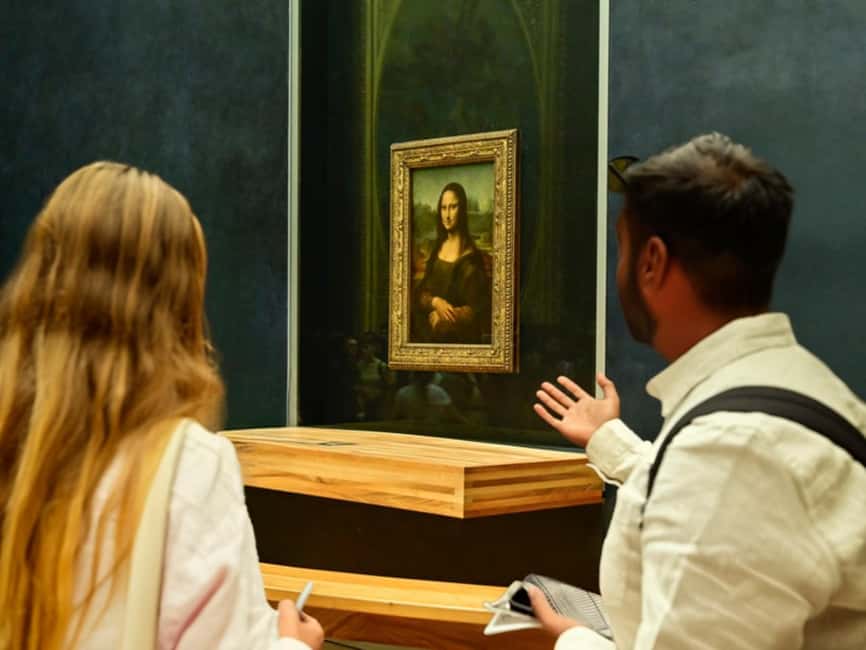
No Louvre tour feels complete without meeting the Mona Lisa. This one sets you up to see her with context, so you’re not just staring at a tiny image behind glass and hoping you get the point.
What helps is the mystery framing your guide brings—why her smile reads the way it does, and what makes the painting so endlessly discussed. Even if you’ve seen photos a hundred times, seeing her in person is still a jolt. The painting’s presence hits differently when you’ve been given a lens for observation.
Practical tip: arrive ready to look slowly. If you rush, you’ll just get the icon. With a guide and a focused route, you can give the Mona Lisa the attention it deserves.
After the tour: how to use your extra time wisely
When your guided segment ends, you can stay inside the museum until closing time. The important rule: once you leave the artwork area where your guide takes you, you’re not allowed to re-enter that section.
So think of this phase as freedom with boundaries. Pick a small number of what you want most, and don’t try to tour the whole museum on your own.
Also keep in mind that photography and filming are strictly prohibited in temporary exhibition rooms. You can still take photos outside those areas, but you should expect the rules to be enforced. If you’re unsure in the moment, follow what others are doing and what signs indicate.
Logistics that can make or break the day
A smooth Louvre visit is half planning, half good shoes.
Here are the practical points that matter most:
- Bring a passport or ID card.
- Plan for security lines even with skip-the-line entry.
- No luggage or large bags. Bags over the size limit of 55 cm x 35 cm x 20 cm cannot be brought in.
- There’s no coat check on site for you as part of the small group tour.
- Lockers aren’t accessible to the group on this tour, so leave bulky items at your accommodation.
Also: baby strollers aren’t allowed, and weapons or sharp objects are not allowed. No smoking.
And if you’re traveling with anything extra—tripods, umbrellas, big backpacks—assume you’ll have trouble. This tour is designed for an uncluttered museum run.
Price and value: is $123 a fair trade?
At $123 per person for a 150-minute guided experience, you’re paying for three things that matter at the Louvre: time saved, focus, and guidance.
- Time saved: skip-the-ticket line helps, and you’re not spending your morning stuck at entry.
- Focus: with six people and a structured highlight route, you don’t need to decide on the fly.
- Guidance: your guide’s job is to connect names and scenes to meaning, so your eyes know what to notice.
If you’re the type who likes museums but hates wandering aimlessly, the value tends to feel strong. If you’re a hardcore Louvre explorer who wants total freedom to chase niche rooms, you might prefer a self-guided visit. Still, a guided “greatest hits” route is often the fastest way to get your bearings.
Who this tour fits best (and who might want something else)
This is a good match for:
- First-time Louvre visitors who want the Mona Lisa and the biggest storytelling stops
- People who feel museum burnout when there are too many rooms and too little structure
- Travelers who like small-group energy and clear guidance
It is not suitable for people with mobility impairments or wheelchair users, based on the tour’s requirements.
If your group can manage stairs and walking, you’ll likely enjoy the pace and the fact that the guide keeps you moving between major works instead of waiting in place.
Should you book this Louvre semi-private tour?
I’d book it if you want a short, high-impact Louvre visit with a guide, especially if you’re worried about crowd chaos and want a small group of six.
Skip this only if you need maximum flexibility to roam on your own for hours, or if accessibility concerns apply to your group. Also, if you’re traveling with big luggage, plan to keep it at your hotel because the tour setup doesn’t work well with large items.
For most people, this is a smart way to see the Louvre’s headline moments—Mona Lisa, Crown Jewels, Napoleon, and major masterpieces—without turning your day into a stressful maze.
FAQ
How long is the Louvre semi-private tour?
The tour lasts 150 minutes.
What is the group size?
The maximum group size is 6 participants.
Is it actually skip-the-line?
Yes, the tour includes skip-the-line entry to the Louvre Museum. You may still wait at security.
Where do we meet for the tour?
Meet at the equestrian statue of Louis XIV in front of the Louvre Pyramid. A representative will be holding a sign with The Tour Guy.
What should I bring?
Bring a passport or ID card and wear comfortable shoes.
What is not included in the price?
Hotel pickup and drop-off are not included, and food and beverages are not included.
Is photography allowed?
Photography and filming are strictly prohibited in temporary exhibition rooms.
Can I bring luggage or large bags?
No. Large bags are not allowed, and items exceeding 55 cm x 35 cm x 20 cm cannot be brought into the Louvre. There is no coat check on site for this tour, and lockers are not accessible to the group.
What’s the cancellation policy?
You can cancel up to 24 hours in advance for a full refund.
Is the tour suitable for wheelchair users or mobility impairments?
No. It is not suitable for people with mobility impairments or wheelchair users.