REVIEW · PARIS
Escape game in Montmartre
Book on Viator →Operated by Playgreen · Bookable on Viator
Montmartre feels like a movie set when you solve a code. This outdoor escape game turns famous sights and a few quieter corners into a riddle-based walk with cultural explanations. I like that it runs on a mobile ticket and keeps you moving through Montmartre’s postcard stops instead of standing around waiting for the next fact.
Two things I especially appreciate: you get a host who’s also a photographer, so your group can capture the day with photos along the route, and you also leave with a surprise gift once the code is cracked. One thing to keep in mind: a couple of the stops list admission as not included, so you may want to plan a bit extra if you want to go inside those specific places.
In This Review
- Key Highlights You Should Know First
- Why an Escape Game Beat a Standard Montmartre Walk
- How the Code, Riddles, and Mobile Ticket Actually Feel in Real Life
- Starting at Funiculaire Gare Haute: Getting Oriented Fast
- Stop-by-Stop: Sacré-Cœur Through Riddles (and What You’ll Notice)
- Au Lapin Agile, Bateau-Lavoir, and Saint-Pierre: The Montmartre Personality Hits
- Place du Tertre and Le Passe-Muraille: Where Fun Meets Local Lore
- Dalida, Maison Rose Area, and Wallace Fountains: The Photo Stops You’ll Actually Want
- Moulin de la Galette and Clos Montmartre: What to Expect When Admissions Change
- Ending at Le Bateau-Lavoir: The Code’s Payoff and the Gift
- Price and Value: Is $41.71 Worth Two Hours of Montmartre?
- Who Should Book This Escape Game (and Who Might Skip)
- Should You Book Playgreen’s Montmartre Escape Game?
- FAQ
- How long is the Montmartre escape game?
- Where do I meet, and where does it end?
- What does the ticket type mean?
- Is it available for kids and teenagers?
- Are all stops included with admission tickets?
- Is there walking involved?
- What’s the cancellation policy?
Key Highlights You Should Know First
- Riddles replace the usual script: you’ll learn as you solve, not as you listen.
- A photographer host can take your group photos for free and send them to you via WhatsApp.
- Two hours of momentum across major Montmartre landmarks (no half-day drag).
- Plenty of recognizable sights: Sacré-Cœur, Place du Tertre, Maison Rose area, and more.
- Family-friendly versions are available for kids and teenagers.
- Some admissions aren’t included, so you may pay extra at a couple stops.
Why an Escape Game Beat a Standard Montmartre Walk

If you’ve ever done Montmartre with the typical “look here, read this, next stop” rhythm, you already know the problem. You see a lot, but it can feel a little passive. This experience flips it. You’re out in the streets cracking a code, and the cultural bits come with the puzzle—so you stay alert and you remember more.
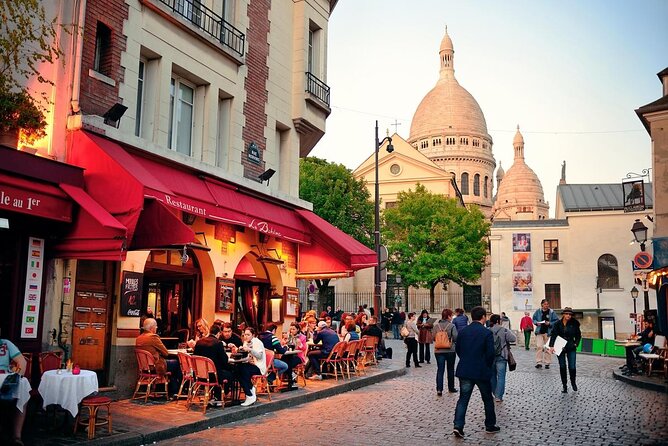
What makes it work in Montmartre is the setting. You move through the exact kind of winding streets, iconic facades, and classic viewpoints that make people fall for the neighborhood. The whole experience is also built to feel like part of that famous 2002 Amélie from Montmartre mood—quirky, charming, and cinematic—without turning into a costume tour.
The best part for me is the mix of famous and lesser-visited spots. Even with big-name stops like Sacré-Cœur, you’re also led toward places that are interesting but not always the first thing people plan. That balance is what makes the walk feel fresh instead of repetitive.
You can also read our reviews of more tours and experiences in Paris.



How the Code, Riddles, and Mobile Ticket Actually Feel in Real Life
You get two hours to crack a code, and the experience is structured around solving riddles at each stop. That matters because you’re not just “walking around Montmartre.” You’re searching, thinking, and moving with purpose.
A mobile ticket keeps it simple. You don’t need to mess with paper passes or long check-in rituals during the walk. And the host’s role isn’t just to talk; it’s to guide you when you’re stuck, with the game staying fun instead of turning into a quiz you can’t finish.
The pacing is designed for group energy. This is not an activity where everyone disconnects and waits. The setup encourages teamwork (even if you’re just a couple), and the route is short enough that the end feels like a payoff, not a marathon.
One note from the overall vibe: a few clues can be obscure. The good news is that the experience is set up so you can still get there in the end. If you enjoy puzzles, this will feel satisfying. If you hate thinking on the spot, it might feel like one more task—so aim for a mindset of play.
Starting at Funiculaire Gare Haute: Getting Oriented Fast

You meet at the Funiculaire Gare Haute area, at 7 Rue Foyatier, and the walk ends at Le Bateau-Lavoir (13 Pl. Emile Goudeau). Starting near a funicular hub is practical because it puts you on the right side of the Montmartre “map”—and it’s easier to reach by public transportation.
From the first moments, the format helps you get oriented quickly. Instead of “where do we go next,” you’re nudged forward by the riddle prompts. That’s a big deal in Montmartre, where it’s easy to wander in circles just because the streets are so pretty.
Also, the group size is capped at a max of 100 travelers. In practice, that cap is what you want to see for an outdoor game. It suggests you’re less likely to be swallowed by a mega-crowd, and more likely to keep the energy you need to solve together.
Stop-by-Stop: Sacré-Cœur Through Riddles (and What You’ll Notice)
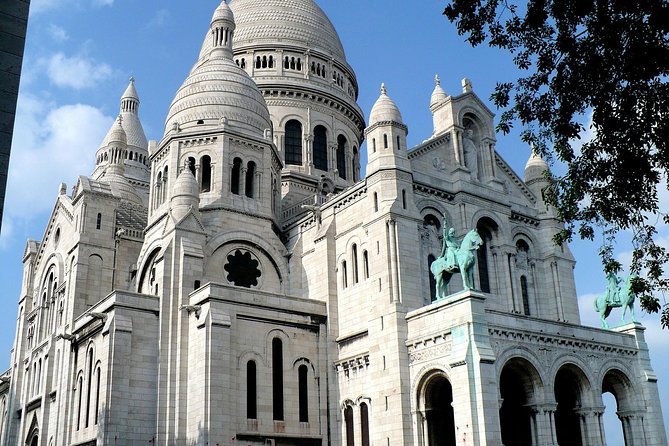
The first big landmark on the route is Basilique du Sacré-Cœur de Montmartre. You don’t just arrive and stare. You explore it through a riddle with cultural explanations—so you’re paying attention to details you might otherwise skip.
Even when you’re not planning to go into every nook, Sacré-Cœur is the kind of place that anchors the neighborhood in your mind. A puzzle here works because it gives you a reason to slow down. It turns “famous church” into “something I’m actively reading,” which usually means you come away with more than a quick photo.
You should also know the itinerary lists an admission ticket as free for this stop. So you’re not likely to hit a surprise cost just to do the experience’s portion around Sacré-Cœur.
Au Lapin Agile, Bateau-Lavoir, and Saint-Pierre: The Montmartre Personality Hits
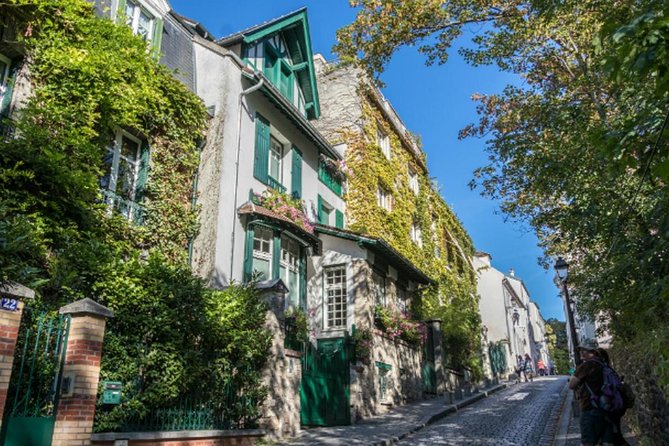
After Sacré-Cœur, the route moves into classic Montmartre zones that feel more human scale. Next you hit Au Lapin Agile, then Le Bateau-Lavoir, then Eglise Saint-Pierre de Montmartre.
Here’s why these stops matter in the escape-game format:
- Each one gives you a different “mood” of Montmartre, so the game never feels repetitive.
- The riddle approach makes you look at the street level details, not just the postcard angles.
- Short time at each stop keeps you from getting tired of the same kind of sightseeing.
One small quirk: Le Bateau-Lavoir shows up again later on the route as well, so you’ll revisit the area with fresh eyes. When a place returns, it’s usually because the game wants you to connect clues to the broader identity of the neighborhood—rather than treating it like separate photo-op stops.
As for logistics, each of these early stops is listed as about 5 minutes for the riddle-and-explanations portion. That timing is part of the value. You’re getting momentum without feeling rushed out the door.






Place du Tertre and Le Passe-Muraille: Where Fun Meets Local Lore

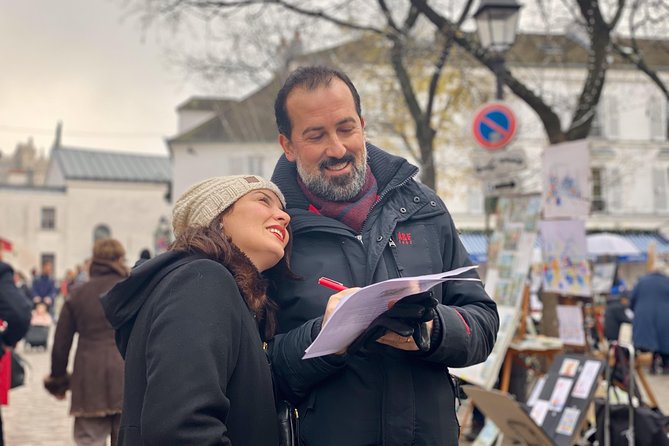
Then you reach Place du Tertre, one of the most recognizable squares in Montmartre. In a normal tour, you’d spend time watching street-life and maybe buy something. In this game, you slow down because the square ties into the code. You also get cultural explanations as part of solving.
From there, you move to Le Passe-Muraille. It’s the kind of spot that’s easy to recognize in a photo but easy to overlook in a “just walk through” plan. In an escape game, you’re forced to pay attention long enough to understand why the place is remembered the way it is.
If you’re traveling with teens, this is where the format shines. The point isn’t only to see things; it’s to participate in figuring things out. Reviews often emphasize how the puzzle structure keeps everyone engaged—especially teenagers, who can be hard to win over with standard sightseeing.
Dalida, Maison Rose Area, and Wallace Fountains: The Photo Stops You’ll Actually Want
Next comes Place Dalida, then La Maison Rose, and later Fontaines Wallace. These are exactly the kinds of locations where you’ll want pictures, and this experience is prepared for that.
That photographer-host feature is practical, not gimmicky. Your host can take photos of you and your loved ones for free, and the photos are sent via WhatsApp. It’s a nice advantage in a neighborhood like Montmartre, where you’re often stuck asking strangers to take a group shot and hoping it doesn’t cut off someone’s head.
One careful detail: the itinerary lists La Maison Rose with admission not included. That doesn’t stop you from enjoying the stop as part of the game, but it could affect whether you can or want to enter. If you’re the type who likes to step inside everything, plan for possible extra costs.
Fontaines Wallace has admission listed as free in the itinerary. So you can treat that stop as pure sightseeing and puzzle-solving without worrying about additional tickets.
Moulin de la Galette and Clos Montmartre: What to Expect When Admissions Change
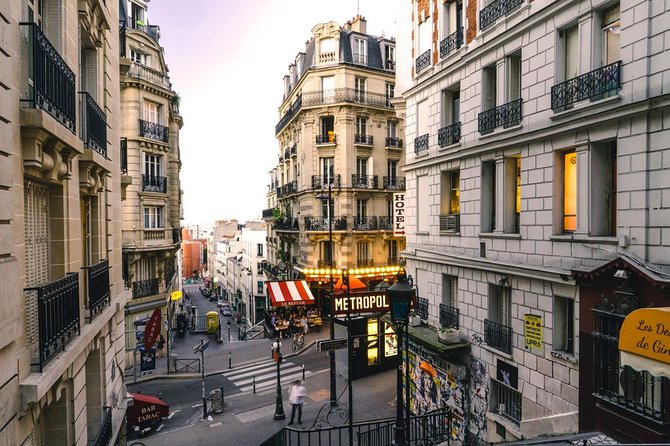
You’ll also reach Moulin de La Galette (admission not included). Then there’s a stop at the Vigne du Clos Montmartre.
This is where the outdoor escape-game value is worth thinking through. The game design uses these places as clue anchors, but it doesn’t automatically mean every stop is a full-ticket attraction.
So my practical advice: if you’re mainly here for the puzzle walk and the Montmartre atmosphere, you’ll still get a lot of satisfaction from the experience even if you don’t pay extra to enter every site. If you’re building a bigger “do it all” day, then you’ll want to decide ahead of time which not-included admissions are worth your money.
The vineyards and mills are also the kind of visual contrast that keeps the walk interesting. Instead of all church-and-square vibes, you get street-level culture mixed with Montmartre’s more scenic identity.
Ending at Le Bateau-Lavoir: The Code’s Payoff and the Gift
The walk ends at Le Bateau-Lavoir, the same location you visited earlier. That return makes the finale feel intentional. By the time you reach the end, you’ve pieced together enough clues to understand the neighborhood’s identity in a way that feels more personal than reading a plaque.
And yes, there’s a payoff. When you crack the code, you may receive a surprise gift. It’s not huge in “souvenir” terms, but it adds a final hook. It turns the whole experience into something you can say you completed.
If you’re choosing this as your main Montmartre activity, you’ll usually like the ending structure. You’re leaving with photos, a story you can retell, and a sense of Montmartre that comes from active puzzle-solving.
Price and Value: Is $41.71 Worth Two Hours of Montmartre?
At $41.71 per person for about 2 hours, this isn’t cheap in the “just wandering around” category. But it competes well with the sightseeing alternatives that cost more once you add guides, transport, and entrance fees.
Here’s how the value stacks up:
- You’re getting a guided, riddle-driven route across major Montmartre sights.
- You’re getting a host who can also act as a photographer, plus follow-up photos via WhatsApp.
- You’re getting cultural explanations built into the game flow.
- You’re getting a surprise gift at the end.
Those extras are the real value lever. A standard walk can be free or low-cost, but you’ll miss the puzzle structure and the photo capture support. Meanwhile, structured tours can cost more, and you still might spend a lot of time in listening mode. This sits in the middle: structured but playful.
The one value caution is the not-included admission stops. If you plan to go inside La Maison Rose and Moulin de La Galette, your total day cost could rise. But if you treat them as puzzle anchors and enjoy the outside experience, the base price holds up well.
Who Should Book This Escape Game (and Who Might Skip)
Book it if you want Montmartre with interaction. This is ideal for couples who like puzzles, families who want something active, and groups with teens who need a reason to stay interested.
It’s also a good fit if you’re the type who likes photos but hates spending the whole day lining up shots. The photographer-host helps you get your pictures without making it your full-time job.
You should think twice if puzzle solving stresses you out. The clues can be a little obscure, and you’ll spend the time actively searching. Also, the activity calls for moderate physical fitness. The route is walk-based, so if you’re dealing with mobility limits, you should consider whether the walking rhythm will feel comfortable.
Finally, group size cap helps: the maximum is listed as 100 travelers. If you hate crowds, this cap is encouraging, but like all Montmartre plans, the neighborhood itself can still be lively.
Should You Book Playgreen’s Montmartre Escape Game?
In my view, this is a strong “main activity” choice for your Montmartre time—especially if you want to remember the neighborhood, not just pass through it. The best reasons to book are the riddle format, the photo support from a host who also photographs, and the sense of completion when the code is cracked.
If you’re on a tight schedule, this also has an advantage: two hours is short enough to fit into a broader Paris day. And if you’re traveling with teens, the escape-game style is built for participation rather than passive watching.
If you want to maximize value, go in with a puzzle-friendly mindset, and decide in advance whether you care about stepping into the places where admission isn’t included.
FAQ
How long is the Montmartre escape game?
It runs for about 2 hours.
Where do I meet, and where does it end?
You start at Funiculaire Gare Haute, 7 Rue Foyatier, 75018 Paris, and you end at Le Bateau-Lavoir, 13 Pl. Emile Goudeau, 75018 Paris.
What does the ticket type mean?
You receive a mobile ticket.
Is it available for kids and teenagers?
Yes. The game is also offered in kids and teenager versions.
Are all stops included with admission tickets?
Not all. The itinerary lists some stops with admission tickets as free, and it also lists La Maison Rose and Moulin de La Galette as not included.
Is there walking involved?
Yes. The activity is described as requiring moderate physical fitness, and it’s designed as a walking route through Montmartre.
What’s the cancellation policy?
You can cancel for a full refund if you cancel at least 24 hours before the experience starts. If you cancel within 24 hours, the amount paid is not refunded.