REVIEW · PARIS
Paris: Macaron Baking Class
Book on GetYourGuide →Operated by ExperienceFirst · Bookable on GetYourGuide
Macarons are harder than they look. This class turns that mystery into a repeatable method, with hands-on expert guidance in a historic bakery setting and small-group attention. You’ll mix, pipe, and bake, then customize colors and flavors, but plan for one catch: the space is in a historic building with multiple steps and you’ll be standing for a while.
I love that you don’t just watch. You work the batter yourself, ask questions, and get a take-home box you made—plus a tasting to calibrate your expectations. The class runs 2 hours and the instructor teaches in English, which makes it friendly if you want real learning without a language barrier.
In This Review
- Chez Manon in Le Marais: where your macaron class starts
- Behind-the-scenes bakery time: what you do during the 2 hours
- The macaron technique you’ll practice (and how the teacher helps)
- Flavor and color customization: making your batch feel personal
- Tasting and what you learn by eating your own work
- Macaron history lessons you’ll actually remember
- Guides and small-group energy: getting real attention
- Price and value: is $117 per person fair for Paris?
- Accessibility and comfort: stairs, standing, and the basement kitchen
- Kids in the class: what to expect with younger guests
- One caution to consider: kitchen conditions and ingredient quality questions
- Who should book this macaron class (and who might skip it)
- Gluten-free note and allergies: what you should know ahead of time
- Practical tips for your day
- Should you book the Paris macaron baking class?
- FAQ
- Where is the meeting point for the class?
- How long does the macaron baking class last?
- How many people are in the group?
- Is the instructor’s English level sufficient for English speakers?
- Do you take macarons home at the end?
- What’s included besides the baking itself?
- Are kids allowed, and can children participate in the hands-on baking?
- Is the class wheelchair accessible?
- Are the macarons gluten-free and are there allergy considerations?
Chez Manon in Le Marais: where your macaron class starts
Your class meets inside the bakery at Chez Manon, 25 Rue de Bretagne, 75003, Paris. When you arrive, you’ll want to tell bakery staff you’re there for the baking class—they’ll point you to the right direction.
The location matters more than you’d think. Le Marais is one of those neighborhoods where you can walk off the class feeling like you actually spent time in “real” Paris, not just rushed from one stop to the next. And since this is a short, focused activity (just 2 hours), starting in the center keeps your day from turning into a logistics puzzle.
One small detail I like: in addition to the main session, the experience includes time to settle in before you head behind the scenes. In at least one account, people arrived to a complimentary macaron and a drink while waiting, then moved on when the group was ready.
Behind-the-scenes bakery time: what you do during the 2 hours
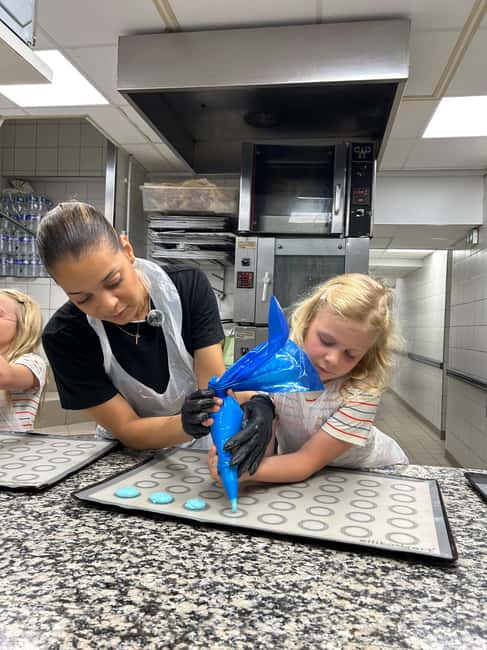
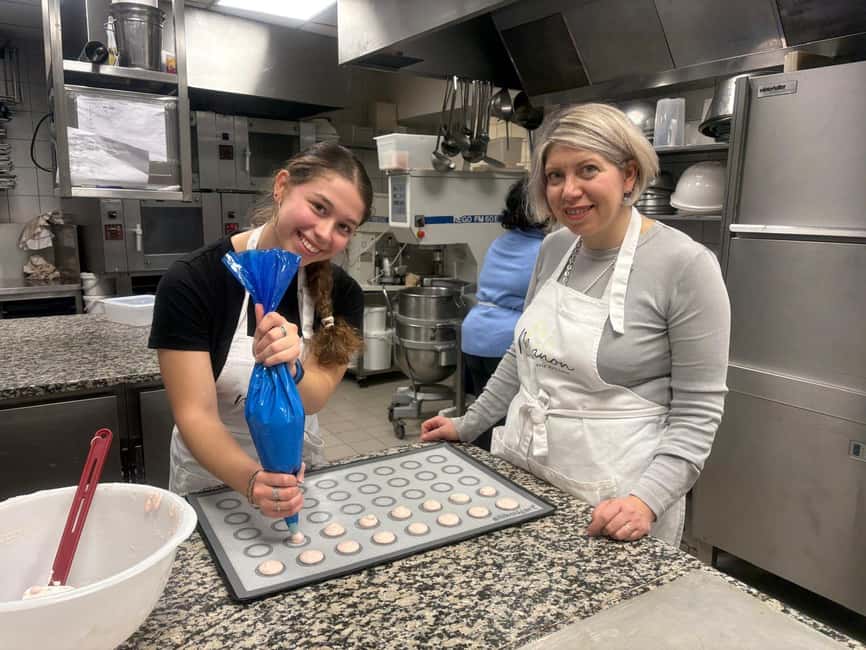
This is a practical, kitchen-focused class. You’re not studying macarons from a screen—you’re making them, step by step, with a local pâtisserie expert. The class is limited to up to 8 participants, so you’re not lost in the crowd.
A typical flow goes like this:
1) Welcome and setup inside the bakery
You’ll get oriented, and you’ll likely have a small bite and drink while you wait for your turn to start.
2) Go behind the scenes to the working kitchen area
This part is where the experience feels “real.” More than one account describes a basement kitchen setup, with steep stairs involved. If stairs are an issue for you, this is the moment to decide whether you’re comfortable with it.
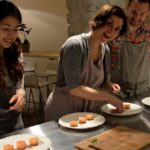
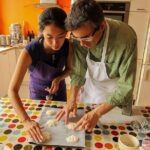
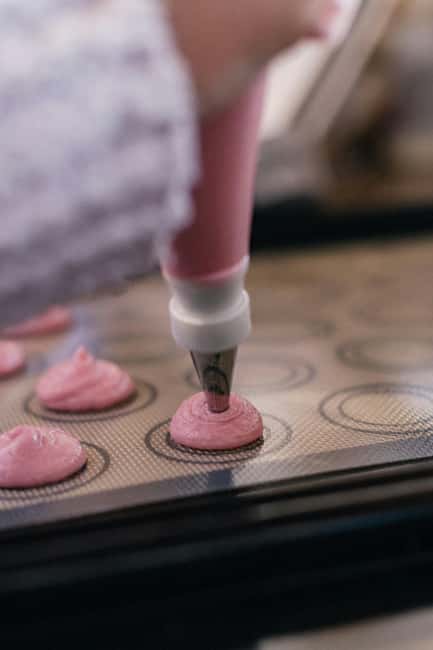
3) Mix, pipe, and bake your own macarons
You’ll follow a set method, but you can still make the class feel personal through flavor and color choices.
4) Guided tasting and refreshments
After you bake, you’ll taste what you made, plus learn what to look for—texture, finish, and how the filling-and-sandwich part should feel.
5) Take-home box
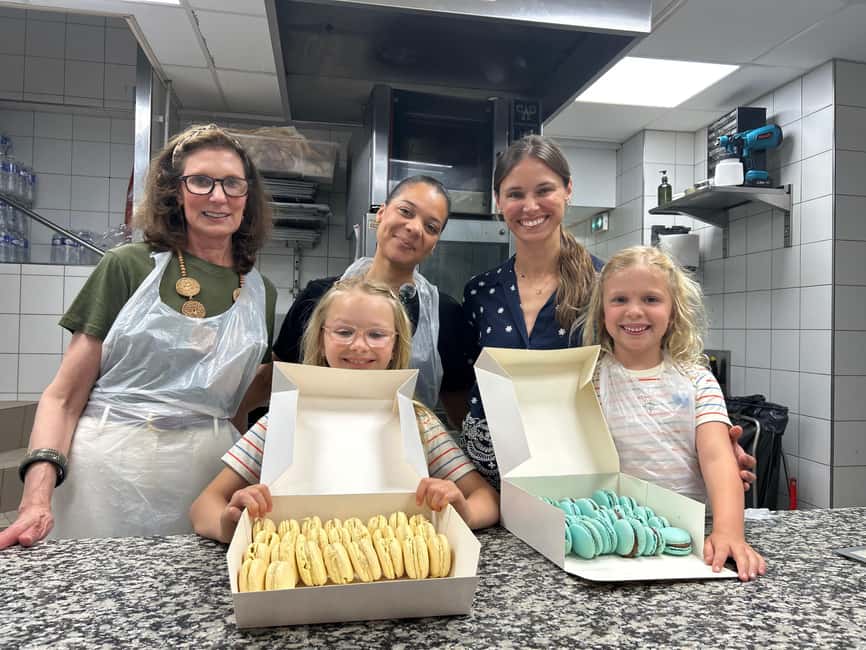
You leave with a box of your personalized macarons. That’s a big part of the value, because it turns the class into an actual souvenir you can share (or hoard).
You can also read our reviews of more cooking classes in Paris
The macaron technique you’ll practice (and how the teacher helps)
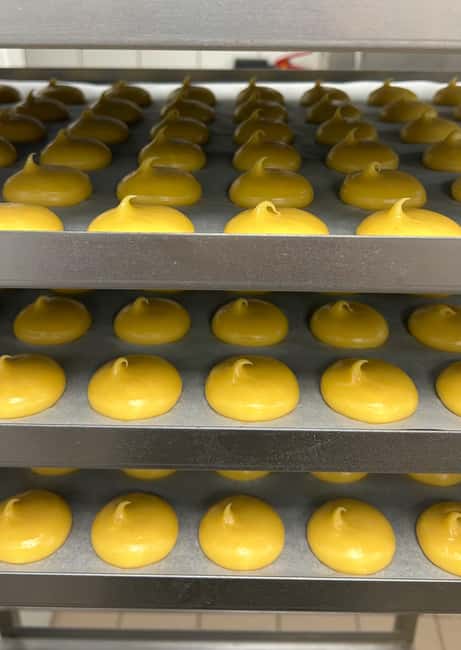
Macarons have a reputation for being delicate. In this class, the teaching approach is about making that delicacy manageable: you get a guided recipe process, and you learn what to watch so your results improve.
You’ll be working through the core skills that trip most people up:
- Mixing to get the right batter consistency
- Piping so your shells come out the right size and shape
- Baking so you get the correct shell formation and texture
The English-speaking instructors guide you through each stage, and the pacing is built for questions. Multiple accounts highlight that you can ask things as you go, not just at the end.
I also like that the class doesn’t pretend macarons are magic. It treats them like a process you can learn—then practice again at home.
A practical note: the class follows a set recipe with various flavor options, but you can’t request substitutions. So if you’re hoping for a specific ingredient swap, you’ll want to pick from what’s offered.
Flavor and color customization: making your batch feel personal
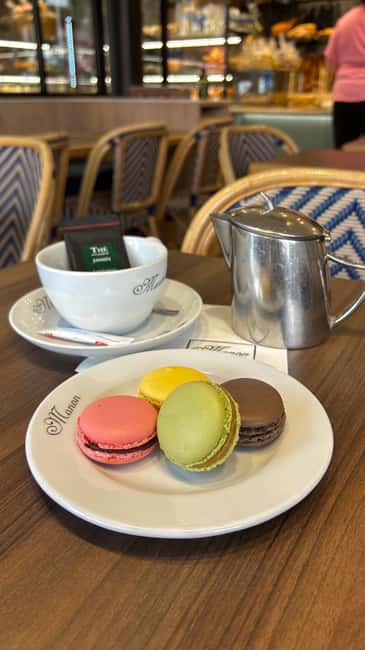
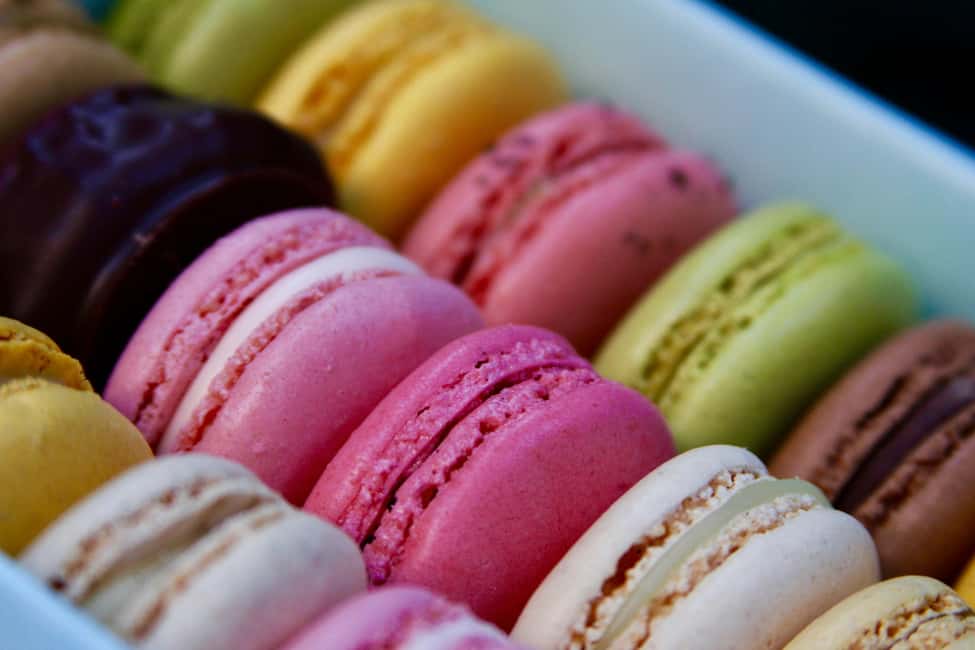
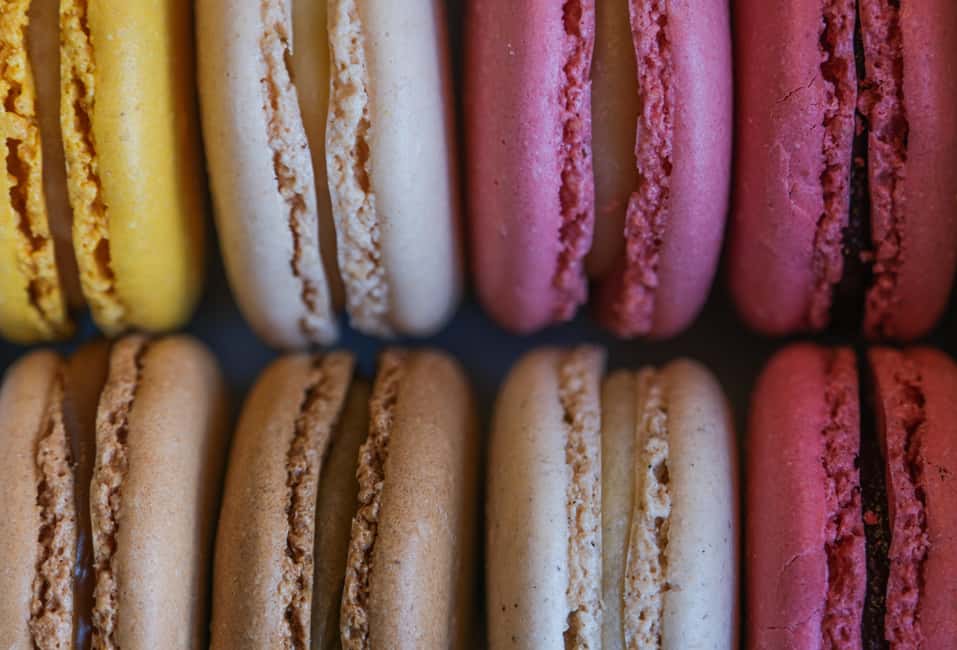
One of the fun parts here is that you don’t just make one “default” macaron. You customize flavors and colors to match your preferences.
That’s more than a cute detail. When you choose a flavor, you’re also tasting the difference later during the guided tasting. It helps you understand that macarons aren’t only about the shell technique—the filling flavor balance and the final taste matter too.
You’ll also learn what ingredients are in the macarons you’re making. The macarons use dairy and almond powder.
Tasting and what you learn by eating your own work
The class includes a macaron tasting and refreshments after the baking stage. This is where your “I hope these turn out” stress gets turned into something useful.
In several accounts, people say the tasting isn’t just an afterthought—it’s part of the lesson. You get to compare shells, look at texture, and hear what the trainer expects you to notice. It’s a quick feedback loop, and that’s one reason classes like this can improve your results later.
If you’re traveling with kids or you’re a first-timer, tasting also makes the whole session feel like a win. You’re not stuck waiting for results in the oven with no payoff.
Macaron history lessons you’ll actually remember
You also get a history segment about macarons—why they became iconic and how they spread through French pâtisserie culture. The key is that this story is folded into the class, not treated like a lecture that steals time from the actual baking.
And even if you don’t care about food history for its own sake, it adds context that makes the technique feel less random. When something is tied to tradition, you tend to understand why people obsess over the details.
You can also read our reviews of more tours and experiences in Paris



Guides and small-group energy: getting real attention
The small group size (max 8) is a big reason this class works. You’re not just standing around; someone is watching what you do.
In positive accounts, guides were described as engaging and full of tips, with real time for questions. One name that comes up is Paulette, described as incredible, and another is Jess, praised for making the session feel fun and focused.
If you’re the type who learns by doing—and then checking your work—this setup is ideal. You get feedback in the moment, not hours later when you’ve already mixed the next batch.
Price and value: is $117 per person fair for Paris?
At $117 per person for a 2-hour class, this isn’t “cheap eats.” But it isn’t overpriced in the way tourist-only cooking demos can be either.
Here’s what you’re paying for:
- A local pâtisserie expert leading you through the process
- Hands-on work (not just observation)
- Personalization through flavors and colors
- A guided tasting plus refreshments
- A take-home box of what you made
You also get the payoff of a meaningful souvenir. In Paris, that matters. A box of macarons you made yourself beats the usual shelf-stable mementos.
That said, you should go in expecting a real baking class, not a casual snack activity. You’ll be standing, following a procedure, and paying attention to details.
Accessibility and comfort: stairs, standing, and the basement kitchen
This class requires you to be able to stand for an extended period of time. It’s also not wheelchair accessible, because the bakery is in a historic building with multiple steps.
More than one account flags steep steps when moving to a basement kitchen area. So if you have limited mobility, balance issues, or you get uncomfortable on stairs, take that seriously before booking.
And since children are allowed only with an adult accompaniment, families should plan for the same standing-and-stairs reality.
Kids in the class: what to expect with younger guests
Kids can join, but they must be accompanied by an adult. There’s also a specific safety rule: children under 5 join free of charge, but they won’t be able to participate in the hands-on baking portion.
One account praised the kindness of the instructors with kids who didn’t speak English, describing a gentle approach that still let children try making plenty of cute macarons. If you’re bringing children who can follow basic instructions and stay focused, this can be a very good family-friendly activity.
One caution to consider: kitchen conditions and ingredient quality questions
Most of the feedback is strongly positive—people describe strong instruction, good results, and an enjoyable evening.
However, there is at least one negative account that raised concerns about kitchen hygiene and the quality of ingredients used, including claims about equipment condition and insects in the batter. I can’t verify those claims from the details provided here, but it’s fair to say this is the sort of thing worth asking about if food-safety is a personal priority for you.
If you book, consider sending a quick message beforehand asking what to expect for the work area and ingredient sourcing. You’re paying for an experience that includes hands-on baking, so it’s reasonable to want confidence in the conditions.
Who should book this macaron class (and who might skip it)
You’ll probably love this if:
- You want a real skill, not just a food stop
- You enjoy hands-on cooking experiences and learning the “why”
- You want a Paris activity that ends with a take-home box
- You like small-group instruction where you can ask questions
You might skip it if:
- Stairs and standing are hard for you
- You need wheelchair accessibility
- You’re hoping for ingredient substitutions (the recipe is set)
- You have strong sensitivity concerns beyond what’s stated in the allergy info
Gluten-free note and allergies: what you should know ahead of time
The class says the macarons are gluten-free, but the bakery is not a gluten-free facility. It’s also stated that wheat is used in other products in the building.
So if you’re highly sensitive to cross-contamination, you’ll want to factor that in. Also remember the macarons use dairy and almond powder. If you have a dairy allergy or nut allergy, this class may not be suitable.
Practical tips for your day
A few things that make the class smoother:
- Wear shoes you can stand in comfortably.
- Expect stairs, including steep ones if you go into a basement kitchen area.
- Plan to arrive with a little time buffer so you’re not rushing inside to get set up.
- If you’re bringing kids, remember under-5 can join for free but won’t participate in hands-on baking.
Also, because the recipe is set and substitutions aren’t available, decide your flavor choices in advance if that helps you plan.
Should you book the Paris macaron baking class?
If you want a hands-on, small-group Paris food experience that ends with a take-home souvenir, I’d say yes. The biggest strengths are the expert instruction, the ability to customize flavors and colors, and the fact that the process includes tasting and feedback so you’re not left guessing.
I’d only think twice if stairs are a problem, if you need wheelchair access, or if food-safety concerns are a deal-breaker for you. And if dietary needs are complex, double-check the stated allergen and gluten-free/cross-contact details ahead of time.
Bottom line: this is a fun evening class with a clear goal—learn how to make macarons well enough to feel proud, then bring the proof home.
FAQ
Where is the meeting point for the class?
Meet your guide inside Chez Manon, 25 Rue de Bretagne, 75003, Paris. When you arrive, notify the bakery staff that you’re there for the baking class.
How long does the macaron baking class last?
The class lasts 2 hours.
How many people are in the group?
The experience runs as a small group limited to 8 participants.
Is the instructor’s English level sufficient for English speakers?
Yes. The instructor is listed as English-speaking.
Do you take macarons home at the end?
Yes. You’ll take home a box of your personalized macarons.
What’s included besides the baking itself?
Included are the local pâtisserie expert, the hands-on macaron class, macarons tasting and refreshments, and your personalized macarons to take home.
Are kids allowed, and can children participate in the hands-on baking?
Children are allowed if accompanied by an adult. Children under 5 can join for free, but they won’t be able to participate in the hands-on baking due to safety concerns.
Is the class wheelchair accessible?
No. The activity is not wheelchair accessible due to a historic building with multiple steps.
Are the macarons gluten-free and are there allergy considerations?
The macarons are stated to be gluten-free, but the bakery is not a gluten-free facility and uses wheat in other products. The macarons also use dairy and almond powder.