REVIEW · PARIS
Paris: Classical Music Concert in Saint-Julien-le-Pauvre
Book on GetYourGuide →Operated by Ensemble Royal · Bookable on GetYourGuide
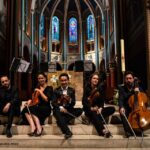
Mozart sounds better with stone around you. This 65-minute concert places you inside Saint-Julien-le-Pauvre in the Latin Quarter, where the intimate church acoustics make strings and voices feel close. I really like the lineup of famous favorites like Vivaldi’s Spring and Summer and Mozart’s Lacrimosa, and I also like that the Ensemble Royal performs with two featured, award-winning soloists. One possible drawback: if you’re seated far back, you may not see the performers as clearly, even if the sound still carries beautifully.
I also like the rhythm of the evening. You get serious music in a historic setting, then you step right back out into an area built for slow wandering and dinner. Meeting is straightforward: you find the staff right in front of Saint-Julien-le-Pauvre, and they’ll point you to your seat.
In This Review
- Key reasons to book this Saint-Julien-le-Pauvre concert
- Saint-Julien-le-Pauvre: the medieval church you’re really buying
- Ensemble Royal and the two soloists: how the program stays compelling
- The music lineup: Vivaldi’s energy, Mozart’s ache, and more
- 65 minutes in real life: perfect length, not a marathon
- Finding the entrance and getting seated in a small church
- After the concert: Latin Quarter dinner and a walk with purpose
- Price and value: what $46 buys you in Paris terms
- Who this concert is best for (and who should think twice)
- Should you book Ensemble Royal in Saint-Julien-le-Pauvre?
- FAQ
- How long is the concert?
- What does the ticket include?
- Where do I meet the staff?
- What classical pieces are performed?
- Are food and drinks included?
- What languages will the host/greeter use?
- Is the venue wheelchair accessible?
- Is there free cancellation?
- Is there a pay later option?
- What can I do after the show?
Key reasons to book this Saint-Julien-le-Pauvre concert
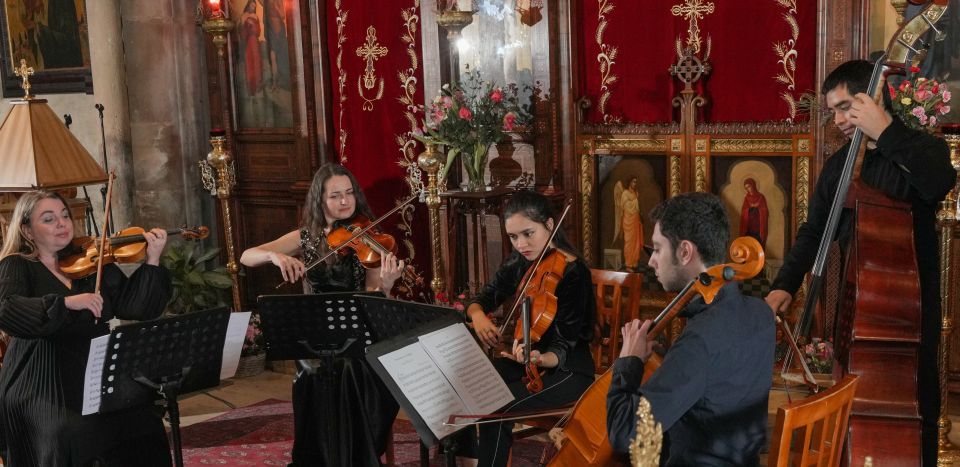
- A historic Latin Quarter church setting that’s old enough to make the music feel extra real
- Ensemble Royal plus 2 guest soloists giving you a full sound, not just a basic recital
- Familiar masterworks like Vivaldi, Mozart, Händel, and Saint-Saëns
- Strong acoustics for soft sacred writing, especially Mozart’s Lacrimosa
- A calm, focused 65 minutes that fits easily into a sightseeing-heavy Paris day
- Easy post-concert plans right outside in the Latin Quarter
Saint-Julien-le-Pauvre: the medieval church you’re really buying
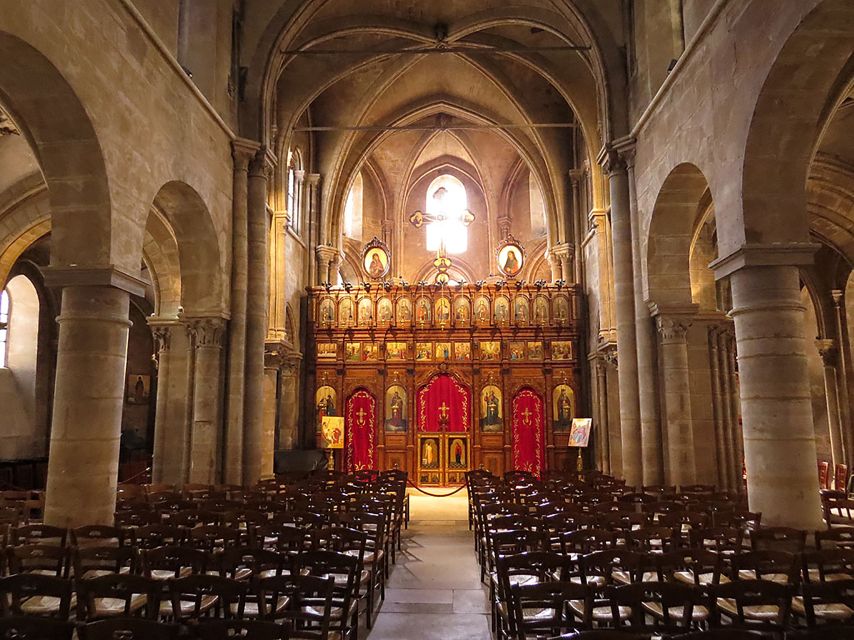
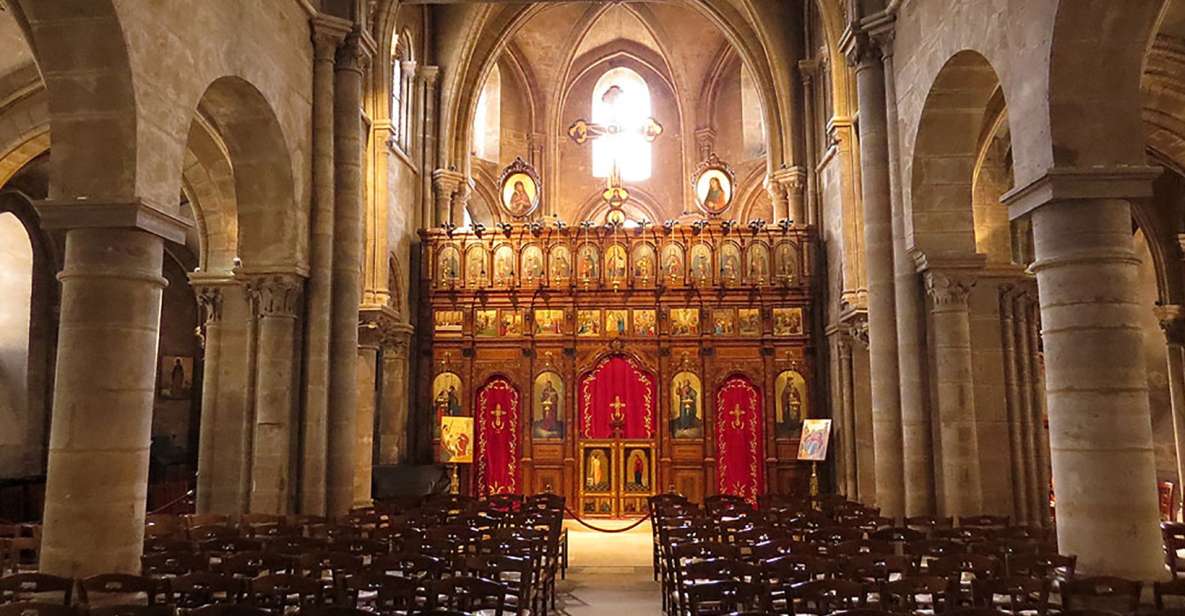
Before the music starts, the room does half the work. Saint-Julien-le-Pauvre is one of Paris’s oldest religious buildings, and it shows. The architecture is medieval, stone-led, and quietly dramatic, so you’re not just attending a concert—you’re stepping into a space designed for sound to travel and linger.
This is a major reason the show feels worthwhile. Big venues can sometimes feel distant, even when the musicians are excellent. Here, the building keeps the experience human. The sound arrives with clarity, and the atmosphere nudges you to listen instead of multitasking.
It’s also an easy win location-wise. You’re in the middle of the Latin Quarter, which means you’re not burning time getting to the concert or trying to invent a plan afterward. If your Paris itinerary is heavy on churches by day, this is your low-effort, high-reward change of pace at night.
You can also read our reviews of more tours and experiences in Paris


Ensemble Royal and the two soloists: how the program stays compelling
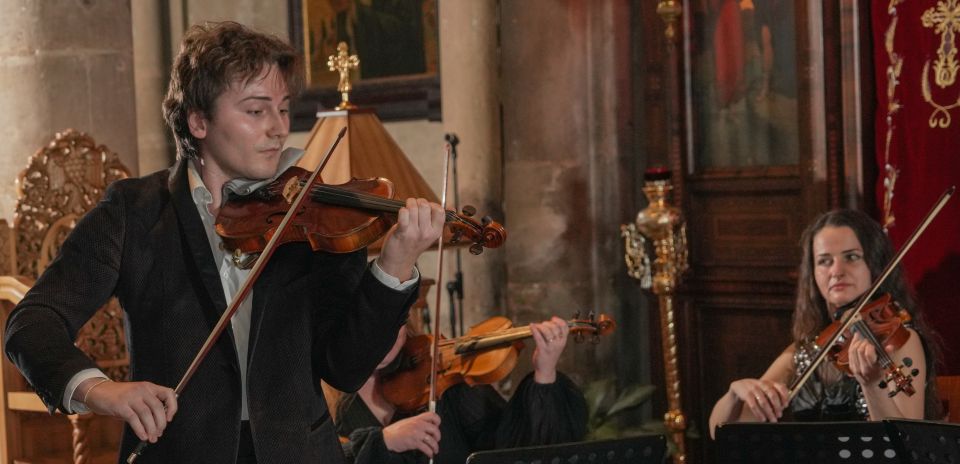
You’re not just watching one performer. The concert is built around Ensemble Royal, supported by two guest soloists. That matters because classical concerts can go two ways: either you get a smooth, varied evening, or you get one standout moment followed by a lot of waiting.
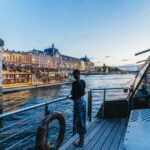
Here, the structure is designed for flow. The Ensemble Royal handles the backbone—tight ensemble playing, balance, and that satisfying sense of order. Then the soloists bring the spotlight moments. In the provided materials and performance mentions, guest soloists include violinists and vocalists; names that come up are Dorian Rambaud (violin) and Olga Voljnovic (soprano). Even if your particular date features different soloists, the format is the same: two featured voices/speakers for the most emotional passages.
Also, a practical note: there’s a host/greeter who speaks French and English. You’ll get direction at the start, and there may be announcements during the performance. If the audio sounds unclear from your seat, that’s not about the musicians—it’s the nature of how some churches handle microphones.
The music lineup: Vivaldi’s energy, Mozart’s ache, and more
The best part of this concert is that the repertoire hits a sweet spot: famous enough to enjoy right away, but still arranged and performed with real intention.
Here’s what you can expect from the program:
- Vivaldi’s Spring and Summer (often linked to The Four Seasons, depending on the specific presentation)
- Mozart’s Lacrimosa from the Requiem
- Händel’s Largo from Xerxes
- The Swan by Saint-Saëns
Why this mix works for you: it keeps emotional variety without feeling like a homework assignment. Vivaldi’s Spring and Summer are vivid and rhythmic. They give your brain a quick wake-up. Then Mozart’s Lacrimosa changes the temperature fast. You go from bright motion to something that feels like it’s made for candlelight and stillness—even though there’s no need to over-romanticize it. It’s simply a powerful piece.
Händel’s Largo brings softness and long-breathed phrasing. Saint-Saëns gives you a lyrical, graceful moment that’s easy to follow even if you don’t live in classical music playlists.
A detail that comes up in the way people describe the concert: the choices tend to stick to well-loved works rather than forcing you through hard-to-like modern material. If you want a Paris night that makes you feel good and moved, this repertoire is aimed exactly there.
65 minutes in real life: perfect length, not a marathon
The concert runs about 65 minutes. That’s a big deal in Paris, where many evening activities either start late, run long, or drag after the main highlight.
This length keeps attention high. You get enough time for the most memorable movements—Vivaldi’s lively passages and Mozart’s heavier emotional center—without turning the evening into a test of stamina.
Plan your day with that in mind. If you’ve been walking all afternoon, you don’t need a long meal break before the show. Just make sure you’re not rushed. Once you’re seated, settle in and let the music do its job.
Finding the entrance and getting seated in a small church
The meeting point is simple: meet staff right in front of Saint-Julien-le-Pauvre, and they’ll direct you to your seat.
That sounds basic, but here’s the practical value: small church concerts rely on smooth entry. You’ll want to arrive with enough time to get oriented without standing around in front of strangers while the music starts. When the staff guide you, follow their instructions closely—where you sit affects both sightlines and comfort.
Sightlines are the one “heads up” I’d give you. Some people note that from the back you may not see the musicians clearly. Sound still works, but if visual detail matters to you, aim for the best seat your timing allows. When staff are available, that’s the moment to ask where they recommend you sit.
Comfort is another factor. A few mentions point out that chairs can be uncomfortable, especially if you’re older or have specific mobility needs. If you’re sensitive to seating, it’s worth getting there early enough to choose a spot that feels manageable for the full program.



After the concert: Latin Quarter dinner and a walk with purpose
Once the final notes end, you step back into a neighborhood designed for exactly what you want next: wandering, browsing, and dinner.
The concert location in the Latin Quarter is a practical pairing with sightseeing. You’re close to major landmarks, and you’re surrounded by traditional restaurants and quaint streets. That means you don’t have to solve the hardest part of evening planning while you’re tired. You can pick a restaurant nearby and keep the mood going.
My advice: don’t plan a tight, timed transfer right after the show. Instead, treat the next 45 to 90 minutes as your buffer. Let the area breathe. Even if you only do a short stroll, it helps the music land and turns the evening into something you’ll remember.
Price and value: what $46 buys you in Paris terms
At $46 per person, you’re paying for three things:
- Live musicians in a historic venue (not a recording or a stripped-down setup)
- A short, focused concert length that fits real travel schedules
- A program that leans on major classical works you’ll recognize
In other words, this isn’t a “maybe someday” activity. It’s priced like an accessible night out, but delivered like a real performance. The venue does a lot of the emotional work, and the music selection makes it easy to enjoy even if you’re not a classical expert.
The one cost that’s not included is food and drinks. That’s normal for concerts, but it does affect value if you’re the type who likes to combine everything into one budget line. My solution is easy: treat the concert ticket as the main event, then eat afterward in the Latin Quarter where you can choose your comfort and budget.
Who this concert is best for (and who should think twice)
This is a great fit if you:
- Like classical music but want a format that feels friendly and not academic
- Want a Paris experience that’s quiet enough to feel meaningful, even in a busy trip
- Appreciate historic places where acoustics matter
- Want an easy evening plan with a straightforward start and a natural place to eat after
You might think twice if:
- You need excellent sightlines from every seat
- You’re very sensitive to church seating comfort
- You’re expecting a long, multi-hour evening with lots of added context beyond the music (this is primarily a music show, not a guided attraction)
Should you book Ensemble Royal in Saint-Julien-le-Pauvre?
Yes, I think you should book it if you want a genuinely classic Paris night without complicated planning. The combination of historic Saint-Julien-le-Pauvre, a strong mix of big-name works (Vivaldi, Mozart, Händel, Saint-Saëns), and the Ensemble Royal format with two featured soloists makes it a high-value option. Add the fact that you can walk into the Latin Quarter immediately afterward, and it turns into one of those trips-planning wins.
If you’re on the fence, use these two decision filters:
- If you want your evening to end with music that actually moves you, book.
- If you’re extremely picky about comfort or visibility, arrive early and be ready to ask where seating works best when the staff direct you.
Either way, this is the kind of concert that makes Paris feel personal rather than just photographed.
FAQ
How long is the concert?
The concert lasts 65 minutes.
What does the ticket include?
Your ticket includes the concert only.
Where do I meet the staff?
Meet the staff right in front of Saint-Julien-le-Pauvre church, and they will direct you to your seat.
What classical pieces are performed?
The concert includes Vivaldi’s Spring and Summer, Mozart’s Lacrimosa from the Requiem, Händel’s Largo from Xerxes, and Saint-Saëns The Swan.
Are food and drinks included?
No. Food and drinks are not included.
What languages will the host/greeter use?
French and English.
Is the venue wheelchair accessible?
Yes, the activity is wheelchair accessible.
Is there free cancellation?
Yes. You can cancel up to 24 hours in advance for a full refund.
Is there a pay later option?
Yes. You can reserve now and pay later.
What can I do after the show?
You can explore the Latin Quarter after the concert, including typical restaurants and the nearby streets.