REVIEW · PARIS
Montmartre/Sacre-Coeur/Paris- Artistic & Bohemian Epicenter
Book on Viator →Bookable on Viator
Montmartre turns art into a walk. This 2-hour, small-group route connects Montmartre street life with film-worthy corners and the big view from Sacré-Cœur. You’ll follow a guide through cobbled climbs, artist squares, and alleyways that helped shape how Paris gets remembered.
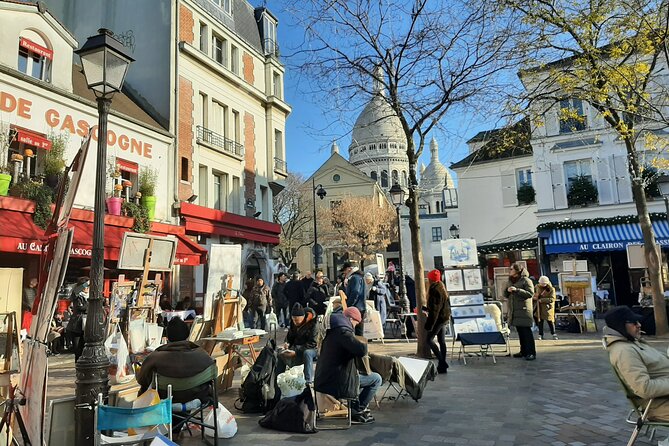
I love the small group size (up to 15), because you’re not stuck behind a wall of people while trying to hear stories. I also love the stop at Place du Tertre, where you can watch local artists at work, often including instant sketching on demand.
One drawback to plan for: Sacré-Cœur is a major draw, so there can be a line when you arrive. Also, since coffee and/or tea isn’t included, bring water and decide in advance where you’ll grab a café break.
In This Review
- Key things that make this Montmartre walk worth it
- Montmartre, the place where Paris grew a personality
- Meet at Rue des Abbesses, end at Sacré-Cœur
- Sacré-Cœur Basilica: the view and the stories behind it
- Rue Lepic and the Amélie film spots you can actually find
- Place du Tertre: watch artists work, not just pose
- Dalida’s Maison: when celebrity becomes a real address
- Le Bateau-Lavoir and Picasso’s early Paris pull
- Place des Abbesses and Montmartre’s Art Nouveau touch
- Windmills of Montmartre: the working-class layer under the art
- Guides matter here: what to expect from the storytelling
- Price and value: why $48.37 can work for a short Montmartre day
- Practical tips so the walk feels easy, not stressful
- Who this Montmartre & Sacré-Cœur tour fits best
- Should you book this Montmartre walking tour?
- FAQ
- How long is the tour?
- How much does it cost per person?
- Is the tour offered in English?
- What is the maximum group size?
- Where do we meet, and where does the tour end?
- What stops are included on the route?
- Is Sacré-Cœur admission included?
- Is coffee or tea included?
- Are service animals allowed, and is there free cancellation?
Key things that make this Montmartre walk worth it
- Small group, real conversation: Max 15 people keeps the pacing human.
- A local Montmartre resident guides the story: Expect village-life details, not just monuments.
- Place du Tertre artists at work: You see the square as it functions today.
- Rue Lepic and Amélie film footprints: You’ll pick out specific streets used in the movie.
- Dalida and Le Bateau-Lavoir stops: Famous names become street-level, walkable reality.
- Sacré-Cœur panorama included in the route: The climb ends with a big payoff view.
Montmartre, the place where Paris grew a personality
Montmartre has always felt a little different from the grand boulevards—more like a working neighborhood with creative energy than a postcard set. In this walk, the goal isn’t to race past sights. It’s to help you connect the dots between artists, streets, and the kind of everyday life that later became myth.
The tour is designed as an easy circuit: you start around Place des Abbesses, move through artist lanes, and finish at Sacré-Cœur. That matters, because the best Montmartre moments happen when you’re moving on foot and looking slightly slower than usual.
Also, it’s in English and runs about 2 hours, which is long enough to feel like you saw a lot, but short enough that you won’t end the day exhausted.
You can also read our reviews of more tours and experiences in Paris.



Meet at Rue des Abbesses, end at Sacré-Cœur
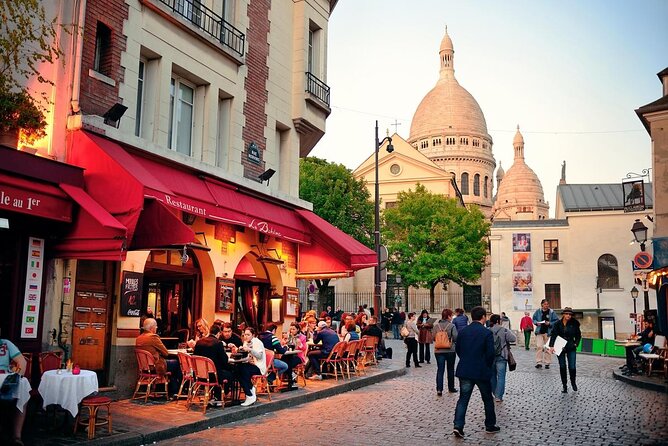
You meet at 22 Rue des Abbesses (75018 Paris). The tour wraps at Basilique du Sacré-Cœur (35 Rue du Chevalier de la Barre, 75018 Paris), so your final moments are naturally timed with the basilica area and its view.
The route is close to public transportation, so it’s not a “get there by taxi or suffer” kind of day. And because you get a mobile ticket, you’re not stuck digging for paper in your bag.
One practical note: even though this is a walking tour, Montmartre includes uphill sections. Most people can do it, but if you have mobility limits or fatigue issues, plan to take it at a relaxed pace with your guide’s tempo.
Sacré-Cœur Basilica: the view and the stories behind it
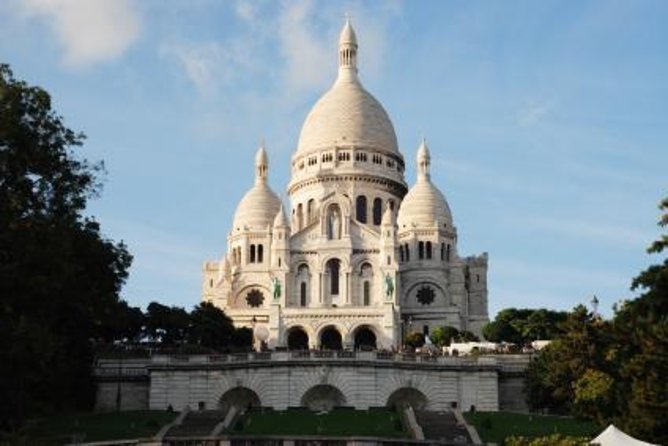
Your first stop is the Basilique du Sacré-Cœur de Montmartre, with the tour marking free admission for this portion. You’ll spend about 15 minutes here, but the point is less about rushing inside and more about understanding why this spot matters.
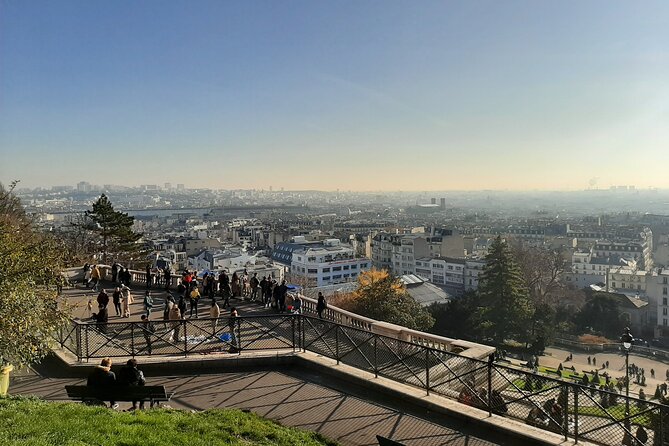
Sacré-Cœur sits at the top of Montmartre’s slopes, so the route to it acts like a build-up. As you walk uphill, the neighborhood quiets into older cobbled streets, then suddenly opens into an expansive city view. That shift is the payoff.
The guide also connects architecture and history with what people actually do around the basilica. If you’re the type who likes looking at buildings and asking why they look the way they do, this is where the tour feels especially useful.
Rue Lepic and the Amélie film spots you can actually find
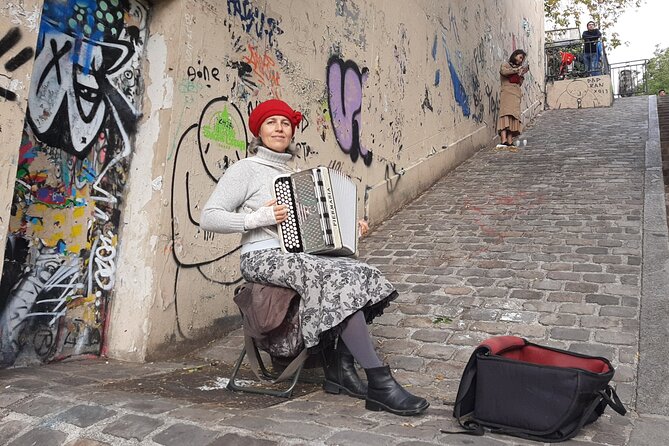
From the basilica area, you move to Rue Lepic for about 20 minutes. This section is built around the idea of walking in the footsteps of impressionist artists who were inspired by Montmartre’s local scenes.
Even better, Rue Lepic is tied to film locations from Amélie, specifically named in the tour’s theme. That means you’re not just “in the same neighborhood as a movie.” You’re learning where to look on the street so the movie references start clicking in your mind.
This is also a good moment for the “feel” of Montmartre—hip, artsy, and layered with history. If you like street photography, this is one of your best stretches, because the details are real and not staged.
Place du Tertre: watch artists work, not just pose
Next comes Place du Tertre, where you spend around 15 minutes. This is the classic Montmartre artist square, but the tour makes it practical: you’ll see local artists at work right there in the flow of the square.
The tour specifically notes that artists make an instant sketch on demand. That’s a small thing, but it changes the whole experience. You’re not only looking at art. You’re watching how people create it in real time, with travelers and locals drifting through as part of the everyday scene.
One consideration: because this is a top attraction, it can feel crowded depending on the time of day. The upside is that the guide’s walking rhythm keeps you from standing still too long, and you’ll still catch the working-art atmosphere.






Dalida’s Maison: when celebrity becomes a real address
After the square, you head to La Maison de Dalida for about 10 minutes. The tour frames Dalida as a major French/Italian star, with the note that she was born in Egypt and held titles in the mid-1950s.
What I like about this stop is that it shrinks fame into street scale. You’re not looking at a distant museum exhibit. You’re standing in a neighborhood where famous lives intersect with the same streets you walk every day.
Even if you don’t know Dalida’s full catalog, the story works because it’s connected to the Montmartre setting. It helps you feel how the area draws artists from many backgrounds and turns their presence into local lore.
Le Bateau-Lavoir and Picasso’s early Paris pull
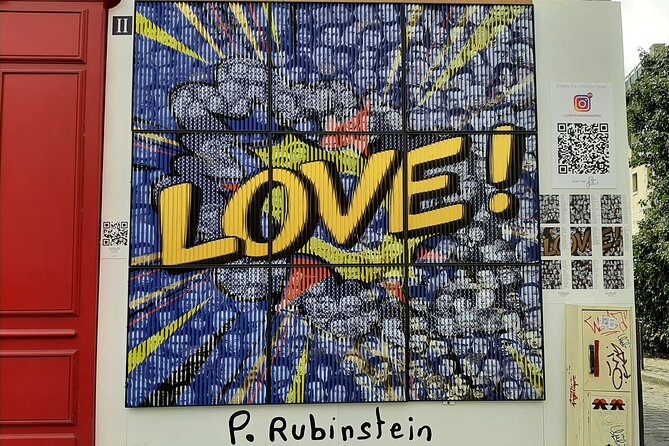
Then you move to Le Bateau-Lavoir, also about 10 minutes. This is a historically important meeting place for early 20th-century artists, and the tour brings in major names like Picasso.
The stop includes the detail that Picasso first came to Paris in 1900 and then fell in love with the city’s vibes. The tour also notes you pass by Picasso’s studio in Montmartre, tying the myth of the artist to a walkable route you can map with your eyes.
This part is great if you like art history that feels physical. You’re not trapped in facts on a page. You’re seeing where people actually gathered, created, and argued—then you continue walking through the neighborhood that helped shape their work.
Place des Abbesses and Montmartre’s Art Nouveau touch
You’ll also pass Place des Abbesses, about 10 minutes. Here the tour highlights Art Nouveau attractions and the sense of village life.
This stop helps break up the more famous Montmartre scenes. Sacré-Cœur and Place du Tertre can dominate your mental picture, but Abbesses reminds you Montmartre is still lived-in. It also gives you a chance to reset, especially if you’ve been climbing.
Look for design details and street corners rather than only big landmarks. Guides who love this neighborhood tend to point out the kind of visuals you’d otherwise walk past.
Windmills of Montmartre: the working-class layer under the art
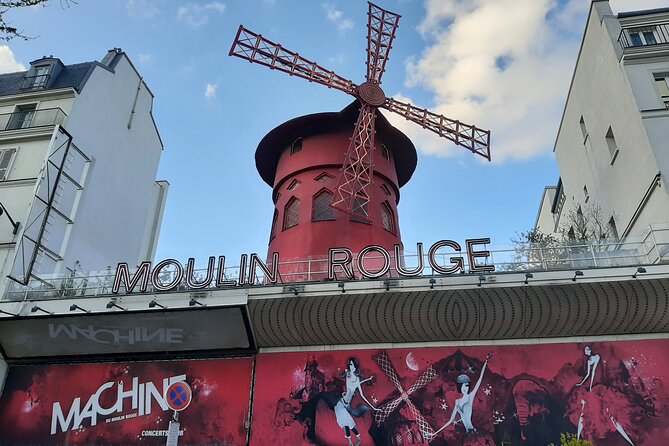
The final major segment includes Montmartre windmills, explained as dating back to the 17th century. The tour also frames Montmartre as once a working-class village north of Paris, before it became the bohemian magnet it’s known as today.
You’ll spend around 10 minutes on this part. It’s short by design, because the best way to absorb it is to see it as a layer: old labor history under modern artistic identity.
When you connect this to the earlier stops—artists in Le Bateau-Lavoir, sketching in Place du Tertre, and film-friendly streets on Rue Lepic—you start to see the logic. Montmartre’s creativity didn’t appear out of nowhere. It grew out of a place where people worked, gathered, and built community.
Guides matter here: what to expect from the storytelling
The tour is led by a local guide who’s an art lover and Montmartre Village resident. That local angle shows in the pacing: you’re not only learning facts, you’re getting the “how it feels” part of the neighborhood.
Based on past leadership, guides such as Jill and Matt have been involved. I like that both styles come through in the same core way: history is used to explain what you’re seeing now, not to turn your walk into a lecture.
If you’re the type who likes personalization, you’ll likely appreciate how the guide can adjust. One example from a previous run: Jill customized the walk for an emerging opera singer and included stories about composers such as Satie. That kind of tailoring is exactly what makes this tour feel less canned.
Price and value: why $48.37 can work for a short Montmartre day
At $48.37 per person for about 2 hours, you’re paying for three things at once: guided storytelling, a focused route through key spots, and the small-group benefit (max 15).
Is it cheap? No Paris tour at this level is truly “cheap.” But it’s also not a long haul. You’re not buying a whole day. You’re buying a concentrated chunk of Montmartre with a guide who connects the dots between art, streets, and real details like film locations.
Also, several stops are noted with free admission where it applies (including Sacré-Cœur). That reduces the “what else will I have to pay?” stress. And because there’s no mention of major paid extras inside the route, you can better control your own spending.
If you’re trying to do Montmartre without losing half your day to wandering, this price can feel fair—especially with a guide who keeps the walk moving and meaningful.
Practical tips so the walk feels easy, not stressful
A good Montmartre tour is as much about your prep as the guide. Here are a few things that’ll help:
- Wear shoes you trust on cobblestones. Montmartre roads can be slick and uneven.
- Plan your timing for Sacré-Cœur. The basilica area can attract lines, so allow patience at that endpoint.
- Bring water. Since coffee/tea isn’t included, you’ll want a basic hydration plan.
- Use your eyes on Rue Lepic and Place du Tertre. This is where the guide’s “look for this” style pays off.
If you want photos, go in with a simple goal: capture one or two corners where the movie references and artist vibes overlap. Then spend the rest of your attention on the street-level atmosphere.
Who this Montmartre & Sacré-Cœur tour fits best
This experience fits best if you want Montmartre as a story, not a checklist. It’s especially good for you if you:
- Like art and want street-level context for famous names
- Want Amélie film locations you can actually recognize
- Prefer a smaller group where you can hear the guide and ask questions
- Want a manageable 2-hour outing in an otherwise packed Paris trip
It might not be perfect if you’re only interested in fast monument photos and don’t care about explanations. This tour works because the details matter.
Should you book this Montmartre walking tour?
I think you should book it if you want a compact, art-focused Montmartre walk with a resident guide and a route that makes Sacré-Cœur feel like the ending of a story, not just a view stop.
Skip it (or reconsider) if you get irritated by lines and slow pacing. Sacré-Cœur’s popularity can add waiting time at the end, and this is still a walking tour where you’ll move through lively streets.
If you’re flexible, patient, and curious about how artists shaped Montmartre’s identity, this one is a strong match. It’s the kind of walk that leaves you looking at the neighborhood after the tour, not just remembering where you took photos.
FAQ
How long is the tour?
The tour lasts about 2 hours.
How much does it cost per person?
It costs $48.37 per person.
Is the tour offered in English?
Yes, it’s offered in English.
What is the maximum group size?
The tour has a maximum of 15 travelers.
Where do we meet, and where does the tour end?
You start at 22 Rue des Abbesses, 75018 Paris, France. The tour ends at Basilique du Sacré-Cœur de Montmartre, 35 Rue du Chevalier de la Barre, 75018 Paris, France.
What stops are included on the route?
The walk includes Basilique du Sacré-Cœur de Montmartre, Rue Lepic, Place du Tertre, La Maison de Dalida, Le Bateau-Lavoir, Place des Abbesses, and the windmills of Montmartre.
Is Sacré-Cœur admission included?
The Sacré-Cœur stop is marked as free admission for this experience.
Is coffee or tea included?
No. Coffee and/or tea are not included.
Are service animals allowed, and is there free cancellation?
Service animals are allowed. You can cancel for a full refund if you cancel at least 24 hours before the experience start time.