REVIEW · PARIS
Mille Feuille Napoléon Pastry Class in Paris
Book on Viator →Operated by Maison Fleuret — The Baking School · Bookable on Viator
Paris tastes better in layers. In this mille-feuille class, you learn how crisp puff pastry meets vanilla cream the real French way. I like the small group size (max 6), because you get hands-on attention. I also like that it’s taught in English at Maison Fleuret, so you can actually follow every step.
The best part is the teaching style: clear guidance from instructors like Julie, and focused technique from chefs such as Chef Minel. You’ll work on the components and put them together yourself, not just watch.
One thing to consider: this is a dessert-focused experience. If you do not enjoy butter-forward pastry and rich custard flavors, you might find the payoff a bit too sweet and creamy.
In This Review
- Key Things You’ll Love About This Mille-feuille Class
- Mille-feuille in Paris: why this dessert is worth your time
- Getting to Maison Fleuret: the 7 Rue de Béarn meeting point setup
- What you actually learn: puff pastry, caramelized notes, and vanilla custard
- Hands-on making: building your own Napoleon with real confidence
- Tasting and finishing: how to appreciate the layers (and not just the sweetness)
- What the class includes—and what it does not
- Price and value: is $132.45 for 2h30 worth it?
- Who this class is best for (and who should skip it)
- Practical tips so your Napoleon comes out better
- Should you book the Mille-feuille (Napoleon) pastry class?
- FAQ
- How long is the Mille-feuille (Napoleon) pastry class?
- Where does the class meet in Paris?
- Is the class offered in English?
- What is the maximum group size?
- What dessert do you make?
- What is included in the price?
- What is not included?
- Do I get a mobile ticket?
- Are service animals allowed?
- What is the cancellation policy?
- When will I receive confirmation?
Key Things You’ll Love About This Mille-feuille Class
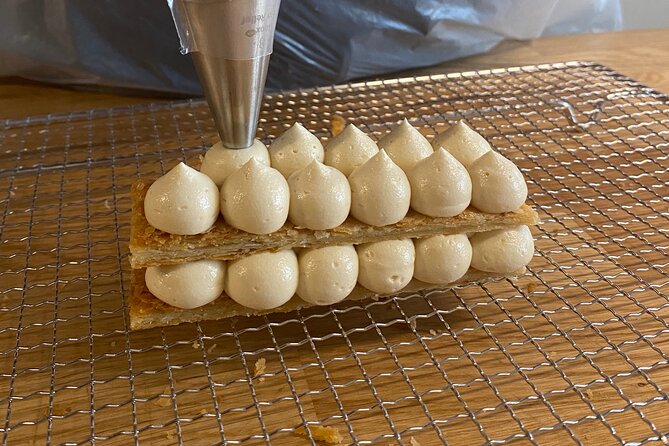
- Hands-on technique for classic Napoleon-style pastry and cream
- English instruction that keeps the process easy to follow
- Max 6 people, which means more help when you hit snags
- Coffee and/or tea included, so you’re not just tasting pastry dry
- Instructors who explain clearly, including tips for first-timers
- You leave with your finished dessert, not just photos
Mille-feuille in Paris: why this dessert is worth your time
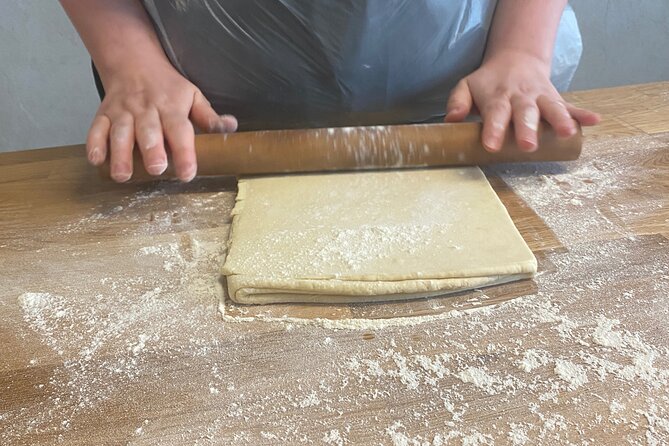
In France, mille-feuille (often called “Napoleon” in the U.S.) is a big deal because it’s all about contrast. You get something shatter-crisp from well-made puff pastry, then softness from a creamy custard—usually a vanilla custard style commonly described as crème anglaise.
This class is built around that idea: texture matters. The goal isn’t only to make something that looks right. It’s to understand why the layers work—how caramelized pastry edges and smooth cream balance each other.
The 19th-century roots also explain why the technique is so respected. This isn’t a trend pastry. It’s a classic French benchmark. Once you learn the logic behind the pastry and the cream, other desserts start to make more sense too.
You can also read our reviews of more tours and experiences in Paris


Getting to Maison Fleuret: the 7 Rue de Béarn meeting point setup
Your experience starts at 7 Rue de Béarn, 75003 Paris, and it ends back at the same spot. That’s good news for two reasons: you’re not spending your time hunting for the class, and you’re not getting stranded far from transit afterward.
Maison Fleuret—the baking school behind this—runs the class for up to 6 travelers, which keeps it from feeling like a factory demo. The setting is also described as intimate, and that matters because mille-feuille is technique-heavy. Small-group instruction means you can ask questions as you go, instead of waiting until the end.
The class is offered in English, so you won’t need to translate recipe steps in your head. And since confirmation is received at booking and the ticket is mobile, you’ll be able to go in with less friction.
What you actually learn: puff pastry, caramelized notes, and vanilla custard
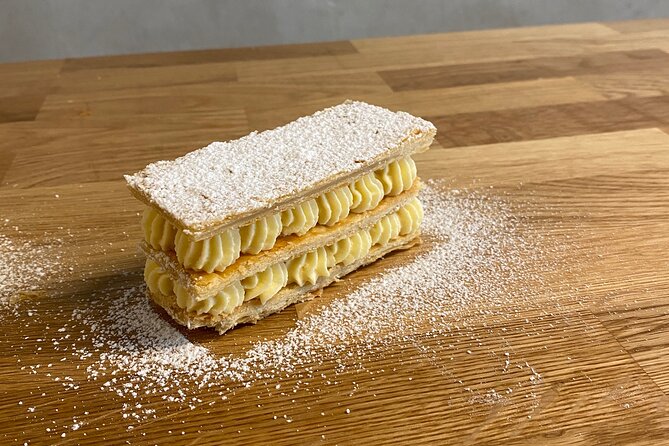
This is not a pastry class that only teaches the final assembly. You’re learning the key building blocks that make a mille-feuille taste like a mille-feuille.
From the get-go, you focus on puff pastry—specifically the parts that lead to caramelized, crisp layers. Reviews and the course description both emphasize careful technique with the pastry so you get the right snap rather than a soggy middle.
Then you move to the cream side: vanilla custard. One of the most useful details you’ll hear is how crème anglaise piping works in practice. Even if you’re not a baker, you’re not expected to guess. You’ll get step-by-step guidance so the cream comes out with the right look and texture.
If you like butter-forward desserts, you’ll probably feel at home here. That “butter” note is a recurring theme in people’s favorite parts of the class—because puff pastry isn’t subtle. It’s built on fat and layers, and the flavor shows.
Hands-on making: building your own Napoleon with real confidence
The class’s main challenge is also the charm: you’ll make your own mille-feuille, not just sample one. As you work, you practice layering with attention to detail—because the dessert only works when each part behaves the way it should.
Here’s what to pay attention to as you assemble:
- Crisp pastry needs the right handling so it doesn’t soften before serving.
- Cream needs smooth consistency so it holds its shape between layers.
- The final stack needs evenness, so every bite has layers.
That’s also why the teaching style matters. Instructors such as Julie are praised for being down-to-earth and speaking excellent English. Chef Minel is praised for confident, relaxed teaching with plenty of hints. In a class like this, those “small hints” are often the difference between a dessert that looks okay and one that tastes like the real thing.
And because the group is small, you’re more likely to get quick correction when something goes off. That’s a big deal for first-timers. Mille-feuille isn’t hard in theory, but it’s easy to mis-handle a step if you’re rushing or guessing.
Tasting and finishing: how to appreciate the layers (and not just the sweetness)
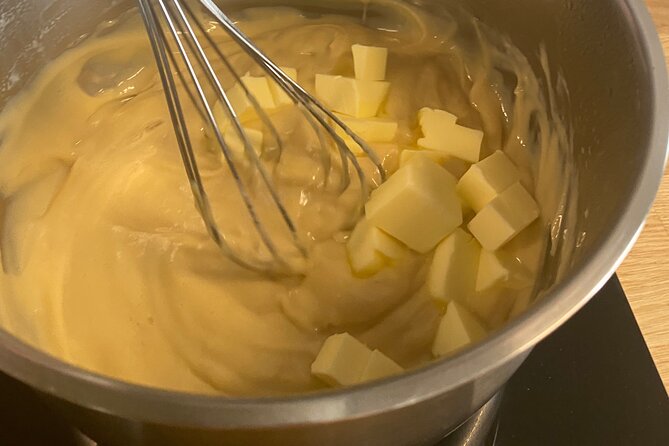
The course is structured around learning to appreciate the different layers and subtle textures. That’s smarter than just eating. If you take a few minutes with your dessert, you’ll start tasting the “why” behind each component.
Try tasting like this:
- First bite: notice crispness versus softness.
- Middle bite: notice how the cream supports the pastry rather than flattening it.
- Last bite: notice how the flavors linger—especially the vanilla and caramel notes.
You’ll have coffee and/or tea included, which is a practical touch. Rich pastry always benefits from something warm and slightly bitter to balance sweetness.
There’s also a nice bonus that pops up in comments: chefs sometimes share practical restaurant ideas once you’re done. If you’re the type who likes to build a night plan around what you just learned, that kind of advice can be gold.






What the class includes—and what it does not
Included:
- Coffee and/or tea
- Your hands-on pastry class focused on mille-feuille (Napoleon)
- A dessert focus centered on the classic 1000 leaves / Napoleon style
Not included:
- Private transportation
That difference matters for planning. Paris is easy by public transit, and the meeting point is described as near public transportation. So you’ll probably want to factor in your own transit time rather than budgeting for car service.
Also, plan on the class being a dessert centerpiece. There isn’t a full meal listed here. This is ideal if you want an activity that turns into an edible souvenir.
Price and value: is $132.45 for 2h30 worth it?
At $132.45 per person for about 2 hours 30 minutes, you’re paying for more than ingredients. You’re paying for:
- Small-group, English instruction
- Professional pastry guidance (including piping and assembly technique)
- The experience of making a classic French dessert from scratch
- A structured setting that keeps you from wasting time or ingredients at home
Compared to the usual Paris cooking experiences that are mostly observation, this one is more “learn by doing.” The max 6-person format pushes the value up because you’re more likely to get personal help when you need it.
Compared to buying a mille-feuille from a bakery, this costs more—but you’re not just buying flavor. You’re buying technique you can repeat. And you’re leaving with a dessert you made yourself, which changes how the whole experience feels.
One more timing note: it’s commonly booked about 27 days in advance on average. That’s a sign this class fills up and stays popular, likely because people want a hands-on French pastry moment that fits into a Paris schedule.
Who this class is best for (and who should skip it)
This class fits best if you:
- Want a hands-on French baking experience with clear guidance in English
- Enjoy butter and custard and don’t mind rich desserts
- Like the idea of learning technique you can use again later
- Want a family-friendly outing vibe (people have described it as fun for girls and pairs)
It may be less ideal if you:
- Strongly dislike creamy desserts or butter-heavy pastry
- Expect a light snack experience rather than a technique-based dessert class
- Want a multi-course meal format (this is focused on dessert)
Practical tips so your Napoleon comes out better
You’ll get the most from the class if you show up ready to work. A few simple habits help:
- Arrive with time to settle in. When cooking starts fast, you don’t want to be flustered.
- Be open to corrections. Mille-feuille rewards small adjustments—especially with cream piping and layer alignment.
- Pace your questions. Since the group is small, you’ll learn faster if you ask as you go.
- If you’re sensitive to sweet flavors, plan to share. Most people end up with a dessert that is very worth trying, but it can be substantial.
And if you’re thinking about taking this as a solo activity, that can work well too. The class format is described as intimate, and the teacher attention is the key ingredient.
Should you book the Mille-feuille (Napoleon) pastry class?
If you want one hands-on Paris experience that teaches a true classic, I’d say yes, especially for first-timers who want real instruction. The combination of a small group, English-speaking teaching, and a focus on actual techniques like puff pastry handling and crème anglaise piping makes this a standout use of time.
Book it sooner rather than later if your dates are fixed. And if you love butter, vanilla custard, and crisp pastry layers, you’re going to enjoy the learning—and you’ll enjoy the dessert even more.
FAQ
How long is the Mille-feuille (Napoleon) pastry class?
The class lasts about 2 hours 30 minutes.
Where does the class meet in Paris?
The meeting point is 7 Rue de Béarn, 75003 Paris, France.
Is the class offered in English?
Yes, the experience is offered in English.
What is the maximum group size?
The class has a maximum of 6 travelers.
What dessert do you make?
The dessert is 1000 Leaves / Napoleon.
What is included in the price?
Coffee and/or tea are included.
What is not included?
Private transportation is not included.
Do I get a mobile ticket?
Yes, it includes a mobile ticket.
Are service animals allowed?
Yes, service animals are allowed.
What is the cancellation policy?
You can cancel for a full refund up to 24 hours in advance of the experience start time.
When will I receive confirmation?
Confirmation is received at the time of booking.