REVIEW · PARIS
Medieval Paris Private Tour
Book on Viator →Operated by Paris in person · Bookable on Viator
Medieval Paris is hidden in plain sight. This private walking tour turns famous landmarks into a guided lesson on how the city looked and worked in the Middle Ages, with an art historian leading the way. I love the private format—you can ask hard questions and actually get answers—and I especially like the focus on architecture you can read with your eyes, not just dates on a timeline.
One watch-out: this route is built for seeing medieval Paris from key viewpoints, so some major places (like Notre-Dame) aren’t entered, and the Musée de Cluny portion is mainly about the building rather than museum galleries. If you were hoping for lots of indoor time, plan to pair it with another museum visit later in your trip.
In This Review
- Quick hits: what makes this tour different
- What you pay for: private medieval focus in a small group
- Where you start (and where the route ends)
- Stop-by-stop: how the route tells the story of medieval Paris
- Stop 1: Musée de Cluny (outside look only)
- Stop 2: Notre-Dame from afar (no interior right now)
- Stop 3: La Sorbonne and the medieval university model
- Stop 4: Tour Saint-Jacques and the strange mix of people
- Stop 5: Fountain of the Innocents—pretty, then painfully real
- Stop 6: Centre Pompidou—modern form, medieval ideas
- Stop 7: Hotel de Ville—100% medieval underneath a Renaissance face
- The real learning payoff: how medieval symbols become visible
- Notre-Dame’s closure doesn’t derail the tour
- How much time indoors? (And what you can do if you want more)
- The guide factor: art historian depth, with room for your questions
- A few practical tips to get more out of it
- Who this suits best
- Should you book the Medieval Paris Private Tour?
- FAQ
- Is this a private tour?
- How long is the Medieval Paris Private Tour?
- How much does it cost and how many people can be in the group?
- What language is the tour offered in?
- What’s included in the price?
- Do you enter Notre-Dame?
- Where do we meet and where does the tour end?
Quick hits: what makes this tour different
- Art historian guide: you’ll get context for Gothic details and medieval institutions, explained in plain language.
- A route designed around the city’s layers: from Île de la Cité origins to the marketplace area that later became Les Halles/Centre Pompidou.
- Fountain of the Innocents stop: a turning point for understanding medieval life—beautiful and cruel, at the same time.
- Latin Quarter + Sorbonne: you’ll learn how a university shaped Paris long before it became a tourist symbol.
- Tour Saint-Jacques in flamboyant Gothic style: plus its surprising ties to pilgrims, astrologers, and alchemists.
- Private group size: up to 10 per booking, with the experience kept private to your party.
What you pay for: private medieval focus in a small group
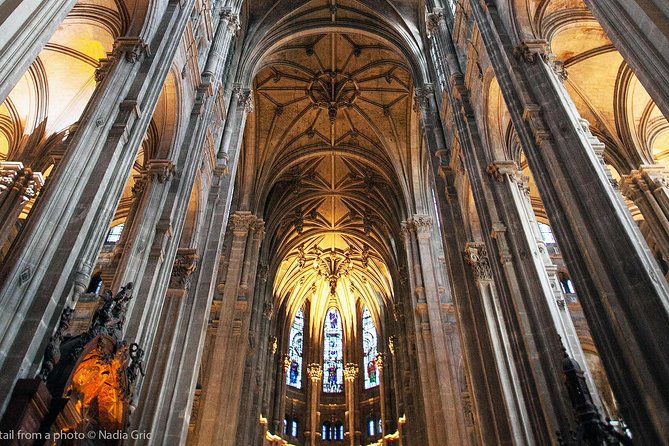
This tour costs $360.48 per group for up to 6 people, for about 2 hours. That sounds steep at first—until you do the math. If you fill the group size, you’re roughly in the neighborhood of $60 per person. With fewer people, the cost per person rises, but you still get something you can’t fake on a self-guided walk: a guide who knows how to connect buildings to the life that happened around them.
Value also comes from the “how” of the tour. This isn’t just a photo walk. The guide is there to point out medieval symbols and architectural clues that most visitors miss, especially around the cathedral area, the Latin Quarter, and the spots tied to major city institutions.
You can also read our reviews of more private tours in Paris



Where you start (and where the route ends)
The tour begins at 98 Bd Saint-Germain, 75005 Paris, at the side of the Pompidou museum by the Stravinsky fountain. It ends at 26 Rue Saint-Merri, 75004 Paris.
That ending matters. Saint-Merri is in a neighborhood that feels more local than the busiest museum cores, and it gives you an easy landing zone for dinner or a second walk afterward—especially if you’re aiming to keep your day from feeling like a series of stops.
Stop-by-stop: how the route tells the story of medieval Paris
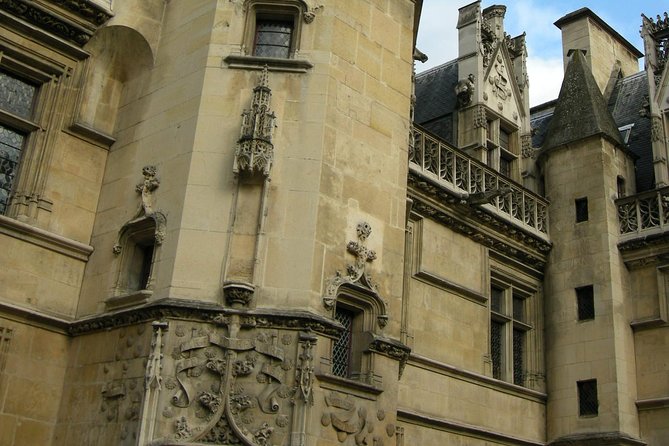
This is a walking route that ties locations together by theme: cathedral-era Paris, education and religion, civic power, and the way markets and daily life shaped the city.
Stop 1: Musée de Cluny (outside look only)
You start with Musée de Cluny, a medieval museum set in a building that itself reflects the Middle Ages in Paris. The emphasis here is on the building and what it signals about medieval life, not on touring the museum galleries.
Why I think that choice works: many people get museum-fatigued quickly. If you want medieval Paris to feel like a lived city instead of a list of artifacts, starting with the “feel” of medieval architecture gives you the right mental map for the rest of the walk.
Time on this stop: about 20 minutes (and the plan notes admission free).
Stop 2: Notre-Dame from afar (no interior right now)
Notre-Dame is the headline, but the tour handles a real-world limitation: Notre-Dame won’t be accessible for a while, so you’ll get commentary from afar without entering.
Instead of treating the closure as a lost opportunity, the guide uses the cathedral’s setting—on the Île de la Cité, where the city’s early founding took shape—to explain why the Gothic landmark became such a powerful symbol. Even from outside, you can learn how medieval builders thought about light, structure, and meaning.
Time on this stop: about 20 minutes (not entering; admission free is noted).






Stop 3: La Sorbonne and the medieval university model
Next comes La Sorbonne, introduced as the former medieval University of Paris—one of Europe’s oldest colleges. This stop is about institutions, not just architecture.
You’ll likely hear how medieval universities functioned: how learning was organized, how authority worked, and why being a student in medieval Paris wasn’t only about books—it was tied to power, culture, and civic identity.
Time on this stop: about 10 minutes (admission free).
Stop 4: Tour Saint-Jacques and the strange mix of people
Tour Saint-Jacques is one of the tour’s most fun “wait, what?” moments. The plan describes it as an important site for pilgrims, and also connected with astrologists and alchemists—which instantly complicates the simple idea that medieval life was only about churches and rules.
You also get a visual treat: the tower is described as a pinnacle of flamboyant Gothic style. The guide helps you see what that means in practice: details that signal status, craft, and the changing tastes of Gothic design.
Time on this stop: about 15 minutes (admission free).
Stop 5: Fountain of the Innocents—pretty, then painfully real
At the Fountain of the Innocents, you’re guided to see the place as a window into medieval daily life. It’s described as the city’s oldest monumental fountain, and the tour frames it as beautiful while also being incredibly cruel.
That contrast is the point. Medieval cities weren’t only dramatic churches and grand plans. They were also places where hardship sat close to decoration, and where public spaces carried the moral and social realities of the time.
Time on this stop: about 20 minutes (admission free).
Stop 6: Centre Pompidou—modern form, medieval ideas
Then the tour makes a clever pivot: Centre Pompidou is the modern image of modernity, but the commentary connects it to medieval influence. The plan explicitly says the contemporary building is heavily inspired and influenced by the medieval period.
This kind of stop is great if you’re the type who likes patterns across centuries. It helps you stop thinking of medieval Paris as a sealed-off “old chapter,” and start noticing how later Paris kept borrowing medieval visual language.
Time on this stop: about 15 minutes (admission free).
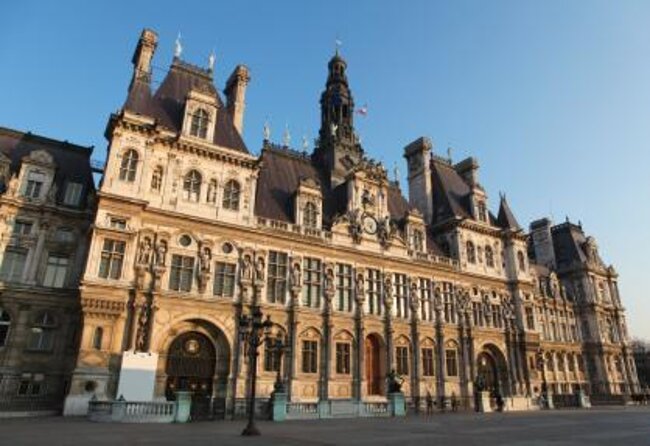
Stop 7: Hotel de Ville—100% medieval underneath a Renaissance face
The final major institutional stop is Hotel de Ville. The plan warns you not to let the Renaissance façade fool you: the site is described as 100% medieval.
That’s a strong lesson for anyone who thinks Paris landmarks are frozen in time. When you’re standing in a city full of reused surfaces, you need a guide who can read what’s beneath the skin—and this stop is designed for that.
Time on this stop: about 15 minutes (admission free).
The real learning payoff: how medieval symbols become visible
What I like most about this tour format is the way it trains your eye. Instead of “Here’s a building, isn’t it cool?”, you get guided attention to symbols and architectural elements that date to the Middle Ages.
For example, you learn why certain places matter beyond their looks—Notre-Dame’s location on Île de la Cité, Sorbonne’s role as a medieval university institution, and Tour Saint-Jacques as a space connected to pilgrims, astrologers, and alchemists. Those details change how you interpret the city while you’re walking on your own later.
A second payoff is the way the route connects separate landmarks into one story. You’re essentially being taught that Paris’ medieval core didn’t disappear; it got layered. The tour description specifically points to layers beneath modern landmarks like Centre Pompidou and Les Halles, tied to a central marketplace that existed as early as the 12th century.
So even after the tour ends, you’ll have a framework for what you’re seeing: older systems, rebuilt over time, leaving traces you can learn to spot.
Notre-Dame’s closure doesn’t derail the tour
If you’re worried about paying for a cathedral tour and then not going inside, you’re thinking like a normal human. Here’s the practical answer: the plan is set up so you’re not stuck with only a shrug from a distance.
You still get the history behind why Notre-Dame sits where it sits—on the Île de la Cité—and you get guidance for recognizing what makes a Gothic cathedral “Gothic” in the real world. It’s not the same as stepping into the nave, but it keeps the tour on-message.
If your top priority is interiors, you might pair this with another visit where you can go inside what’s open that day. For understanding medieval Paris as a city system, this “from afar” approach can actually be more focused.
How much time indoors? (And what you can do if you want more)
The tour is mostly an outdoor walking experience with outside-view commentary. The Musée de Cluny part is explicitly about the building and doesn’t mean a museum run. Notre-Dame is also commentary from outside.
That means the best way to use this tour is as an interpretation layer. Afterward, you’ll know what questions to ask when you visit on your own—especially about what looks medieval but isn’t, and what feels modern but is actually responding to older Paris.
If you want extra religious-architecture time, you may find the route includes a church interior moment such as Sainte-Sévérine—one of the tour write-ups mentions enjoying access there. It’s still smart to treat that as “possible depending on the day,” not as a guarantee.
The guide factor: art historian depth, with room for your questions
Because this is private, the guide can shape the pace around what you care about most. The tour is described as led by an art historian, and the experience of guides like Amy and Caroline shows up in the details people remember: lots of backstory, architecture talk, and myth-busting about what medieval Paris was really like.
Caroline, for example, is noted for ending with practical local ideas: pointing out a square at the end of the Île de la Cité that works well for lunch, along with a fun extra—help getting pétanque balls to play in the square. That’s the kind of “you’ll actually use this” advice that turns a history lesson into a better day.
A few practical tips to get more out of it
Bring comfortable shoes. You’re walking between major corners of Paris, and the tour description asks for moderate physical fitness.
Also, come ready with at least one question. If you’re curious about guild life, street life, how medieval universities worked, or why certain buildings gained power, say so early. Private tours work best when you drive the conversation.
Finally, if you’re the type who loves photos, do that too—but let the guide teach you what to photograph. The value here is knowing what you’re seeing and why it mattered.
Who this suits best
This tour fits you if:
- You like history, but you want it connected to real buildings and street details.
- You’re drawn to Gothic architecture, medieval institutions, and how cities evolve.
- You’d rather ask questions than follow a script.
It might not fit you if:
- Your main goal is indoor museum time or full interior access to the biggest sights.
- You’re only interested in quick highlights and photos with minimal explanation.
Should you book the Medieval Paris Private Tour?
I’d book it if you want a smarter way to see medieval Paris during a short stay. At $360.48 per group, the value becomes real when you travel with friends and split the cost, and the guide’s art-history lens helps you understand the city beyond the obvious.
I’d skip or pair it with a second, more interior-focused plan if you’re set on going inside Notre-Dame or spending time in museum galleries. This is an excellent interpretation walk—less about rooms, more about reading Paris like a living document.
If your travel style leans toward “show me what to look for,” this one delivers.
FAQ
Is this a private tour?
Yes. It’s a private walking tour for your group only.
How long is the Medieval Paris Private Tour?
It runs for about 2 hours.
How much does it cost and how many people can be in the group?
It costs $360.48 per group, up to 6 people, with a maximum of 10 people per booking.
What language is the tour offered in?
The tour is offered in English.
What’s included in the price?
A professional art historian guide is included.
Do you enter Notre-Dame?
No. The plan says Notre-Dame won’t be accessible for a while, so you get commentary from afar without entering.
Where do we meet and where does the tour end?
You meet at 98 Bd Saint-Germain, 75005 Paris, at the side of the Pompidou museum by the Stravinsky fountain, and the tour ends at 26 Rue Saint-Merri, 75004 Paris.